
The purse of Fortuna Myth Meaning & Symbolism
A mortal receives a magical purse from the goddess Fortuna, only to learn that true wealth lies not in endless gold, but in the wisdom of letting go.
The Tale of The Purse of Fortuna
Listen, and hear the whisper of the turning wheel.
In the days when gods walked just beyond the edge of sight, and [the wind](/myths/the-wind “Myth from Various culture.”/) carried the scent of ambrosia and mortal dust, there lived a man named Aeson. He was not a king, nor a warrior, but a simple soul whose life was etched by the plow and the quiet, unyielding struggle of the soil. His hands were calloused, his back bent, and his heart held a hollow ache—a longing for a reprieve from the relentless calculus of need.
One evening, as the sun bled into [the horizon](/myths/the-horizon “Myth from Various culture.”/) and long shadows stretched like grasping fingers, Aeson took a path home he had never walked before. The air grew thick and silent, the birdsong ceased, and the very light took on a liquid, golden quality. In a clearing where ancient oaks formed a silent council, he saw her.
She was [Fortuna](/myths/fortuna “Myth from Roman culture.”/). She stood upon a great wheel of dark, polished wood that turned with a sound like distant thunder. One foot was planted firmly, the other poised as if to step off into [the void](/myths/the-void “Myth from Buddhist culture.”/). In her hands, she held not a cornucopia or a rudder, but a simple, worn leather purse, its drawstrings loosely tied. Her eyes held the chaos of storms and the calm of deep wells.
“Aeson,” her voice was not a sound, but a vibration in the marrow of his bones. “You have labored under the weight of lack. You have felt the bite of my indifference. Today, the wheel turns to you.”
She extended the purse. “This is my gift. Reach within, and you shall draw forth a single gold coin. But know this: the purse will never empty. For every coin you remove, another shall take its place. It is abundance without end.”
Trembling, Aeson took the purse. It was warm, humming with a low, potent energy. He loosened the strings, slipped his fingers inside, and felt the cool, perfect disc of a coin. He drew it out. It gleamed in the twilight, pure and heavy. Even as he marveled at it, he heard the soft, metallic chime of another coin forming within the depths of the pouch.
He ran home, the purse clutched to his chest like a second heart. That night, by the light of a single tallow candle, he began. One coin, then another, then a handful. They piled upon his rough-hewn table, a growing mound of light. He laughed, a sound of pure, unadulterated release. He filled a chest, then a second. His humble cottage began to groan under the weight of gold. He no longer farmed. He no longer slept. His world shrank to the circle of candlelight and the endless, mesmerizing flow from the purse.
But a chill entered his joy. The chime of a new coin forming, once a promise, became a demand. If he stopped, even for a moment, he was wasting potential. The gold was no longer wealth; it was a tide he had to manage, a hoard he had to protect. His back, once bent from labor, was now bent from counting. His eyes, once on the horizon, were locked on the glint of metal. The hollow ache in his heart had not been filled; it had been replaced by a gnawing, metallic fear of loss.
One frozen midnight, as he clutched the purse, desperately pulling coins to fill a new chest, he heard Fortuna’s voice again, this time as a sigh in the chimney wind. “The gift is also the test, Aeson. The purse never empties… but the hand that holds it can become full.”
He looked at his hands, stained and cramped. He looked at his home, a cave of cold gold. In a moment of clarity that felt like drowning and breaking the surface at once, he understood. With a cry that was both agony and liberation, he did not reach into the purse. He turned it inside out, shaking it violently over [the hearth](/myths/the-hearth “Myth from Norse culture.”/). A final, cataract of gold poured forth, and then… silence. The purse hung limp, empty, just a scrap of leather.
At that moment, the first true peace he had ever known settled upon him. The wheel had turned.

Cultural Origins & Context
The motif of the inexhaustible purse, horn, or vessel is a true mytheme, appearing from the Cornucopia of Greek myth to the bottomless rice pot of East Asian folklore. Its most poignant articulation with Fortuna, however, speaks to a specific cultural moment: the transition from agrarian, fate-bound societies to the mercantile, chance-driven worlds of early empires. Fortuna herself evolved from an agricultural deity to the capricious mistress of Rome’s fortunes, worshipped by senators and slaves alike.
This story was not scripture, but street philosophy. It was told in marketplaces, by traveling storytellers and Stoic philosophers, as a parable for the new anxiety of the age: the intoxicating, terrifying possibility of sudden wealth and its equally sudden disappearance. It functioned as a societal pressure valve, a way to process the psychological dislocation caused by economic chance. It taught that Fortuna’s favor was not a permanent state of grace, but a dynamic relationship requiring wisdom, not just greed.
Symbolic Architecture
The myth’s power lies in its deceptively simple symbolic [architecture](/symbols/architecture “Symbol: Architecture in dreams often signifies structure, stability, and the framing of personal identity or life’s journey.”/). The Fortuna figure is not evil, but amoral; she is [the principle](/symbols/the-principle “Symbol: A fundamental truth, law, or doctrine that serves as a foundation for a system of belief, behavior, or reasoning, often representing moral or ethical standards.”/) of pure potentiality and random distribution. Her wheel symbolizes the cyclical, inescapable [nature](/symbols/nature “Symbol: Nature symbolizes growth, connectivity, and the primal forces of existence.”/) of circumstance—what rises must fall, and what falls may rise again.
The purse is the paradox of the unconscious gift: it offers to fill the conscious void, but in doing so, it reveals that the void was never in the world, but in one’s relationship to it.
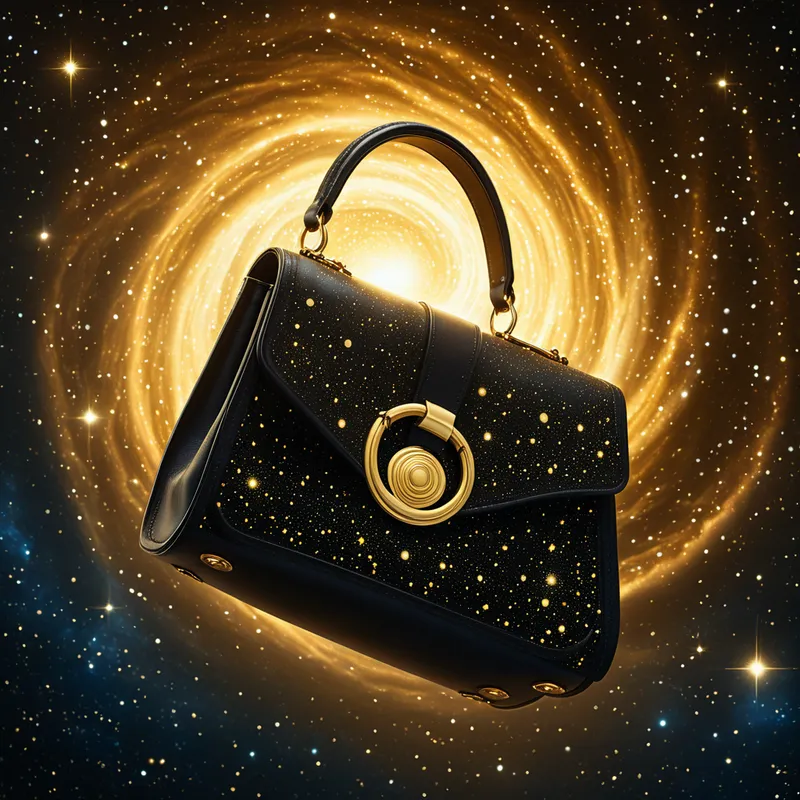
The [purse](/symbols/purse “Symbol: A purse often symbolizes personal belongings, identity, and the management of resources.”/) itself is the core [symbol](/symbols/symbol “Symbol: A symbol can represent an idea, concept, or belief, serving as a powerful tool for communication and understanding.”/). It represents the archetypal “magical [solution](/symbols/solution “Symbol: A solution symbolizes resolution, clarity, and the overcoming of obstacles, often representing a sense of accomplishment.”/)” offered by the unconscious—often in the form of an addiction, a compulsive [behavior](/symbols/behavior “Symbol: Behavior encompasses the actions and reactions of individuals, often as a response to various stimuli or contexts.”/), or an idealized fantasy that promises to solve all lacks. It is endless on the inside, reflecting the boundless potential of the [psyche](/myths/psyche “Myth from Greek culture.”/), but finite in the hand that holds it, reflecting [the ego](/myths/the-ego “Myth from Jungian culture.”/)’s limited [capacity](/symbols/capacity “Symbol: A measure of one’s potential, limits, or ability to contain, process, or achieve something, often reflecting self-assessment or external demands.”/) to integrate. The gold is not just [wealth](/symbols/wealth “Symbol: Wealth in dreams often represents abundance, security, or inner resources, but can also symbolize burdens, anxieties, or moral/spiritual values.”/), but psychic [energy](/symbols/energy “Symbol: Energy symbolizes vitality, motivation, and the drive that fuels actions and ambitions.”/)—libido, [attention](/symbols/attention “Symbol: Attention in dreams signifies focus, awareness, and the priorities in one’s life, often indicating where the dreamer’s energy is invested.”/), [life](/symbols/life “Symbol: The symbol of ‘Life’ represents a journey of growth, interconnectedness, and existential meaning, encompassing both the joys and challenges that define human experience.”/) force—that, when hoarded by a fragile ego, becomes a [prison](/symbols/prison “Symbol: Prison in dreams typically represents feelings of restriction, confinement, or a lack of freedom in one’s life or mind.”/) of its own making.
Aeson’s final act of turning the purse inside out is the critical symbolic turn. It is not [rejection](/symbols/rejection “Symbol: The experience of being refused, excluded, or dismissed by others, often representing fears of inadequacy or social belonging.”/), but inversion. It represents the ego’s surrender of its compulsive, controlling [relationship](/symbols/relationship “Symbol: A representation of connections we have with others in our lives, often reflecting our emotional state.”/) to the unconscious [source](/symbols/source “Symbol: The origin point of something, often representing beginnings, nourishment, or the fundamental cause behind phenomena.”/). He stops taking from the [mystery](/symbols/mystery “Symbol: An enigmatic, unresolved element that invites curiosity and exploration, often representing the unknown or hidden aspects of existence.”/) and allows the mystery to empty itself into his [reality](/symbols/reality “Symbol: Reality signifies the state of existence and perception, often reflecting one’s understanding of truth and life experiences.”/), thereby ending the spell.
The Dreamer’s Resonance
When this myth stirs in the modern dreamscape, it rarely appears as a classical goddess. Instead, one might dream of a wallet that refills with money, a smartphone with endless battery and notifications, a faucet that won’t stop running gold, or a job that promises endless productivity without satisfaction. The somatic experience is one of initial euphoria giving way to claustrophobic anxiety, a feeling of being buried or drowned by the very [thing](/myths/thing “Myth from Norse culture.”/) desired.
Psychologically, this dream pattern signals a profound encounter with what Jung called the Shadow—not the dark shadow of evil, but the golden shadow of potential that has become compulsive. The dreamer is at a point where an unconscious complex (a pattern of thought, emotion, and memory) is offering a seemingly perfect solution to a sense of lack or insecurity. The dream is a warning: the solution is becoming the problem. The psyche is illustrating [the law](/myths/the-law “Myth from Biblical culture.”/) of diminishing returns on an ego-driven strategy for wholeness. The process underway is the painful but necessary realization that one is not in a relationship of receiving from life, but of clutching at it.

Alchemical Translation
The alchemical journey mirrored in this myth is the [Nigredo](/myths/nigredo “Myth from Alchemical culture.”/) and Ablutio—the blackening and the washing. Aeson’s initial poverty is the materia prima, the base lead of the soul’s discontent. Fortuna’s gift is the first transmutation, the flash of gold, the illusion of the completed work. This is the seductive trap of the spiritual bypass or the quick fix; it turns the soul’s lead not into true gold, but into a glittering, imprisoning idol.
The true alchemy begins in the cottage buried in gold—[the Nigredo](/myths/the-nigredo “Myth from Alchemical culture.”/). This is the dark night where the promised treasure reveals its toxic nature. The ego, identified with the possession of the gift, suffers and is “blackened” by despair and claustrophobia. This suffering is not an error, but the essential fire of transformation.
The final act is not acquisition, but evacuation. The philosopher’s stone is not found in the endless purse, but in the courage to empty it.
Turning the purse inside out is the Ablutio—the washing clean. It is the dissolution of the ego’s identification with the magical object. The psychic energy (gold) is not lost; it is released from the compulsive form (the purse) and returned to the ecosystem of the soul. Aeson, now empty-handed, is for the first time truly rich, for he is no longer possessed by his possessions. He has achieved a qualitative shift from having to being. The individuation process here moves from a state of the “orphan” yearning for external salvation, through a crisis of attachment, to a nascent state of the “sage” who understands the intrinsic value of emptiness and the cyclical grace of the turning wheel. The purse of Fortuna, once held, must ultimately be released, so that the soul itself may become [the vessel](/myths/the-vessel “Myth from Alchemical culture.”/) that Fortune fills and empties in her eternal, mysterious dance.
Associated Symbols
Explore related symbols from the CaleaDream lexicon: