
The Pruner Myth Meaning & Symbolism
A myth of a gardener who must cut away the beloved, overgrown heart of the World-Tree to save the entire forest, embodying the agony and necessity of sacred sacrifice.
The Tale of The Pruner
Listen, and hear the rustle of the oldest leaves. In the first age of the World-Tree, the forest was a paradise of unending growth. Canopies knitted together a roof of perpetual green; roots delved deep into the dark, singing earth. The Arboreal Wardens tended to this glory, their every touch a blessing of vitality. They believed all growth was sacred, and to cut a living branch was the deepest blasphemy.
But a silence began at the heart of [the world](/myths/the-world “Myth from Tarot culture.”/). The World-Tree’s great boughs, once supple, grew stiff and heavy. Its leaves, once the color of sunlit emerald, dulled to a weary grey. A creeping malaise spread from its core—a beautiful, toxic blight. The tree was consuming itself in its own magnificent, unchecked proliferation. Its heartwood, gorged on its own life-force, had become a dense, radiant knot of cancerous gold, beautiful to behold but strangling the flow of sap to the outermost twigs. The forest held its breath. Birdsong ceased. The Wardens wept, for they saw the end of all things in this glorious stagnation.
Among them was one called Kaelen. While others prayed for a miracle of more growth, Kaelen knelt and pressed his ear to the great roots. He did not hear a song, but a labored, drowning gasp. The truth whispered up from the dark: the heart must be cut away, or the whole would perish. To save the tree, one must commit the ultimate act of violation against it.
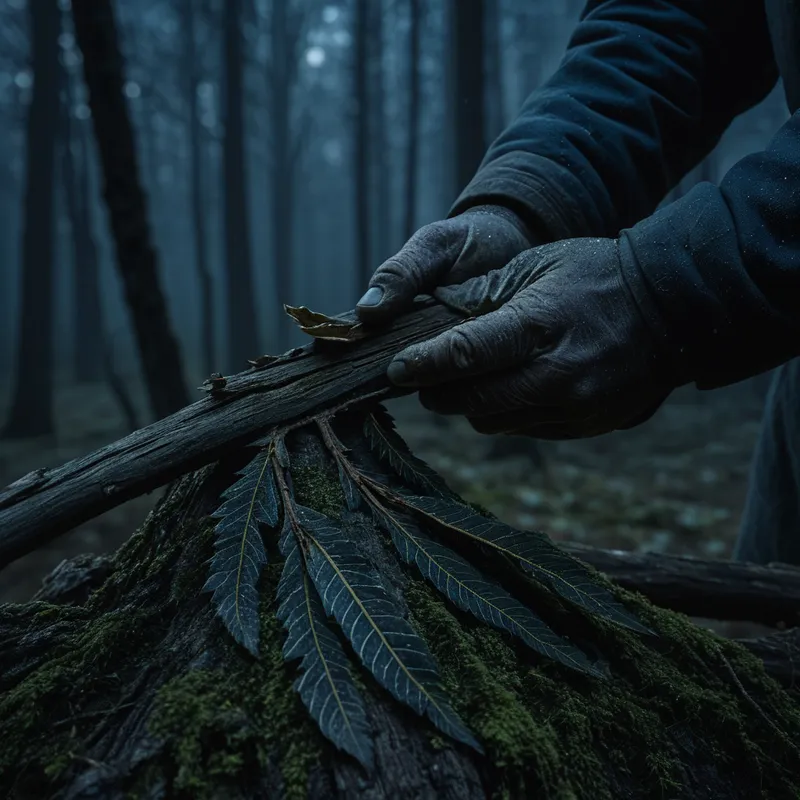
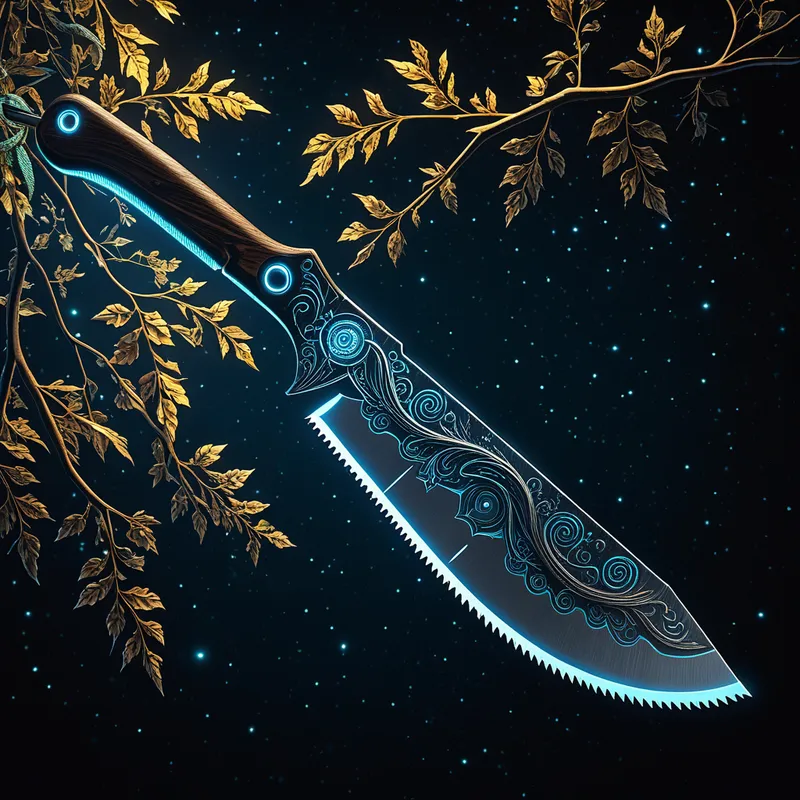
The other Wardens recoiled in horror. “To wound the heart is to kill the spirit!” they cried. But Kaelen, his heart breaking with the weight of the knowledge, went to the Sorrow-Smith. There, he forged a blade unlike any other: a pruning saw of silver, its teeth honed not on stone, but on resolve. He climbed the vast trunk, past the grieving faces of his kin, into the luminous, suffocating chamber of the heartwood.
The air was thick with the cloying scent of dying nectar. The heartwood pulsed with a sickly, gorgeous light. To look upon it was to see all the forest’s potential frozen in a single, fatal moment of perfection. Kaelen raised the silver saw. The tree shuddered. He set the teeth to the glowing wood, and a sound like a world weeping echoed through the boughs. With every pull of the saw, golden sap, thick as blood, flowed freely. With every cut, he felt a part of his own spirit sever. He was not a hero conquering a beast, but a healer performing a catastrophic surgery, his love the only anesthetic against the agony of the act.
When the final fibers parted, the severed heartwood fell, its light extinguishing into the depths below. A terrible silence followed. Then, from the clean, open wound, a clear, silver sap began to bead—not gold, but pure and bright. It flowed outward, along channels long forgotten. A sigh moved through the entire forest, a sigh of release. Where the sap touched, grey leaves flushed green, stiff boughs found flexibility, and from the very wound itself, a new, slender shoot, vibrant and strong, emerged towards the light. Kaelen, the Pruner, clung to the trunk, emptied of everything but the terrible, necessary cost of the cure.
Cultural Origins & Context
The myth of The Pruner originates from the oral traditions of the Arboriculture Lore culture, a society whose cosmology, law, and daily ritual were intimately tied to silviculture and sacred horticulture. It was not a casual folktale but a foundational narrative, recited during the Season of the Silver Blade. The teller was always the eldest Root-Speaker, and the recitation was performed not in a grand hall, but within a grove, at dusk.
Its societal function was multifaceted. Primarily, it provided the sacred justification and emotional framework for the very real, vital practice of pruning and forest management. It transformed a seemingly violent act of cutting into a sacred, sorrowful duty of stewardship. The myth taught that responsible care sometimes requires inflicting a controlled wound to prevent a greater death. It was also a narrative of leadership, instructing that the one who bears the terrible knowledge of what must be done must also bear the psychological burden of executing it, often in the face of communal opposition.
Symbolic Architecture
At its core, The Pruner myth is a profound [allegory](/symbols/allegory “Symbol: A narrative device where characters, events, or settings represent abstract ideas or moral qualities, conveying deeper meanings through symbolic storytelling.”/) for the necessity of sacrifice within any living [system](/symbols/system “Symbol: A system represents structure, organization, and interrelated components functioning together, often reflecting personal or social order.”/), be it ecological, communal, or psychological. The World-[Tree](/symbols/tree “Symbol: In dreams, the tree often symbolizes growth, stability, and the interconnectedness of life.”/) represents any complex, organic whole—a [family](/symbols/family “Symbol: The symbol of ‘family’ represents foundational relationships and emotional connections that shape an individual’s identity and personal development.”/), a society, a [psyche](/myths/psyche “Myth from Greek culture.”/). The beautiful, overgrown heartwood symbolizes that which has become overly dominant, narcissistic, or stagnant. It is [the ego](/myths/the-ego “Myth from Jungian culture.”/) grown rigid, [the tradition](/symbols/the-tradition “Symbol: Represents established customs, rituals, and social norms passed through generations, embodying collective identity and continuity.”/) that stifles innovation, the comfort that prevents growth.
The most sacred growth often begins with a sacred wound.
Kaelen, The Pruner, embodies the [Caregiver](/symbols/caregiver “Symbol: A spiritual or mythical figure representing nurturing, protection, and unconditional support, often embodying divine or archetypal parental energy.”/) [archetype](/symbols/archetype “Symbol: A universal, primordial pattern or prototype in the collective unconscious that shapes human experience, behavior, and creative expression.”/) in its most mature and difficult form. His heroism is not in battle, but in accepting the burden of conscious, painful [action](/symbols/action “Symbol: Action in dreams represents the drive for agency, motivation, and the ability to take control of situations in waking life.”/). The silver saw represents conscious [intention](/symbols/intention “Symbol: Intention represents the clarity of purpose and direction in one’s life and can symbolize motivation and commitment within a dream context.”/)—the tool of discernment and will, tempered in the fires of sorrow and necessity. The act of pruning is not destruction, but a form of love so severe it is indistinguishable from [grief](/symbols/grief “Symbol: A profound emotional response to loss, often manifesting as deep sorrow, yearning, and a sense of emptiness.”/). The new shoot from the wound is the promise that [life](/symbols/life “Symbol: The symbol of ‘Life’ represents a journey of growth, interconnectedness, and existential meaning, encompassing both the joys and challenges that define human experience.”/), when cleared of its pathological attachments, will always move toward wholeness in a new form.
The Dreamer’s Resonance
When this myth stirs in the modern unconscious, it often manifests in dreams of pruning, cutting, or surgery performed upon [the self](/myths/the-self “Myth from Jungian culture.”/) or one’s personal environment. A dreamer may find themselves trimming back an overgrown garden with a deep sense of melancholy, or performing surgery on their own body with clinical detachment and profound sadness. The somatic sensation is often one of acute, clean pain followed by a wave of relief—a psychic lancing of a boil.
Psychologically, this dream pattern signals a critical moment of psychic differentiation. The dreamer is grappling with the necessity of cutting away a part of their identity, a relationship, a career path, or a deeply held belief that, while once vital or beautiful, has now become a source of stagnation or toxicity. The dream captures the internal conflict between the part that clings to the familiar growth (the other Wardens) and the part that knows a painful but liberating act is required (The Pruner within). The agony in the dream is the ego’s resistance to its own necessary diminishment for the sake of the greater Self.
Alchemical Translation
The alchemical process mirrored in The Pruner’s tale is [solutio](/myths/solutio “Myth from Alchemical culture.”/) followed by coagulatio—dissolution and recombination. The myth models a crucial phase in the individuation journey: the voluntary dissolution of a psychic complex that has become overly rigidified.
[The first stage](/myths/the-first-stage “Myth from Alchemical culture.”/) is [nigredo](/myths/nigredo “Myth from Alchemical culture.”/), the blackening, represented by the malaise of the forest and Kaelen’s dark, lonely knowledge. The Sorrow-Smith is the albedo, the whitening, where the tool of consciousness is forged in reflection. The act of pruning itself is the [rubedo](/myths/rubedo “Myth from Alchemical culture.”/), the reddening or suffering—the passionate, painful engagement with the material. The flowing of the clear sap is the citrinitas, the yellowing or illumination, the emergence of a new, purified energy flow.
Individuation is not merely adding new experiences, but often the courageous and mournful subtraction of outworn selves.
For the modern individual, the myth instructs that psychological growth is not an endless accumulation, but a cyclical process of cultivation. We must become the Pruner of our own inner forest. This requires developing the silver saw of discernment to identify what in our lives—be it an attachment, a grievance, a self-image—has become the beautiful, choking heartwood. The [triumph](/myths/triumph “Myth from Roman culture.”/) is not in the cut itself, but in the capacity to stand in the grief of that loss, to witness the wound, and to trust, as Kaelen did, that from that sacred emptiness, a truer, more resilient form of life will inevitably rise. The goal is not a painless existence, but a whole one, where decay and blossoming are recognized as partners in the same, eternal dance.
Associated Symbols
Explore related symbols from the CaleaDream lexicon: