The prophet Daniel Myth Meaning & Symbolism
A prophet in Babylonian exile, famed for interpreting dreams and surviving the lion's den, embodying unwavering faith and divine insight in a hostile world.
The Tale of The prophet Daniel
Listen, and hear the tale of a soul cast into the furnace of empire. In the days when the golden city of Babylon drank the tears of conquered nations, a young man named Daniel was carried away from the hills of Judah. He was of royal blood, a seedling of David’s line, planted now in the foreign soil of Nebuchadnezzar’s court.
They gave him a new name, Belteshazzar, and fed him the rich meats and wines of the king’s table. But Daniel’s spirit was not for sale. He requested water and vegetables, and his countenance shone brighter than all the others. To him, and to his companions Hananiah, Mishael, and Azariah, the God of their fathers gave knowledge and skill in all literature and wisdom; but to Daniel alone, he gave understanding in all visions and dreams.
The first test came like a phantom in the night. King Nebuchadnezzar was troubled, his sleep shattered by a dream that fled with the dawn, leaving only dread. He summoned all his wise men, his enchanters and sorcerers, and demanded they tell him both the dream and its interpretation—or face dismemberment. Panic filled the chamber like a foul smoke. But Daniel sought his God in prayer, and the mystery was revealed to him in a night vision. He stood before the king, not with the arrogance of a seer, but with the humility of a vessel. “You saw, O king,” he began, and described the great statue of gold, silver, bronze, iron, and clay, shattered by a stone not cut by human hands. The dream was a map of empires, rising and falling by a will greater than any king’s. Daniel was elevated, made ruler over the province of Babylon.
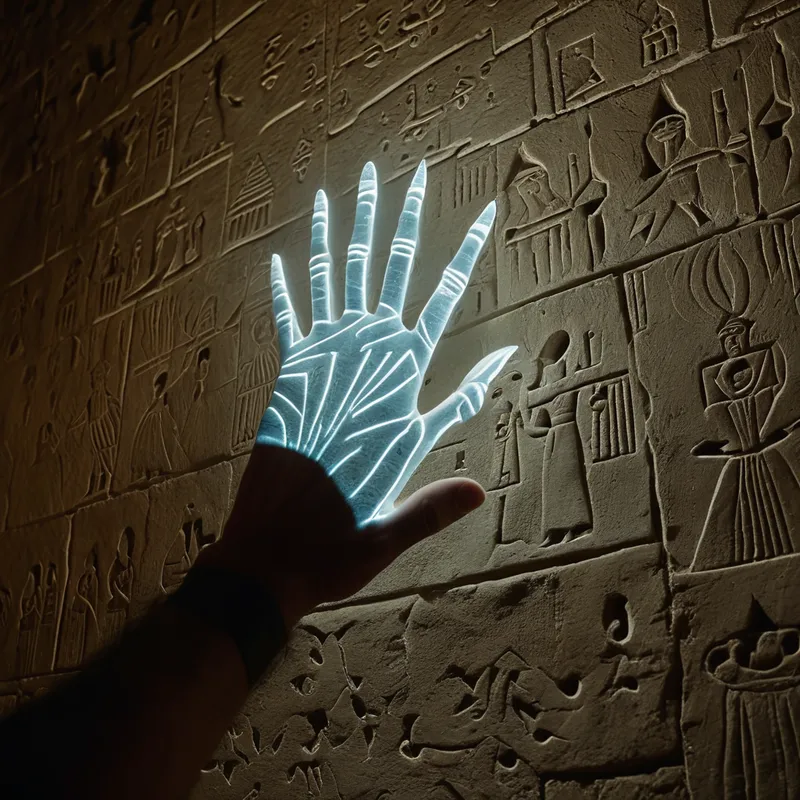
Years passed. A new king, Belshazzar, held a great feast, drinking wine from the sacred vessels looted from the Temple in Jerusalem. In that moment of sacrilegious pride, the fingers of a human hand appeared and wrote on the plaster of the wall: MENE, MENE, TEKEL, PARSIN. The king’s laughter died, his knees knocked together. Again, Daniel was summoned. He needed no night vision to read the judgment: “You have been weighed in the balances and found wanting.” That very night, Babylon fell to the Medes and Persians.
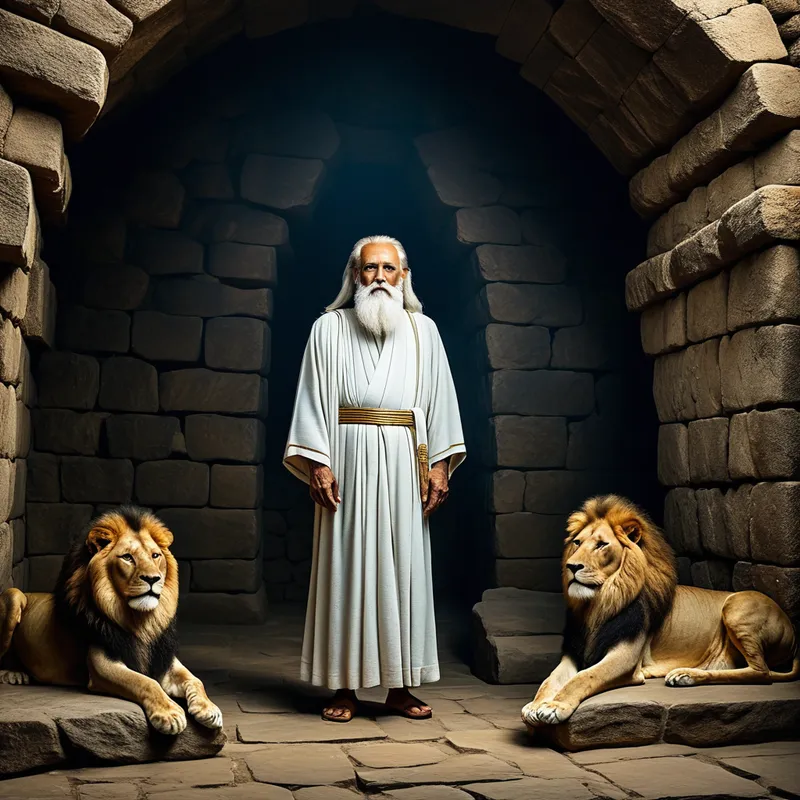
Under the new regime, Daniel’s integrity shone brighter, earning him high office. This provoked a venomous envy in the other satraps. Knowing they could find no fault in his conduct, they attacked his faith. They flattered King Darius into signing an irrevocable law: for thirty days, all prayers must be to the king alone. Daniel heard the decree. He went to his upper chamber, where the windows faced Jerusalem, and three times a day he knelt and prayed to his God, as he had always done. The trap was sprung. With a heavy heart, Darius cast Daniel into the den of lions. “May your God, whom you serve continually, deliver you,” he said, his voice thick with despair.
The stone was rolled over the mouth of the den. The night was long. At the first break of dawn, the king, who had fasted and spent a sleepless night, rushed to the pit and cried out in anguish, “O Daniel, servant of the living God, has your God, whom you serve continually, been able to deliver you from the lions?” And from the darkness came a voice, clear and unharmed: “O king, live forever! My God sent his angel and shut the lions’ mouths.” Daniel was lifted out, without a scratch. And those who had accused him met the fate they had designed for him. The story ends with Daniel, an old man in a foreign land, receiving visions of the end of days, of resurrection, and of an everlasting kingdom that would not be destroyed.
Cultural Origins & Context
The figure of Daniel emerges from the profound trauma of the Babylonian Exile. The stories in the first half of the book bearing his name are folkloric wisdom tales, likely circulated orally among the exiled Jewish communities in Mesopotamia. They functioned as resistance literature—not of armed revolt, but of cultural and spiritual endurance. They answered a desperate question: How do we remain us when everything—our temple, our king, our land—has been taken away?
The tales of Daniel, Shadrach, Meshach, and Abednego provided a model. They showed that one could serve a foreign king with excellence while maintaining absolute loyalty to Yahweh. Integrity, dietary observance, and prayer were the borders of the soul that no empire could cross. The later, more apocalyptic visions in the book (Chapters 7-12) reflect the pressures of the Antiochus IV Epiphanes period (2nd century BCE), offering coded hope that the terrifying empires of the world were transient, and that divine justice would ultimately prevail for the faithful.
Symbolic Architecture
Daniel is the archetype of the Righteous Remnant. He symbolizes the conscious ego that refuses to be assimilated by the collective shadow of a dominant, often tyrannical, culture (Babylon). His dietary choice is not mere asceticism; it is the symbolic act of discrimination, of consciously choosing what nourishes the authentic self and rejecting what intoxicates or compromises it.
The den of lions is not a punishment, but the ultimate temenos—the sacred enclosure where one meets the raw, instinctual power of the unconscious, alone and unprotected by societal persona.
The lions represent the devouring, chaotic forces of the psyche—rage, envy, fear, the predatory instincts of the survival mind. Daniel’s survival signifies a state of psychic integration where the ego, aligned with the Self (the divine center), is no longer threatened by these primal energies. They are not destroyed; their mouths are shut. They become guardians, not destroyers. His ability to interpret dreams and read the writing on the wall symbolizes the faculty of symbolic perception—the capacity to see the deeper, often ominous, patterns and meanings behind the façade of conscious reality that others ignore or cannot decipher.

The Dreamer’s Resonance
When the Daniel pattern stirs in the modern dreamer, it often manifests as a confrontation with an impersonal, overwhelming system—a corporate structure, a social pressure, a bureaucratic machine—that demands compromise of one’s core values. The dreamer may find themselves in a sterile, modern “Babylon,” feeling like an exile.
Dreams of being falsely accused, of facing a tribunal for an unknown crime, or of being forced to comply with an absurd but powerful decree echo Daniel’s trial. A dream of calmly entering a cage with wild animals suggests the dreamer is being called to face a long-avoided primal fear or instinctual complex without the usual defenses. To dream of deciphering a mysterious code or a glowing text points to the psyche’s attempt to deliver a crucial, non-rational message to consciousness—a “writing on the wall” about one’s current life direction that requires intuitive, not logical, interpretation.

Alchemical Translation
The alchemical journey of Daniel is the opus of maintaining consciousness in the belly of the beast. Babylon represents the massa confusa, the chaotic, undifferentiated world of collective values and pressures. Daniel’s initial refusal of the king’s food is the first stage of separatio—distinguishing the precious from the vile, the soul’s sustenance from the ego’s inflation.
The exile is the necessary nigredo, the darkening, where the old identity (Judean prince) is dissolved so a new, more resilient consciousness (the servant of God in Babylon) can be formed.
His repeated ascents to the upper room to pray are acts of sublimatio—rising above the earthly drama to connect with the transpersonal Self. This practice builds the inner fortress. The lion’s den is the ultimate mortificatio and coniunctio. The ego faces utter annihilation (being devoured), but through its steadfast alignment with the Self, it undergoes not destruction, but a sacred marriage with the instinctual world. The fierce lions lie down with the lamb of consciousness.
For the modern individual, the myth does not promise rescue from hardship, but a template for how to be within it. It models the individuation process of becoming an intact, discerning self within a collective, using wisdom and integrity as one’s guide, and finding that the most terrifying depths of the psyche, when faced with faith, can become the ground of one’s unshakable peace. Daniel emerges not as a conqueror of Babylon, but as its illuminated inhabitant—proof that the kingdom of heaven is within, even in the heart of empire.
Associated Symbols
Explore related symbols from the CaleaDream lexicon: