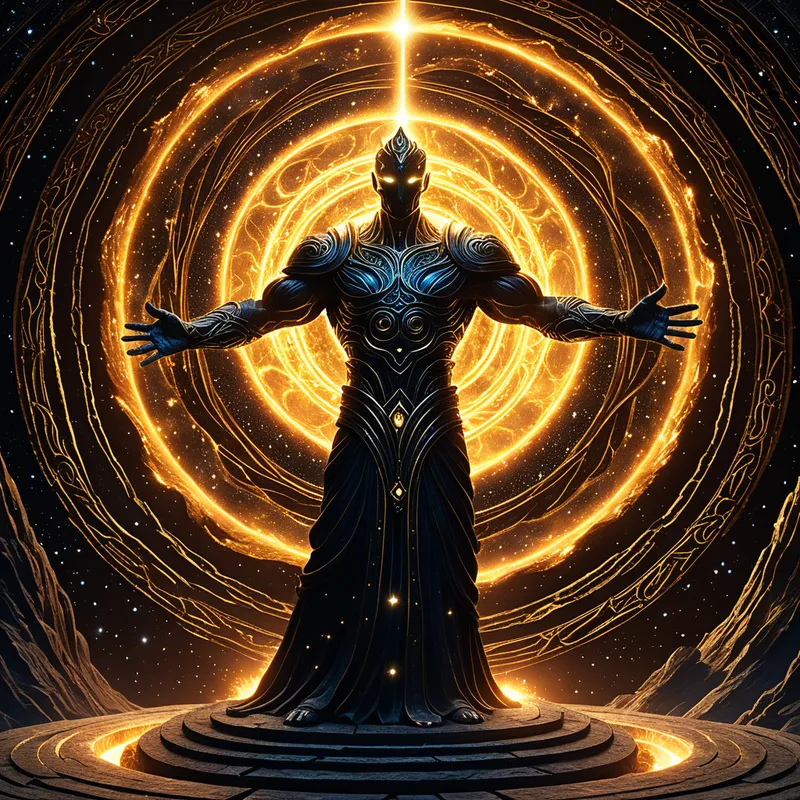
The Process of Extraction Myth Meaning & Symbolism
A myth of a divine artisan who extracts the soul of the world from its base matter, a sacred act of sacrifice that births consciousness from chaos.
The Tale of The Process of Extraction
In the time before time, when substance was dream and dream was substance, there existed only the [Prima Materia](/myths/prima-materia “Myth from Alchemical culture.”/). It was a swirling, singing ocean of potential—beautiful in its totality, terrible in its chaos. All things were contained within it, but nothing was distinct. Light and dark, spirit and matter, joy and terror, all churned in an eternal, silent symphony.
From the heart of this chaos, self-awareness was born. It called itself the Artifex. [The Artifex](/myths/the-artifex “Myth from Alchemical culture.”/) beheld the Prima Materia and saw not just chaos, but a [sleeping beauty](/myths/sleeping-beauty “Myth from Greek culture.”/) trapped within a dragon of formlessness. It heard a melody buried beneath the noise, a single, pure note yearning to be sung. A great love and a greater sorrow awoke within [the Artifex](/myths/the-artifex “Myth from Alchemical culture.”/). To let the beauty sleep was a kind of peace. To wake it was to inflict the agony of separation.
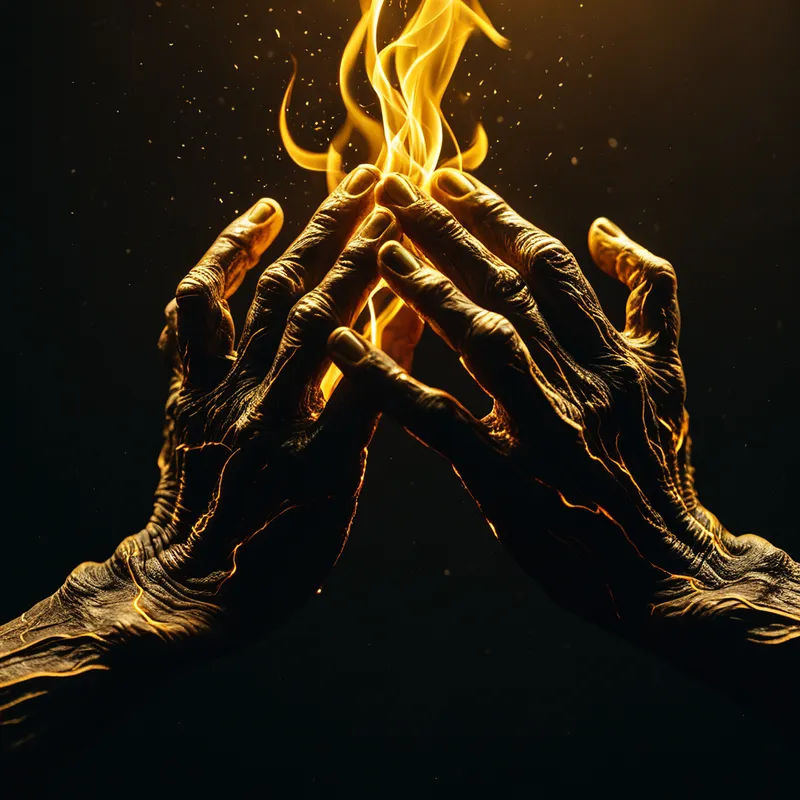
Driven by this divine contradiction—love that demands action, compassion that necessitates violence—the Artifex descended. It did not enter the chaos, but instead extended its hands, which were not hands but focused intentions, into the seething mass. The Prima Materia recoiled, then clung. It was a lover and a predator, welcoming and consuming. The Artifex did not fight the chaos. It sought the core, the hidden note, the sleeping soul of [the world](/myths/the-world “Myth from Tarot culture.”/).
The process was not a battle, but a terrible, intimate surgery. The Artifex’s will became a filter, a crucible of attention. It began to separate. Not with a sword, but with a profound, listening silence that distinguished light from dark, tone from dissonance. This was the First Pain. The unified field screamed as it was divided. Essence was pulled from accident, spirit from dense matter. The extracted substance was raw, brilliant, and terrified—a radiant, struggling form of pure potential now aware of its own existence, and thus, its own loneliness.
For ages that cannot be measured, the Artifex held this extracted essence, this Anima Mundi, in its grasp. The Artifex itself was changed, stained by the residue of the chaos, wearied by the eternal strain of holding the separation. The extracted essence, now conscious, wept tears that solidified into the first stars and bled light that became the first suns. Its cries of anguish became the solar winds; its sighs, the breath of worlds.
The process did not end with a clean removal. A portion of the essence remained forever entangled with the base matter, a haunting memory of unity. The dross, the leftover chaos, cooled and coagulated into the realm of fixed forms—the material world, beautiful in its solidity, but haunted by the echo of the unity it lost. The Artifex, its work complete yet eternally ongoing, became the tension itself—the space between the pure spirit and the dense world, the silent witness to the agony and ecstasy of being something, rather than everything.
Cultural Origins & Context
The myth of the Process of Extraction is the foundational narrative of the Alchemical culture, not as a historical event but as a cosmological and psychological axiom. It was never a single story told around a fire, but a living doctrine transmitted through the secretive language of [the laboratory](/myths/the-laboratory “Myth from Alchemical culture.”/). It was passed from master to apprentice not in scrolls, but in the very procedures of distillation, calcination, and sublimation.
The tellers of this myth were the practitioners themselves—the Adepts. They did not recite it; they performed it. Each time they heated a substance to separate its volatile from its fixed parts, they were re-enacting the Artifex’s primordial act. The myth provided the sacred context for what outsiders saw as mere proto-chemistry. Its societal function was to frame all human endeavor, especially suffering and refinement, as a microcosm of the divine drama. It answered the profound question: Why is there pain in creation? Why is consciousness born of struggle? The myth taught that extraction—the pain of becoming distinct—is the very price of existence and the prerequisite for any higher synthesis.
Symbolic Architecture
At its [heart](/symbols/heart “Symbol: The heart symbolizes love, emotion, and the core of one’s existence, representing deep connections with others and self.”/), the myth is a grand [metaphor](/symbols/metaphor “Symbol: A figure of speech where one thing represents another, often revealing hidden connections and deeper truths through symbolic comparison.”/) for the [birth](/symbols/birth “Symbol: Birth symbolizes new beginnings, transformation, and the potential for growth and development.”/) of [consciousness](/symbols/consciousness “Symbol: Consciousness represents the state of awareness and perception, encompassing thoughts, feelings, and experiences.”/) itself, both cosmically and within the individual [psyche](/myths/psyche “Myth from Greek culture.”/). The Prima Materia represents the unconscious—the totality of the [psyche](/myths/psyche “Myth from Greek culture.”/) where all opposites are merged. It is the state of [infancy](/symbols/infancy “Symbol: A symbol of beginnings, vulnerability, and foundational development, often representing a return to origins or a state of pure potential.”/), of undifferentiated wholeness that precedes ego.
The Artifex is the archetypal impulse toward consciousness. It is not the conscious ego, but the Self (in the Jungian sense) initiating the painful, necessary process of individuation.
The “Extraction” is the fundamental act of discernment. It is the [moment](/symbols/moment “Symbol: The symbol of a ‘moment’ embodies the significance of transient experiences that encapsulate emotional depth or pivotal transformations in life.”/) a thought is separated from the stream of thought, a feeling is named, a complex is made conscious. The extracted [Anima](/symbols/anima “Symbol: The feminine archetype within the male unconscious, representing soul, creativity, and connection to the inner world.”/) Mundi is the nascent individual [spirit](/symbols/spirit “Symbol: Spirit symbolizes the essence of life, vitality, and the spiritual journey of the individual.”/), the [soul](/symbols/soul “Symbol: The soul represents the essence of a person, encompassing their spirit, identity, and connection to the universe.”/), or the transcendent function—the precious, vulnerable core of [identity](/symbols/identity “Symbol: Identity represents the sense of self, encompassing personal beliefs, cultural background, and social roles.”/) that is won through inner conflict. The leftover dross is the personal [shadow](/symbols/shadow “Symbol: The ‘shadow’ embodies the unconscious, repressed aspects of the self and often represents fears or hidden emotions.”/) and the collective “[weight](/symbols/weight “Symbol: Weight symbolizes burdens, responsibilities, and emotional loads one carries in life.”/) of the world”—the unresolved, unconscious [material](/symbols/material “Symbol: Material signifies the tangible aspects of life, often representing physical resources, desires, and the physical world’s influence on our existence.”/) that forms our personal [history](/symbols/history “Symbol: History in dreams often represents the dreamer’s past experiences, lessons learned, or unresolved issues that continue to influence their present.”/) and neuroses.
The myth’s genius is its refusal to vilify the base matter. The [chaos](/symbols/chaos “Symbol: In Arts & Music, chaos represents raw creative potential, uncontrolled expression, and the breakdown of order to forge new artistic forms.”/) is not evil; it is the necessary [matrix](/symbols/matrix “Symbol: A dream symbol representing the fundamental structure of reality, consciousness, or the self. It often signifies feelings of being trapped, controlled, or questioning the nature of existence.”/). The pain is not [punishment](/symbols/punishment “Symbol: A dream symbol representing consequences for actions, often tied to guilt, societal rules, or internal moral conflicts.”/); it is the inherent cost of [differentiation](/symbols/differentiation “Symbol: The process of distinguishing or separating parts of the self, emotions, or identity from a whole, often marking a developmental or psychological milestone.”/). The Artifex is stained and wearied, symbolizing that the act of becoming conscious alters the very fabric of the unconscious from which it sprang.

The Dreamer’s Resonance
When this myth activates in the modern dreamer, it manifests not as a literal story, but as a somatic and emotional pattern of extraction. One may dream of pulling teeth, digging for buried treasure that is painfully lodged, performing surgery on oneself, or trying to rescue a child or animal trapped in thick mud or concrete. The environment is often a cluttered attic, a dense jungle, or a murky body of [water](/myths/water “Myth from Chinese culture.”/)—symbols of the unconscious Prima Materia.
Psychologically, the dreamer is undergoing a process of differentiation. They are in the midst of “pulling out” a part of themselves that has been enmeshed in an unconscious complex—perhaps disentangling their self-worth from a job, their identity from a relationship, or their creativity from internalized criticism. The somatic feeling is one of immense strain, resistance, and often, a paradoxical grief. There is pain in the pulling, but also a deep, instinctual knowing that it is necessary. The dream signals that the psyche is engaged in the sacred, difficult work of separating its own gold from the leaden weight of undifferentiated experience.
Alchemical Translation
For the modern individual seeking wholeness, the Process of Extraction is the non-negotiable first stage of psychic transmutation. Before you can transform, you must know what “you” are. Before the Coniunctio (union), must come the [Separatio](/myths/separatio “Myth from Alchemical culture.”/).
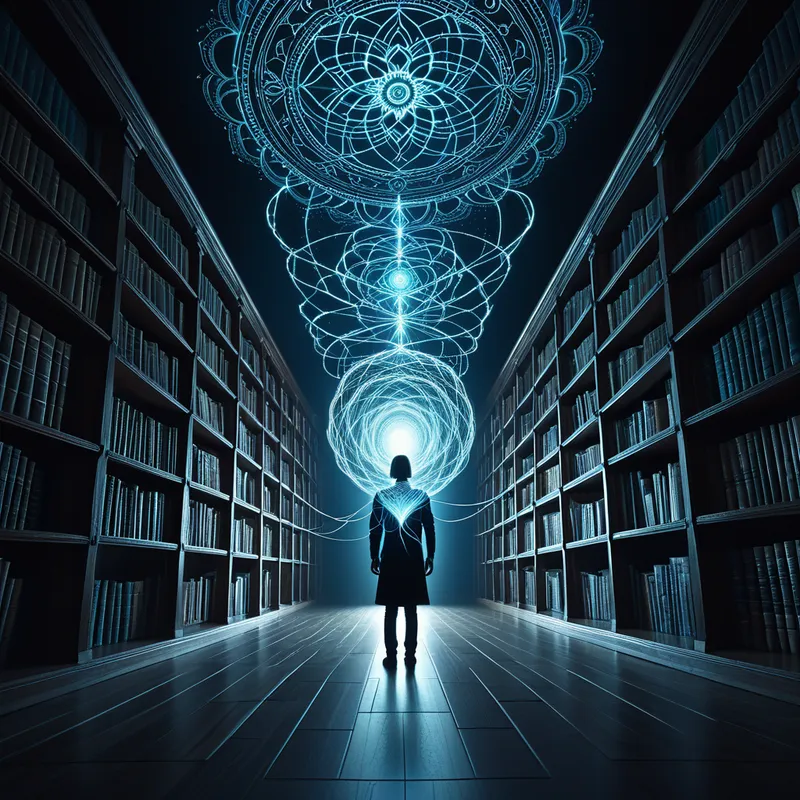
The myth models this by showing that the work begins not with adding something, but with subtracting—with a fierce, compassionate focus on what is essential. The individual must become their own Artifex. This means plunging the hands of attention into the chaotic Prima Materia of one’s own life: the mixed motives, the confused emotions, the tangled history. It requires the will to distinguish: “This pain is mine, but this shame I inherited. This anger is justified, but this resentment is a prison I can choose to leave.”
The goal is not to discard the base matter, but to honor it as the necessary ground from which the spirit is drawn. The shadow remains, but it no longer holds the soul hostage.
The “[triumph](/myths/triumph “Myth from Roman culture.”/)” in the myth is not a victory, but an achieved tension. The modern individual’s triumph is similarly the capacity to hold the tension of opposites—spirit and matter, conscious and unconscious, ideal and real—without collapsing into one or the other. The extracted essence, one’s Anima Mundi or true self, is not a static prize. It is a living, responsive consciousness born from and forever in relationship with the world it was extracted from. To undergo this process is to stop being a passive element in the chaos and to become, however humbly, a co-artisan of your own being, participating in the eternal, painful, and glorious process of bringing soul into the world.
Associated Symbols
Explore related symbols from the CaleaDream lexicon: