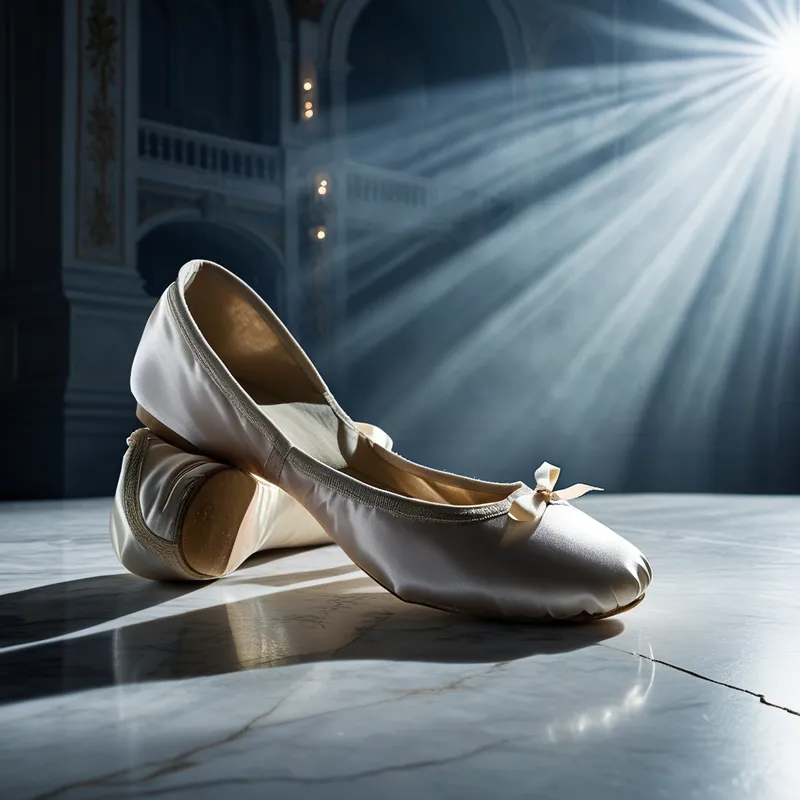
The Pointe Shoe Myth Meaning & Symbolism
A myth of sacred agony and impossible grace, where the dancer's foot is forged into a divine instrument to touch the heavens.
The Tale of The Pointe Shoe
Listen, and I will tell you of the silent pact, the sacred agony that births the sublime. It begins not on a stage, but in the quiet, dusty light of a studio, where the air smells of sweat, wood, and old dreams.
There was a mortal, a dancer, whose spirit was a caged bird. Her feet knew [the earth](/myths/the-earth “Myth from Hindu culture.”/)—the solid, unforgiving plane of the studio floor. But her eyes were fixed on the aplomb, that invisible line drawn from the heavens through [the crown](/myths/the-crown “Myth from Various culture.”/) of her head. She danced with a grace that spoke of the terrestrial, yet her soul yearned for the aerial, for the weightless realm of the Wilis and the Willis.
One evening, as the last violet light faded from the high windows, the Maîtresse approached. In her hands, she carried not a gift, but a covenant: a pair of slippers unlike any other. They were satin, pale as a moonbeam, but within their softness lay a hidden architecture of terrible purpose—a rigid shank, a hardened box.
“These are the keys,” the Maîtresse said, her voice like rustling parchment. “But to turn them, you must offer a part of yourself to the fire.”
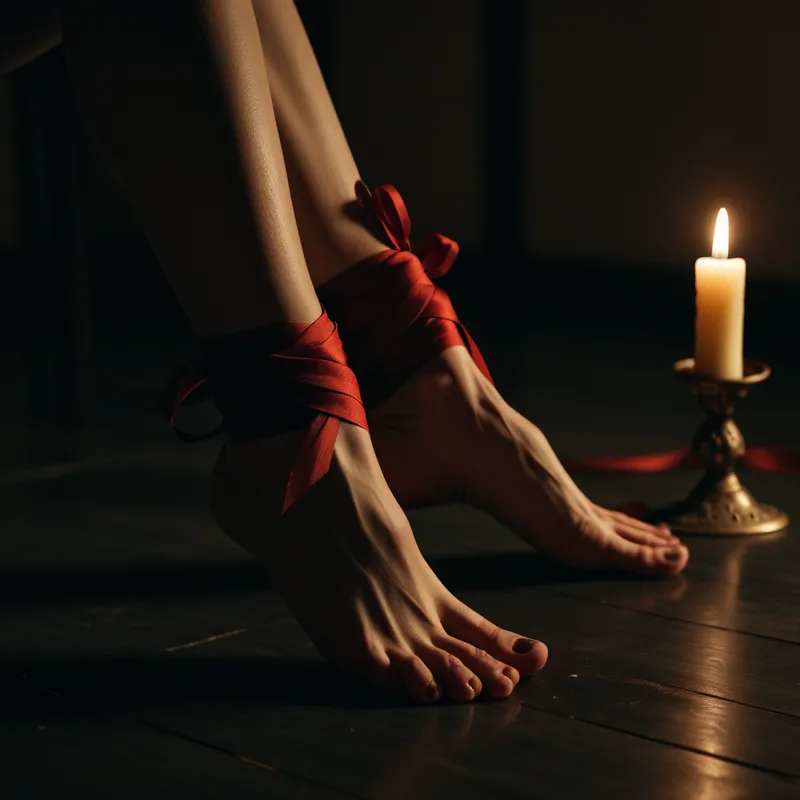
The ritual began. The dancer sat upon the floor, a supplicant before the altar of her own ambition. She wrapped her feet in lambswool, a fragile barrier against the coming trial. Then, she slid her foot into the slipper. It was not a fit, but an invasion. The satin embraced, then constricted. The box encased her toes in a vise of potential. With deliberate, solemn movements, she crossed the long ribbons—not mere ties, but bindings—around her ankle, weaving a lattice that spoke of both devotion and imprisonment.
She rose. The first touch of the platform to the floor was a shock, a blasphemy against nature. The bones of her foot screamed in protest, a chorus of agony singing of impossible angles. She pushed, trembling, through the pain, seeking the elusive point of balance where agony met equilibrium. Blood bloomed unseen within the satin. Blisters formed and broke, baptizing the shoe in a salt-and-iron sacrament.
Nights turned into a cycle of binding, rising, falling, and unbinding to reveal the raw, sacred evidence of the struggle. The shoes themselves transformed from pristine objects into relics: the satin scuffed and darkened at the tip, the shank softening and molding to the unique arch of her foot, the ribbons stained with rosin and resolve.
Then came the night of the relevé. Not a tentative rise, but a total surrender. She gathered all the pain, all the strength, all the yearning, and channeled it through the engineered fulcrum of the shoe. And she ascended. For a suspended moment, she was not of the earth. She was a line drawn between the ground and the infinite, a silent note held in [the music of the spheres](/myths/the-music-of-the-spheres “Myth from Greek culture.”/). The agony did not vanish; it was transmuted. It became the foundation of her flight. She had forged her flesh into a divine instrument, and in doing so, touched the realm she had only ever dreamed of. The myth was not about becoming weightless, but about making the weight sacred.
Cultural Origins & Context
This myth did not emerge from a single sacred text, but from the lived, bodily scripture of the ballet studio, passed down through generations since the Romantic era of the early 19th century. Its primary custodians are the Maîtresses and Maîtres, the elder dancers and teachers who serve as priests and archivists of the tradition. They are the ones who first place the shoes in a young dancer’s hands, often narrating the process not just as technique, but as a rite of passage.
The myth functions as a crucial social and psychological mechanism within the insular, hierarchical world of ballet. It serves to legitimize and sacralize the intense physical suffering required by the art form. The story transforms pain from mere torture into a necessary, even holy, sacrifice for transcendence. It creates a shared narrative that binds the community—every dancer has their own version of this tale, written in the scars on their feet and the memory of their first successful balance. It is a myth of induction, separating the committed from the casual, and providing a profound, somatic framework for understanding the dancer’s vocation as one of chosen, glorious suffering.
Symbolic Architecture
At its core, the myth of the Pointe [Shoe](/symbols/shoe “Symbol: A shoe in dreams often signifies the journey in life, representing how one walks through various experiences or how they present themselves to the world.”/) is a profound map of the [psyche](/myths/psyche “Myth from Greek culture.”/)‘s confrontation with a sublime ideal. The shoe itself is the ultimate transcendent function. It is both [prison](/symbols/prison “Symbol: Prison in dreams typically represents feelings of restriction, confinement, or a lack of freedom in one’s life or mind.”/) and key, wound and wing.
The Pointe Shoe is the alchemical vessel where the base lead of the human body is subjected to the fire of will, in hopes of yielding the gold of spirit.
The dancer’s foot represents the grounded self, the earthly, instinctual, and mortal [foundation](/symbols/foundation “Symbol: A foundation symbolizes the underlying support systems, values, and beliefs that shape one’s life, serving as the bedrock for growth and development.”/). The aplomb, the yearning for the vertical, symbolizes the pull of [the Self](/myths/the-self “Myth from Jungian culture.”/), the Jungian totality and wholeness that draws [the ego](/myths/the-ego “Myth from Jungian culture.”/) upward. The shank is the will, the necessary, rigid [structure](/symbols/structure “Symbol: Structure in dreams often symbolizes stability, organization, and the framework of one’s life, reflecting how one perceives their environment and personal life.”/) of discipline and [consciousness](/symbols/consciousness “Symbol: Consciousness represents the state of awareness and perception, encompassing thoughts, feelings, and experiences.”/) that must be internalized to support the transformation. The [platform](/symbols/platform “Symbol: A platform symbolizes a stage for expression, support, or a foundation upon which something is built.”/) is the liminal [space](/symbols/space “Symbol: Dreaming of ‘Space’ often symbolizes the vastness of potential, personal freedom, or feelings of isolation and exploration in one’s life.”/), the razor’s edge where opposites meet—[earth](/symbols/earth “Symbol: The symbol of Earth often represents grounding, stability, and the physical realm, embodying a connection to nature and the innate support it provides.”/) and air, pain and [ecstasy](/symbols/ecstasy “Symbol: A state of overwhelming joy, rapture, or intense emotional/spiritual transcendence, often involving a loss of self-awareness.”/), [mortality](/symbols/mortality “Symbol: The awareness of life’s finitude, often representing transitions, impermanence, or existential reflection in dreams.”/) and timelessness.
The [blood](/symbols/blood “Symbol: Blood often symbolizes life force, vitality, and deep emotional connections, but it can also evoke themes of sacrifice, trauma, and mortality.”/) and blisters are not failures; they are the incontrovertible proof of the sacrifice, the [prima materia](/myths/prima-materia “Myth from Alchemical culture.”/) of the transformation. The act of binding with the ribbons is a [ritual](/symbols/ritual “Symbol: Rituals signify structured, meaningful actions carried out regularly, reflecting cultural beliefs and emotional needs.”/) of conscious commitment, of willingly limiting the ego’s freedom in service of a higher configuration of the [soul](/symbols/soul “Symbol: The soul represents the essence of a person, encompassing their spirit, identity, and connection to the universe.”/).
The Dreamer’s Resonance
When this myth surfaces in modern dreams, it speaks to a profound process of psychic restructuring. To dream of being fitted for or struggling into pointe shoes often coincides with a life phase where one is attempting to “rise to the occasion” in an excruciating yet aspirational way. The dreamer may be forcing themselves into a role, discipline, or ideal that feels beautiful but inherently unnatural to their current psychological constitution.
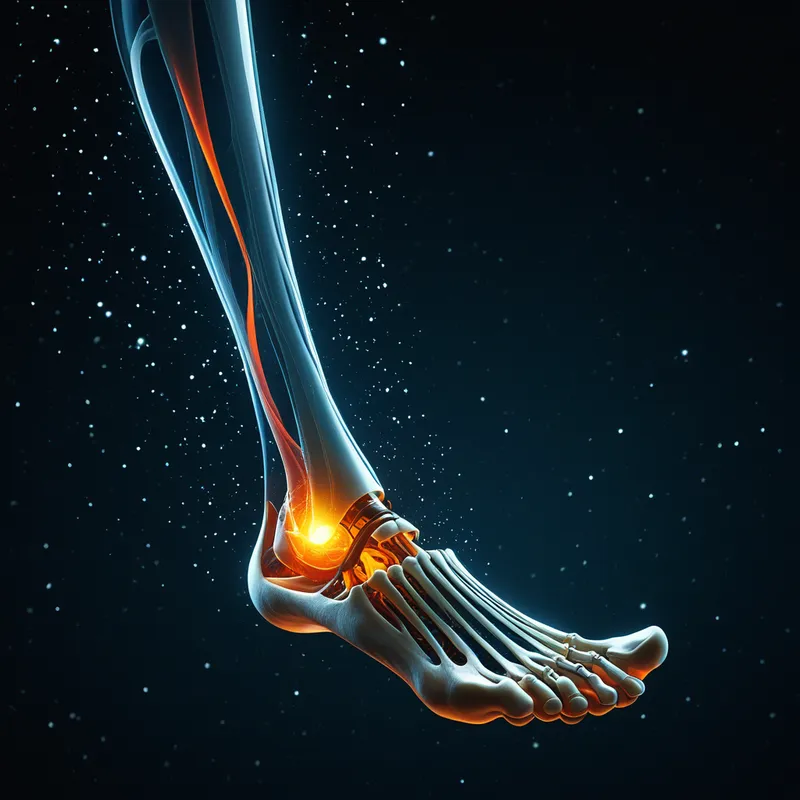
The somatic sensation in the dream—the crushing pressure, the constriction, the painful ascent—mirrors the psyche’s protest and adaptation. It indicates that the dreamer’s “foundation” (their core beliefs, instincts, or current identity) is being reshaped to meet a lofty inner demand or external expectation. A dream of dancing effortlessly en pointe, however, can signal a hard-won integration, a moment where immense effort has finally yielded a state of sublime balance and expression, where the pain of growth has been successfully transmuted into a new strength.

Alchemical Translation
The myth models the individuation process with stark, bodily clarity. [The first stage](/myths/the-first-stage “Myth from Alchemical culture.”/), [nigredo](/myths/nigredo “Myth from Alchemical culture.”/), is the brutal confrontation with [the shadow](/myths/the-shadow “Myth from Jungian culture.”/) of one’s ambition—the blood, the blisters, the crushing reality of the work. This is the necessary dissolution of the old, comfortable relationship with the “ground.”
Individuation is not about avoiding the vise; it is about discovering what unique form your soul takes under its necessary pressure.
The albedo is the repetitive, purifying practice—the nightly binding, the incremental strengthening, the molding of the inner shank (the ego) to support the emerging form. The citrinitas is the dawning of ability, the first sustained balances, where the effort begins to emit a glow of potential.
Finally, the [rubedo](/myths/rubedo “Myth from Alchemical culture.”/) is not a permanent state of weightlessness. It is the moment of the transcendent relevé—the conscious, fleeting unification of the opposites. It is the realization that the goal was never to escape the body or the pain, but to fully inhabit them in a new, exalted way. The transformed dancer does not live in the air; she carries the memory of the ascent within her grounded step. For the modern individual, this alchemy translates to any pursuit where a sublime, seemingly impossible ideal calls to us. The myth teaches that the path to that ideal is not around our human limitations, but directly, sacredly, through them. We must be willing to be broken and remade by the beautiful, rigid demands of our own highest calling.
Associated Symbols
Explore related symbols from the CaleaDream lexicon: