The Poetic Edda Myth Meaning & Symbolism
A collection of ancient Norse poems detailing the world's creation, the gods' struggles, and the prophesied twilight, revealing a profound cosmology of order and chaos.
The Tale of The Poetic Edda
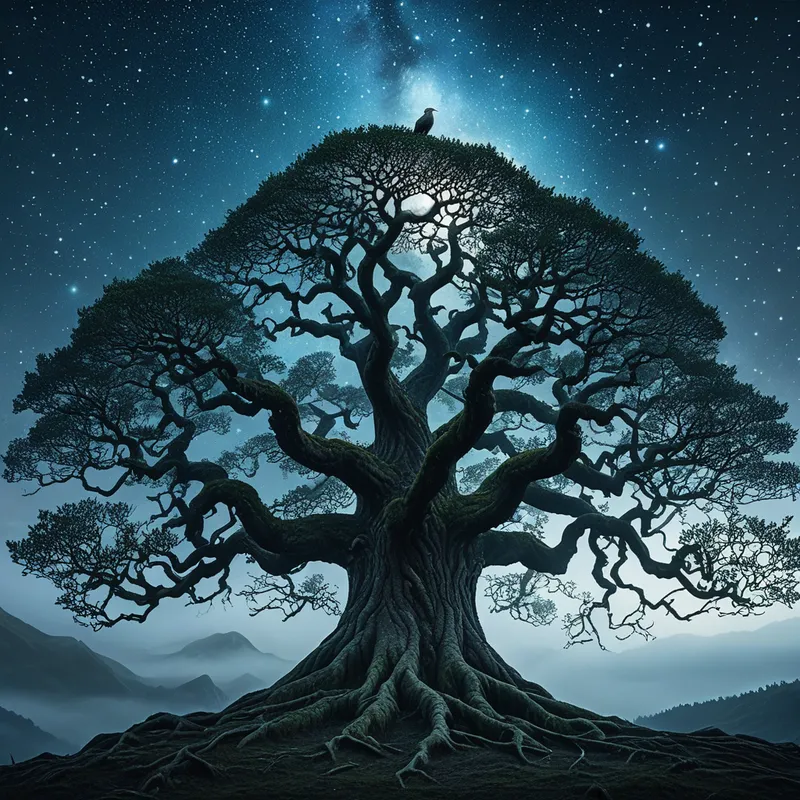
Listen. [The wind](/myths/the-wind “Myth from Various culture.”/) in the high branches of the [Yggdrasil](/myths/yggdrasil “Myth from Global/Universal culture.”/) is not just wind—it is the whispering breath of all that was and all that will be. In the beginning, there was only [Ginnungagap](/myths/ginnungagap “Myth from Norse culture.”/), a chasm of silence between the realm of icy mist, [Niflheim](/myths/niflheim “Myth from Norse culture.”/), and the land of fiery sparks, [Muspelheim](/myths/muspelheim “Myth from Norse culture.”/). From their meeting, the drip-drip of melting ice formed the first giant, Ymir, and the great cow, Audhumla, whose licking of the salty ice blocks revealed the first god, Buri.
From his lineage came Odin and his brothers, who slew the sleeping Ymir. His blood became the seas, his flesh [the earth](/myths/the-earth “Myth from Hindu culture.”/), his bones the mountains, and his skull the dome of [the sky](/myths/the-sky “Myth from Persian culture.”/), held aloft by four dwarves. From maggots in his flesh, they fashioned [the dwarves](/myths/the-dwarves “Myth from Norse culture.”/); from two logs on a shore, they breathed life into the first humans, Ask and Embla.
But this order is not eternal. It is woven with [threads of fate](/myths/threads-of-fate “Myth from Greek culture.”/) by the [Norns](/myths/norns “Myth from Nordic culture.”/) at the base of Yggdrasil, and it is frayed by broken oaths and gathering shadows. The great wolf [Fenrir](/myths/fenrir “Myth from Norse culture.”/) strains at his bonds. The serpent [Jörmungandr](/myths/jrmungandr “Myth from Norse culture.”/) stirs in the deep. In the hall of Loki, bitterness festers into a plot that will see the bright god Baldr struck down by a mistletoe dart—a death from which there is no return, the first irrevocable step toward the twilight.
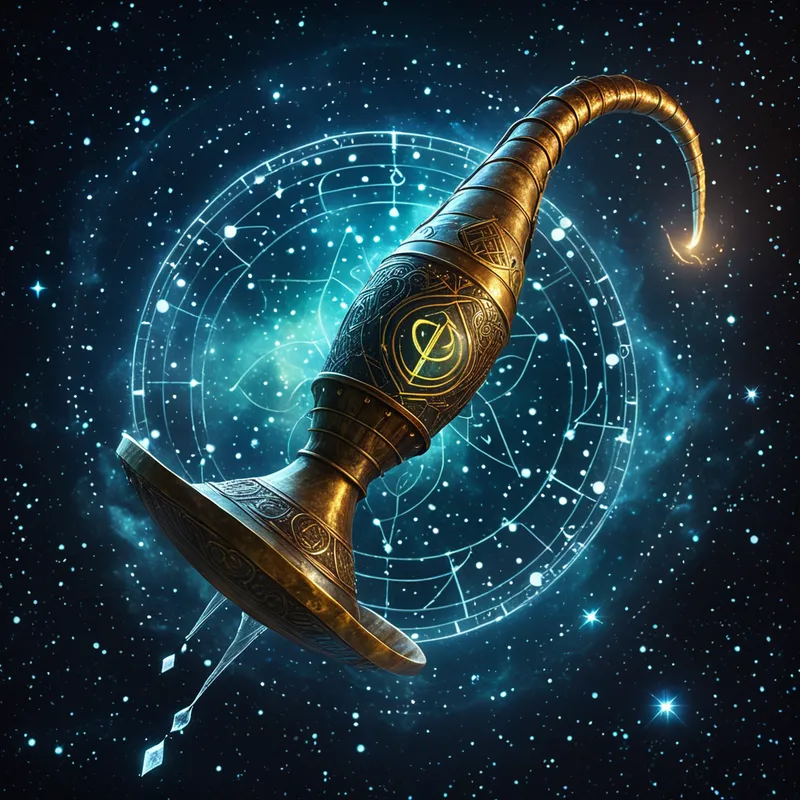
For the final act is foretold: [Ragnarök](/myths/ragnark “Myth from Norse culture.”/). The horn [Gjallarhorn](/myths/gjallarhorn “Myth from Norse culture.”/) will sound. The bonds will break. Fenrir will run with jaws agape; Jörmungandr will spew venom across the skies. Gods and giants will meet on the plain of Vígriðr. Odin will fall to the wolf. Thor will slay the serpent and stagger nine steps before succumbing to its poison. The sun will be swallowed, the stars will vanish, and [the world](/myths/the-world “Myth from Tarot culture.”/) will be consumed by fire and [water](/myths/water “Myth from Chinese culture.”/).
Yet, from the silence that follows the roaring end, a whisper rises. The earth, green and fair, will rise again from [the sea](/myths/the-sea “Myth from Greek culture.”/). The sons of the slain gods will return. Vidar and Vali will walk in the new sunlight. Two humans, sheltered in the wood of Yggdrasil, will repopulate the world. The cycle is complete, and yet, it begins anew.
Cultural Origins & Context
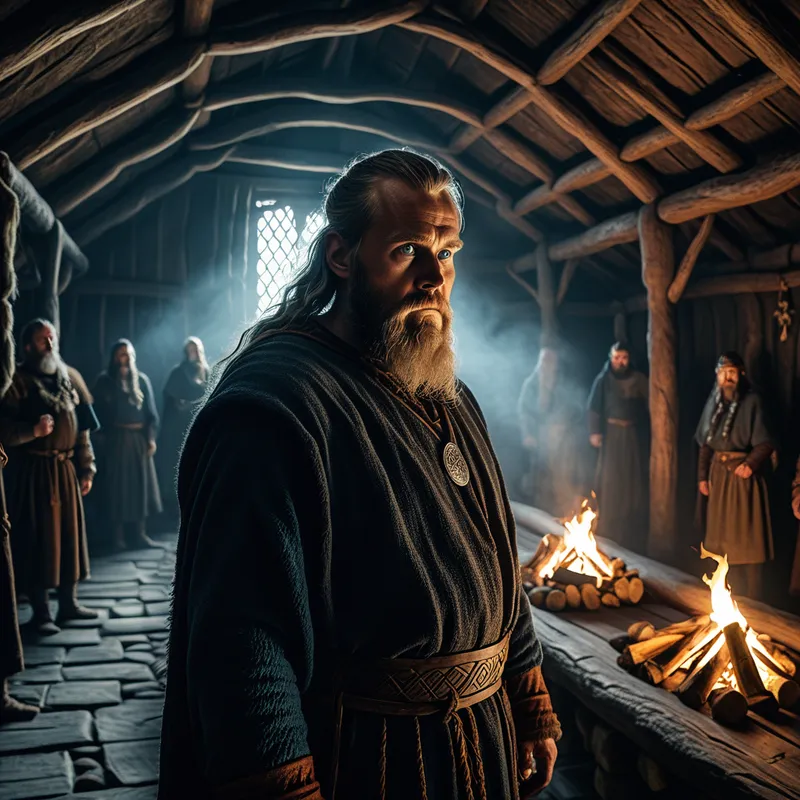
The poems we call The Poetic Edda are not a single book penned by one hand, but a collection of anonymous verse compositions, preserved primarily in the 13th-century Icelandic manuscript known as the Codex Regius. These poems are the bedrock of Norse mythology, believed to have been composed orally between the 9th and 12th centuries, during the Viking Age and the early conversion period to Christianity. They were the province of the skalds, who functioned as historians, entertainers, and custodians of cosmic law.
Their societal function was multifaceted. On one level, they were sacred narratives explaining the origin and structure of the cosmos, justifying the social order, and encoding ethical values—the paramount importance of courage, wisdom, and loyalty in the face of a fate one cannot ultimately escape. On another, they were a technology for navigating existential reality. Recited in longhouses, by firesides, or before battles, these verses connected the listener to a worldview where heroism was defined not by victory, but by the dignity of one’s stance against the inevitable. The myths provided a template for understanding loss, betrayal, and the cyclical nature of existence, from the personal microcosm to the cosmic macrocosm.
Symbolic Architecture
The Eddic [cosmos](/symbols/cosmos “Symbol: The entire universe as an ordered, harmonious system, often representing the totality of existence, spiritual connection, and the unknown.”/) is a profound symbolic map of the [psyche](/myths/psyche “Myth from Greek culture.”/). Yggdrasil is the [axis](/symbols/axis “Symbol: A central line or principle around which things revolve, representing stability, orientation, and the fundamental structure of reality or consciousness.”/) mundi, the central pillar of [the self](/myths/the-self “Myth from Jungian culture.”/), connecting the conscious [realm](/symbols/realm “Symbol: The symbol of ‘Realm’ often signifies the boundaries of one’s consciousness, experiences, or emotional states, suggesting aspects of reality that are either explored or ignored.”/) ([Midgard](/myths/midgard “Myth from Norse culture.”/)) with the [heights](/symbols/heights “Symbol: Represents ambition, fear, or spiritual elevation. Often symbolizes life challenges or a desire for perspective.”/) of aspiration and wisdom (Asgard) and the [depths](/symbols/depths “Symbol: Represents the subconscious, hidden emotions, or foundational aspects of the self, often linked to primal fears or profound truths.”/) of the unconscious, instinctual, and ancestral past (Hel and [Jotunheim](/myths/jotunheim “Myth from Norse culture.”/)).
The world is born from the tension of opposites—fire and ice, order and chaos—and so too is the individual psyche.
The gods are not omnipotent moral paragons; they are archetypal forces within us. Odin’s relentless [pursuit](/symbols/pursuit “Symbol: A chase or being chased in dreams often reflects unresolved anxieties, unfulfilled desires, or internal conflicts demanding attention.”/) of wisdom, at the cost of his eye and through self-sacrifice on the [tree](/symbols/tree “Symbol: In dreams, the tree often symbolizes growth, stability, and the interconnectedness of life.”/), symbolizes [the ego](/myths/the-ego “Myth from Jungian culture.”/)’s painful [quest](/symbols/quest “Symbol: A quest symbolizes a journey or search for purpose, fulfillment, or knowledge, often representing life’s challenges and adventures.”/) for [consciousness](/symbols/consciousness “Symbol: Consciousness represents the state of awareness and perception, encompassing thoughts, feelings, and experiences.”/). Loki represents the [shadow](/symbols/shadow “Symbol: The ‘shadow’ embodies the unconscious, repressed aspects of the self and often represents fears or hidden emotions.”/)—the chaotic, inventive, and destructive [trickster energy](/symbols/trickster-energy “Symbol: A chaotic, transformative force that disrupts order, reveals hidden truths, and catalyzes change through humor, deception, or mischief.”/) that both undermines and catalyzes growth. The [death](/symbols/death “Symbol: Symbolizes transformation, endings, and new beginnings; often associated with fear of the unknown.”/) of Baldr, the most beautiful and beloved, is the symbolic death of naive [innocence](/symbols/innocence “Symbol: A state of purity, naivety, and freedom from guilt or corruption, often associated with childhood and moral simplicity.”/), the [moment](/symbols/moment “Symbol: The symbol of a ‘moment’ embodies the significance of transient experiences that encapsulate emotional depth or pivotal transformations in life.”/) the psyche realizes its own [vulnerability](/symbols/vulnerability “Symbol: A state of emotional or physical exposure, often involving risk of harm, that reveals authentic self beneath protective layers.”/) and the [reality](/symbols/reality “Symbol: Reality signifies the state of existence and perception, often reflecting one’s understanding of truth and life experiences.”/) of irrevocable [loss](/symbols/loss “Symbol: Loss often symbolizes change, grief, and transformation in dreams, representing the emotional or psychological detachment from something or someone significant.”/). Ragnarök is not merely an apocalyptic fantasy; it is the necessary [dissolution](/symbols/dissolution “Symbol: The process of breaking down, dispersing, or losing form, often representing transformation, release, or the end of a state of being.”/) of an outworn psychic [structure](/symbols/structure “Symbol: Structure in dreams often symbolizes stability, organization, and the framework of one’s life, reflecting how one perceives their environment and personal life.”/), a dominant [attitude](/symbols/attitude “Symbol: Attitude symbolizes one’s mental state, perception, and posture towards life, influencing emotions and actions significantly.”/) or complex that has become too rigid and must be torn down so that renewal is possible.
The Dreamer’s Resonance
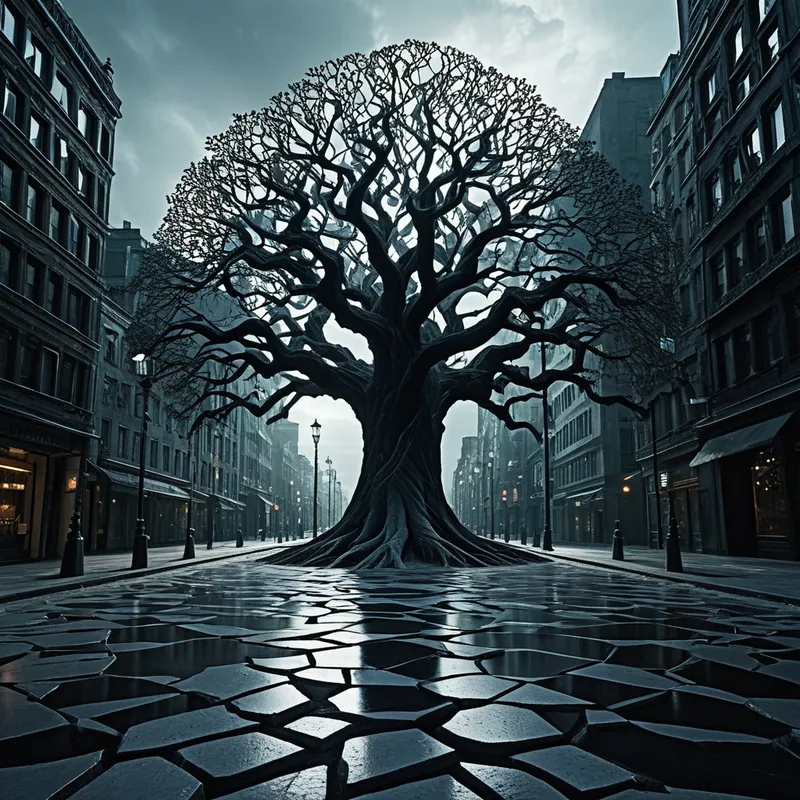
When the motifs of the Edda surface in modern dreams, they often signal a profound engagement with foundational psychic processes. To dream of a great, imperiled tree is to feel the core of one’s identity or belief system under strain. Dreaming of binding a monstrous wolf or serpent may reflect an attempt to control a powerful, instinctual drive (anger, passion, fear) that feels threatening to the conscious personality.
A dream of a twilight battle, where familiar figures fall, often coincides with a life transition so significant it feels like an end of a world—the conclusion of a career, the death of a relationship, the collapse of a long-held self-image. The somatic experience can be one of deep anxiety, a churning in the gut like the sea before the storm, or a paradoxical sense of calm fatalism. The psyche is rehearsing the archetypal pattern of Ragnarök, preparing the dreamer not for literal destruction, but for the dissolution of a current psychological “age” to make way for new growth.
Alchemical Translation
The alchemical journey mirrored in the Edda is the opus contra naturam—the work against nature, which here means against unconscious identification. It is the path of individuation, where one consciously engages with the full spectrum of inner archetypes, not just the “divine” or heroic ones.
The process begins in the [nigredo](/myths/nigredo “Myth from Alchemical culture.”/), the blackening, represented by the primeval void of Ginnungagap and the death of Baldr—a descent into confusion, depression, or meaninglessness. The binding of the monsters is a necessary but temporary coagulatio, a solidification of the ego to contain chaotic forces. The climax is the [rubedo](/myths/rubedo “Myth from Alchemical culture.”/), the reddening or fiery confrontation of Ragnarök, where the conscious self (the gods) must face its destined encounter with the repressed or feared aspects of [the shadow](/myths/the-shadow “Myth from Jungian culture.”/) (the giants, the monsters).
True transformation requires the courage to let your known world burn, trusting that the seeds of the new self are sown in its ashes.
The renewal after Ragnarök is the albedo, the whitening, the state of clarity and reconstitution. Vidar and Vali, the survivors, represent those resilient, often quieter parts of the psyche—vengeance for injustice and natural vitality—that endure and form the foundation of the renewed personality. The two hidden humans are the latent potentials of the psyche, preserved through the cataclysm, ready to begin the cycle again at a higher level of integration. Thus, the Edda does not offer salvation from fate, but a majestic, sobering blueprint for how to meet it with full awareness, to participate consciously in the eternal cycle of your own becoming.
Associated Symbols
Explore related symbols from the CaleaDream lexicon: