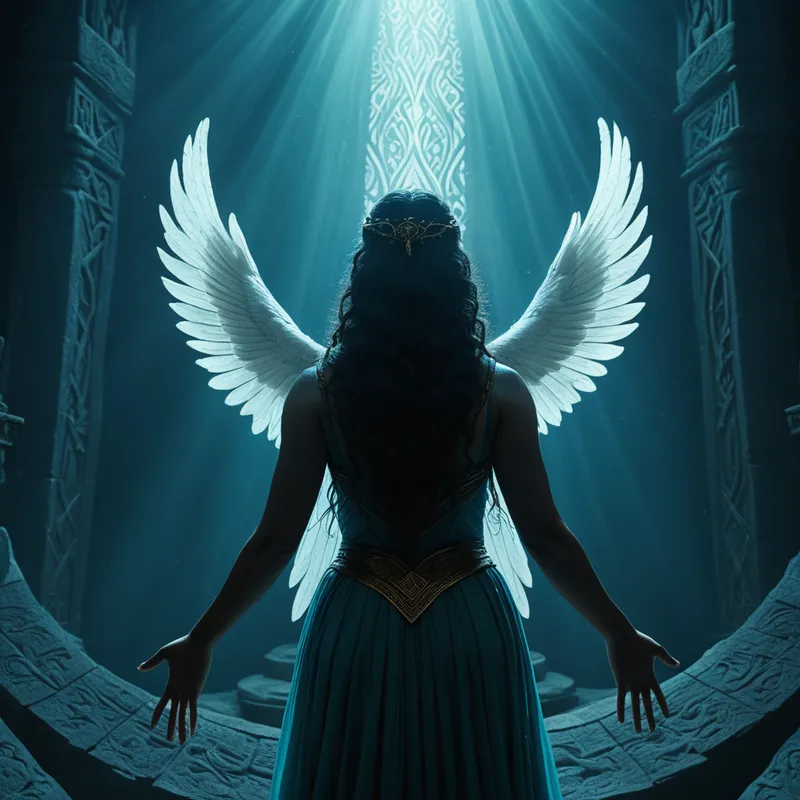
The Plant of Immortality
A Babylonian myth about a plant granting eternal life, lost to humanity through a serpent's cunning, exploring mortality and divine gifts.
The Tale of The Plant of Immortality
The tale is etched into the eleventh tablet of the Epic of [Gilgamesh](/myths/gilgamesh “Myth from Mesopotamian culture.”/), [the world](/myths/the-world “Myth from Tarot culture.”/)’s oldest surviving great poem. It belongs not to the gods, but to the haunted heart of a king. Gilgamesh, two-thirds divine and one-third mortal, has witnessed the [death](/myths/death “Myth from Tarot culture.”/) of his beloved friend, the wild man [Enkidu](/myths/enkidu “Myth from Sumerian culture.”/). This loss shatters Gilgamesh’s royal invincibility, driving a splinter of raw terror into his soul: if Enkidu could die, so too must he. His grief curdles into a frantic, desperate Quest. He abandons his throne in Uruk and dons the skin of a beast, setting out across the world to find the secret of life without end.
His journey is a descent through the geography of despair. He traverses the twin peaks of Mashu, guarded by Scorpion-beings, and walks twelve leagues of absolute darkness. He pleads with the alewife Siduri and crosses the Waters of Death with [the ferryman](/myths/the-ferryman “Myth from Various culture.”/) Urshanabi. Finally, on the far shore of existence, he finds the one mortal to have been granted eternal life: [Utnapishtim](/myths/utnapishtim “Myth from Mesopotamian culture.”/), the Babylonian Noah, survivor of the gods’ [great flood](/myths/great-flood “Myth from Mesopotamian culture.”/). Gilgamesh begs for his secret. [Utnapishtim](/myths/utnapishtim “Myth from Mesopotamian culture.”/), weary with the weight of endless days, offers a bitter lesson on the futility of the request. To prove Gilgamesh’s mortal nature, he challenges him to stay awake for six days and seven nights. Gilgamesh fails instantly, falling into a sleep that mimics death.
Seeing the king’s profound grief, Utnapishtim’s wife persuades her husband to offer a consolation. He tells Gilgamesh of a secret [thing](/myths/thing “Myth from Norse culture.”/), a plant that grows at the bottom of the great cosmic ocean. “Its name shall be ‘Old Man Becomes Young,’” Utnapishtim says. “If you can possess this plant, you will find your life renewed.” Hope, once extinguished, flares anew. Gilgamesh ties heavy stones to his feet, plunges into the abyssal waters, and finds it. He grasps the thorny plant, cuts it free, and rises, triumphant. He has the answer to his Quest, the Plant of Immortality itself.
The return journey is lighter, filled with plans. He will bring the plant to Uruk, test it on an old man first, then partake himself. He will share this gift, this reversal of Fate. But the cosmos, it seems, has a different design. Weary from his travels, Gilgamesh stops at a cool pool to bathe. He lays the precious plant on the bank. In that moment of unguarded respite, a serpent, drawn by the plant’s scent, slithers from the reeds, seizes it, and consumes it. Immediately, the serpent sheds its skin, emerging renewed. Gilgamesh, witnessing this, is plunged into a void deeper than any he has known. He sits down and weeps. His tears are for the lost plant, for Enkidu, and for the final, irrevocable understanding that settles upon him: immortality is not the lot of humankind. The gift was found, held, and lost. He returns to Uruk, to his mortal walls, carrying only the hard-won wisdom of his Mortality.
Cultural Origins & Context
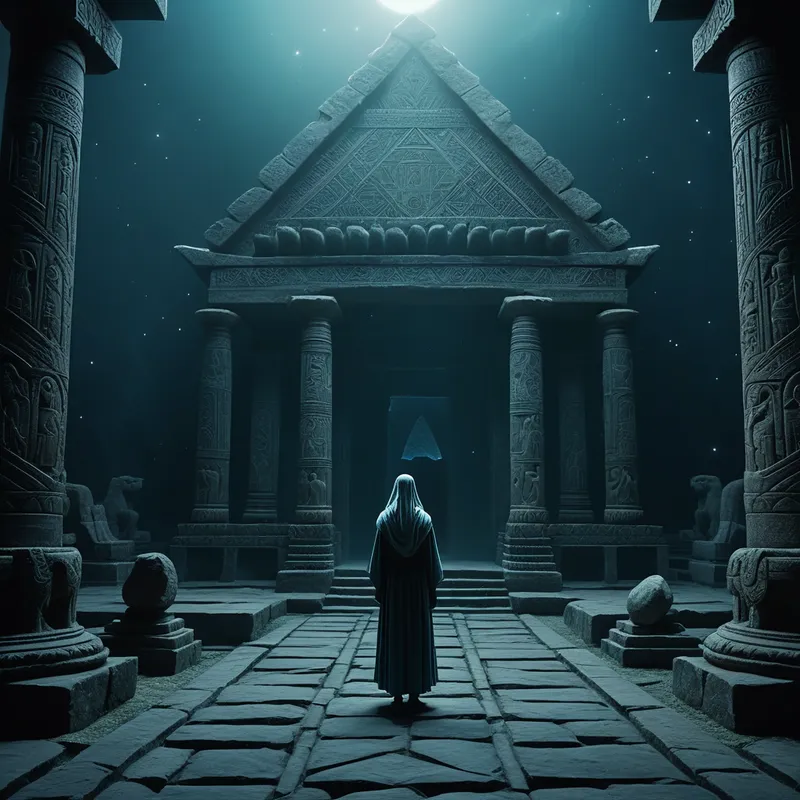
The myth is embedded in the rich, clay-and-reed soil of Mesopotamian thought, where the boundary between humanity and divinity was a legally and cosmically enforced decree. The Epic of Gilgamesh, compiled from older Sumerian tales around 2100 BCE, is not merely an adventure but a profound meditation on civilization’s discontents. Gilgamesh begins as the archetypal tyrant, all unchecked power and Pride. The gods create Enkidu to temper him, and in their friendship, Gilgamesh finds his humanity—only to have it ripped away.
In this culture, death was a bleak, dusty descent to the Kur or Irkalla. There was no pleasant afterlife, only a diminished existence. Eternal life was the sole prerogative of the gods. Gilgamesh’s quest is thus a revolutionary, even blasphemous, act: a mortal king attempting to storm the ultimate privilege of the divine order. His failure is not a personal failing but a reaffirmation of cosmic law. The serpent, a potent chthonic symbol in Mesopotamia often associated with fertility, healing, and [the underworld](/myths/the-underworld “Myth from Greek culture.”/) (as seen on the rod of the god [Ningishzida](/myths/ningishzida “Myth from Mesopotamian culture.”/)), becomes the perfect, ambivalent agent of this reaffirmation. It takes the gift not for malice, but by its nature, simultaneously performing the renewal Gilgamesh sought and denying it to him, enforcing the natural order.
Symbolic Architecture
The myth’s power lies in its layered [symbolism](/symbols/symbolism “Symbol: The use of symbols to represent ideas or qualities, often conveying deeper meanings beyond literal interpretation. In dreams, it’s the language of the unconscious.”/), each element a [node](/symbols/node “Symbol: A point of connection, intersection, or decision in a network, representing junctions in life paths, relationships, or systems.”/) in a network of meaning.
The Plant itself is not a fruit from a tree of knowledge, but a submerged, hidden, thorny herb. It suggests that immortality is not a grand, divine fruit to be plucked, but something humble, earthly, and difficult to obtain—rooted in the primal, dark waters of the unconscious rather than in the lofty Sky of conscious ambition.
The Serpent is the great Trickster of this drama. It does not argue or fight; it waits. It acts in the moment of the hero’s relaxation, his return to the body (the bath). Its theft is a silent, natural law in action. By shedding its skin, it visually demonstrates the very renewal Gilgamesh desires, making the loss an exquisite, personalized torture. The serpent integrates the gift back into the cyclical processes of nature, away from the linear, possessive desire of the human ego.
Gilgamesh’s Quest is the archetypal journey of the Orphan. Having lost the “brother” who completed him (Enkidu), he is cast out from the psychic wholeness of their partnership. His search for the plant is a search for a parent—a divine, nurturing source of eternal security—that does not exist. The orphan’s ultimate discovery is that he must father himself, not through eternal life, but through the acceptance of his finite, human story.
The Dreamer’s Resonance
Why does this ancient failure still captivate? Because it maps the modern [psyche](/myths/psyche “Myth from Greek culture.”/)’s own futile quests to escape the fundamental conditions of existence. Gilgamesh is every person who, upon experiencing the searing Grief of loss—of a loved one, youth, a dream—races to outrun their own fragility. We seek our own Plants of Immortality in legacy, wealth, fame, or perfect health, in a desperate attempt to carve our name into eternity.
The serpent’s intervention resonates as the inevitable return of the repressed. Just as Gilgamesh must stop to bathe—to attend to his weary, human self—our own defenses eventually lower. In that moment, the unconscious (the serpent) reclaims the impossible fantasy. The “theft” feels like a cruel fate, but psychologically, it may be a necessary sabotage. [The ego](/myths/the-ego “Myth from Jungian culture.”/)’s possession of literal immortality would be a psychic catastrophe, severing us from the flow of life, change, and meaning that requires an endpoint. The myth suggests that our deepest renewal comes not from avoiding death, but from fully confronting the Mortality we share with all living things. Gilgamesh’s tears at the end are not just of despair, but of initiation. He weeps his way into a new, sober humanity.

Alchemical Translation
In the alchemy of the soul, the myth describes the peril of seeking the [prima materia](/myths/prima-materia “Myth from Alchemical culture.”/)—the ultimate substance—for the wrong reason. Gilgamesh seeks the plant as an external object to conquer death, a literal solution to a spiritual problem.
The true alchemical process is not about finding a thing, but undergoing a transformation. Gilgamesh’s entire journey—the descent into darkness, the confrontation with his limits (sleep), the plunge into the cosmic Ocean—is the process. The plant is merely the symbolic reward for that process, which he misunderstands.
His failure to integrate the gift is symbolized by placing it on the bank, separating it from himself. The serpent, representing the instinctive, transformative wisdom of the body and the unconscious, performs the correct alchemy: it incorporates the plant. It doesn’t own it; it becomes it. The shedding of the skin is the true Rebirth—a release of an old state, not a freezing of the current one. Gilgamesh returns to Uruk without the literal plant, but having shed his own skin of naive heroism and divine entitlement. He has been cooked in the fires of Loss and emerges with the lead of his humanity turned, if not to gold, then to something more valuable: authentic consciousness.
Associated Symbols
Explore related symbols from the CaleaDream lexicon:
- Serpent — An ancient symbol of cyclical renewal, healing, and chthonic wisdom, often acting as the guardian of life’s deepest mysteries and the agent of transformative loss.
- Quest — A driven, often desperate journey undertaken to obtain a profound object or answer, representing the soul’s search for wholeness, meaning, or escape from a fundamental wound.
- Mortality — The inescapable condition of finite life, the central trauma from which much human striving and symbolism arises, and the necessary ground for creating meaning.
- Ocean — The vast, unconscious depths of the psyche and the cosmos, the source of primordial life and hidden treasures that require a perilous dive to obtain.
- Loss — The searing experience of deprivation that initiates the heroic journey, shattering the ego’s illusions and forcing a confrontation with fundamental truths.
- Rebirth — The transformative process of shedding an old state of being and emerging renewed, often symbolized by acts like the serpent shedding its skin.
- Grief — The profound, watery emotion that follows loss, capable of eroding the foundations of [the self](/myths/the-self “Myth from Jungian culture.”/) and initiating a necessary descent.
- Trickster — An ambivalent, boundary-crossing archetype that disrupts order and plans, often delivering painful but necessary wisdom through cunning and subversion.
- Journey — The fundamental movement through symbolic landscapes of challenge and discovery, representing the internal process of psychological change and integration.
- Plant — A symbol of organic, rooted life, potential, and hidden remedies; representing gifts from the earthly or unconscious realm that require cultivation and are subject to natural law.