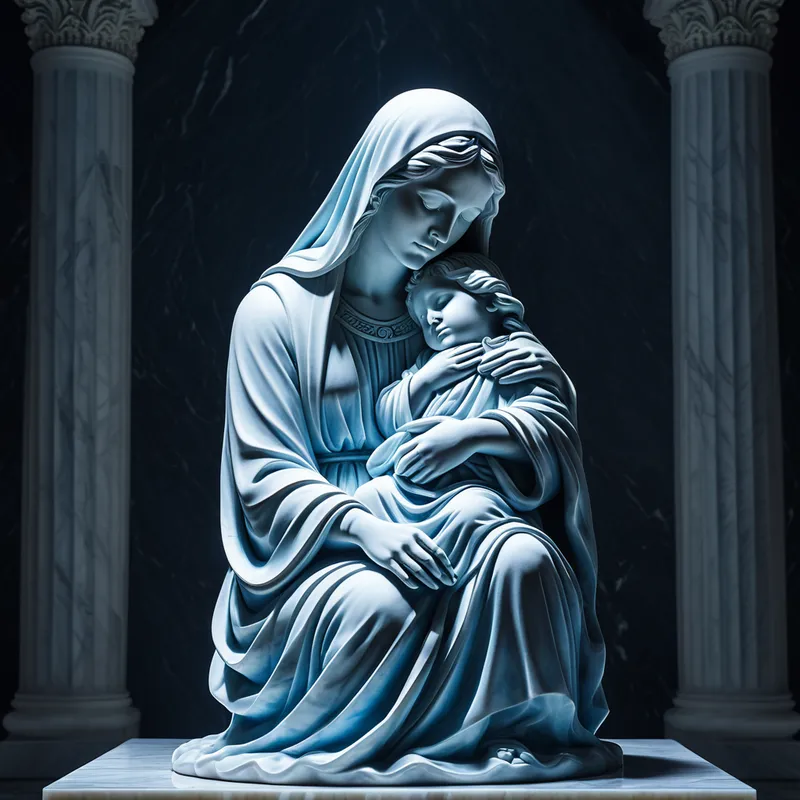
The Pietà (Mary cradling the c Myth Meaning & Symbolism
A mother cradles her executed son, her silent grief a universal vessel for the unbearable weight of love and loss.
The Tale of The Pietà
The world holds its breath in the hour after the storm. The sky, bruised purple and gray, hangs low over the place of the skull. The clamor of the mob, the cruel hammer-strokes, the final cry—all have faded into a silence so profound it becomes a new kind of sound. It is the sound of a universe holding a wound.
In this hollowed-out silence, she moves. Not as a queen or a goddess, but as the first and final motion of the world: a mother going to her child. Her robes, the color of the deepest sea at twilight, are stained with the dust and dread of the day. She approaches the rough-hewn timber where he hangs, released now by rough hands that work quickly, avoiding her eyes.
They lower him. The weight is terrible, the finality of gravity asserting its claim over a form that once spoke of other laws. She does not flinch. She opens her lap, the throne of all creation, and receives him. Her arms, which once cradled infinity in the form of a newborn, now cradle its apparent end. She gathers his head to her shoulder, his limbs across her knees, arranging the terrible angles of death into an echo of a resting child. The crown of thorns is a grotesque parody of a halo; the wound in his side a dark, silent mouth.
Her face is not rent by screaming. It is a landscape of perfected sorrow, smoothed by a love so vast it contains the agony without being consumed by it. She looks not at the sky in accusation, nor at the fleeing disciples, but down at the face in her arms. Her gaze is a private universe, a silent conversation that transcends the language of the living. In her stillness, the entire frantic drama of betrayal, politics, and violence finds its true center and its ultimate critique. She holds the sacrifice. She is the vessel that contains it. The moment stretches, becomes eternal—not a tableau of defeat, but a silent, seismic altar where love meets loss and does not look away.
Cultural Origins & Context
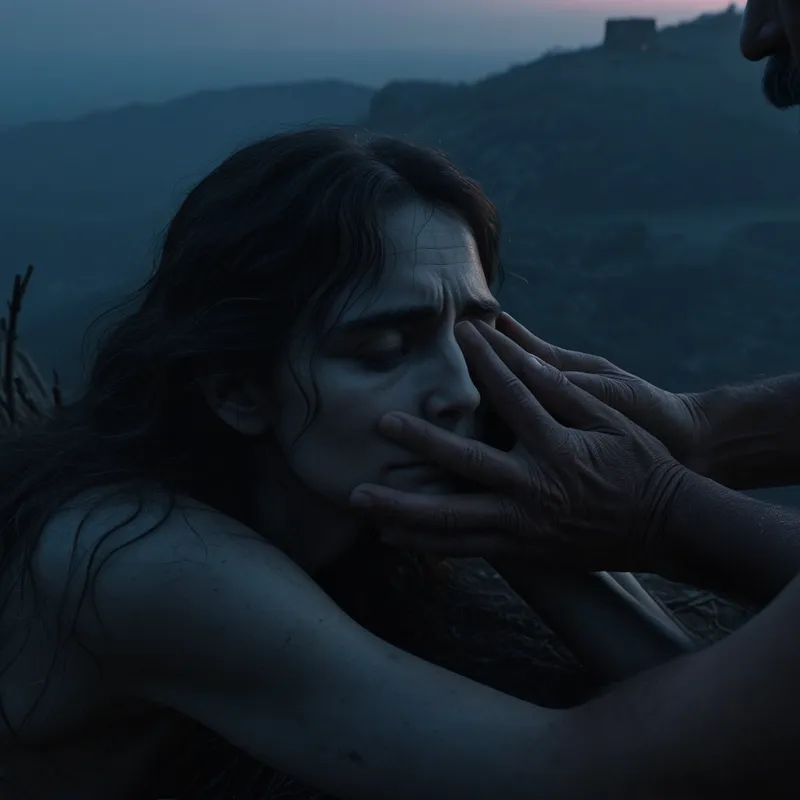
The image we know as the Pietà is a devotional motif that crystallized in the late medieval period, most famously immortalized in marble by Michelangelo in 1499. Its cultural roots, however, tap into a universal aquifer of human experience far older than Christianity. While the specific narrative is drawn from the Passion of Christ, the archetypal pattern—a grieving mother or goddess holding her dead son or lover—resonates across millennia and continents.
We see it in the Egyptian Isis gathering the dismembered pieces of Osiris. We hear its echo in the Greek Demeter’s desperate grief. The Lamentation scene was a staple of Byzantine and Gothic art, serving a vital societal function: to provide a focal point for communal grief, penitence, and empathetic identification. It was not a historical report but a theological and emotional icon. The faithful were invited not just to witness, but to enter the mystery of sacrificial love and maternal compassion, to feel the cost of redemption in their own bodies through the figure of Mary. She became the universal human response to divine sacrifice, the bridge between the unbearable event and the human heart meant to comprehend it.
Symbolic Architecture
At its core, the Pietà is a supreme symbol of containment. It presents the ultimate paradox: the act of holding that which cannot be held—death, ultimate loss, the shattering of a world.
The Pietà does not seek to resurrect the body; it seeks to sanctify the moment of passage by refusing to let it be alone or undignified.
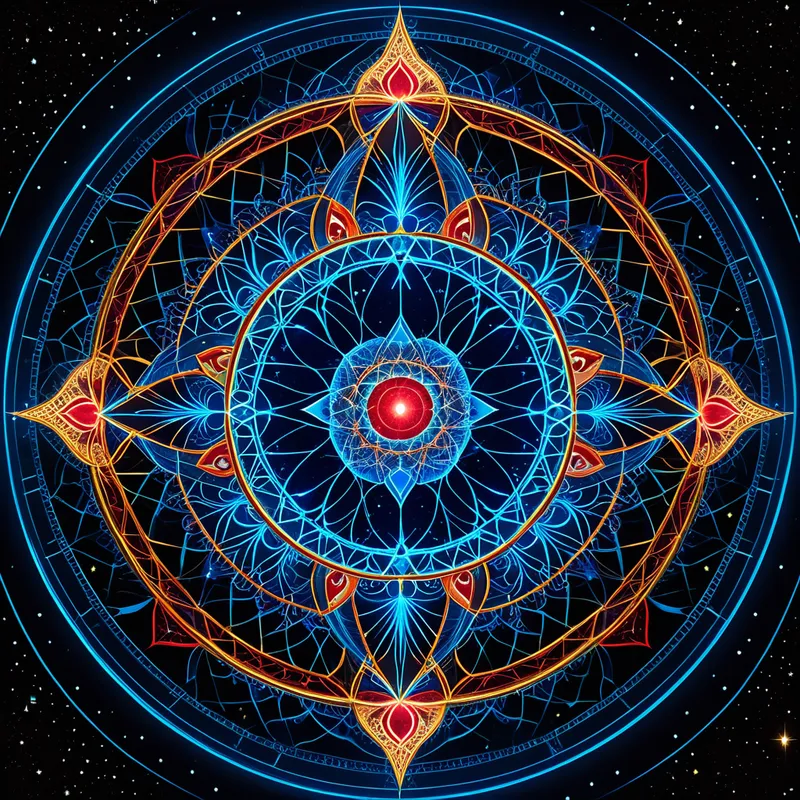
Mary represents the vas, the sacred container of the alchemical process. Christ represents the filius, the content that must be dissolved. Her lap is the athanor, the furnace that does not burn with fire but with compassionate attention. Psychologically, Mary is the aspect of the psyche capable of witnessing its own deepest wounds—the death of innocence, the betrayal of ideals, the sacrifice of the ego—without fragmentation. She is the Self’s capacity for unconditional holding. Christ represents the dying content: an old identity, a cherished hope, a painful truth that must be acknowledged and mourned for transformation to be possible. The composition itself is a mandala of sorrow, a closed circle of care that creates a sacred space within the chaos of trauma.
The Dreamer’s Resonance
When this pattern emerges in modern dreams, it rarely appears as a religious icon. Instead, the dreamer may find themselves in a stark, quiet space, holding something broken, precious, and utterly still. It could be a shattered heirloom, a lifeless animal, a beloved person who is unresponsive, or even a part of their own body. The key somatic sensation is not active grief, but a profound, weighted stillness—a gravity of care.
This dream signals a critical phase of psychic integration. The psyche is attempting to process a profound loss or a necessary “death”—the end of a relationship, a career, a long-held self-image, or the confrontation with a deep inner trauma. The dreaming ego is being cast in the role of the Mater Dolorosa, learning to hold what feels unbearable. The process is one of moving from raw, chaotic pain into structured, conscious sorrow. The dream is an enactment of the ego’s new, difficult task: to become the compassionate witness to its own suffering, to stop fleeing the pain and instead grant it a dignified space to be. It is the somatic rehearsal for acceptance.
Alchemical Translation
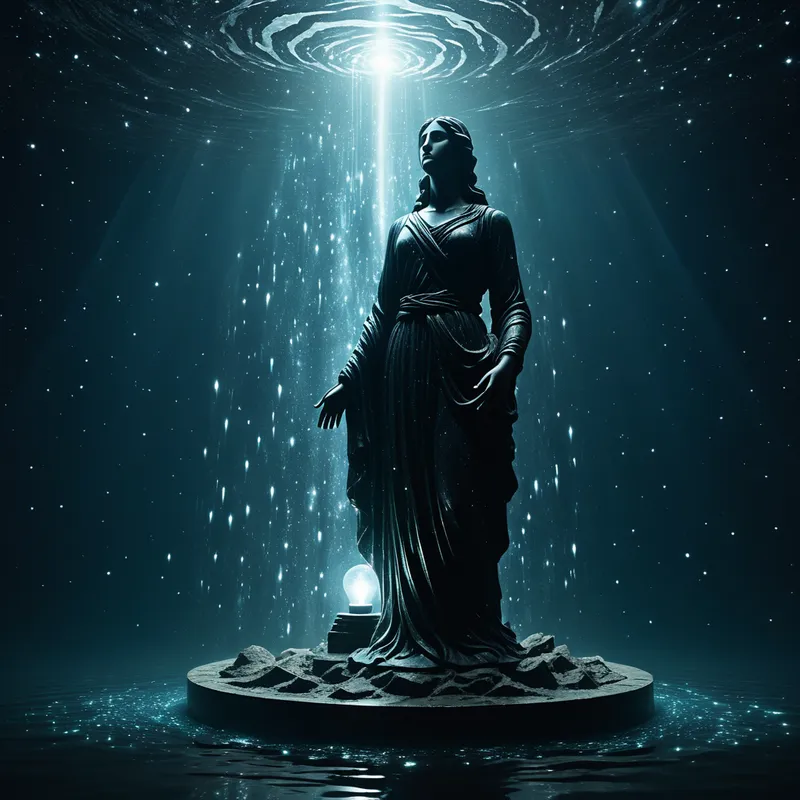
The journey of the Pietà is the alchemy of nigredo into meaning. It models the individuation process by demonstrating that the path to wholeness does not bypass the depths of despair but goes directly through its still center.
The triumph of the Pietà is not in reversal, but in reverence. The transformation occurs not in the body being held, but in the consciousness doing the holding.
For the modern individual, the “Christ” that must be laid in the lap is any aspect of the self that feels crucified by life: our innocence, our ambitions, our perceived failures, our primal wounds. The instinct is to reject this dead weight, to numb it, or to rage against its killers. The alchemical instruction of the myth is the opposite: Gather it. Hold it. Arrange its terrible form with care. This is the ablutio, the washing not with water, but with tears of conscious acknowledgment. Mary’s silent composure is the ego’s achievement of a witnessing consciousness strong enough to contain the conflict without being destroyed by it.
In doing so, the individual performs the sacred magic of the container. The “dead” content—the pain, the loss, the sacrificed ideal—begins to change its nature. It is no longer a foreign invader of the psyche but an integrated, honored part of its history. It is transmuted from a source of bleeding trauma into a source of compassionate depth. The one who holds and the thing held eventually are recognized as part of a single, suffering, and ultimately sacred whole. The Pietà thus completes its cycle: from a scene of ultimate ending, it becomes the silent, potent seed of a new beginning—a psyche that has made peace with its own necessary deaths, and in that peace, finds a foundation more solid than innocence ever was.
Associated Symbols
Explore related symbols from the CaleaDream lexicon: