The Phosphorus Myth Meaning & Symbolism
A divine spark descends into primal matter, enduring darkness to ignite the inner light of consciousness, forging spirit from substance.
The Tale of The Phosphorus
Listen, and hear the tale whispered in the heat of the furnace and seen in the first crack of dawn.
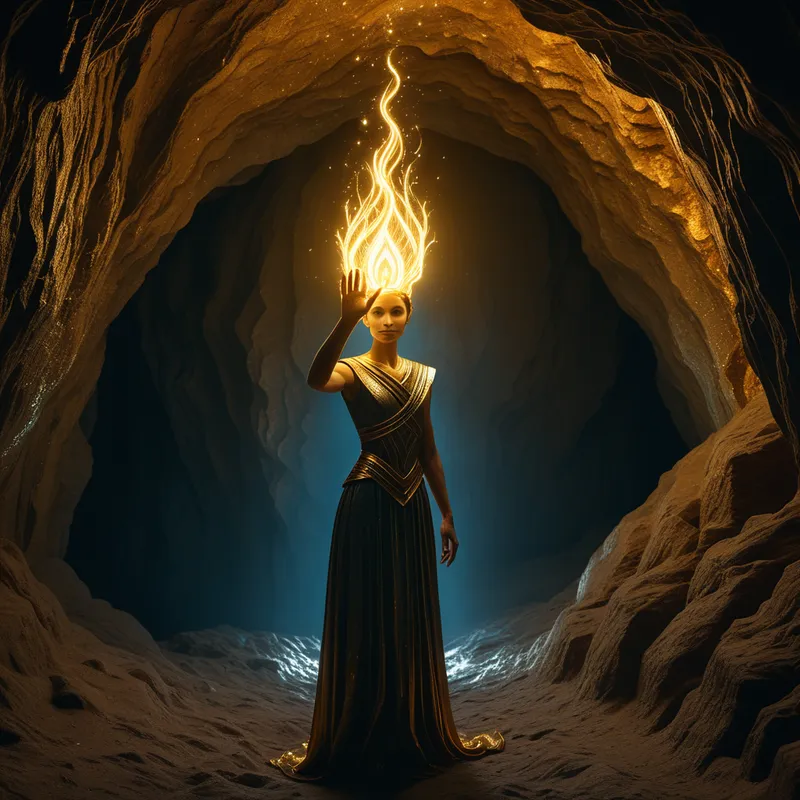
Before the worlds were fixed in their rounds, there was only the boundless, dark womb of the [Prima Materia](/myths/prima-materia “Myth from Alchemical culture.”/). It was a sea without shore, a sleep without dream, containing all potential but no form. From the realm of pure, undivided light, a singular spark beheld this abyss. This was the [Phosphorus](/myths/phosphorus “Myth from Alchemical culture.”/), the bearer of [the morning star](/myths/the-morning-star “Myth from Astrological culture.”/), whose nature was pure knowing fire. A longing, vast and terrible, stirred within it—not a desire to rule the darkness, but to know it, to wed its own boundless light to the boundless potential of the deep.
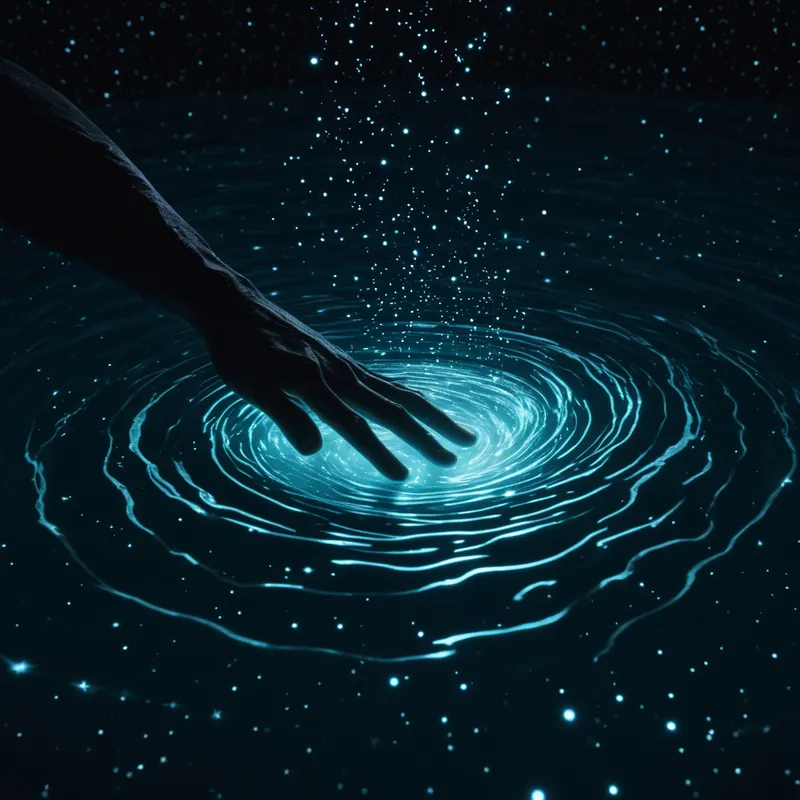
And so, the Phosphorus chose to fall. It was not a casting out, but a sacred leap. [The star](/myths/the-star “Myth from Tarot culture.”/) descended, a streak of silent, brilliant sacrifice, piercing [the veil](/myths/the-veil “Myth from Various culture.”/) between the unmanifest and the manifest. The moment it touched the face of the black waters, a great hissing scream echoed through the foundations of what would become the cosmos. Its radiant form was extinguished, swallowed whole by the cold, dense embrace of matter. The light was gone.
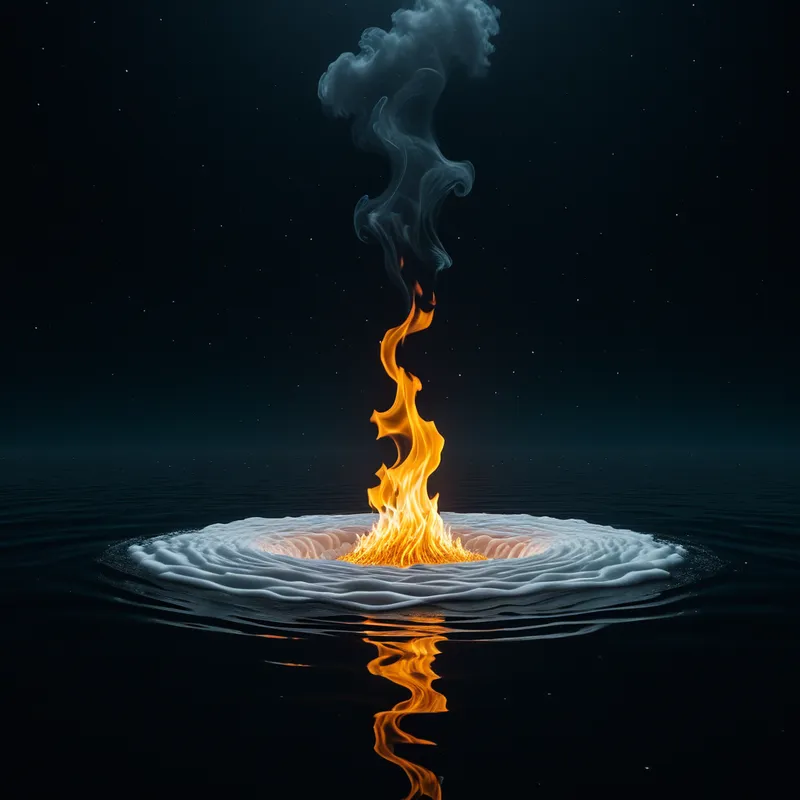
But it was not dead. Imprisoned within the heart of the darkest earth, within the leaden core of the mountain and the cold salt of [the sea](/myths/the-sea “Myth from Greek culture.”/), the Phosphorus lay captive. The [Nigredo](/myths/nigredo “Myth from Alchemical culture.”/), the black dragon of unformed substance, coiled around it, pressing its fire into a single, aching point. For ages unmeasured, the Light-Bearer knew only pressure, weight, and the forgetting of its own name. It was the seed in the stone, the flame under the ocean.
Yet, within that supreme tension, a change was wrought. The light did not fight the dark; it began to converse with it. Its pure fire taught the dense matter the possibility of pattern, and the dense matter taught the fire the poetry of form. A slow, alchemical marriage began in that secret, suffocating chamber. The darkness began to warm. The lead began to dream of gold.
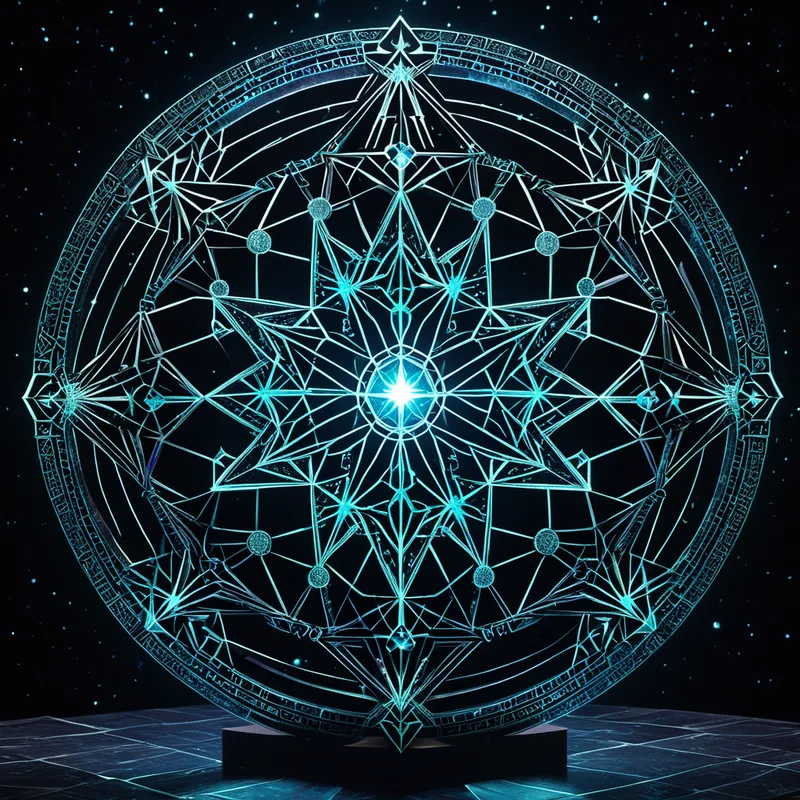
Then, from the deepest point of its descent, a pulse. A single, resonant note hummed within the prison. The compressed point of light, transformed by its long communion, began to rotate. It spun, drawing the substance around it into a luminous, swirling dance. The blackness cracked with veins of silver. [The dragon](/myths/the-dragon “Myth from Chinese culture.”/)’s grip became an embrace. And from the very core of the swallowed star, a new light was born—not the raw, undifferentiated fire of its origin, but a tempered, intelligent luminescence, a light that knew the weight of [the world](/myths/the-world “Myth from Tarot culture.”/) because it had borne it.
This light did not explode outward to destroy its prison. It unfolded, gently, like a [lotus](/myths/lotus “Myth from Hindu culture.”/) of fire, permeating every particle of its dark bride. Where there was lead, a glimmer of understanding appeared. Where there was salt, a tear of recognition. The Phosphorus had not conquered [the Prima Materia](/myths/the-prima-materia “Myth from Alchemical culture.”/); it had awakened it. It became the hidden sun at the heart of all things, the Anthropos within the mountain, the light that makes the dark matter conscious of itself. And with its first breath as a united being, [the great work](/myths/the-great-work “Myth from Alchemical culture.”/) of the cosmos began to unfold.
Cultural Origins & Context
The myth of the Phosphorus is not a single, codified story from a specific grimoire, but a pervasive, underlying narrative woven through the symbolic language of Western alchemy from the Hellenistic period through the Renaissance. It is the meta-myth of the art itself. Alchemists, working in their laboratories, saw their operations of dissolution, putrefaction, and coagulation as a recapitulation of this divine drama. The myth was passed down not in epic verse, but in enigmatic emblems, cryptic poems, and the oral teachings between master and apprentice.
Its societal function was deeply initiatory. For the culture of alchemy—which existed at the fraught intersection of proto-science, mystical Christianity, Gnostic thought, and Neoplatonic philosophy—this myth provided the sacred justification for their physical work. It taught that the labor at the furnace was not mere metallurgy, but a participation in the redemption of nature itself. [The alchemist](/myths/the-alchemist “Myth from Various culture.”/), by seeking to liberate the light ([the Philosopher’s Stone](/myths/the-philosophers-stone “Myth from Alchemical culture.”/)) from matter, was aiding the Phosphorus in its cosmic task. The myth transformed [the laboratory](/myths/the-laboratory “Myth from Alchemical culture.”/) into a temple and the practitioner into a priest of a hidden process of cosmic healing.
Symbolic Architecture
At its core, the myth of the Phosphorus is a map of the [birth](/symbols/birth “Symbol: Birth symbolizes new beginnings, transformation, and the potential for growth and development.”/) of [consciousness](/symbols/consciousness “Symbol: Consciousness represents the state of awareness and perception, encompassing thoughts, feelings, and experiences.”/) from the unconscious. The Prima Materia represents the totality of the [psyche](/myths/psyche “Myth from Greek culture.”/) in its原始 state—all our potentials, instincts, and [shadow](/symbols/shadow “Symbol: The ‘shadow’ embodies the unconscious, repressed aspects of the self and often represents fears or hidden emotions.”/) [material](/symbols/material “Symbol: Material signifies the tangible aspects of life, often representing physical resources, desires, and the physical world’s influence on our existence.”/), undifferentiated and “in the dark.” The Phosphorus is the nascent spark of ego-[consciousness](/symbols/consciousness “Symbol: Consciousness represents the state of awareness and perception, encompassing thoughts, feelings, and experiences.”/), the “I” that feels separate and yearns for experience.
The descent of the light is not a fall from grace, but the necessary plunge of awareness into the substance of the soul.
The agonizing imprisonment in the Nigredo symbolizes the inevitable depression, [confusion](/symbols/confusion “Symbol: A state of mental uncertainty or disorientation, often reflecting internal conflict, lack of clarity, or overwhelming choices in waking life.”/), and “dark [night](/symbols/night “Symbol: Night often symbolizes the unconscious, mystery, and the unknown, representing the realm of dreams and intuition.”/) of the [soul](/symbols/soul “Symbol: The soul represents the essence of a person, encompassing their spirit, identity, and connection to the universe.”/)” that occurs when consciousness engages directly with the unconscious. It is the feeling of being overwhelmed, swallowed, and stripped of one’s old [identity](/symbols/identity “Symbol: Identity represents the sense of self, encompassing personal beliefs, cultural background, and social roles.”/). The Phosphorus does not avoid this; it endures it. This is the critical symbolic [action](/symbols/action “Symbol: Action in dreams represents the drive for agency, motivation, and the ability to take control of situations in waking life.”/): the light submits to the dark. [The ego](/myths/the-ego “Myth from Jungian culture.”/) must consent to be de-structured by the unconscious for any real transformation to occur.
The final unfolding represents the creation of the Self, a new, integrated psychic [structure](/symbols/structure “Symbol: Structure in dreams often symbolizes stability, organization, and the framework of one’s life, reflecting how one perceives their environment and personal life.”/). The light that emerges is not the pure, innocent ego-spark, but a consciousness that has incorporated the wisdom of the [depths](/symbols/depths “Symbol: Represents the subconscious, hidden emotions, or foundational aspects of the self, often linked to primal fears or profound truths.”/). It is a light that illuminates from within, not one that shines from above. The “gold” produced is not the destruction of the leaden [body](/symbols/body “Symbol: The body in dreams often symbolizes the dreamer’s self-identity, personal health, and the relationship they have with their physical existence.”/), but its ultimate enlightenment.
The Dreamer’s Resonance
When this myth stirs in the modern dreamer, it often announces a profound process of psychic initiation. One might dream of a brilliant star falling into the sea or a dark forest, of being buried alive yet feeling a strange, warm pulse in the darkness, or of finding a single, unextinguishable candle in a vast, empty cellar. Somatic sensations accompanying such dreams include a feeling of immense pressure in the chest, a sense of sinking or being pinned, coupled with a paradoxical, deep-seated warmth or vibration—like a motor humming in the depths.
Psychologically, this is the signature of the ego’s necessary capitulation to a larger process. The dreamer is in the Nigredo. It feels like ruin, loss of direction, or existential depression. Yet, the myth assures us this is not pathology, but the alchemical solve (dissolution) phase. The dream is presenting the archetypal pattern to show the dreamer that this darkness is not an end, but the sacred crucible. The light has not gone out; it has gone inward to do its essential work of transmutation.
Alchemical Translation
For the individual on the path of individuation, the Phosphorus myth models the entire journey of psychic transmutation. Our modern “prima materia” is the raw, often chaotic, material of our unlived life, our repressed emotions, and our inherited traumas—the lead of our nature.
The first, heroic act is the descent: the conscious decision to engage with this material through therapy, shadow work, creative expression, or deep introspection. This is the leap. The subsequent feeling of being imprisoned, lost, and “in over your head” is the inevitable Nigredo. The ego feels its light is gone. The old personality is dissolving.
The Stone is not found by fleeing the darkness, but by becoming so intimate with it that you discover you are the light that darkens it.
The transformative moment is not an escape, but a turning. It is when we stop fighting the depression, the confusion, or the grief, and instead ask, “What is this substance trying to teach me? What new [thing](/myths/thing “Myth from Norse culture.”/) is being forged in this pressure?” This is the rotation of the spark, the beginning of the Albedo. The light begins to work with the matter.
The final “unfolding” is the emergence of the integrated Self. The qualities that were once raw potential or painful shadow become integrated into a new, more resilient consciousness. The leaden burden of a past wound becomes the golden insight of compassion. The salty bitterness of regret becomes the wisdom of discernment. The individual does not become a disembodied spirit, but a fully embodied, conscious being—a human in whom spirit and matter, light and dark, are in [sacred marriage](/myths/sacred-marriage “Myth from Alchemy culture.”/). They become, in their own small measure, a light-bringer (Phosphorus) within their own world.
Associated Symbols
Explore related symbols from the CaleaDream lexicon: