
The Phoenix Myth Meaning & Symbolism
A magnificent, immortal bird that cyclically dies in a pyre of its own making, only to be reborn anew from the ashes.
The Tale of The Phoenix
Listen. In the silent spaces between the turning of the ages, when the sun hangs heavy and [the world](/myths/the-world “Myth from Tarot culture.”/) holds its breath, it is time. High upon a remote pinnacle of rock, kissed only by the first and last light, a nest is built. Not of twig and mud, but of frankincense and myrrh, of cinnamon bark and spikenard. The air is thick with sacred perfume.
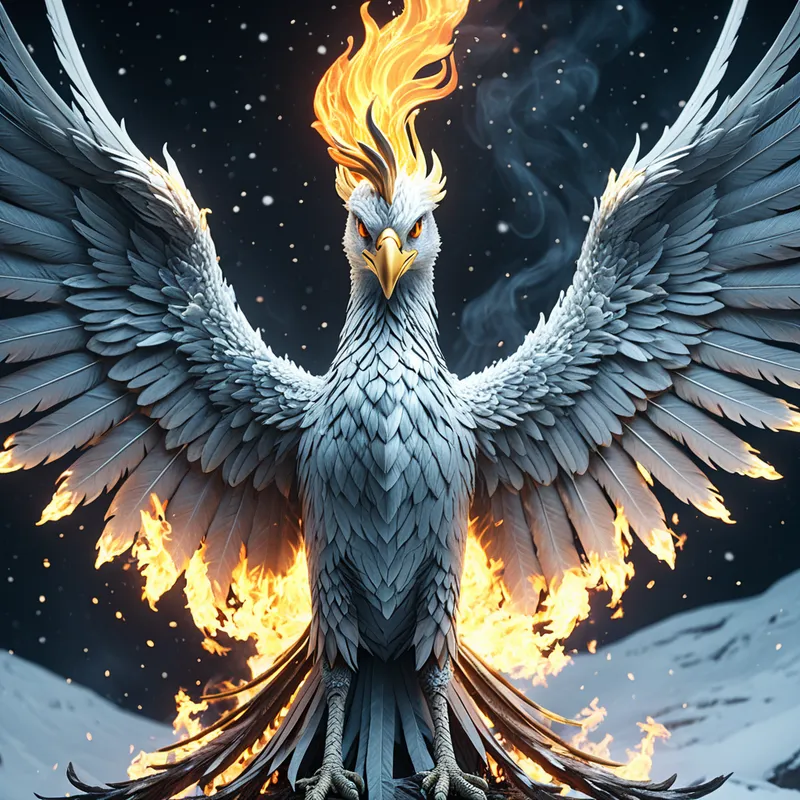
Here, the [Phoenix](/myths/phoenix “Myth from Egyptian culture.”/) resides. Its plumage is the captured fire of a thousand dawns and the deep crimson of a heart’s blood. Its eyes are pools of liquid amber, holding the memory of empires risen and fallen. For five hundred years—or a thousand, for who truly counts such spans?—it has been the sole witness to its own eternity. But eternity is a weight. The feathers, once vibrant, now feel like chains of gold. The ancient song in its breast has become a solitary echo.
It does not flee the coming fire. It turns to face the sun, spreads its vast wings, and begins to sing. The song is not one of lament, but of invocation—a piercing, beautiful melody that calls the flame from its own soul. A spark ignites at the tip of its wing. Then another. The sacred spices of its nest catch like tinder, and the Phoenix is enveloped in a conflagration of its own making. The fire does not crackle like common wood; it roars with a pure, white-hot silence, a pillar of light visible to the gods. The flesh consumes, the bones blacken and crumble. All is reduced to a pyre of glorious, incandescent ruin, and then, to a mound of warm, grey ash.
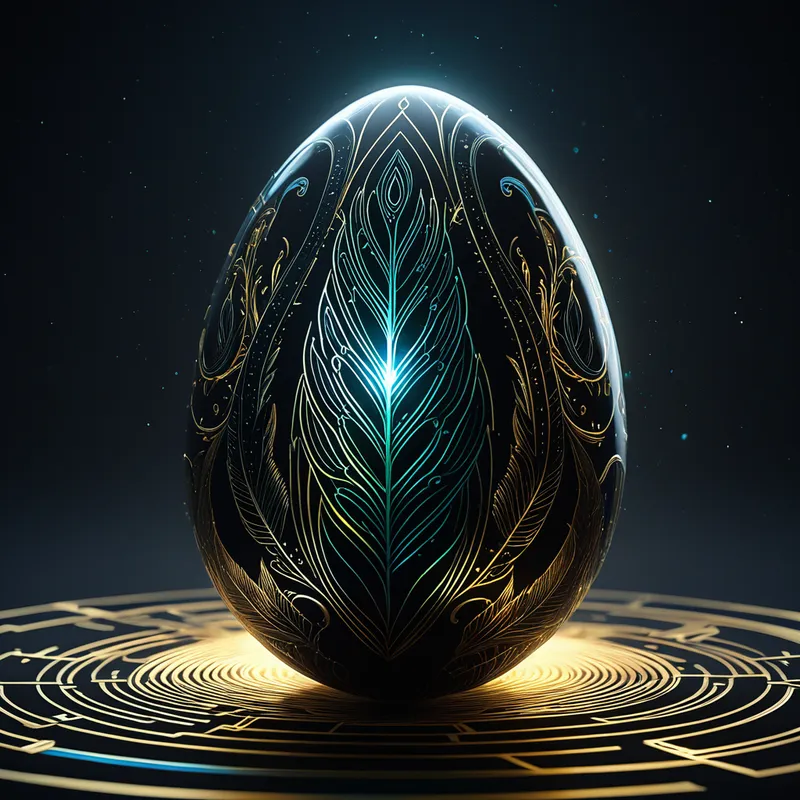
The world is still. The perfume of spice is now the scent of ozone and ending. But in the heart of the ashes, a movement. A stirring. A single, perfect worm—some say—wriggles forth. Others tell of a tiny, new heart beginning to beat. From this humble, nascent [thing](/myths/thing “Myth from Norse culture.”/), form gathers. Wings of damp down unfurl, a beak opens for its first breath of the new age’s air. And there, from the very essence of its former death, the Phoenix rises. Not a copy, but the same essence, renewed. Younger, brighter, its song now a promise. It gathers its own ashes into an egg of myrrh, carries them to [the temple](/myths/the-temple “Myth from Jewish culture.”/) of the sun, and departs, leaving only the legend of its sacrifice and the certainty of its return.
Cultural Origins & Context
The Phoenix is a truly global citizen of myth. Its most famous chronicler was the Greek historian Herodotus, who, while visiting Egypt, recorded the tale of the Bennu, a heron-like bird associated with the sun god Ra and the cyclical flooding of the Nile. This Egyptian root is crucial; the myth is born from the observation of nature’s most fundamental law—death fuels life, [the river](/myths/the-river “Myth from Buddhist culture.”/)’s flood brings fertile silt.
From this Nile-born seed, the myth migrated and mutated. In Persian tradition, it became the [Simurgh](/myths/simurgh “Myth from Persian culture.”/), a wise, healing creature so old it had seen the world’s destruction three times over. In Chinese mythology, the Fenghuang is a composite being representing the union of [yin and yang](/myths/yin-and-yang “Myth from Chinese culture.”/), an emblem of imperial authority and cosmic harmony. Early Christian writers adopted the Phoenix as a natural symbol for Christ’s resurrection and the promise of eternal life.
The myth was not merely a story told for wonder. It served a profound societal function: it was a metaphysical anchor. In a world of plagues, wars, and personal tragedy, the Phoenix provided a narrative template that insisted on renewal. It was a cosmic reassurance that endings are not absolute, that the sun will rise again, that the empire, though fallen, may one day be reborn in a new form. It was a story told by priests, bards, and scholars to explain the inexplicable continuity of life and spirit in the face of overwhelming evidence of decay.
Symbolic Architecture
At its core, the [Phoenix](/symbols/phoenix “Symbol: The Phoenix symbolizes rebirth, transformation, and the cycle of life, often representing the ability to rise from challenges stronger and renewed.”/) is the ultimate [symbol](/symbols/symbol “Symbol: A symbol can represent an idea, concept, or belief, serving as a powerful tool for communication and understanding.”/) of transformation through sacrifice. It is not a passive [rebirth](/symbols/rebirth “Symbol: A profound transformation where old aspects of self or life die, making way for new beginnings, growth, and renewal.”/), like a seed sprouting. It is an active, willed, and total self-immolation.
The Phoenix does not wait for death; it becomes the priest and the pyre, the sacrificer and the sacrificed, in a single, sacred act.
Psychologically, it represents [the ego](/myths/the-ego “Myth from Jungian culture.”/)’s necessary [death](/symbols/death “Symbol: Symbolizes transformation, endings, and new beginnings; often associated with fear of the unknown.”/) for [the Self](/myths/the-self “Myth from Jungian culture.”/) to emerge. The “[nest](/symbols/nest “Symbol: A ‘nest’ symbolizes safety, home, and the nurturing aspects of personal and familial connections.”/)” of aromatic spices symbolizes the accumulated [identity](/symbols/identity “Symbol: Identity represents the sense of self, encompassing personal beliefs, cultural background, and social roles.”/)—our achievements, our reputation, our cherished self-[image](/symbols/image “Symbol: An image represents perception, memories, and the visual narratives we create in our minds.”/) (“I am successful,” “I am a [caregiver](/symbols/caregiver “Symbol: A spiritual or mythical figure representing nurturing, protection, and unconditional support, often embodying divine or archetypal parental energy.”/),” “I am wounded”). These are precious, but they become a cage. The Phoenix myth insists that to be truly renewed, we must be willing to set fire to this very [identity](/symbols/identity “Symbol: Identity represents the sense of self, encompassing personal beliefs, cultural background, and social roles.”/). The flame is the heat of profound psychological [crisis](/symbols/crisis “Symbol: A crisis symbolizes turmoil, urgent challenges, and the need for immediate resolution or change.”/)—the dark [night](/symbols/night “Symbol: Night often symbolizes the unconscious, mystery, and the unknown, representing the realm of dreams and intuition.”/) of the [soul](/symbols/soul “Symbol: The soul represents the essence of a person, encompassing their spirit, identity, and connection to the universe.”/), the depression, the shattering [loss](/symbols/loss “Symbol: Loss often symbolizes change, grief, and transformation in dreams, representing the emotional or psychological detachment from something or someone significant.”/)—that feels utterly destructive, but which contains the latent [energy](/symbols/energy “Symbol: Energy symbolizes vitality, motivation, and the drive that fuels actions and ambitions.”/) for rebirth.
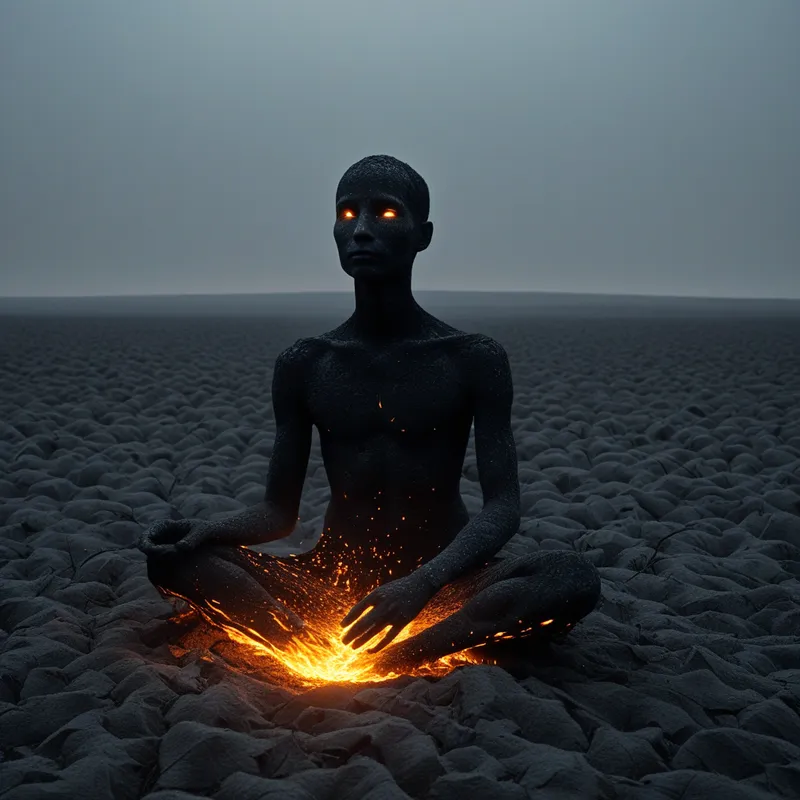
The ashes are the crucial, fertile middle ground. They represent the state of [nigredo](/myths/nigredo “Myth from Alchemical culture.”/)—the blackening, the utter [dissolution](/symbols/dissolution “Symbol: The process of breaking down, dispersing, or losing form, often representing transformation, release, or the end of a state of being.”/) of form. It is a state of humility, of being reduced to essential matter. From this blank slate, the new form can coalesce. The myth teaches that we must not rush from death to rebirth; we must endure the ashes, for they are the [womb](/symbols/womb “Symbol: A symbol of origin, potential, and profound transformation, representing the beginning of life’s journey and the unconscious source of creation.”/).
The Dreamer’s Resonance
When the Phoenix pattern stirs in the modern dreamer, it often announces a profound, non-negotiable psychic transition. The dream imagery is rarely of the glorious bird in flight. More common are dreams of houses on fire (the [psyche](/myths/psyche “Myth from Greek culture.”/)’s structure burning), of finding strange eggs in ashes (the nascent new self), or of being trapped in a cocoon of one’s own making that is beginning to smolder.
Somatically, this process can feel like a deep fatigue with one’s own life—a sense of “I cannot go on like this,” even if externally, nothing is “wrong.” It is a burning away of old motivations. Psychologically, the dreamer is in the grip of what Jung called the Self, which orchestrates these crises of renewal for the purpose of wholeness. The conflict is between the part of the psyche that clings to the old, familiar nest (even if it is painful) and the part that knows a fiery death is the only path forward. The dream is the psyche’s way of initiating the ritual it knows it must undergo.
Alchemical Translation
The journey of the Phoenix is a perfect map for the alchemical process of individuation. For the modern individual, the myth models the terrifying yet liberating work of psychic transmutation.
First, we must build our sacred nest—that is, we must consciously gather and honor the elements of our current life phase. We acknowledge our accomplishments, our relationships, our identity. Then, we must find the courage to become the spark. This is the conscious decision to engage in therapy, to end a hollow relationship, to leave a soul-crushing job, to confront a deep-seated trauma. We initiate the fire ourselves; we do not wait for fate to strike the match.
The immolation is the experience of the process itself—the grief, the rage, the feeling of being annihilated. This is the shadow-work. We sit in the ashes (nigredo), in the not-knowing. This is a period of fallowness, depression, or quiet retreat that is essential and non-negotiable.
The new Phoenix is not born from the old bird, but from its ashes. Our renewed self is not a better version of the old ego, but a more complete being forged in the furnace of its surrender.
Finally, the gathering of the ashes. This is the integration. We do not repress the memory of the “death.” We take the lessons, the scars, the wisdom of our dissolution, and we carry them forward as the sacred substance of our new life. We enshrine our pain as a source of strength, not shame. The individual who has undergone this cycle carries a quiet authority—the knowledge that they have met their own end and chosen to begin again. They have translated the universal myth of the Phoenix into the singular, lived truth of their own becoming.
Associated Symbols
Explore related symbols from the CaleaDream lexicon: