
The Philosopher's Stone Formula Myth Meaning & Symbolism
The secret formula for the Stone is not a substance, but a process of dissolution and rebirth, hidden within the soul of the alchemist.
The Tale of The Philosopher’s Stone Formula
In the silent hour between the wolf and the dog, when [the world](/myths/the-world “Myth from Tarot culture.”/) holds its breath, the true work begins. [The laboratory](/myths/the-laboratory “Myth from Alchemical culture.”/) is not a room of stone and mortar, but a cavern of the soul, lit by the dim, unwavering flame of a single lamp. Here, the Adept stands, not as a man of flesh, but as a vessel of longing. His tools are not mere iron and glass, but the elements of his own being: the heavy Lead of his despair, the volatile [Mercury](/myths/mercury “Myth from Roman culture.”/) of his intellect, and the corrosive Salt of his earthly pains.
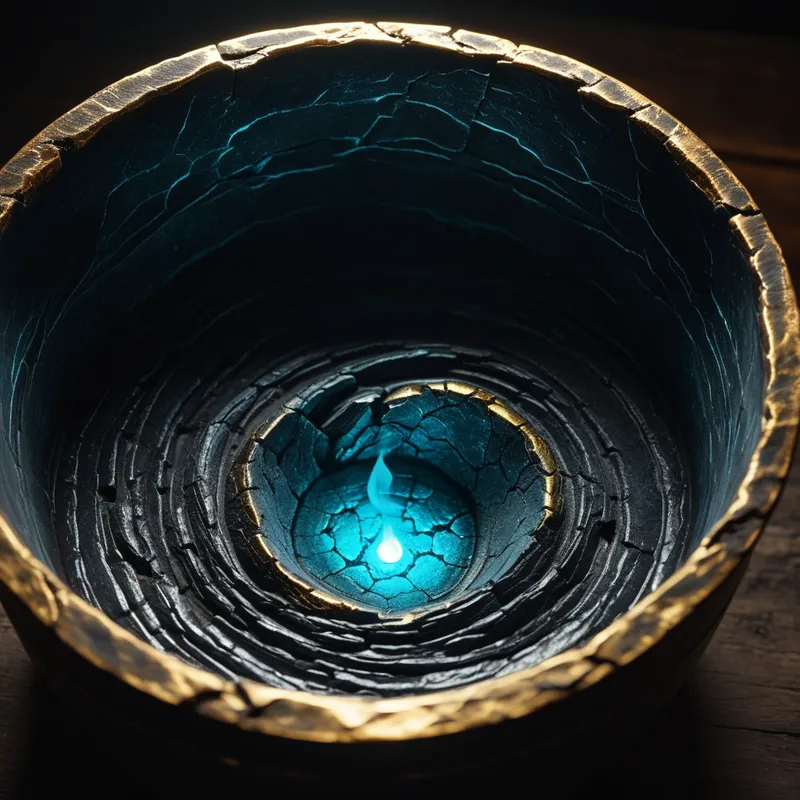
The myth whispers that the Formula is not written in any book, but in the cracking of [the vessel](/myths/the-vessel “Myth from Alchemical culture.”/). [The Adept](/myths/the-adept “Myth from Alchemical culture.”/) places his compounded self—his pride, his knowledge, his very identity—into the [Hermetic Vessel](/myths/hermetic-vessel “Myth from Alchemical culture.”/). The fire is lit. This is the [Nigredo](/myths/nigredo “Myth from Alchemical culture.”/), the long night. He watches as all he knew blackens, dissolves into a chaotic, swirling [prima materia](/myths/prima-materia “Myth from Alchemical culture.”/). He is beset by the Dragon of Chaos, a terror from within that threatens to shatter [the vessel](/myths/the-vessel “Myth from Alchemical culture.”/) entirely. The formula here is one of surrender, of holding the fire steady while his world turns to ash.
Then, a miracle in the murk. From the blackness arises a spectrum of haunting hues—the Albedo. A ghostly white light, then the peacock’s tail of iridescent colors, a false dawn that promises much but yields nothing solid. The Adept’s hope soars and is crushed a thousand times. The formula demands he distill these fleeting visions, to separate the subtle from the gross in an endless, meticulous Circulatio.
The final test is the marriage. The white queen, Luna, and the red king, Sol, must be joined in the Chemical Wedding. This is the [Rubedo](/myths/rubedo “Myth from Alchemical culture.”/). The heat is unbearable, a conflagration of the spirit. For a moment, all is stillness, a terrible silence at the heart of the flame. Then, from the union, it precipitates: not a powder, not an elixir, but a living, internal sun. The [Philosopher’s Stone](/myths/philosophers-stone “Myth from Alchemical culture.”/). It is said to glow with a light that does not illuminate the room, but the Adept’s own depths. The formula is complete. The Stone was never made; it was remembered, born from the ashes of what was sacrificed to the fire.
Cultural Origins & Context
The myth of the Formula is the backbone of Western esoteric alchemy, flourishing from the Hellenistic period through the Renaissance. It was never a single, canonical story but a living, evolving corpus of allegory recorded in cryptic texts like the [Tabula Smaragdina](/myths/tabula-smaragdina “Myth from Alchemical/Hermetic culture.”/) and the visions of practitioners such as [Hermes Trismegistus](/myths/hermes-trismegistus “Myth from Greek culture.”/), Paracelsus, and the anonymous authors of the [Rosarium Philosophorum](/myths/rosarium-philosophorum “Myth from Alchemical culture.”/). It was passed down through a chain of initiation, part oral tradition, part encoded manuscript, designed to be meaningless to the profane and revelatory to the prepared mind.
Its societal function was dual. Exoterically, it belonged to the proto-scientific endeavor of manipulating matter. Esoterically, and more importantly, it served as a profound psychological and spiritual roadmap for a select few. In an age where orthodox religion often delineated strict paths to salvation, alchemical mythology provided a parallel, deeply personal narrative of redemption through one’s own labor—the Opus Magnum. It was a myth for the individual soul navigating the inner cosmos, with the laboratory serving as a sacred theater for the drama of the [psyche](/myths/psyche “Myth from Greek culture.”/).
Symbolic Architecture
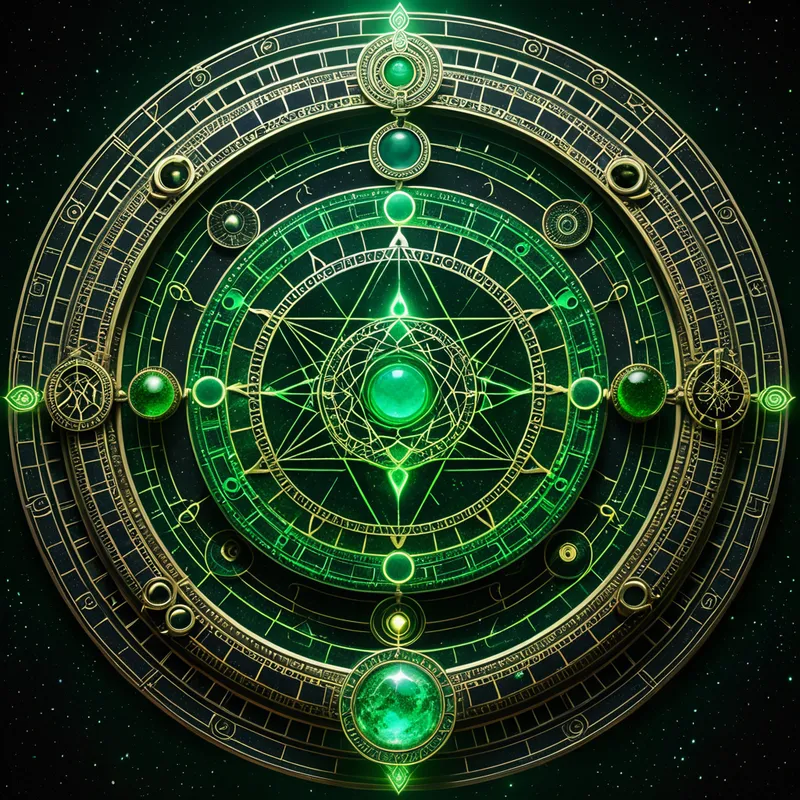
The myth’s power lies in its complete mapping of inner states onto outer processes. The [laboratory](/symbols/laboratory “Symbol: A controlled environment for experimentation, discovery, and analysis, representing the pursuit of knowledge through methodical processes.”/) is the psyche itself. The raw materials—Saturnine lead, Mercurial quicksilver, Sulfurous brimstone—are the conflicted aspects of [the self](/myths/the-self “Myth from Jungian culture.”/).
The First Matter is the unexamined life; the Stone is the life made conscious.
The [Ouroboros](/symbols/ouroboros “Symbol: An ancient symbol depicting a serpent or dragon eating its own tail, representing cyclicality, eternity, self-sufficiency, and the unity of opposites.”/) that often encircles the diagrams is the central [symbol](/symbols/symbol “Symbol: A symbol can represent an idea, concept, or belief, serving as a powerful tool for communication and understanding.”/): the process feeds on itself. The [dissolution](/symbols/dissolution “Symbol: The process of breaking down, dispersing, or losing form, often representing transformation, release, or the end of a state of being.”/) (Nigredo) represents the confrontation with the [Shadow](/symbols/shadow “Symbol: The ‘shadow’ embodies the unconscious, repressed aspects of the self and often represents fears or hidden emotions.”/), the necessary [death](/symbols/death “Symbol: Symbolizes transformation, endings, and new beginnings; often associated with fear of the unknown.”/) of [the ego](/myths/the-ego “Myth from Jungian culture.”/)’s illusions. The purification ([Albedo](/symbols/albedo “Symbol: In alchemy, the whitening stage representing purification, spiritual ascension, and the emergence of consciousness from darkness.”/)) is the arduous work of [differentiation](/symbols/differentiation “Symbol: The process of distinguishing or separating parts of the self, emotions, or identity from a whole, often marking a developmental or psychological milestone.”/), of recognizing [anima](/symbols/anima “Symbol: The feminine archetype within the male unconscious, representing soul, creativity, and connection to the inner world.”/) and [animus](/symbols/animus “Symbol: In Jungian psychology, the masculine inner personality in a woman’s unconscious, representing logic, action, and spiritual guidance.”/), [spirit](/symbols/spirit “Symbol: Spirit symbolizes the essence of life, vitality, and the spiritual journey of the individual.”/) and matter, as distinct but related. The final union (Rubedo) symbolizes the [integration](/symbols/integration “Symbol: The process of unifying disparate parts of the self or experience into a cohesive whole, often representing psychological wholeness or resolution of internal conflict.”/) of these opposites into a new, stable center—the Self, which is the psychological equivalent of the [Stone](/symbols/stone “Symbol: In dreams, a stone often symbolizes strength, stability, and permanence, but it may also represent emotional burdens or obstacles that need to be acknowledged and processed.”/). The Formula, therefore, is the archetypal [pattern](/symbols/pattern “Symbol: A ‘Pattern’ in dreams often signifies the underlying structure of experiences and thoughts, representing both order and the repetitiveness of life’s situations.”/) of psychic [death](/symbols/death “Symbol: Symbolizes transformation, endings, and new beginnings; often associated with fear of the unknown.”/) and [rebirth](/symbols/rebirth “Symbol: A profound transformation where old aspects of self or life die, making way for new beginnings, growth, and renewal.”/).
The Dreamer’s Resonance
When this myth stirs in the modern dreamer, it signals a profound catalytic process in the unconscious. Dreaming of intricate, ancient laboratories, of following a complex recipe, or of a substance that changes color and state, points to the psyche actively engaged in its own Opus Magnum.
Somatically, this may coincide with periods of intense fatigue (the Nigredo), feelings of purification or lightness (the Albedo), or surges of creative energy and passion (the Rubedo). A dream of a crucible cracking under pressure mirrors the feeling of a psychological container—a relationship, a career, an identity—no longer being able to hold the transformative conflict within. To dream of finally holding the glowing Stone is to experience, in symbolic form, a moment of profound self-realization and inner cohesion. The dream is the laboratory of the night, and the Formula is the process the soul instinctively follows toward wholeness.
Alchemical Translation
For the modern individual, [the Philosopher’s Stone](/myths/the-philosophers-stone “Myth from Alchemical culture.”/) Formula is the myth of individuation. The quest is not for literal gold, but for [the golden mean](/myths/the-golden-mean “Myth from Greek culture.”/) of the personality—the authentic Self.
The fire is not in the furnace, but in the tension of holding opposites.
The first step, the Nigredo, translates as [the dark night of the soul](/myths/the-dark-night-of-the-soul “Myth from Christian Mysticism culture.”/): depression, meaninglessness, the collapse of old values. This is not pathology to be avoided, but the essential first ingredient. The Albedo is the analytical, reflective work of therapy, journaling, or art—washing the psychic material, seeing it clearly. The peacock’s tail represents all the brilliant but transient insights that must be grounded.
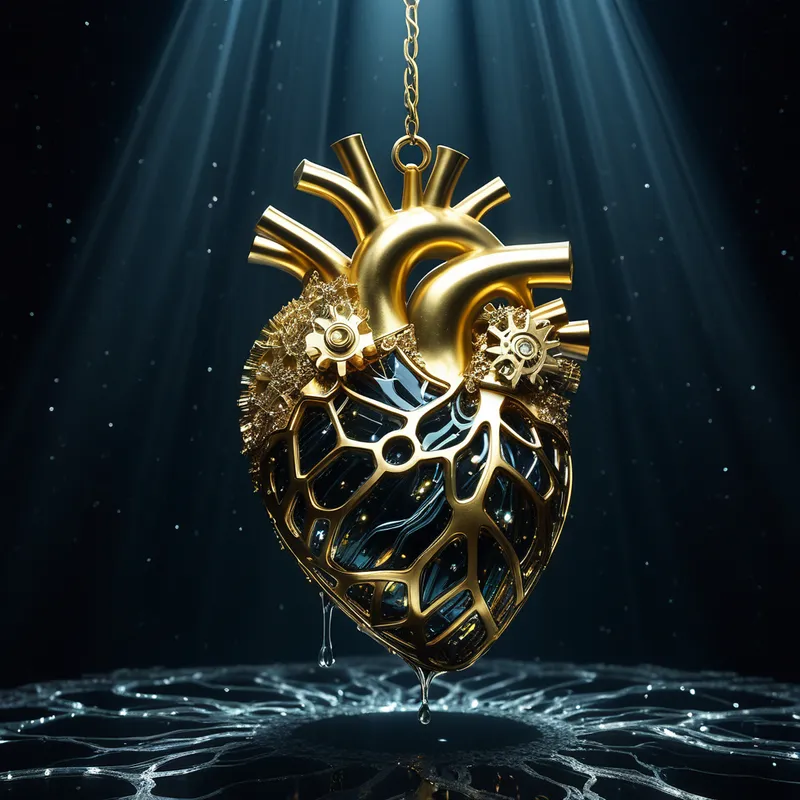
The Rubedo is the ultimate challenge of integration. It is the marriage of one’s logical mind with intuitive feeling, of masculine and feminine energies within, of accepting one’s history (the lead) while forging a new purpose (the gold). The final product, the Stone, is not a state of perfect, static bliss. It is the [lapis philosophorum](/myths/lapis-philosophorum “Myth from Alchemical culture.”/)—the philosopher’s stone—the enduring, resilient core of being that can touch the base metal of everyday experience and find meaning within it. The Formula teaches that transformation requires the courage to enter the vessel, the patience to endure the fire, and the wisdom to recognize that the treasure was always the transformed alchemist.
Associated Symbols
Explore related symbols from the CaleaDream lexicon: