The Parable of the Ten Virgins Myth Meaning & Symbolism
A tale of ten maidens awaiting a bridegroom, divided by foresight and folly, revealing the eternal tension between preparedness and procrastination of the soul.
The Tale of The Parable of the Ten Virgins
Listen, and hear a story of midnight and oil, of a threshold and a closing door.
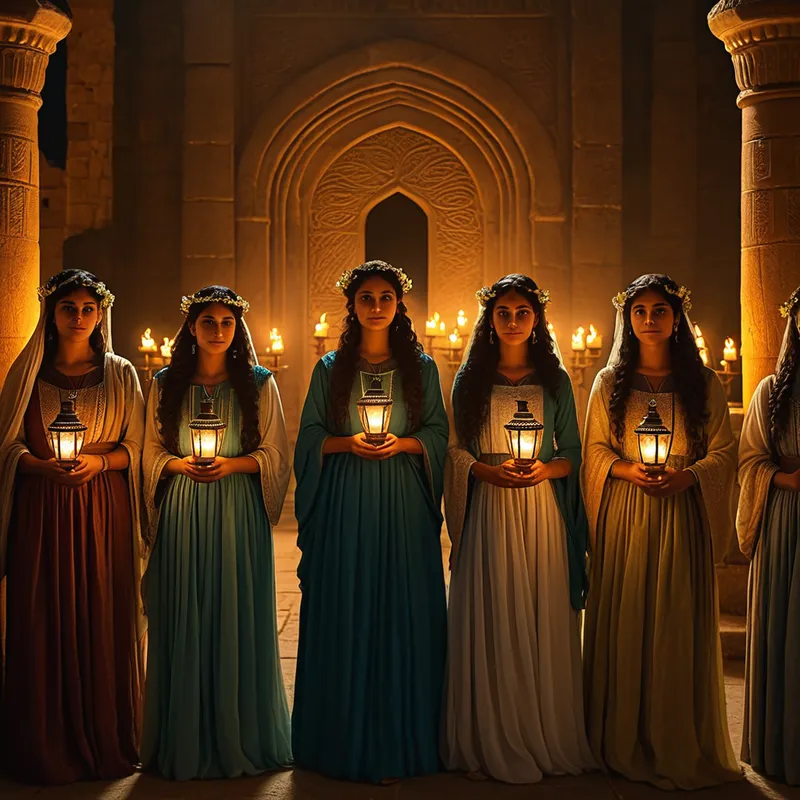
The night was a vast, velvet cloak, pierced by a cold sliver of moon. Ten maidens, their hearts fluttering like moth-wings against glass, stood in the courtyard. They were bridesmaids, clad in their finest, each clutching the symbol of their vigil: a lamp. Their task was singular—to wait. To wait for the Bridegroom, whose coming was certain but whose hour was a secret locked in the heart of the night.
Five among them were called wise. Their eyes held the calm of deep wells. When they took their lamps, they also took flasks, heavy with precious oil. The other five were called foolish. Their laughter was light, their thoughts on the feast to come, not the long watch. They took their lamps, bright and new, but gave no thought to what lay beyond the first hour of darkness.
The wait began. The stars wheeled slowly. The sounds of the town faded into a deep silence. Eyes grew heavy. One by one, the maidens succumbed to sleep, their lamps burning low. Then, at the deepest hour, when hope seems thinnest, a cry shattered the stillness: “Behold! The Bridegroom comes! Go out to meet him!”
All ten maidens startled awake, scrambling to trim their wicks. A dreadful sound followed—the sputter and die of flame. The lamps of the foolish five guttered out, leaving them in a sudden, personal darkness. “Give us some of your oil,” they pleaded to the wise, their voices sharp with panic. “Our lamps are going out!”
But the wise maidens shook their heads, their faces sorrowful but resolute. “Perhaps there will not be enough for both us and you. Go instead to the merchants and buy some for yourselves.”
And so, as the wise turned to join the glorious procession of torchlight and music approaching the wedding hall, the foolish ran. They ran through the sleeping, alien streets to a marketplace long closed, pounding on shuttered stalls, their cries swallowed by the uncaring night.
Meanwhile, the wise maidens, their lamps casting steady pools of gold upon the ground, entered with the Bridegroom into the feast. The great door, carved of oak and bound with iron, swung shut with a final, resonant thud that echoed in the bones of [the earth](/myths/the-earth “Myth from Hindu culture.”/).
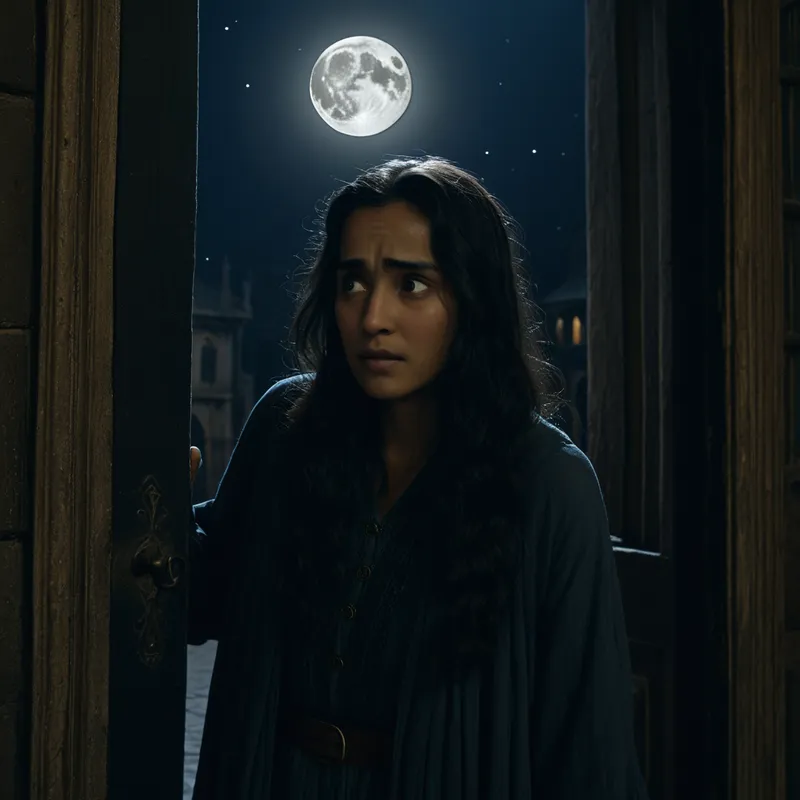
Much later, there came a frantic knocking. “Lord, Lord, open to us!” cried the voices of the foolish, returned at last with oil, but too late. And from within the hall, filled with light and song, a voice replied, a voice of terrible, gentle certainty: “Truly, I say to you, I do not know you.”
And the maidens remained outside, in the cold and the dark, where there was only the sound of their own weeping, and the grinding of teeth.
Cultural Origins & Context
This story is one of the parables of [Jesus](/myths/jesus “Myth from Christian culture.”/), recorded in the Gospel of Matthew (25:1-13). It was spoken within a first-century Jewish milieu, where wedding customs involved a joyful, unpredictable procession of the groom to the bride’s home, with attendants required to be ready to join him with lamps alight. The parable functioned as urgent eschatological teaching—instruction concerning the “end times” and the coming kingdom of God. It was not a general moral fable but a specific, community-shaping warning to the early church: be spiritually prepared for a culmination that could arrive at any moment, for delay breeds catastrophic complacency. Passed down orally and then in scripture, its societal function was to forge a collective identity of vigilant expectancy, separating the authentically committed from the nominally affiliated.
Symbolic Architecture
The parable is a masterful map of existential readiness. Each element is a psychic coordinate.
The Bridegroom symbolizes the [arrival](/symbols/arrival “Symbol: The act of reaching a destination, marking the end of a journey and the beginning of a new phase or state.”/) of a [moment](/symbols/moment “Symbol: The symbol of a ‘moment’ embodies the significance of transient experiences that encapsulate emotional depth or pivotal transformations in life.”/) of ultimate meaning, [truth](/symbols/truth “Symbol: Truth represents authenticity, honesty, and the quest for knowledge beyond mere appearances.”/), or divine encounter—the [kairos](/myths/kairos “Myth from Global/Universal culture.”/) moment that interrupts ordinary, chronological time ([chronos](/symbols/chronos “Symbol: Ancient Greek personification of time as a destructive, all-devouring force, representing inevitable change, decay, and the cyclical nature of existence.”/)). His delay is the necessary [tension](/symbols/tension “Symbol: A state of mental or emotional strain, often manifesting physically as tightness, pressure, or unease, signaling unresolved conflict or anticipation.”/) that tests the quality of one’s waiting.
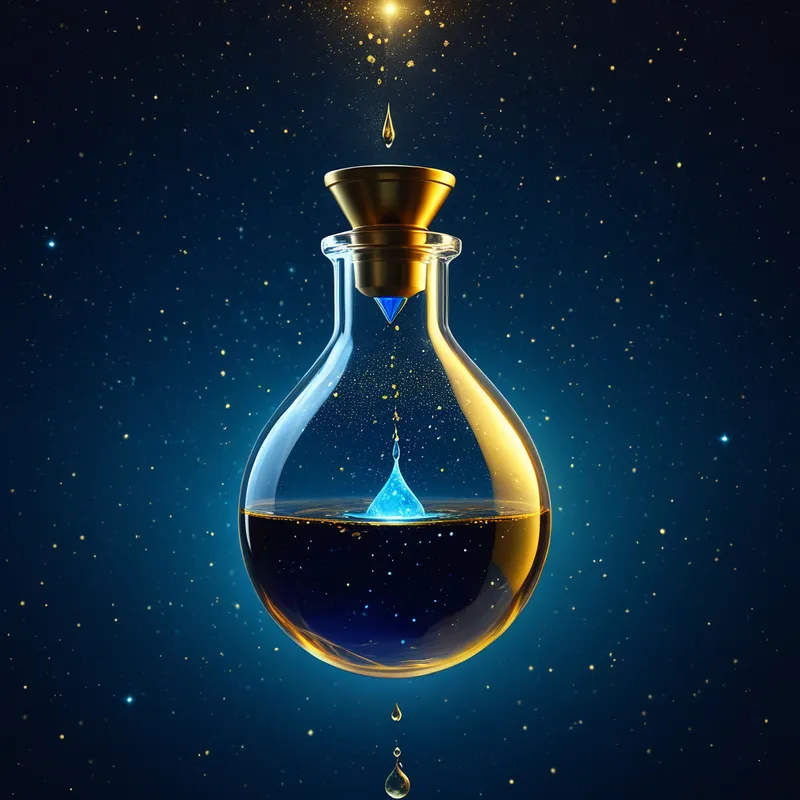
The oil is the core [symbol](/symbols/symbol “Symbol: A symbol can represent an idea, concept, or belief, serving as a powerful tool for communication and understanding.”/). It is not the [lamp](/symbols/lamp “Symbol: A lamp symbolizes guidance, enlightenment, and the illumination of truth, often representing knowledge or clarity in dark times.”/) (the outer form, the [role](/symbols/role “Symbol: The concept of ‘role’ in dreams often reflects one’s identity or how individuals perceive their place within various social structures.”/), the [identity](/symbols/identity “Symbol: Identity represents the sense of self, encompassing personal beliefs, cultural background, and social roles.”/)), but the inner, combustible substance that fuels the light. It represents stored-up [consciousness](/symbols/consciousness “Symbol: Consciousness represents the state of awareness and perception, encompassing thoughts, feelings, and experiences.”/), the accrued wisdom, the practiced integrity, the lived [faith](/symbols/faith “Symbol: A profound trust or belief in something beyond empirical proof, often tied to spiritual conviction or deep-seated confidence in people, ideas, or outcomes.”/) that cannot be transferred or borrowed at the last [minute](/symbols/minute “Symbol: The ‘minute’ symbolizes the passage of time, attention to detail, and the importance of living in the present moment.”/).
The oil is the currency of the inner life, earned in the daylight of ordinary time and spent in the midnight of crisis.
The wise and foolish virgins represent not two types of people, but two potentials within every [soul](/symbols/soul “Symbol: The soul represents the essence of a person, encompassing their spirit, identity, and connection to the universe.”/). The wise is the part that attends to [depth](/symbols/depth “Symbol: Represents profound layers of consciousness, hidden truths, or the unknown aspects of existence, often symbolizing introspection and existential exploration.”/), that invests in the unseen reserves. The foolish is the part that lives on the surface, assuming the form ([the lamp](/myths/the-lamp “Myth from Alchemical culture.”/)) is enough, perpetually mortgaging the future for the comfort of the present. The shut [door](/symbols/door “Symbol: A door symbolizes transition, opportunity, and choices, representing thresholds between different states of being or experiences.”/) is not cruelty, but the natural, psychic consequence of a [life](/symbols/life “Symbol: The symbol of ‘Life’ represents a journey of growth, interconnectedness, and existential meaning, encompassing both the joys and challenges that define human experience.”/) unprepared for its own most important moment. It is [the law](/symbols/the-law “Symbol: Represents external rules, societal order, moral boundaries, and the tension between personal freedom and collective structure.”/) of inner cause and effect.
The Dreamer’s Resonance
When this myth stirs in the modern dreamer, it often manifests as dreams of being late, of missed exams, of forgotten passwords, or of arriving at a crucial event utterly unprepared. The somatic feeling is one of gut-wrenching anxiety, of frantic searching, and profound shame. Psychologically, this signals that the conscious ego has been “asleep” to some developing inner necessity. A call from [the Self](/myths/the-self “Myth from Jungian culture.”/) (the Bridegroom) is imminent or has already been sounded, but the dreamer has not done the inner work (secured the oil) to respond adequately.
The dream is a compensatory alarm from the unconscious. It highlights where the dreamer is living foolishly—perhaps maintaining a spiritual or intellectual facade without substance, or avoiding the disciplined work required for a looming life transition. The “marketplace” where the foolish seek oil represents the futile attempt to find outer, quick-fix solutions (consumerism, superficial advice, distraction) for an inherently inner deficit.
Alchemical Translation
The parable models the alchemical process of preparatio—the lengthy, often tedious preparation of the raw material of the soul. Individuation, the journey toward psychic wholeness, is not a single heroic leap but a long vigil of small, faithful acts of consciousness.
The foolish virgin within us wants the gold (enlightenment, wholeness, peace) without [the nigredo](/myths/the-nigredo “Myth from Alchemical culture.”/)—the blackening, the laborious work in the dark. She wants the wedding feast without the watch. The wise virgin knows the secret: the oil is made in the dark, through the slow, patient distillation of experience into wisdom, of suffering into compassion, of attention into presence.
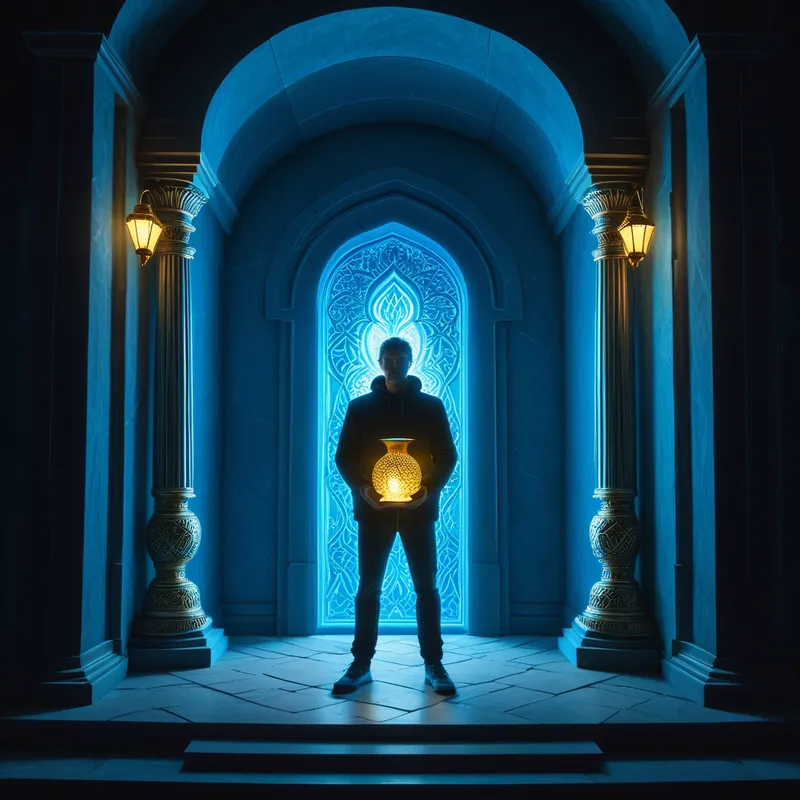
The shut door is the ultimate alchemical vessel. It is the sealed container where the fate of the foolish part is fixed, so that the wise part can be fully born.
The [triumph](/myths/triumph “Myth from Roman culture.”/) is not the exclusion of the foolish, but the irreversible differentiation from her. The closed door represents the firm, conscious boundary [the ego](/myths/the-ego “Myth from Jungian culture.”/) must establish against its own procrastinating, superficial tendencies. To “know” the Bridegroom is to have achieved a level of conscious development that allows for recognition and communion. The one who has not done the work remains a stranger to that level of reality. Thus, the parable is a severe but compassionate guide to the most sacred responsibility: the stewardship of one’s own [inner light](/myths/inner-light “Myth from Buddhist culture.”/), lest when the call comes from the depths, we find ourselves fumbling in the dark, strangers to our own awakening.
Associated Symbols
Explore related symbols from the CaleaDream lexicon: