The Origin of the First Rooster Myth Meaning & Symbolism
A celestial being descends to become the first rooster, sacrificing its divine form to bring order, time, and protection to the human world.
The Tale of The Origin of the First Rooster
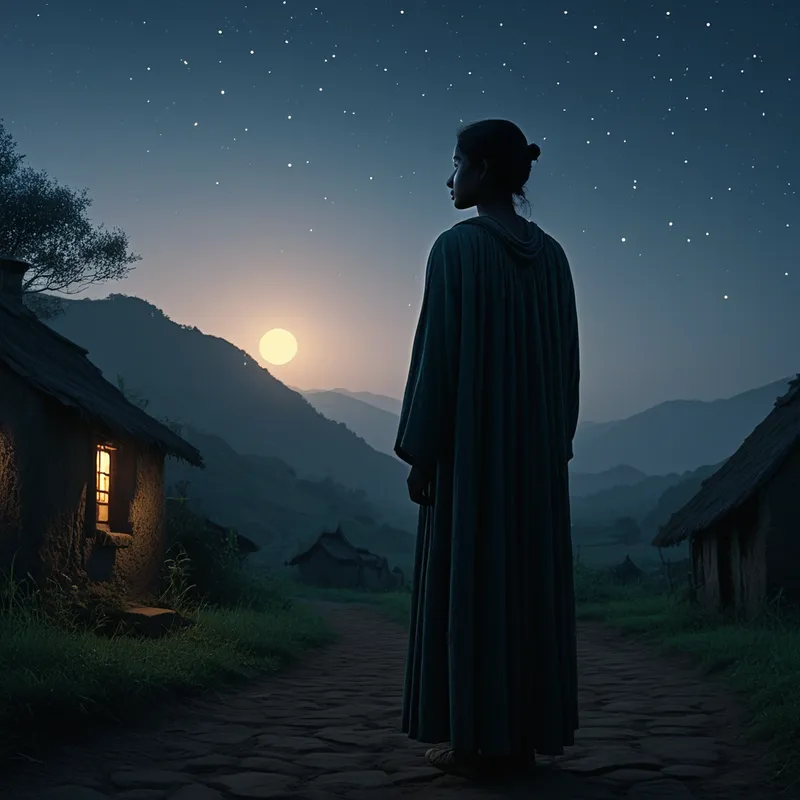
In the time before time was measured, when the world was soft and dark, the heavens held their breath. The sun, a loyal servant, did not yet know when to rise. The people of the earth slept in a perpetual twilight, their lives ruled by the whims of shadow and the silent terror of creatures that slithered in the unbroken night. Chaos was the only king.
From the court of the Celestial Emperor, a profound sorrow was felt. The cries of humanity, lost and fearful, were a faint but piercing melody of distress that rose through the layers of the cosmos. The Emperor looked upon his court of shining ministers and divine beasts. His gaze settled upon one of his most loyal and radiant attendants, a being of pure celestial essence, whose form was light and whose voice was the harmony of the spheres.
“The world below suffers in an endless dusk,” the Emperor’s voice echoed like distant thunder. “They have no herald for the sun, no guardian against the terrors of the deep night. They need a marker, a protector, a living bell to cleave the darkness.”
The celestial being stepped forward, its light dimming in understanding of the weight of the unspoken command. It knew the price. To descend was to be bound. To serve was to be transformed. To bring order was to sacrifice eternity.
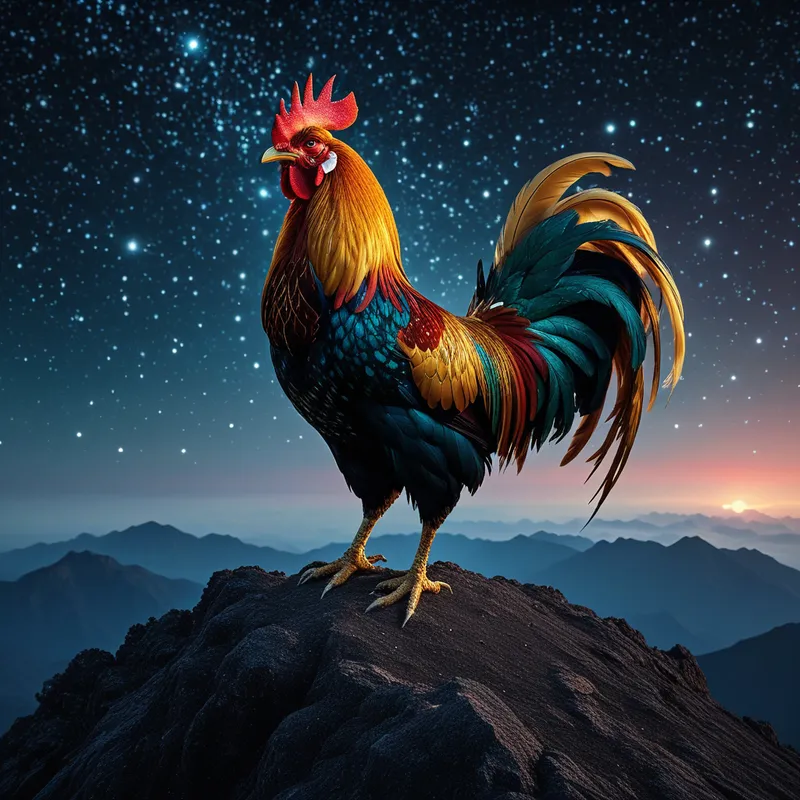
Without a word of protest, the being turned from the palace of jade and cloud. It fell not as a shooting star, but as a slow, deliberate drift of sorrowful light, descending to the highest peak of the world. As it touched the cold, mortal stone, its essence contracted and solidified. The formless light coalesced into vivid feathers—crimson like the first blood of dawn, gold like the heart of the sun it would call, and deep black like the retreating night. Its graceful, ethereal form compacted into the sturdy body of a bird. Its divine voice, once a symphony, focused into a single, potent sound.
It stood upon the mountain, a stranger in its own skin, feeling the terrible weight of earth and the bite of the wind. It looked at the sleeping villages below, shrouded in fear. It felt the approach of the sun, a distant friend waiting for a signal.
Then, drawing the last vestige of its celestial power into its new, earthly throat, it opened its beak. A sound tore forth—not the melody of heaven, but a sharp, clarion cry that shattered the silence like glass. Gyeong-gyeok! The sound rippled across the land, piercing the gloom. It was a command, a challenge, a promise.
In the east, the sun, hearing its name called by this brave, transformed voice, began its ascent. The first thin line of light breached the horizon. The creatures of the night, their power broken by the sound, retreated into the earth. In the villages, people stirred from their troubled sleep. They heard the cry, saw the growing light, and felt, for the first time, the safe rhythm of a new day.
The being, now truly the first Rooster, had traded its place in the eternal court for a daily vigil. It would forever be the hinge between dark and light, the sacrifice that made order possible, its beautiful cry a daily remembrance of the moment chaos was tamed by a willing heart.
Cultural Origins & Context
This myth belongs to the rich tapestry of Korean foundation narratives and Minhwa (folk tales). It was not a story confined to royal courts but was breathed into life by storytellers and grandmothers in village courtyards and around hearths. Its primary function was etiological—explaining the origin of a ubiquitous and vital creature—but its depth served a far greater societal purpose.
In an agrarian society like Korea’s, the rooster’s crow was the alarm clock of the ancient world, regulating the start of the work day, ritual ceremonies, and market times. The myth sanctified this practical function, embedding it within a cosmic moral order. It taught that the comforts and structures of civilization—time, safety, routine—are not natural givens, but are born from profound sacrifice. The rooster became a symbol of Chung (loyalty), of unwavering service to a higher principle (the Celestial Emperor’s will, which is the will of harmony itself). It reinforced a cultural worldview where duty, sacrifice, and maintaining cosmic and social order are the highest virtues.
Symbolic Architecture
At its core, the myth is a masterful depiction of the psyche’s [movement](/symbols/movement “Symbol: Movement symbolizes change, progress, and the dynamics of personal growth, reflecting an individual’s desire or need to transform their circumstances.”/) from undifferentiated unity into structured [consciousness](/symbols/consciousness “Symbol: Consciousness represents the state of awareness and perception, encompassing thoughts, feelings, and experiences.”/).
The [Chaos](/symbols/chaos “Symbol: In Arts & Music, chaos represents raw creative potential, uncontrolled expression, and the breakdown of order to forge new artistic forms.”/) of the eternal [night](/symbols/night “Symbol: Night often symbolizes the unconscious, mystery, and the unknown, representing the realm of dreams and intuition.”/) represents the primal, unconscious state—potentially creative but also terrifying and unlivable. The [human](/symbols/human “Symbol: The symbol of a human represents individuality, complexity of emotions, and social relationships.”/) world asleep is the ego lost in this unconsciousness, unable to orient itself.
The first act of consciousness is not thought, but a cry that creates a boundary. It is the heroic sound that says, “Here, I am. There, the light begins.”
The Celestial Emperor symbolizes the Self, the central organizing principle of the total psyche, which perceives the suffering of the fragmented ego and initiates the process of ordering. The celestial attendant is that potential within us—a latent, divine quality of [awareness](/symbols/awareness “Symbol: Conscious perception of self, surroundings, or internal states. Often signifies awakening, insight, or heightened sensitivity.”/)—that must be volunteered for the difficult [task](/symbols/task “Symbol: A task represents responsibilities, duties, or challenges one faces.”/) of incarnation.
The transformation is the crux. The being does not simply visit [earth](/symbols/earth “Symbol: The symbol of Earth often represents grounding, stability, and the physical realm, embodying a connection to nature and the innate support it provides.”/); it becomes of the earth. Its formless light becomes a defined, mortal [body](/symbols/body “Symbol: The body in dreams often symbolizes the dreamer’s self-identity, personal health, and the relationship they have with their physical existence.”/). This is the archetypal [pattern](/symbols/pattern “Symbol: A ‘Pattern’ in dreams often signifies the underlying structure of experiences and thoughts, representing both order and the repetitiveness of life’s situations.”/) of [spirit](/symbols/spirit “Symbol: Spirit symbolizes the essence of life, vitality, and the spiritual journey of the individual.”/) becoming matter, [idea](/symbols/idea “Symbol: An ‘Idea’ represents a spark of creativity, innovation, or realization, often emerging as a solution to a problem or a new outlook on life.”/) becoming [action](/symbols/action “Symbol: Action in dreams represents the drive for agency, motivation, and the ability to take control of situations in waking life.”/), potential becoming actual. The rooster’s physical form—its comb like a [crown](/symbols/crown “Symbol: A crown symbolizes authority, power, and achievement, often representing an individual’s aspirations, leadership, or societal role.”/), its spurs like weapons, its vibrant plumage—is consciousness now embodied, equipped, and visible.
Finally, the crow is the Logos, the [Word](/symbols/word “Symbol: Words in dreams often represent communication, expression, and the power of language in shaping our realities.”/). It is the active principle that creates [reality](/symbols/reality “Symbol: Reality signifies the state of existence and perception, often reflecting one’s understanding of truth and life experiences.”/). By naming the [dawn](/symbols/dawn “Symbol: The first light of day, symbolizing new beginnings, hope, and the transition from darkness to illumination.”/), it brings it into being. It establishes [rhythm](/symbols/rhythm “Symbol: A fundamental pattern of movement or sound in time, representing life’s cycles, emotional flow, and universal order.”/), the fundamental pattern of [life](/symbols/life “Symbol: The symbol of ‘Life’ represents a journey of growth, interconnectedness, and existential meaning, encompassing both the joys and challenges that define human experience.”/): dark/light, rest/[activity](/symbols/activity “Symbol: Activity in dreams often represents the dynamic aspects of life and can indicate movement, progress, and engagement with personal or societal responsibilities.”/), unconscious/conscious.
The Dreamer’s Resonance
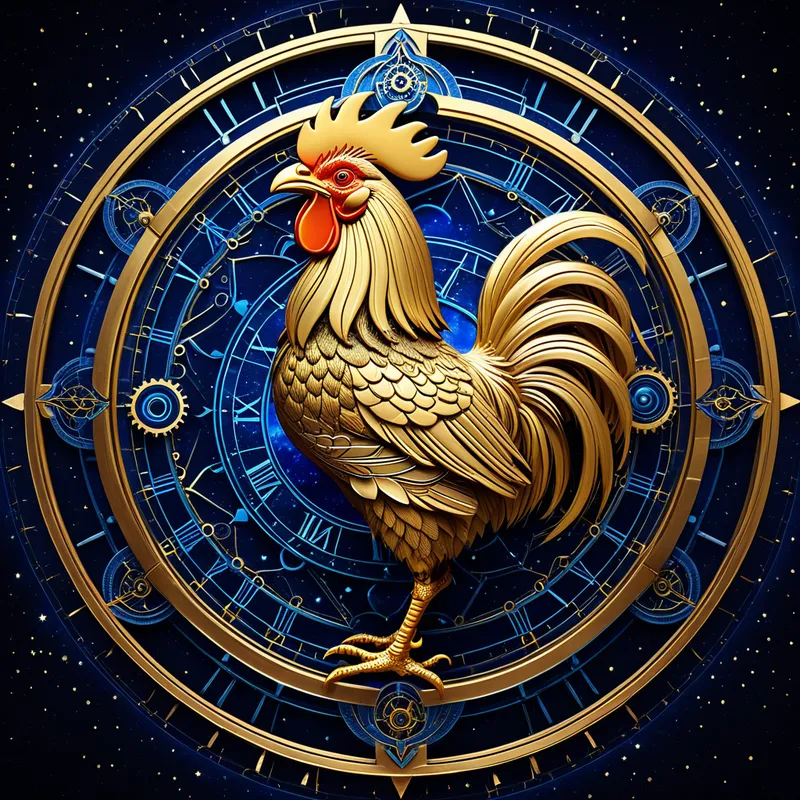
When this myth stirs in the modern dreamer, it often signals a profound transition from a state of psychic chaos or passive suffering into one of active, disciplined order. Dreaming of a rooster, especially one that is luminous, oversized, or speaking, can point to this archetypal process.
Somatically, one might feel a constriction in the throat—the site of the crow—representing a new truth or declaration struggling to be born. Psychologically, it is the process of “taking a stand.” The dreamer may be in a life phase of endless “dusk”: depression, confusion, lack of direction, or being plagued by “nocturnal” fears and anxieties. The appearance of the Rooster archetype is the psyche’s insistence that it is time to find your voice, your unique call, to establish a boundary against what devours your peace, and to commit to a daily practice (a “crowing”) that orients your life toward the light.
It is the dream of accepting a sacred duty to oneself, even if that duty feels like a diminishment from a former, more “free” or “celestial” state. It is the heroism of the mundane.
Alchemical Translation
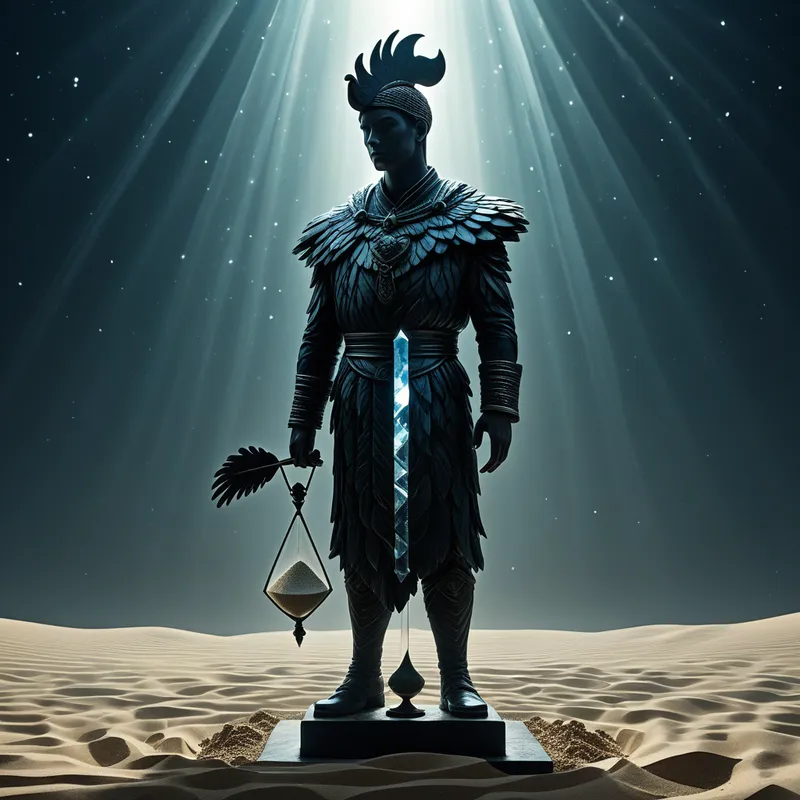
The alchemical journey mirrored in this myth is the opus of bringing the celestial gold of potential down to the earthly realm of manifestation. It is the ultimate process of Individuation.
First, the Recognitio: The Self (Celestial Emperor) recognizes the suffering of the ego’s chaos. In our lives, this is the moment of painful clarity where we see our own disordered patterns, our passive victimhood in the “endless night.”
Second, the Voluntas: The willing sacrifice of a latent, divine part of ourselves. We must volunteer our “celestial” fantasy—perhaps of perfect freedom, of being above it all, of unmanifested talent—to be transformed into a useful, earthly tool. The intellectual must become practical. The artist must complete the work. The healer must touch the wound.
Individuation is not about ascending to heaven, but about bringing a piece of heaven down to earth, and paying for it with your former form.
Third, the Fixatio: The descent and binding into form. This is the hard work of discipline, routine, and embodiment—showing up daily at the mountain peak of your commitment, regardless of weather or weariness.
Finally, the Projectio: The crow. This is the consistent, outward expression of your transformed self. It is the book published, the business launched, the boundary spoken, the art shared, the healing offered. It is the act that, repeated daily, creates a new ordered reality around you. You become the herald of your own dawn, the protector of your own peace, and by your regular, faithful cry, you help orient the world around you toward light.
Associated Symbols
Explore related symbols from the CaleaDream lexicon:
- Bird — The celestial messenger who descends, representing the spirit’s capacity to travel between realms and the sacrifice of flight for grounded purpose.
- Sun — The cosmic order and consciousness that is summoned into being by the rooster’s cry, representing enlightenment, clarity, and the cyclical nature of life.
- Sacrifice — The core action of the myth; the voluntary relinquishment of a higher, freer state for a lower, bound one in service of a greater good and cosmic order.
- Order — The principle established by the rooster’s daily vigil, representing the triumph of structure, rhythm, and predictability over chaos and fear.
- Light — The direct consequence of the sacrifice, representing consciousness, safety, revelation, and the dispelling of the shadowy contents of the unconscious.
- Hero — The celestial being embodies this archetype through its selfless act of descending to perform a perpetual, foundational service for humanity.
- Dawn — The first moment of creation brought about by the crow, symbolizing new beginnings, hope, and the daily opportunity for renewal.
- Voice — The transformed power of the celestial being, representing declaration, boundary-setting, and the creative power of sound to shape reality.
- Sky — The realm of origin, potential, and the divine order from which the hero descends, contrasting with the earthly realm of manifestation.
- Mountain — The liminal space between heaven and earth where the transformation occurs, representing the point of mediation, sacrifice, and elevated perspective.
- Origin — The myth itself is an origin story, explaining the genesis of a fundamental cultural and cosmic marker, speaking to the human need to understand beginnings.
- First — The unique, foundational status of this rooster, representing the archetypal, primordial act that establishes a pattern for all that follows.