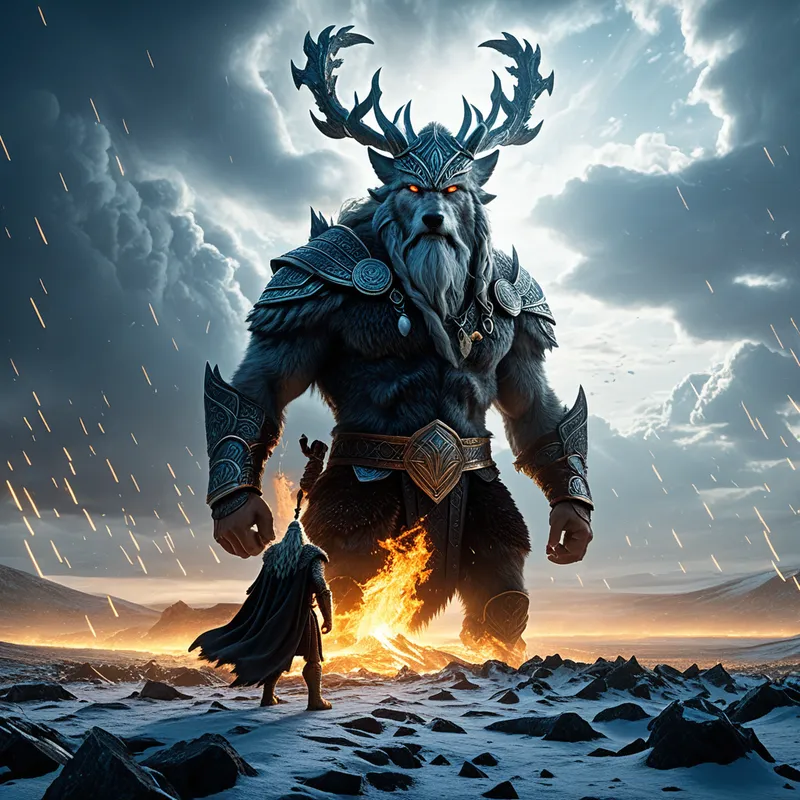
The Norse Ragnarök Myth Meaning & Symbolism
The twilight of the gods, a cataclysmic battle ending the world, followed by a green renewal from the sea, symbolizing necessary death for rebirth.
The Tale of The Norse Ragnarök
Hear now the doom-song of the world. The air grows thick with the breath of wolves. The sun, that golden chariot, grows sickly and pale, her sister the moon fleeing a ravenous shadow. The very bones of the earth tremble, for the great winter, Fimbulvetr, has come. Three winters without a summer, where brother slays brother for a crust of bread, and all oaths are shattered like ice.
From the east, the ship of the dead, Naglfar, breaks free from its moorings, its hull groaning with a legion of frost-giants. From the south, another vessel sails, this one of fire, steered by the fiery giant Surtr, his sword brighter than the sun. The world-serpent, Jörmungandr, stirs in the deep, its coils churning the oceans into poison that floods the lands.
The watchman of the gods, Heimdallr, sees all. He raises the horn Gjallarhorn and blows a blast that cracks the sky, a call to final arms. The Æsir and the Einherjar don their ghostly mail. The All-Father, Odin, rides to the plain of Vigridr, his two ravens silent on his shoulders. He seeks counsel from the severed head of Mímir, but the wisdom now is only of the end.
The bonds break. The great wolf Fenrir, whose leash was forged from the sound of a cat’s footfall and other impossibilities, snaps his fetters. His jaws gape wide enough to scrape sky and earth. Loki, the betrayer, steers the ship of fire, free from his agonizing bonds. The forces of chaos converge.
On Vigridr, the din begins. Odin charges the wolf Fenrir, and is swallowed whole. Thor, protector of mankind, faces the world-serpent Jörmungandr. He strikes the killing blow with his hammer Mjölnir, but staggers back only nine steps before falling, drowned in the serpent’s venom. Týr, who once sacrificed his hand to bind the wolf, fights the hound Garmr, and they slay each other. Loki and Heimdallr meet, old foes, and share the same fate. Surtr swings his flaming sword, and the nine worlds become a roaring furnace. The stars vanish. The earth sinks beneath the boiling sea.
Silence. Ash. Embers dying on a dark, watery void.
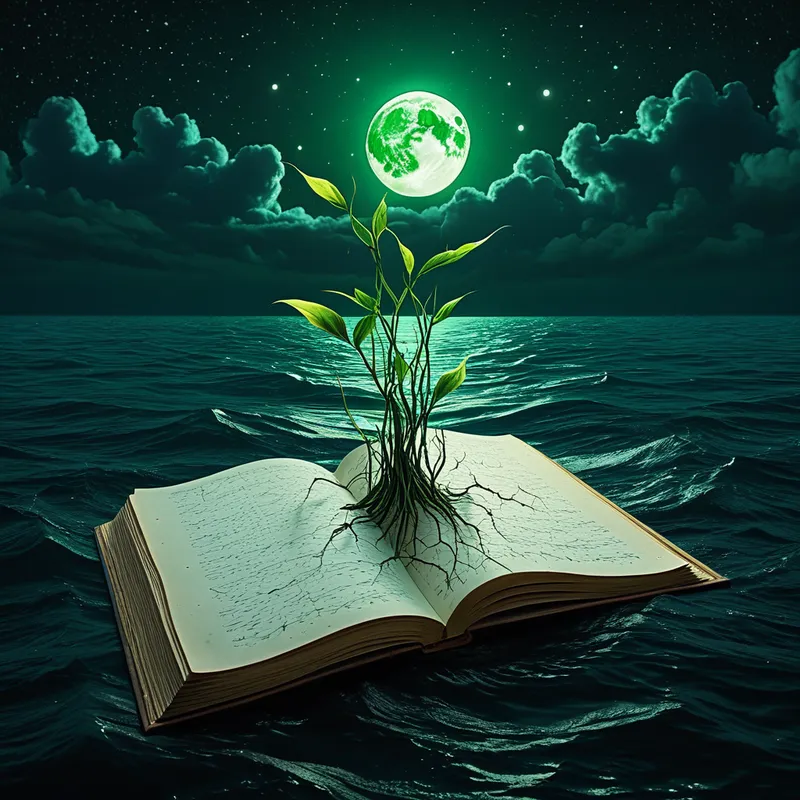
Then… a sigh. A gentle breath from the deep. The waters recede. A new earth rises from the waves, eternally green and fair. From a hidden wood emerge a man and a woman, Líf and Lífþrasir, who hid in the wood of Hoddmímis holt. The sun, born anew, is followed by a daughter more beautiful still. And in the grass, they find golden chess pieces—the gods who once were, hinting at a game not yet finished.
Cultural Origins & Context
This apocalyptic vision was not a scripture, but a story woven into the fabric of a world-view. Preserved primarily in two 13th-century Icelandic texts, the Poetic Edda and Snorri Sturluson’s Prose Edda, its roots reach deep into the oral traditions of the pre-Christian Norse and wider Germanic peoples. It was a myth told in halls smoky with firelight, a narrative that gave shape to a culture’s understanding of time, honor, and fate.
The society that nurtured this myth was one acutely aware of harsh cycles: of winter and summer, of feast and famine, of life won through battle and lost to the cold. The myth of Ragnarök functioned as a cosmic mirror of this reality. It provided a framework for a heroic ethos—the gods themselves fight a battle they know they will lose, yet they arm themselves with magnificent resolve. This was not a myth of salvation or redemption in an afterlife paradise, but one of dignity in the face of inevitable wyrd (fate). It taught that even the cosmos is subject to cycles of death and rebirth, and that courage lies in meeting one’s destined end with eyes wide open.
Symbolic Architecture
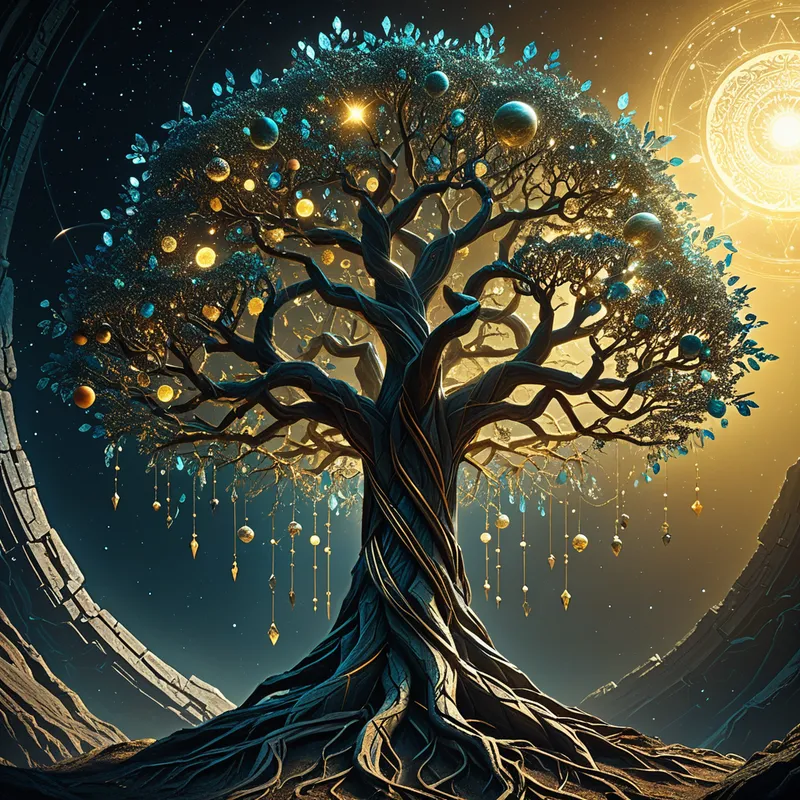
Ragnarök is not merely an end, but the ultimate expression of a necessary cosmological and psychological process. It represents the inevitable confrontation between the structured world of consciousness (the gods, Midgard) and the chaotic, repressed forces of the unconscious (the giants, monsters, and untamed elements).
The world must be unmade so that the self can be remade. The twilight of the gods is the dawn of a deeper consciousness.
The gods themselves are not perfect sovereigns but flawed, dynamic beings whose past actions—Odin’s quest for wisdom, Loki’s treachery, the binding of Fenrir—directly seed the catastrophe. This illustrates a profound psychological truth: the patterns we establish, the “bargains” we make with our own shadows, inevitably culminate in a crisis. Fenrir is the rage bound by cunning; when the cunning fails, the rage consumes all. Jörmungandr is the vast, encircling problem or depression ignored until it can no longer be contained. The fire of Surtr is the purifying, if devastating, conflagration that burns away obsolete forms.
The Dreamer’s Resonance
When the architecture of Ragnarök appears in modern dreams, it signals a profound psychic upheaval. The dreamer is not forecasting world’s end, but experiencing the collapse of an inner world—a long-held identity, a career, a foundational relationship, or a belief system.
Dreams of immense, inescapable waves, of buildings crumbling not from outside force but from internal fracture, of confronting a terrifying beast that is somehow familiar—these are the somatic echoes of Ragnarök. The Fimbulwinter manifests as a period of emotional coldness, isolation, and stagnation in the dreamer’s life. The feeling of “everything falling apart” is not a sign of failure, but of a necessary deconstruction. The dream psyche is orchestrating its own Vigridr, forcing a battle between the ruling “gods” of the conscious personality and the monstrous, neglected aspects of the self that demand recognition.
Alchemical Translation
For the individual, Ragnarök models the terrifying yet essential process of psychic death and rebirth, known in depth psychology as the nigredo and albedo of individuation. The conscious ego (the realm of the Æsir) has built a kingdom, but one that may be based on outworn ideals, repressed traumas (the bound monsters), and unsustainable narratives.
The alchemical fire of Surtr is the heat of this transformative crisis—a depression, a breakdown, a sudden loss that incinerates the old persona. It feels like annihilation.
To be swallowed by the wolf is to be taken into the belly of the unconscious, where the old ruling principle (Odin) must die so that a new, more integrated consciousness can be born from the survivors.
The process is not about “winning” the battle, but about enduring it fully. The death of Thor, who represents brute force and protection, signifies that old methods of control and defense are no longer viable. The new earth that rises, green and unsullied, symbolizes the psychic foundation that emerges after the cataclysm—more resilient, more authentic, and capable of sustaining new life (Líf and Lífþrasir). The golden game-pieces found in the grass are the precious, enduring kernels of wisdom and potential salvaged from the wreck of the old self, ready to be taken up in the new game of being. The cycle does not promise eternal peace, but it offers renewal, and with it, the chance to live from a deeper, more conscious center.
Associated Symbols
Explore related symbols from the CaleaDream lexicon: