
The myth of Sisyphus from Gree Myth Meaning & Symbolism
A cunning king defies the gods and is condemned to eternally push a boulder up a mountain, only to watch it roll back down.
The Tale of The myth of Sisyphus from Gree
Hear now of the cleverest of mortals, and the heaviest of punishments. In the land of Corinth, there ruled a king named [Sisyphus](/myths/sisyphus “Myth from Greek culture.”/). His mind was a [labyrinth](/myths/labyrinth “Myth from Various culture.”/), his wit sharper than any sword. He saw the [threads of fate](/myths/threads-of-fate “Myth from Greek culture.”/) and dared to pull them. He trapped [the river](/myths/the-river “Myth from Buddhist culture.”/) god Asopus to secure a spring for his city. But his greatest trick was played upon [Hades](/myths/hades “Myth from Greek culture.”/) himself.
When the dark god came with his chains of adamant to lead Sisyphus to the [Underworld](/myths/underworld “Myth from Greek culture.”/), the king feigned curiosity. “Show me,” he said, “how these marvelous bindings work.” The lord of shadows, perhaps flattered by mortal interest, demonstrated. In an instant, Sisyphus snapped them shut on Hades, trapping the god of death in his own dungeon. A great silence fell upon [the world](/myths/the-world “Myth from Tarot culture.”/). No soul could cross the Styx. Men ceased to die. War raged without end, and [the earth](/myths/the-earth “Myth from Hindu culture.”/) grew weary.
The great Zeus, from his cloudy throne, thundered in fury. This mortal chaos could not stand. He sent the war-god Ares to break the chains and drag [the trickster](/myths/the-trickster “Myth from Various culture.”/) king down to his final judgment. Sisyphus was led to the bleak shore, his clever tongue finally stilled.
But even then, his cunning did not sleep. Before crossing, he whispered to his wife, Merope, a final, desperate instruction: “Leave my body unburied. Perform no rites.” In the hall of the dead, he approached [Persephone](/myths/persephone “Myth from Greek culture.”/). With a face of tragic grief, he pleaded, “Mighty queen, my wife dishonors me. She leaves my flesh for dogs. Grant me but three days to return to the world of light and sun, to chastise her and see my body given to the earth. Then I shall return, a proper guest in your realm.” Moved by his seeming piety, [Persephone](/myths/persephone “Myth from Greek culture.”/) agreed.
Sisyphus walked back into the sweet air, felt the sun on his face, tasted wine, and laughed. He had cheated death twice. He would not return. The days stretched into years. He ruled, he feasted, he lived.
Until the day [the Furies](/myths/the-furies “Myth from Greek culture.”/) came. Their breath was ice, their eyes held no mercy. There was no trick left, no plea to be made. The judgment of Zeus was final and terrible. For the crime of believing his wit could outmatch cosmic law, for the arrogance of stealing life itself from the gods, Sisyphus was given a task that would define eternity.
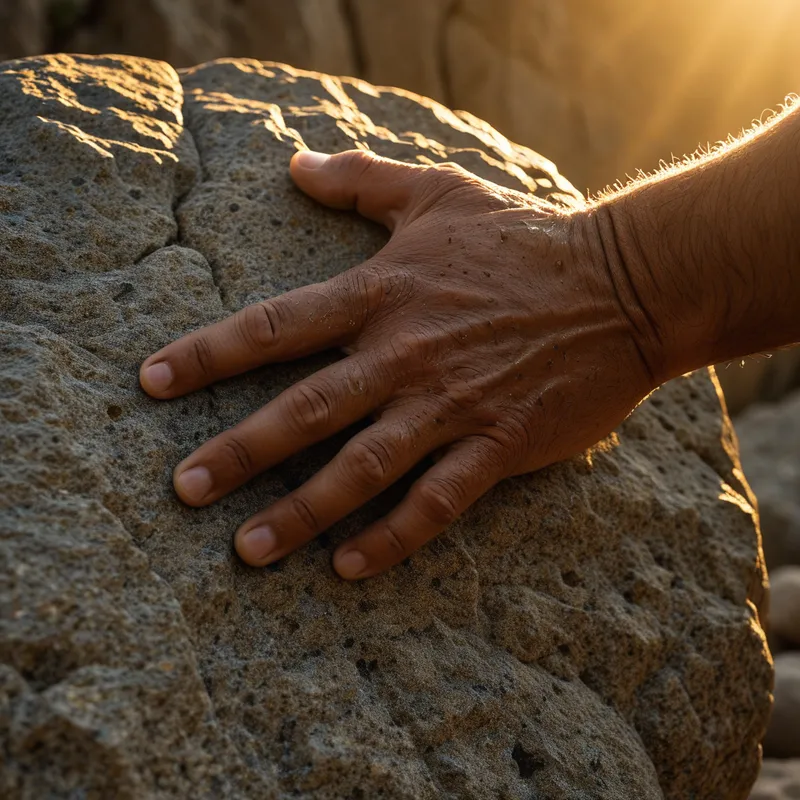
They led him to a barren mountainside in [Tartarus](/myths/tartarus “Myth from Greek culture.”/). Before him lay a massive boulder, hewn from the mountain’s heart, impossibly heavy, its surface slick and unyielding. “Your labor,” they said, “is to push this stone to [the summit](/myths/the-summit “Myth from Taoist culture.”/).” With a grunt of effort born of defiance, he set his shoulder to the rock. Muscles corded, breath came in ragged gasps, dust filled his lungs. For hours, for days, he pushed. He gained inches, then feet. The summit drew near, a promise of rest against the empty sky. With one final, Herculean heave, the boulder teetered on the crest.
And then, as if guided by a malicious will, it rolled. Not to the side, but back. Past him, gathering speed, crashing down the slope he had just conquered, coming to rest in the exact dust from which he began. A silence deeper than [the Underworld](/myths/the-underworld “Myth from Greek culture.”/) settled. And without a word, Sisyphus turned, walked back down the mountain, and set his shoulder once more to the stone. Again. And again. Forever.
Cultural Origins & Context
[The myth of Sisyphus](/myths/the-myth-of-sisyphus “Myth from Modern culture.”/) is a foundational narrative from the rich tapestry of ancient Greek mythology, primarily preserved in the works of later poets and scholars like Hesiod and the Roman mythographer Ovid. It finds its most detailed and chilling account in [Homer](/myths/homer “Myth from Greek culture.”/)’s Odyssey, where the hero [Odysseus](/myths/odysseus “Myth from Greek culture.”/) witnesses Sisyphus’s torment during his journey to the underworld.
This story functioned as a powerful cultural cautionary tale. In a society deeply concerned with hubris and the proper boundaries between mortals and gods, Sisyphus was the ultimate exemplar of transgression. His crimes were not merely against individuals but against the natural order—the cycle of life and death. The myth reinforced the societal values of accepting one’s mortal lot, honoring the gods (particularly through proper burial rites), and understanding that human cleverness, or [metis](/myths/metis “Myth from Greek culture.”/), has limits. It was a story told to remind the living of the consequences of overreaching and the immutable laws of a cosmos not designed for human convenience.
Symbolic Architecture
At its core, the myth of Sisyphus is an archetypal portrait of the absurd [condition](/symbols/condition “Symbol: Condition reflects the state of being, often focusing on physical, emotional, or situational aspects of life.”/). The boulder is not just a rock; it is the [weight of existence](/symbols/weight-of-existence “Symbol: This symbol embodies the burden of consciousness and the inherent challenges of being aware and alive, often leading to feelings of gravity and introspection.”/) itself—our tasks, our responsibilities, our relentless struggles that seem to erase themselves with time. The [mountain](/symbols/mountain “Symbol: Mountains often symbolize challenges, aspirations, and the journey toward self-discovery and enlightenment.”/) is the slope of aspiration, the endless [pursuit](/symbols/pursuit “Symbol: A chase or being chased in dreams often reflects unresolved anxieties, unfulfilled desires, or internal conflicts demanding attention.”/) of meaning in a [universe](/symbols/universe “Symbol: The universe symbolizes vastness, interconnectedness, and the mysteries of existence beyond the individual self.”/) that offers no final [summit](/symbols/summit “Symbol: The highest point of a mountain, representing achievement, perspective, and the culmination of effort.”/), no ultimate [trophy](/symbols/trophy “Symbol: The trophy symbolizes achievement, recognition, and the reward for perseverance in competitive endeavors.”/).
The punishment is not the labor, but the consciousness of its futility. Sisyphus is fully aware at the moment the stone rolls back. He is the thinking reed, condemned to comprehend his own bondage.
Sisyphus represents the [human](/symbols/human “Symbol: The symbol of a human represents individuality, complexity of emotions, and social relationships.”/) [spirit](/symbols/spirit “Symbol: Spirit symbolizes the essence of life, vitality, and the spiritual journey of the individual.”/) in rebellion against a meaningless [fate](/symbols/fate “Symbol: Fate represents the belief in predetermined outcomes, suggesting that some aspects of life are beyond human control.”/). His cunning is the intellect’s attempt to cheat [death](/symbols/death “Symbol: Symbolizes transformation, endings, and new beginnings; often associated with fear of the unknown.”/), to find a loophole in [reality](/symbols/reality “Symbol: Reality signifies the state of existence and perception, often reflecting one’s understanding of truth and life experiences.”/). His eternal [task](/symbols/task “Symbol: A task represents responsibilities, duties, or challenges one faces.”/) is the [psyche](/myths/psyche “Myth from Greek culture.”/)’s confrontation with [the void](/myths/the-void “Myth from Buddhist culture.”/) after all such tricks have failed. Psychologically, he embodies the part of us that is tasked with impossible burdens—the [caregiver](/symbols/caregiver “Symbol: A spiritual or mythical figure representing nurturing, protection, and unconditional support, often embodying divine or archetypal parental energy.”/) who is never relieved, the [artist](/symbols/artist “Symbol: An artist symbolizes creativity, expression, and the exploration of the human experience through various forms of art.”/) whose work is never finished, the [seeker](/symbols/seeker “Symbol: A person actively searching for meaning, truth, or a higher purpose, often representing the dreamer’s own quest for identity or fulfillment.”/) whose question has no answer. He is the [shadow](/symbols/shadow “Symbol: The ‘shadow’ embodies the unconscious, repressed aspects of the self and often represents fears or hidden emotions.”/) of our own relentless striving, the part of our ambition that has become a [prison](/symbols/prison “Symbol: Prison in dreams typically represents feelings of restriction, confinement, or a lack of freedom in one’s life or mind.”/).

The Dreamer’s Resonance
When the myth of Sisyphus erupts into modern dreams, it rarely appears as a classical Greek tableau. Instead, the dreamer finds themselves in a Sisyphean pattern. They may be running on a treadmill that accelerates, filing papers that instantly reappear, or trying to send an urgent text with buttons that melt under their fingers. The somatic feeling is one of profound exhaustion coupled with anxious urgency—a heavy, leaden fatigue in the limbs and a frantic, racing mind.
This dream motif signals a psychological process where [the ego](/myths/the-ego “Myth from Jungian culture.”/) is identified with a futile or repetitive task. The dreamer is likely caught in a life situation—a job, a relationship dynamic, a personal habit—that feels endlessly cyclical with no progress or resolution. The psyche is presenting the absurdity of the condition, forcing the dreamer to feel the weight of the “boulder” they are pushing. It is an invitation from the unconscious to stop, turn around, and question the very nature of the task. Are they pushing the boulder because they must, or because they have forgotten they can choose to step aside?

Alchemical Translation
The alchemical journey implied by Sisyphus’s myth is not one of escape, but of radical inner transformation in the very heart of the struggle. The first step, the [nigredo](/myths/nigredo “Myth from Alchemical culture.”/), is the crushing realization of the cycle’s futility—the moment the boulder rolls back. This is a dark night of the soul, where all former meanings collapse.
The transmutation begins when Sisyphus walks back down the mountain. This is the critical, alchemical moment. It is the space between labors, the moment of descent where he is free of the stone’s weight.
The victory is in the return. In that walk down the mountain, Sisyphus possesses his fate. The rock is his thing. His consciousness, his rebellion, and his acceptance become the ingredients for a new, self-authored meaning.
The individuation process here is the integration of the absurd. One must become the “Absurd Hero.” The boulder—the meaningless task, the chronic illness, the grief that never fully leaves—is not overcome. Instead, the relationship to it changes. The ego’s demand for a final victory is surrendered. In its place arises a deeper, more resilient consciousness that finds dignity not in reaching the summit, but in the quality of the push, in the texture of the struggle, in the silent solidarity with one’s own chosen or allotted burden. The stone remains, but the curse becomes a practice. The punishment becomes a path. One imagines Sisyphus, in his moment of descent, as supremely free. He is the master of a universe that has no master. His [triumph](/myths/triumph “Myth from Roman culture.”/) is a quiet, internal rebellion that no god can touch: the decision to find the struggle itself sufficient.
Associated Symbols
Explore related symbols from the CaleaDream lexicon: