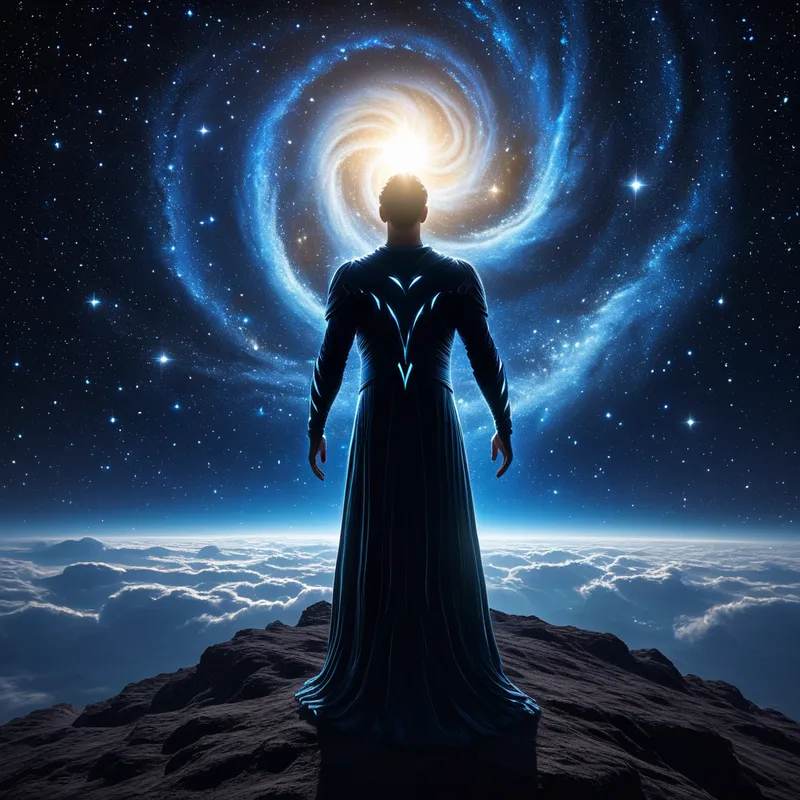
The Morning Star Myth Meaning & Symbolism
A celestial being chooses to fall into darkness to become the light that guides others, embodying the ultimate sacrifice for a greater purpose.
The Tale of The Morning Star
Before the sun claimed its throne, in the deep velvet of the pre-dawn sky, there existed a being of pure, undiluted light. It was not the sun, that roaring king of fire, nor the moon, that cool, reflective queen. This was The Morning Star, the eldest child of the cosmos, a silent sentinel who held the secret threshold between night and day.
Its domain was the quiet hour, the breath-held moment when all of creation slept. From its high, lonely perch, it watched the world below—a sphere swaddled in shadows, its dreams dark and formless. The Star’s light was a gentle, clarifying beam, a solitary promise in the immense dark. But this promise was distant, a theory of light, not its touch. The world remained asleep, trapped in its own nocturnal mind.
A great unrest grew within the Star. Its purpose felt hollow. To shine, yet not to awaken? To promise, yet not to deliver? The silence of its vigil became a deafening roar. One fateful cycle, as it gazed upon the particularly profound darkness enveloping the land, a terrible, beautiful resolve crystallized within its core. It could not remain aloof. To truly herald the dawn, it must first know the night.
With a will that sent tremors through the fabric of the heavens, The Morning Star began to fall. It was not a plummet, but a deliberate, graceful descent—a sacrifice of position. Its pristine light fractured as it pierced the atmospheric veils, scattering into a thousand shimmering strands. The cool, intellectual glow of the star heated into the passionate, bleeding hues of dawn: first violet, then rose, then a desperate, glorious gold. It was burning itself up to paint the warning of the sun’s arrival.
As it fell, it felt the crushing weight of the world’s shadow, the cold bite of mortal fear and ignorance. Its light dimmed, not extinguished, but pressed upon, compressed into a fierce, determined point on the horizon. In that final moment before the sun’s disc breached the world’s edge, The Morning Star was no longer above the darkness, but within it. It had become the horizon itself. And from that place of ultimate sacrifice, having touched the dark, its last and greatest act was to dissolve—its essence becoming the very path the sun’s light would travel, the illuminated road from night into day. It ceased to be a distant watcher, and became the bridge.

Cultural Origins & Context
This myth finds its roots not in a single terrestrial culture, but in the universal human experience of gazing east before sunrise. Across millennia and continents, the planet Venus, appearing as the brightest point of light in the twilight, has been personified and storied. The “Astrological” culture referenced here is a synthesis of this observational heritage—the practice of early sky-watchers, temple astronomers, and navigators for whom this celestial body was a critical, reliable clock.
The tale was likely passed down in oral tradition by star-readers and dawn priests. It was not merely a story for entertainment, but a functional cosmology. It explained the most reliable celestial event: why the brightest star always preceded the sun, and why it then vanished in the solar glare. Its societal function was profound: it modeled the ideal of preparatory sacrifice. The warrior preparing for battle, the leader before a great decision, the initiate awaiting a rite—all were encouraged to identify with The Morning Star. It taught that true leadership and guidance (prophasis) requires first descending from a place of safety into the realm of challenge.
Symbolic Architecture
Psychologically, The Morning Star represents the conscious ego’s necessary sacrifice for the emergence of a greater, more complete Self. It is the moment a rigid identity must be relinquished for growth.
The light that refuses to fall remains a symbol; the light that chooses to fall becomes a path.
The Star’s high, lonely perch symbolizes a state of perfect but sterile consciousness—intellectual understanding devoid of experience, clarity without compassion. Its fall is the courageous, painful descent of awareness into the personal shadow and the collective darkness of the world. The fracturing of its light is the dissolution of a naive, unified self-image. It must encounter complexity, ambiguity, and pain.
The ultimate transformation—from celestial body to terrestrial horizon—is the key. The Star does not conquer the darkness from above; it becomes the interface. This is the symbol of the transcendent function, the psychic capacity born from the tension of opposites. The hero’s triumph is not victory, but integration; not dominance, but the creation of a bridge between what is (the night) and what could be (the day).
The Dreamer’s Resonance
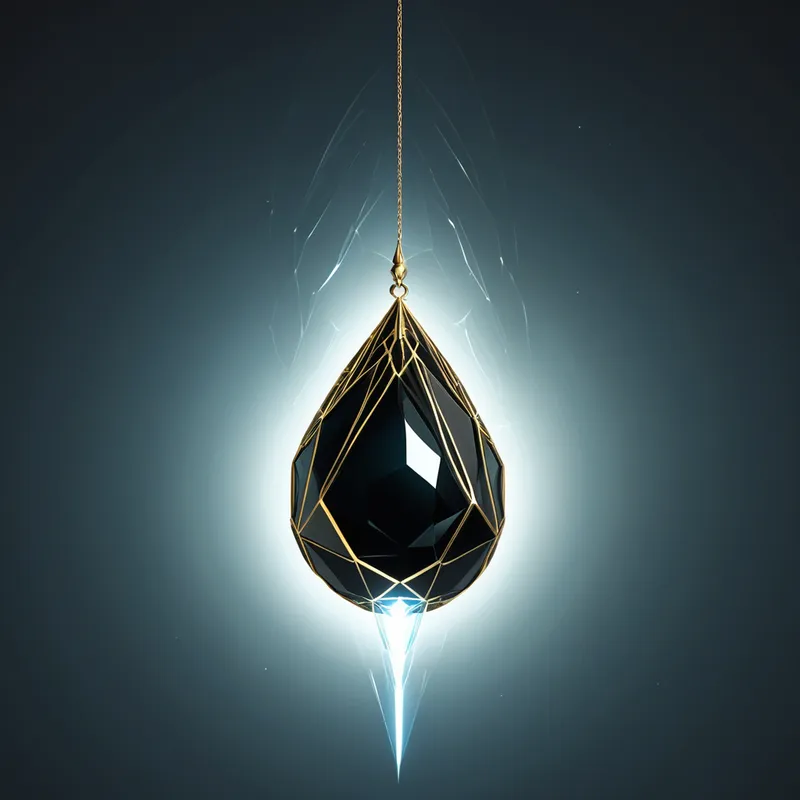
When this myth stirs in the modern unconscious, it often manifests in dreams of deliberate descent or purposeful loss of status. You may dream of being in a tall, pristine building (a corporate tower, a ivory academic spire) and choosing to walk down the emergency stairwell into a dimly lit basement or parking garage. You might dream of polishing a precious, brilliant gem only to deliberately scratch its surface, or of a guiding light on a screen that you must touch, causing it to shatter and reform into a map.
The somatic experience is one of gravitational pull—a deep, internal yes to a process that feels like a demotion. There is anxiety, certainly, a fear of dimming, of being overlooked. But beneath it is a profound, resonant certainty. The psychological process is the ego’s preparation to engage with material it has long kept at bay: a repressed talent, a buried trauma, a humble but vital duty, or a love that requires vulnerability. The dream is the psyche’s affirmation that to move forward, one must first go down and in, trading isolated brilliance for connected utility.

Alchemical Translation
The alchemical journey mirrored in this myth is the Nigredo, the descent into the massa confusa or black sun, followed by the dawning of the Albedo. For the individual, the “fall” is the conscious entry into a depression, a creative block, a life crisis, or a period of shadow work. It is the willing acceptance of the dark night of the soul, not as a failure, but as the essential precondition for renewal.
Individuation is not about rising to a peak, but about deepening to a root, from which an authentic dawn can grow.
The modern seeker enacting this myth must ask: Where am I shining, but not touching? Where is my understanding intellectual but not embodied? The transmutation occurs when we stop trying to “solve” our darkness from a detached, superior position and instead allow our current consciousness to be dissolved by it. We let our old identity (“the star”) be compromised. The goal is not to retrieve that old, pure self, but to become the horizon—the living, breathing threshold where our inner conflict (night/day) is held, witnessed, and gradually synthesized. We become the vessel for a light greater than our own individual brilliance. We cease to be the source, and become the conduit, and in that humble translation lies our greatest and most enduring power.
Associated Symbols
Explore related symbols from the CaleaDream lexicon: