The Mists of Avalon Myth Meaning & Symbolism
A mythic isle veiled in mist, a threshold between worlds, where sovereignty is tested and the soul journeys to reclaim wholeness from the depths.
The Tale of The Mists of Avalon
Listen. [The wind](/myths/the-wind “Myth from Various culture.”/) carries a whisper from the west, from beyond the ninth wave, where the salt air grows thick and the light turns to [pearl](/myths/pearl “Myth from Chinese culture.”/). There lies a place that is not a place, an isle that breathes with the tide of dreams. They call it Avalon. But you will not find it on any map drawn by mortal hand. It is veiled, wrapped in the living cloak of the Mists.
These are no common fogs of the fen. They are the breath of the land itself, silver and shifting, a veil between [the world](/myths/the-world “Myth from Tarot culture.”/) of solid stone and roaring hearth and the world of spirit, memory, and potent magic. The mists part not for the bold, nor the strong of arm, but for the one who carries a wound that will not heal in the sunlit world, and a question that cannot be answered by mortal council.
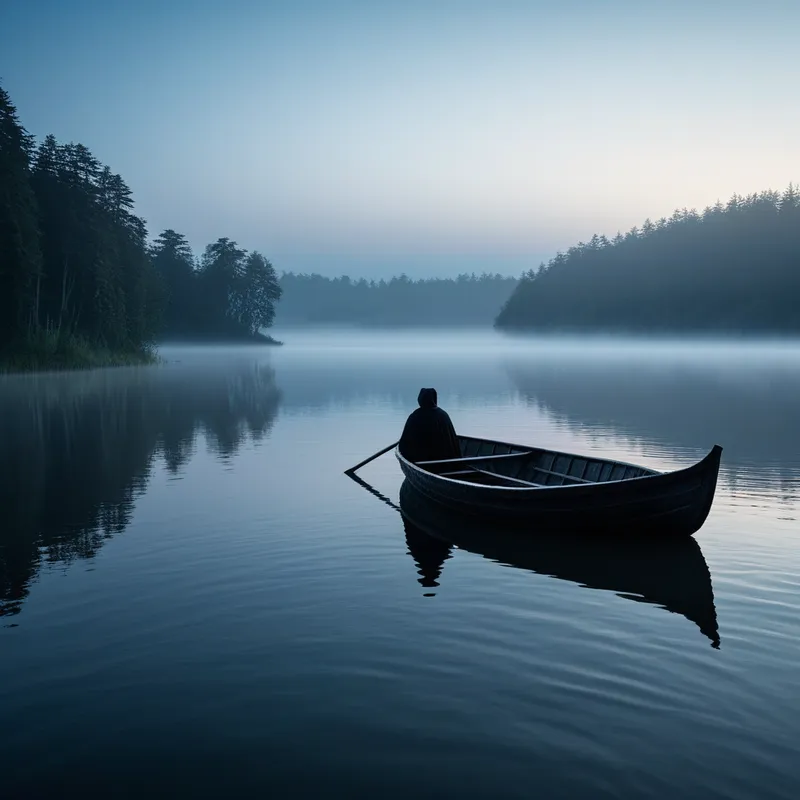
Into such a tale steps a figure of renown, a king whose body is broken. He is borne not on a proud warship, but in a simple, black-hulled barge that moves against the current, guided by no visible hand. The [water](/myths/water “Myth from Chinese culture.”/) is still as dark glass. The air is cold and sweet with the scent of apple blossom out of season. The worldly sounds fade—the clang of forge, the cry of gulls, the murmur of court—until there is only the lap of water and the profound silence of waiting.
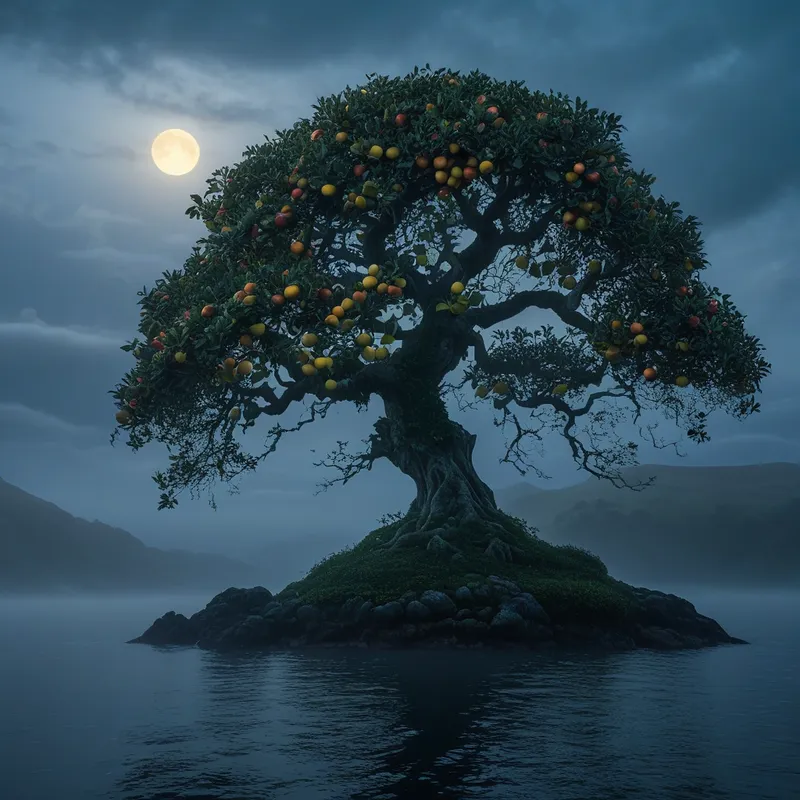
Then, the Mists gather. They rise from the water like a sigh, swirling, thickening, until the familiar shores are lost. There is no forward, no back. There is only the barge, the wounded king, and the enveloping silver-grey. Time stretches and pools. Is it a moment? A lifetime? In the heart of [the mist](/myths/the-mist “Myth from Celtic culture.”/), shapes form: the outlines of willow and [hawthorn](/myths/hawthorn “Myth from Celtic culture.”/), the suggestion of towering, graceful hills. A soft, greenish light glows ahead.
The barge grounds itself on a shore of dark, rich earth. Figures emerge from the luminous haze, not as solid forms, but as presences—women of solemn grace and ancient eyes, clad in robes the colour of dusk and moss. They are the [Sidhe](/myths/sidhe “Myth from Celtic culture.”/)-women, the keepers of the isle. Without a word, they take the king from the barge. Their touch is cool and sure. They carry him not to a hall of stone, but into the heart of a sacred grove, where the apples hang golden and eternal.
Here, in this place outside of time, the work begins. It is not merely the mending of flesh, but the tending of a spirit weary from the weight of a crown, from the compromises of rule, from the betrayal of trusted steel. The Mists do not retreat. They remain at the edges of the grove, a living boundary. The king sleeps, and dreams not of battles, but of the deep, dark soil, of roots reaching into forgotten waters, of a sword being plunged not into a foe, but into a still lake, returning to the source from which it came.
When he wakes, the wound is closed, but a deeper scar remains—a knowing. He sees the isle clearly now: the sacred spring, the [standing stones](/myths/standing-stones “Myth from Celtic culture.”/) humming with a low song, the faces of the keepers who are neither young nor old. He is whole, yet he is changed. And he knows he cannot stay. The Mists part once more, not to reveal his old world, but to show the path back to it, a path he must now walk with the memory of the apple-scented air and the silence of [the threshold](/myths/the-threshold “Myth from Folklore culture.”/) forever in his soul. The barge returns, and the Mists close behind him, seamless, as if they had never opened at all.
Cultural Origins & Context
The mythic motif of Avalon and its concealing mists is not the product of a single text, but a powerful confluence of deep Celtic [otherworld](/myths/otherworld “Myth from Celtic culture.”/) beliefs and later medieval literary synthesis. Its roots sink into the pre-Christian Celtic understanding of the [Sídhe](/myths/sdhe “Myth from Celtic / Irish culture.”/) or [Otherworld](/myths/otherworld “Myth from Celtic culture.”/)—a realm parallel to our own, abundant, timeless, and accessible only at certain liminal points (dusk, dawn, mist-shrouded lakes, certain festivals).
This was not a “heaven” but a source of sovereignty, wisdom, and sometimes peril. The mist is the classic Celtic literary device for the threshold. In early Irish tales like the Mythological Cycle, heroes often find [the Otherworld](/myths/the-otherworld “Myth from Celtic culture.”/) by entering a sudden, magical fog. The mist conceals, protects, and tests. The association of Avalon specifically with apples (afal in Old Welsh) ties it to symbols of immortality, healing, and the sacred knowledge often guarded by female sovereignty figures, like Morrígan.
The crystallized form we recognize comes primarily from the later medieval Arthurian cycle, particularly from Geoffrey of Monmouth and later French romancers, who wove these Celtic otherworld motifs into the story of Arthur. Here, Avalon becomes the domain of [Morgan le Fay](/myths/morgan-le-fay “Myth from Celtic culture.”/), whose name itself echoes [the Morrígan](/myths/the-morrgan “Myth from Celtic culture.”/). The myth was kept alive not by bards alone, but by scribes and poets who sensed its profound power, transforming a pagan otherworld isle into the resting place of the rex quondam rexque futurus—the once and future king. Its function was to provide a mythic resolution that was not death, but transmutation, holding a space for hope and return outside the linear flow of Christian history.
Symbolic Architecture
The Mists of [Avalon](/symbols/avalon “Symbol: A mythical island from Arthurian legend, often representing a spiritual paradise, eternal rest, or a place of healing and transformation.”/) are the ultimate [symbol](/symbols/symbol “Symbol: A symbol can represent an idea, concept, or belief, serving as a powerful tool for communication and understanding.”/) of the liminal. They represent the psychic [space](/symbols/space “Symbol: Dreaming of ‘Space’ often symbolizes the vastness of potential, personal freedom, or feelings of isolation and exploration in one’s life.”/) between conscious and unconscious, between ego-[identity](/symbols/identity “Symbol: Identity represents the sense of self, encompassing personal beliefs, cultural background, and social roles.”/) and the deeper Self. The isle itself is not a [destination](/symbols/destination “Symbol: Signifies goals, aspirations, and the journey one is on in life.”/), but a state of being—the inner sanctum of the [psyche](/myths/psyche “Myth from Greek culture.”/) where healing wisdom resides, often personified as the feminine principle (the [anima](/symbols/anima “Symbol: The feminine archetype within the male unconscious, representing soul, creativity, and connection to the inner world.”/) or the guiding [goddess](/symbols/goddess “Symbol: The goddess symbolizes feminine power, divinity, and the nurturing aspects of life, embodying creation and wisdom.”/)).
The mist is the veil of the unknown that the conscious mind must willingly enter to be made whole. It is the necessary dissolution of certainty.
The wounded [king](/symbols/king “Symbol: A symbol of ultimate authority, leadership, and societal order, often representing the dreamer’s inner power or external control figures.”/) represents [the ego](/myths/the-ego “Myth from Jungian culture.”/)-[consciousness](/symbols/consciousness “Symbol: Consciousness represents the state of awareness and perception, encompassing thoughts, feelings, and experiences.”/) that has become exhausted, injured by the outer world’s demands (the “[kingdom](/symbols/kingdom “Symbol: A kingdom symbolizes authority, belonging, and a sense of identity within a larger context or community.”/)”). His [journey](/symbols/journey “Symbol: A journey in dreams typically signifies adventure, growth, or a significant life transition.”/) to Avalon is the [soul](/symbols/soul “Symbol: The soul represents the essence of a person, encompassing their spirit, identity, and connection to the universe.”/)‘s imperative retreat, a descent into the nourishing, formative [depths](/symbols/depths “Symbol: Represents the subconscious, hidden emotions, or foundational aspects of the self, often linked to primal fears or profound truths.”/) of the unconscious. The black barge is the [vessel](/symbols/vessel “Symbol: A container or structure that holds, transports, or protects something essential, representing the self, emotions, or life journey.”/) of this journey—a [coffin](/symbols/coffin “Symbol: A coffin represents endings, transitions, or significant changes, often associated with fears surrounding mortality and letting go.”/) and a cradle. The [apple](/symbols/apple “Symbol: An apple symbolizes knowledge, temptation, and the duality of good and evil, often representing the pursuit of wisdom with potential consequences.”/) [grove](/symbols/grove “Symbol: A grove symbolizes a sacred space of nature, tranquility, and introspection, often associated with spiritual growth and connection.”/) symbolizes the [hortus conclusus](/myths/hortus-conclusus “Myth from Christian culture.”/), the enclosed garden of the [soul](/symbols/soul “Symbol: The soul represents the essence of a person, encompassing their spirit, identity, and connection to the universe.”/), where the [fruit](/symbols/fruit “Symbol: Fruit symbolizes abundance, nourishment, and the fruits of one’s labor in dreams.”/) of self-[knowledge](/symbols/knowledge “Symbol: Knowledge symbolizes learning, understanding, and wisdom, embodying the acquisition of information and enlightenment.”/) and [integration](/symbols/integration “Symbol: The process of unifying disparate parts of the self or experience into a cohesive whole, often representing psychological wholeness or resolution of internal conflict.”/) grows. The healing is alchemical; it requires a surrender to this hidden, feminine-matriarchal order of the psyche, away from the patriarchal world of [action](/symbols/action “Symbol: Action in dreams represents the drive for agency, motivation, and the ability to take control of situations in waking life.”/) and law.
The Dreamer’s Resonance
When this mythic pattern stirs in modern dreams, it often manifests as a profound sense of transition shrouded in ambiguity. The dreamer may find themselves in a familiar landscape suddenly obscured by fog, standing on a shore looking into mist, or lost in a quiet, muffled forest. There is a somatic quality of suspension, of waiting, of sensory deprivation that paradoxically heightens inner awareness.
Psychologically, this signals a critical phase where the conscious attitude has reached an impasse. Old ways of navigating life (the “kingly” roles of provider, achiever, thinker) are wounded and ineffective. The psyche is initiating a necessary withdrawal. The mist in the dream is the embodiment of not-knowing, of the ego’s control being gently but firmly dissolved. The dreamer is being guided, like the king on his barge, toward an inner Avalon—a core psychic space where deeper, often neglected aspects of [the Self](/myths/the-self “Myth from Jungian culture.”/) (intuition, receptivity, the body’s wisdom, ancestral memory) hold court. The process feels passive, because it is a surrender to a process larger than the will. The anxiety of the mist is the birth-pang of a new orientation preparing to emerge.
Alchemical Translation
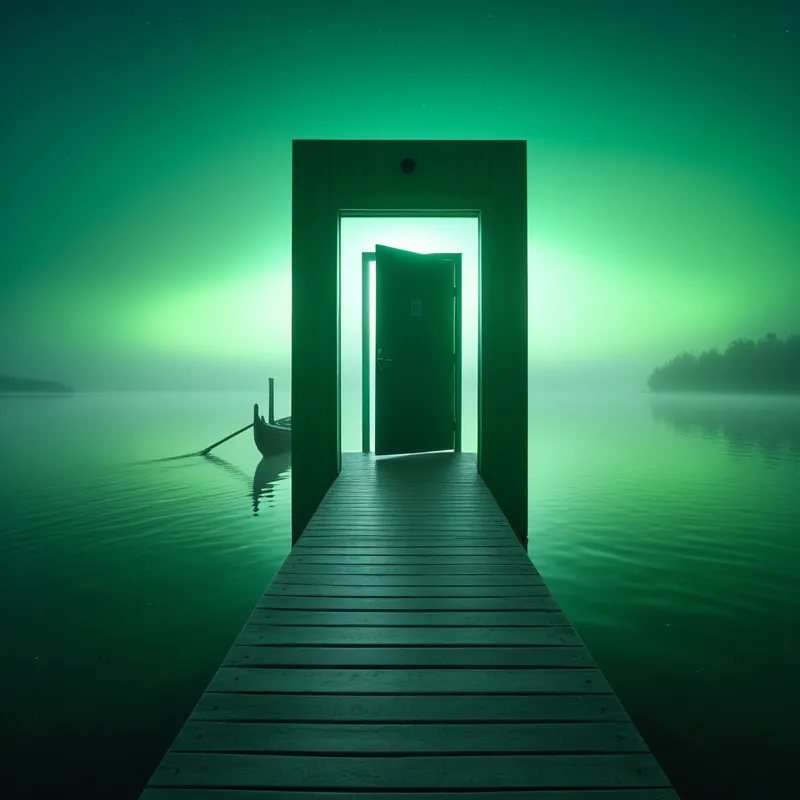
The myth models the Jungian process of individuation with elegant precision. The initial state is one of [nigredo](/myths/nigredo “Myth from Alchemical culture.”/)—the blackening, the wounding of the king. The conscious life is in crisis. The journey through the mists is the [solutio](/myths/solutio “Myth from Alchemical culture.”/)—the dissolution of rigid ego structures in the waters of the unconscious. Avalon is [the vessel](/myths/the-vessel “Myth from Alchemical culture.”/) for the albedo—the whitening, the purification and healing in the lunar, reflective space of the anima.
To pass through the mist is to consent to the death of who you were, so that who you are meant to be can be forged in the silent workshop of the soul.
The core transmutation is the shift from outer sovereignty (rule over a kingdom) to inner sovereignty (rule of the Self). The king does not return to his old life with just a mended body; he returns with the philosophical gold of self-knowledge. He has met the inner feminine authority ([the Sidhe](/myths/the-sidhe “Myth from Celtic culture.”/)-women) and been reformed by it. For the modern individual, this translates to the courage to enter periods of uncertainty, depression, or creative fallowness—the “mists”—not as failures, but as sacred, necessary thresholds. It is the process of retrieving one’s own “sword” (one’s will and power) from the lake of the unconscious, not to wield it blindly in the world, but to understand its true source and purpose. The myth assures us that wholeness is not found in perpetual sunlight, but in the wisdom gleaned from the sacred, silver twilight between the worlds.
Associated Symbols
Explore related symbols from the CaleaDream lexicon: