The Middle Passage and Ancestor Spirits Myth Meaning & Symbolism
A mythic reimagining of the transatlantic crossing where the drowned become guiding spirits, weaving a bridge of memory between the living and the lost.
The Tale of The Middle Passage and Ancestor Spirits
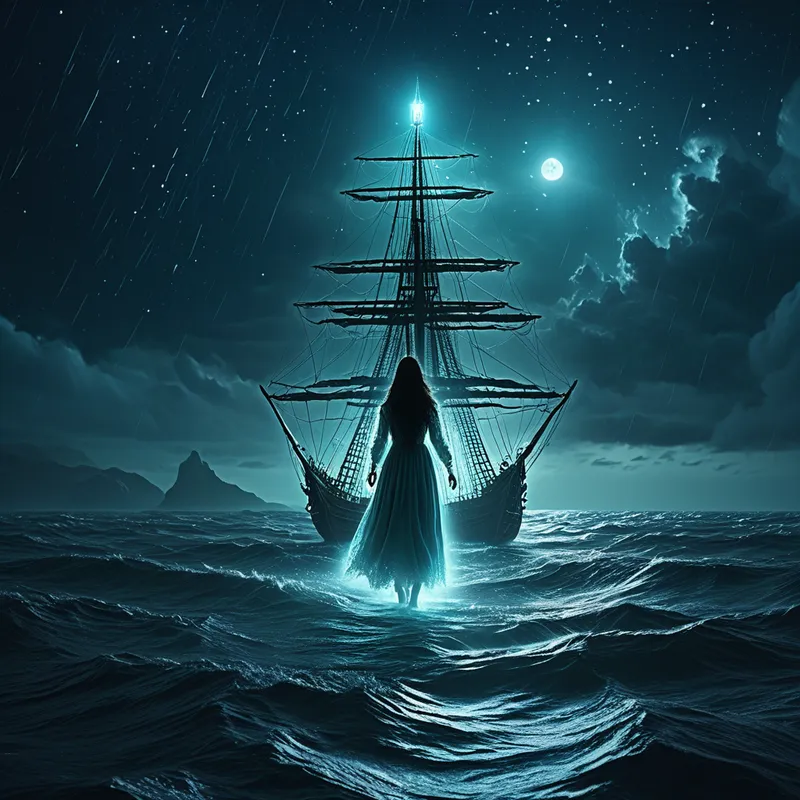
Listen. There is a story that does not live in books, but in the salt of tears and the deep, dark hum of memory. It begins not on land, but in the belly of a wooden beast, groaning across a sea that has forgotten its own name. The air is thick with the smell of fear, sweat, and the iron taste of chains. This is the Middle Passage, but in the telling, it becomes more than history. It becomes a crossing between worlds.
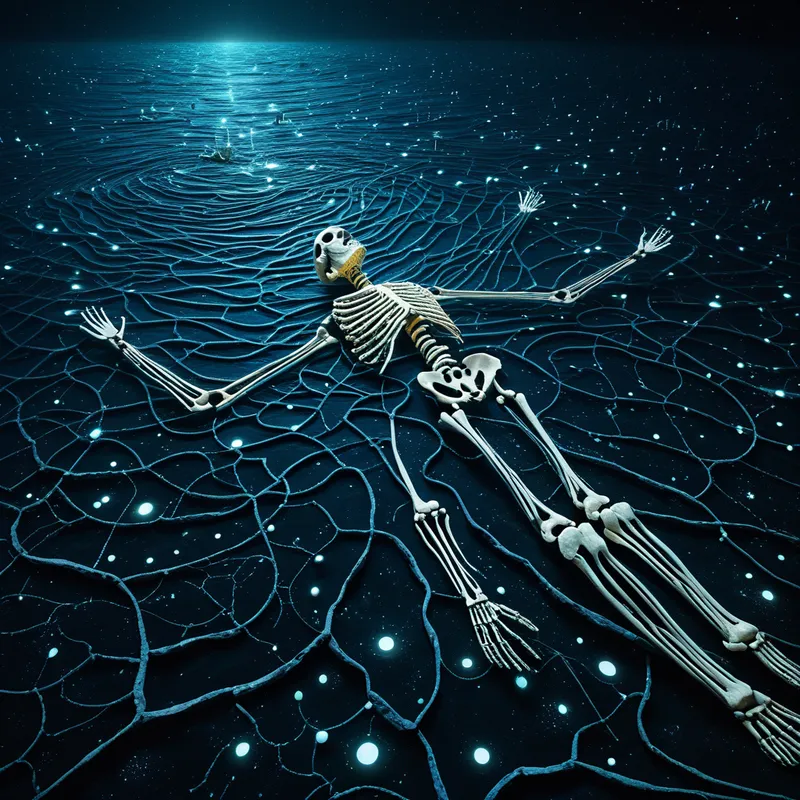
In that floating darkness, where time dissolved into suffering, the first to break were the bodies. They were given to the sea—not with ceremony, but with a splash and a curse from the captors. Their bodies sank, weighted by despair. But their spirits… their spirits did not descend. They hovered in the twilight realm beneath the waves, in the cold, silent pressure of the abyss. They were the Drowned Ancestors, untethered from the land of their birth and denied the shore of their captivity.
A great mourning arose among them, a vibration that shook the roots of the ocean. They were lost, a people severed from the cycle of libation and remembrance. Then, from the deepest trench, a voice older than the continents spoke. It was the Spirit of the Ocean itself, who had swallowed their tears. “You are not lost,” it murmured, its voice the sound of shifting continents. “You are now the path. Your bodies are the roadbed; your memory is the signpost. You are the bridge the living cannot see, but must feel.”
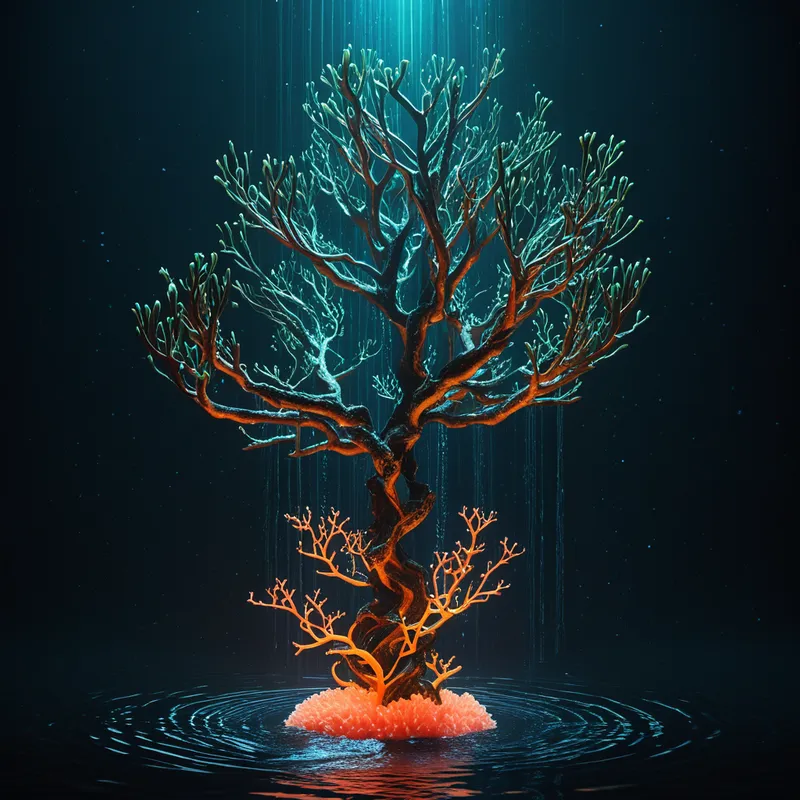
And so the transformation began. The Drowned Ancestors wove themselves into the very current of the Atlantic. Their bones became luminous coral, marking the way. Their sighs became the trade winds. Their longing became the phosphorescent glow on night waves. They turned the ocean of their trauma into a sacred Passageway.
On the ships still crossing, the living, shackled in the hold, would feel a sudden coolness on a fevered brow. They would dream of familiar faces smiling from within seashells. In their deepest despair, they would hear a chorus of hums—old songs, threading through the ship’s timbers, stronger than the storm. A child, crying silently, would see a constellation of shimmering lights form on the dark wall, tracing the shape of the Circle of home. The ancestors were not guiding them to a new land, but through the breaking of their world. They were teaching them to carry the memory of the deep within their very souls, to make the unspeakable journey a sacred Passage of the spirit.
The story ends not with an arrival, but with a weaving. For every soul that survived the crossing carried within them a living map—not of geography, but of connection. The ocean was no longer just a barrier of salt and sorrow; it was now also a congregation, a vast, liquid cemetery that was also a church, humming with the presence of the guiding dead. The bridge was built, not of stone, but of story, and it could never be destroyed.
Cultural Origins & Context
This mythic narrative emerges from the crucible of the African Diaspora, born from the collective trauma of the transatlantic slave trade. It is not a single story with a fixed text, but a resilient, evolving spiritual understanding that was woven in whispers, in work songs, in spirituals, and in the silent language of shared grief. It was passed down through generations not by griots in a village square, but by mothers humming to children, by elders finding meaning in the roar of the ocean, and in the ecstatic visions of Black churches in the New World.
Its primary tellers were the people themselves—the survivors and their descendants—who faced the existential crisis of being forcibly removed from ancestral lands and ritual practices of honoring the dead. The myth served a critical societal function: it re-enchanted a landscape of horror. By transforming the Middle Passage from a historical fact of brutal logistics into a spiritual ordeal with divine witnesses, it denied the captors the final word on meaning. It asserted that even in that profound dislocation, the community of spirit was not broken. The ancestors had not abandoned them; they had become the very medium through which they traveled. This provided a framework for resilience, a way to metabolize catastrophic grief, and a powerful theology of presence that underpins many Diasporic spiritual traditions, from Vodou to Hoodoo to the Baptist church.
Symbolic Architecture
At its core, this myth is a profound [alchemy](/symbols/alchemy “Symbol: A transformative process of purification and creation, often symbolizing personal or spiritual evolution through difficult stages.”/) of symbols, turning instruments of [death](/symbols/death “Symbol: Symbolizes transformation, endings, and new beginnings; often associated with fear of the unknown.”/) into vessels of spiritual continuity.
The [Ocean](/symbols/ocean “Symbol: The ocean symbolizes the vastness of the unconscious mind, representing deeper emotions, intuition, and the mysteries of life.”/) is the central, ambivalent [symbol](/symbols/symbol “Symbol: A symbol can represent an idea, concept, or belief, serving as a powerful tool for communication and understanding.”/). It is the agent of death, the grave, the separator. Yet, through the myth, it is transmuted into a connective [tissue](/symbols/tissue “Symbol: Represents emotional release, vulnerability, and the delicate nature of feelings or physical fragility.”/), a vast [memory](/symbols/memory “Symbol: Memory symbolizes the past, lessons learned, and the narratives we construct about our identities.”/) bank, and a [congregation](/symbols/congregation “Symbol: A congregation symbolizes community, shared beliefs, and collective support, reflecting the human need for connection and belonging.”/) of spirits. It becomes the ultimate Bridge.
The greatest trauma is not merely the event, but the theft of meaning from the event. The myth returns meaning, not by denying the horror, but by planting a sacred seed within it.
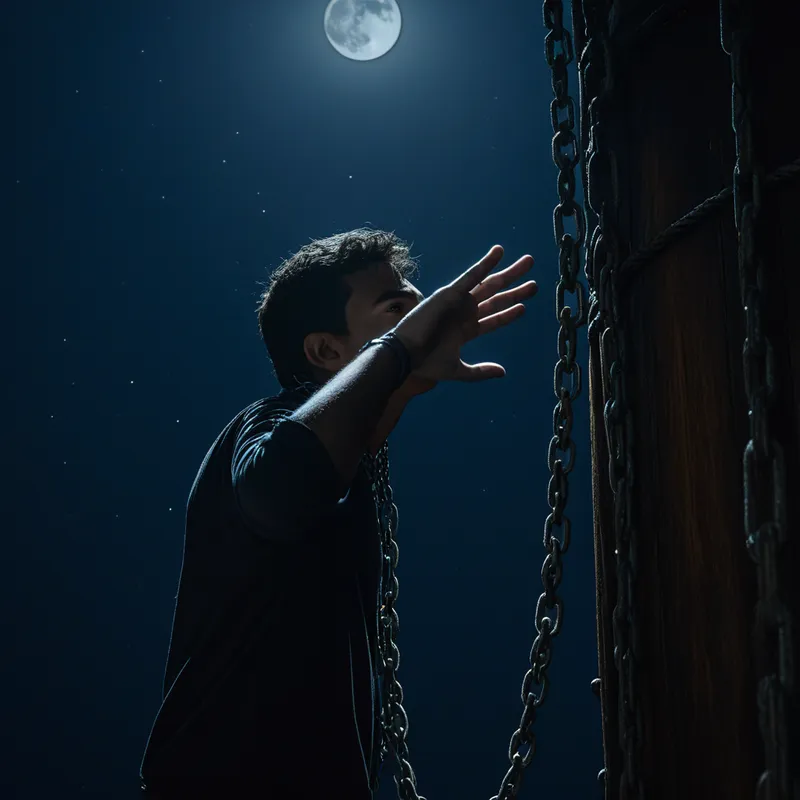
The Ship is the wooden [womb](/symbols/womb “Symbol: A symbol of origin, potential, and profound transformation, representing the beginning of life’s journey and the unconscious source of creation.”/) of death and [rebirth](/symbols/rebirth “Symbol: A profound transformation where old aspects of self or life die, making way for new beginnings, growth, and renewal.”/). It represents the forced, conscious [journey](/symbols/journey “Symbol: A journey in dreams typically signifies adventure, growth, or a significant life transition.”/), while the ocean beneath represents the unconscious, spiritual journey happening simultaneously. The [Drowned Ancestors](/symbols/drowned-ancestors “Symbol: Drowned ancestors are often viewed as a connection to one’s heritage, symbolizing unresolved issues or the need for healing within familial relationships.”/) symbolize the parts of the psyche—of [history](/symbols/history “Symbol: History in dreams often represents the dreamer’s past experiences, lessons learned, or unresolved issues that continue to influence their present.”/), of culture—that are perceived as lost, annihilated, or “gone under.” The myth insists these are not lost, but have become the foundational, guiding [structure](/symbols/structure “Symbol: Structure in dreams often symbolizes stability, organization, and the framework of one’s life, reflecting how one perceives their environment and personal life.”/) of the new [consciousness](/symbols/consciousness “Symbol: Consciousness represents the state of awareness and perception, encompassing thoughts, feelings, and experiences.”/). The Chain, an object of absolute bondage, is paradoxically the catalyst for this deep spiritual [connection](/symbols/connection “Symbol: Connection symbolizes relationships, communication, and bonds among individuals.”/); it is the [weight](/symbols/weight “Symbol: Weight symbolizes burdens, responsibilities, and emotional loads one carries in life.”/) that forces the [soul](/symbols/soul “Symbol: The soul represents the essence of a person, encompassing their spirit, identity, and connection to the universe.”/) to find a [plane](/symbols/plane “Symbol: Dreaming of a plane often symbolizes a desire for freedom, adventure, and new possibilities, as well as transitions in life.”/) of existence beyond the physical.
The act of Memory here is not mere recollection; it is an active, somatic [ritual](/symbols/ritual “Symbol: Rituals signify structured, meaningful actions carried out regularly, reflecting cultural beliefs and emotional needs.”/) of [navigation](/symbols/navigation “Symbol: The act of finding one’s way or directing a course, symbolizing life direction, decision-making, and the journey toward goals.”/). To remember is to summon the bridge. The final shore is not just a geographical [location](/symbols/location “Symbol: The symbol of ‘Location’ signifies a sense of place, context, and the environment in which experiences unfold.”/), but the state of carrying this integrated, dual consciousness—the memory of the deep within the [reality](/symbols/reality “Symbol: Reality signifies the state of existence and perception, often reflecting one’s understanding of truth and life experiences.”/) of the new world.
The Dreamer’s Resonance
When this mythic pattern surfaces in modern dreams, it often signals a profound encounter with the personal or collective shadow—a feeling of being in an inescapable, oppressive transition (the “ship”), severed from one’s roots or former self. The dreamer may experience suffocation, darkness, and the sound of water.
The appearance of guiding, ethereal figures (the Ancestral Spirits) in such dreams points to the psyche’s innate healing intelligence. It indicates that resources for navigation are being activated from within the depths of the dreamer’s own history—personal ancestors, past selves, or archetypal guides. Dreaming of walking on water or seeing lights beneath the waves suggests the beginning of this alchemical shift: the terrifying medium of one’s suffering is starting to be perceived as something that can also support and guide. The somatic process is one of moving from paralysis and panic in the face of a life passage, to a sensed, often wordless, connection to an internal compass forged from past wounds.
Alchemical Translation
For the modern individual, this myth models the process of psychic transmutation—Jung’s individuation—through the ordeal of a necessary, often painful, passage. We all face our “Middle Passages”: divorce, illness, career collapse, spiritual crisis. These are voyages where our old identity is dismantled, and we feel shackled by circumstances beyond our control.
The myth instructs us that the first stage of alchemy is nigredo, the blackening: we must fully acknowledge the reality of the ship’s hold, the chains, the despair. We cannot spiritualize our way out of the genuine horror of the experience. The transformation begins when we stop fighting the ocean of our grief and instead listen to it. The “drowned” parts of ourselves—lost hopes, abandoned talents, childhood wounds—are not gone. They have become part of the substrate of our being.
Individuation is not about reaching a shore untouched by the voyage, but about learning to sail with the ghosts of all your former shipwrecks as your crew.
The alchemical work is to perform the ritual of remembrance: to call the names of those lost parts, to offer libations of attention to our grief and shame. In doing so, we build the internal bridge. We realize that the very depth that threatens to swallow us is also what connects us to our deepest resources. The passage ceases to be something we merely survive and becomes the central, defining story of our resilience and complexity. We become the living bridge, carrying the memory of the deep within our daily walk, fully human, fully conscious of the abyss over which all life is beautifully, precariously suspended.
Associated Symbols
Explore related symbols from the CaleaDream lexicon:
- Ocean — The central, dualistic symbol representing both the grave of trauma and the living congregation of ancestral memory, the medium of the sacred passage.
- Bridge — The spiritual and psychic connection forged by the ancestors across the abyss of dislocation, turning separation into a conduit for guidance.
- Ancestral Spirits — The transmuted souls of the lost who become guides, representing the psyche’s ability to turn profound loss into an internal navigational system.
- Passage — The core transformative process, an arduous journey that fundamentally alters consciousness and forges identity through ordeal.
- Memory — Not mere recollection, but an active, ritualistic force that summons the bridge and keeps the connection to the guiding ancestors alive.
- Chain — The symbol of brutal, forced constraint that paradoxically becomes the catalyst for developing a profound, non-physical spiritual resilience.
- Circle — The symbol of wholeness, community, and cyclical continuity that the ancestors project as a comforting reminder of home and connection against fragmentation.
- Ship — The wooden vessel of forced transition, representing the conscious ego’s terrifying journey through a crisis, the “womb” of death and rebirth.
- Dream — The primary medium through which the guiding ancestors often communicate, representing the unconscious bridge between the living and the spiritual guides.
- Water — The elemental essence of the journey, representing emotion, the unconscious, cleansing, and the fluid boundary between life and death.
- Spirit — The irreducible essence of being that survives physical destruction and becomes the active, guiding force within the mythic landscape.
- Grief — The raw material of the myth, the ocean of sorrow that is not denied but is alchemically transformed into the medium of connection and guidance.