The Marriage of Martu
A Sumerian myth exploring the marriage of Martu, a deity associated with nomadic tribes, revealing tensions between settled civilization and untamed wilderness.
The Tale of The Marriage of Martu
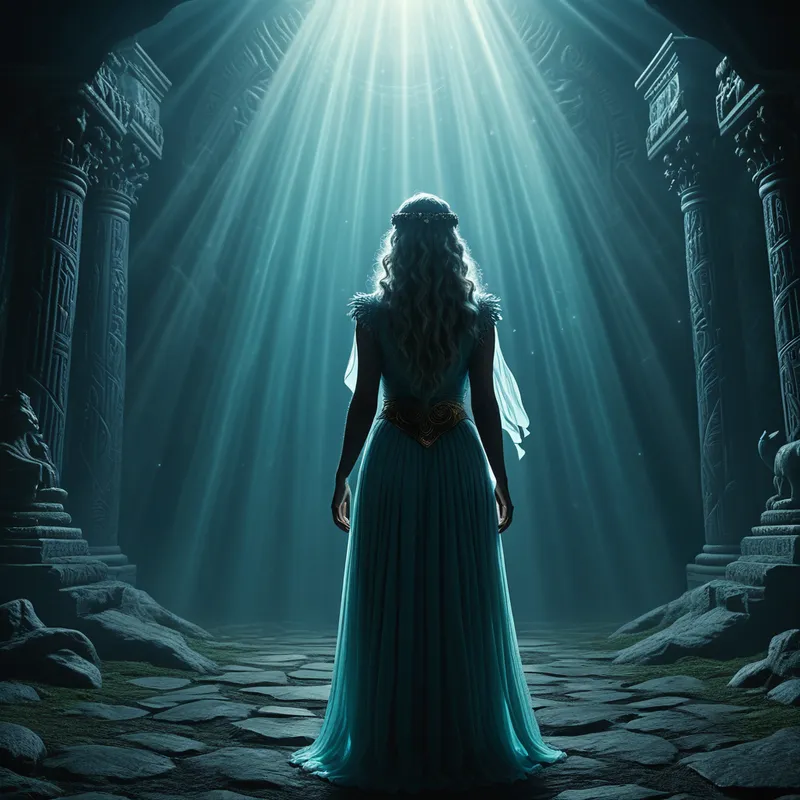
In the heart of the cultivated world, in the city of Ninab, there lived a man named Numushda. He was a lord of abundance, a steward of the granaries and orchards that defined the Mesopotamian ideal of order. To honor the gods of the city, he held a great festival. The air thrummed with the music of lyres, the grounds were heavy with the scent of roasting meats and beer, and the people danced in grateful celebration of their secured, walled existence.
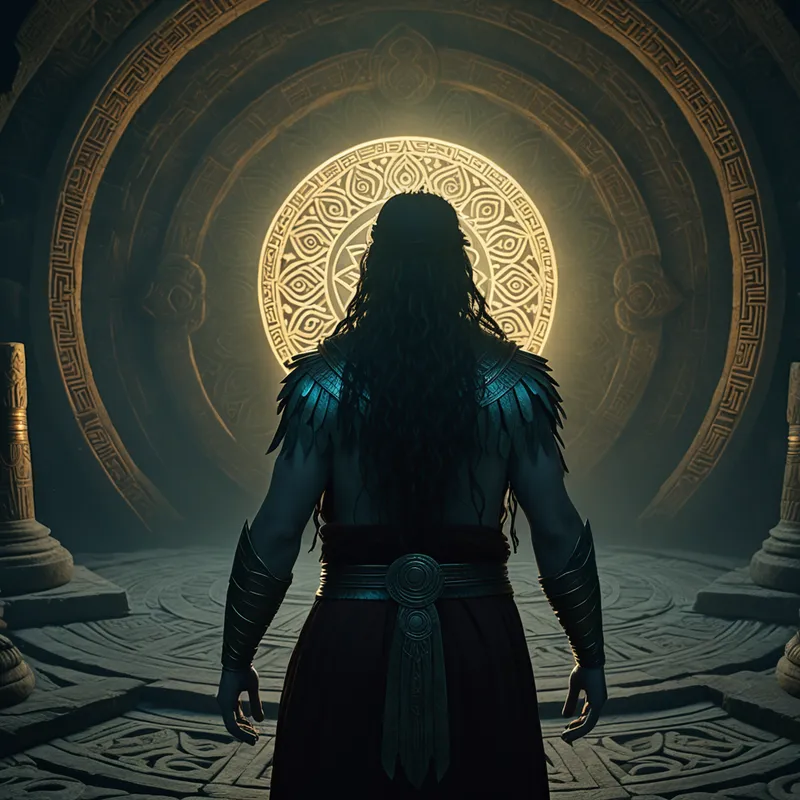
Yet, into this scene of settled harmony came a force from beyond the walls. Martu, a god whose name whispers of the western desert wind, attended the feast. He was not of the plow or the brick. His domain was the stark, open steppe, the edinnu, where life was ruled by the spear and the hunt, where boundaries were drawn by [the horizon](/myths/the-horizon “Myth from Various culture.”/), not by mortar. His presence was a tectonic plate shifting quietly beneath the festival floor.
During the celebrations, a mighty storm demon, a creature of unleashed [chaos](/myths/chaos “Myth from Greek culture.”/), descended upon Ninab. It threatened to shatter the city’s peace, to turn its ordered canals to mud. The city’s champions were powerless. But Martu, whose spirit was kin to the untamed, rose. With the fierce, uncomplicated strength of [the wilderness](/myths/the-wilderness “Myth from Biblical culture.”/) itself, he confronted and slew the demon. In that act, he saved the civilization he inherently stood apart from.
Numushda, overflowing with gratitude, offered Martu a reward of silver and gold, of cattle and lapis lazuli—the treasures of the settled world. Martu refused them all. His desire was not for the fruits of cultivation, but for its very heart: a connection to the human community he protected but did not belong to. He asked for Numushda’s daughter, Adnigkishar, in marriage.
The request sent a ripple of profound ambivalence through the city. Adnigkishar’s brother praised Martu’s valor, seeing the protective strength such a union could bring. But her friends, the daughters of the city, wept for her. To them, Martu was a terrifying prospect. In a poignant lament, they painted a picture of his life: “He who dwells in the mountains, knows not grain… He eats uncooked meat, in his life has no house, in [death](/myths/death “Myth from Tarot culture.”/) no proper burial.” They saw not a hero, but the end of civilized life—a descent into a rootless existence without the sacred rituals of home, hearth, and ancestor veneration.
Yet, Adnigkishar herself looked upon Martu, the slayer of chaos, and saw not the barbarian of her friends’ fears, but a necessary force. She accepted. The marriage was consecrated, a binding of two fundamentally different principles. Martu, the god of the nomadic Amorites, was thus woven into the fabric of Sumerian divine society, not through conquest, but through a sacred contract. He brought the raw, protective power of the wild into the bedchamber of the city, and the city, in turn, offered the wild a name, a place, and a home.
Cultural Origins & Context
The myth of Martu’s marriage emerges from a period of intense cultural friction in ancient Mesopotamia, circa the late third millennium BCE. The Sumerian city-states, with their intricate hierarchies, irrigation-based agriculture, and [pantheon](/myths/pantheon “Myth from Roman culture.”/) of deities presiding over specific civic functions, viewed themselves as islands of divine order (me) in a sea of potential chaos. The “wilderness” was not a romantic ideal but a very real and threatening space—the edinnu—inhabited by nomadic tribes known collectively as the Martu or Amorites.
These tribes were often depicted in Sumerian literature as uncouth, lawless, and fundamentally “other.” Yet, they were also persistent neighbors, traders, mercenaries, and eventually, rulers. The myth is a profound psychological and political document. It does not narrate a conquest, but an assimilation. It acknowledges the terrifying otherness of the nomadic way of life (through the friends’ lament) while simultaneously recognizing its indispensable strength (through Martu’s heroic act and the brother’s approval). The marriage is a metaphor for a necessary, if uneasy, integration. The Sumerian cosmological mind was attempting to digest a changing reality, to find a place within its sacred stories for the very forces that challenged its core identity, transforming a threat into a (somewhat awkward) member of the family.
Symbolic Architecture
At its core, the myth is an elaborate [ritual](/symbols/ritual “Symbol: Rituals signify structured, meaningful actions carried out regularly, reflecting cultural beliefs and emotional needs.”/) for containing a [paradox](/symbols/paradox “Symbol: A contradictory yet true concept that challenges logic and perception, often representing unresolved tensions or profound truths.”/). The central [tension](/symbols/tension “Symbol: A state of mental or emotional strain, often manifesting physically as tightness, pressure, or unease, signaling unresolved conflict or anticipation.”/) is not between good and evil, but between two valid, yet opposing, modes of being: the cultivated and the wild, the [static](/symbols/static “Symbol: Static represents interference, disruption, and the breakdown of clear communication or signal, often evoking feelings of frustration and disconnection.”/) and the mobile, the complex and the simple. The [City](/symbols/city “Symbol: A city often symbolizes community, social connection, and the complexities of modern life, reflecting the dreamer’s relationships and societal integration.”/) (Ninab) represents the [psyche](/myths/psyche “Myth from Greek culture.”/) in its organized state: defended, productive, ritualized, but vulnerable to stagnation and unable to confront certain forms of [chaos](/symbols/chaos “Symbol: In Arts & Music, chaos represents raw creative potential, uncontrolled expression, and the breakdown of order to forge new artistic forms.”/) from within its own [logic](/symbols/logic “Symbol: The principle of reasoning and rational thought, often representing order, structure, and intellectual clarity in dreams.”/).
Martu embodies the [Wilderness](/symbols/wilderness “Symbol: Wilderness often symbolizes the untamed aspects of the self and the unconscious mind, representing a space for personal exploration and discovery.”/), the psychic content that exists outside the walls of conscious [identity](/symbols/identity “Symbol: Identity represents the sense of self, encompassing personal beliefs, cultural background, and social roles.”/)—instinctual, potent, amoral, and free from social constraint. His act of slaying the storm [demon](/symbols/demon “Symbol: Demons often symbolize inner fears, repressed emotions, or negative aspects of oneself that the dreamer is struggling to confront.”/) is crucial; it shows that the chaos which can destroy the city is not the wilderness itself, but a more formless, malignant chaos. The disciplined wild (Martu) is the only force capable of defeating the chaotic wild (the demon).
The marriage, then, is the sacred union of ego and instinct, of persona and shadow. It is the conscious act of inviting the untamed, protective power of the unconscious into a binding relationship with the structured self.
Adnigkishar’s [acceptance](/symbols/acceptance “Symbol: The experience of being welcomed, approved, or integrated into a group or situation, often involving validation of one’s identity or actions.”/) is the pivotal [moment](/symbols/moment “Symbol: The symbol of a ‘moment’ embodies the significance of transient experiences that encapsulate emotional depth or pivotal transformations in life.”/) of [consciousness](/symbols/consciousness “Symbol: Consciousness represents the state of awareness and perception, encompassing thoughts, feelings, and experiences.”/). She is the Bridge, the [anima](/symbols/anima “Symbol: The feminine archetype within the male unconscious, representing soul, creativity, and connection to the inner world.”/) figure who can relate to and value the [strength](/symbols/strength “Symbol: ‘Strength’ symbolizes resilience, courage, and the ability to overcome challenges.”/) of the “other.” Her friends’ [grief](/symbols/grief “Symbol: A profound emotional response to loss, often manifesting as deep sorrow, yearning, and a sense of emptiness.”/) is the lament of the [persona](/symbols/persona “Symbol: The social mask or outward identity one presents to the world, often concealing the true self.”/), terrified of being dissolved by what it does not understand. The myth validates both perspectives: the fear is real, and the union is necessary. The resulting bond does not civilize Martu; it domesticates his function. He remains a god of the steppe, but now his strength guards the city gates from the outside.
The Dreamer’s Resonance
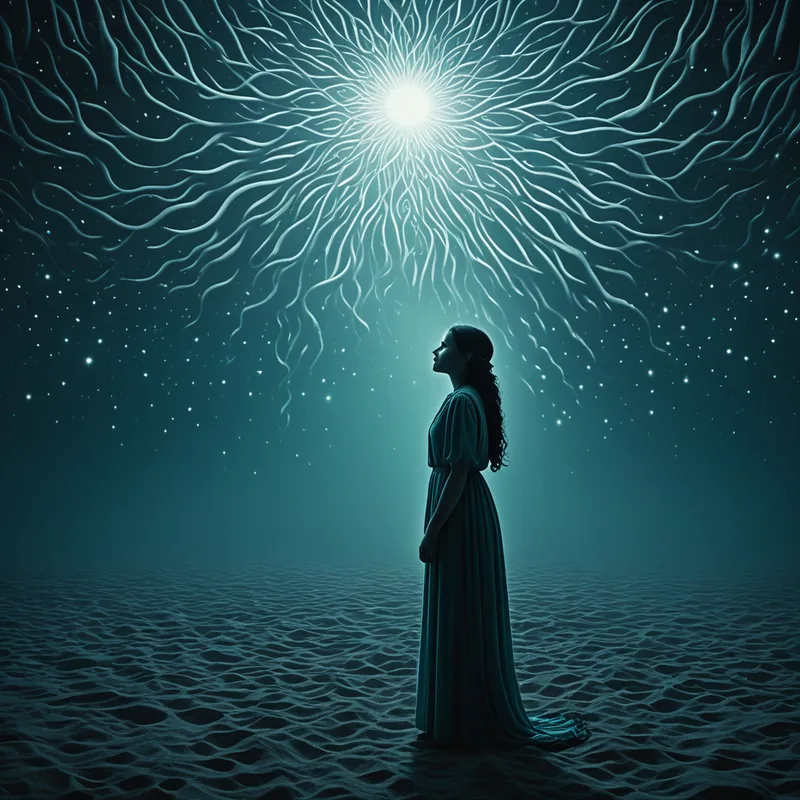
For the modern dreamer, the myth of Martu speaks to those moments when a raw, instinctual part of ourselves—a surge of justified rage, a creative impulse that defies convention, a need for radical freedom—demands recognition and integration. We may initially meet this “Martu” aspect with the dread of Adnigkishar’s friends, fearing it will destroy our carefully constructed lives, our “civilized” personas. We see only the uncooked meat and the lack of a proper house.
The myth suggests that this wild aspect often arrives as a protector, summoned by a crisis—a “storm demon” of depression, anxiety, or creative blockage that our orderly methods cannot solve. The heroic act is the instinct’s initial, often disruptive, intervention. The subsequent marriage is the harder, longer work: the conscious decision to court this power, to give it a seat at the table of our identity, to listen to its needs and learn its language. It is the process of marrying our professional competence with our primal passion, our social grace with our authentic anger, our safe routines with our soul’s longing for the open steppe. The union is never seamless; tension remains. But it creates a more resilient, complete, and potent self, one capable of facing storms from both within and without.
Alchemical Translation
In the alchemical vessel of the psyche, the myth narrates the conjunctio oppositorum—the marriage of opposites—essential for wholeness. The “fixed” element is the settled, ordered consciousness ([Sulfur](/myths/sulfur “Myth from Alchemical culture.”/) of the city). The “volatile” element is the wild, nomadic unconscious ([Mercury](/myths/mercury “Myth from Roman culture.”/) of the steppe). The festival is the initial state of agitated mixture.
The demon is the nigredo, the blackening, a chaotic putrefaction that threatens to dissolve the existing order. Martu’s intervention is the violent separation and application of a contrary force, leading to the albedo, the whitening or cleansing.
The lament of the women is the necessary mourning for the old, pure state that must die for the new union to be born. Adnigkishar’s “yes” is the crucial moment of voluntary dissolution, where [the ego](/myths/the-ego “Myth from Jungian culture.”/)-substance agrees to be altered. The marriage itself is the [rubedo](/myths/rubedo “Myth from Alchemical culture.”/), the reddening, the creation of a new, royal substance—the integrated Self. This Self is not purely civilized nor purely wild, but a tertium non datur, a third [thing](/myths/thing “Myth from Norse culture.”/) which possesses the protective strength of the instinct and the structured vessel of consciousness. The god of the wilderness becomes the guardian of [the temple](/myths/the-temple “Myth from Jewish culture.”/), not by changing his nature, but by having his nature redirected through sacred relationship.
Associated Symbols
Explore related symbols from the CaleaDream lexicon:
- Marriage — The sacred union of opposites, creating a new, more complete whole from disparate and often conflicting elements.
- City — The psyche in its organized, defended, and cultivated state, representing complex social order and identity.
- Wilderness — The untamed realm beyond conscious control, a source of both threat and vital, instinctual power.
- Storm Demon — A form of chaotic, formless energy that threatens to dismantle established structures from within or without.
- Bridge — A connector between separate realms or states of being, enabling passage, communication, and ultimately, integration.
- Wall — The boundary that defines and protects identity, but also separates and creates the dynamic of insider and outsider.
- Sacrifice — The voluntary offering of a prized possession or old state of being to secure a new relationship or divine favor.
- Temple — The sacred inner space where the divine (or the integrated Self) is housed and honored, often built after a period of conflict or chaos.
- Shadow — The unconscious aspect of the personality, containing repressed qualities and instincts, often perceived as dark or foreign.
- Anima — The inner feminine figure in the male psyche (or vice versa as animus) that acts as a mediator to the unconscious and the unknown.
- Chaos — The primordial, undifferentiated state of potential, both creative and destructive, from which all order emerges and into which it may dissolve.
- Order — The principle of structure, pattern, and predictable law, necessary for civilization and conscious life but prone to rigidity.