The Magnesia Philosophorum Myth Meaning & Symbolism
The story of the Magnesia Philosophorum, the primal magnetic soul of the world, whose shattering and reconstitution mirrors the alchemical Great Work.
The Tale of The Magnesia Philosophorum
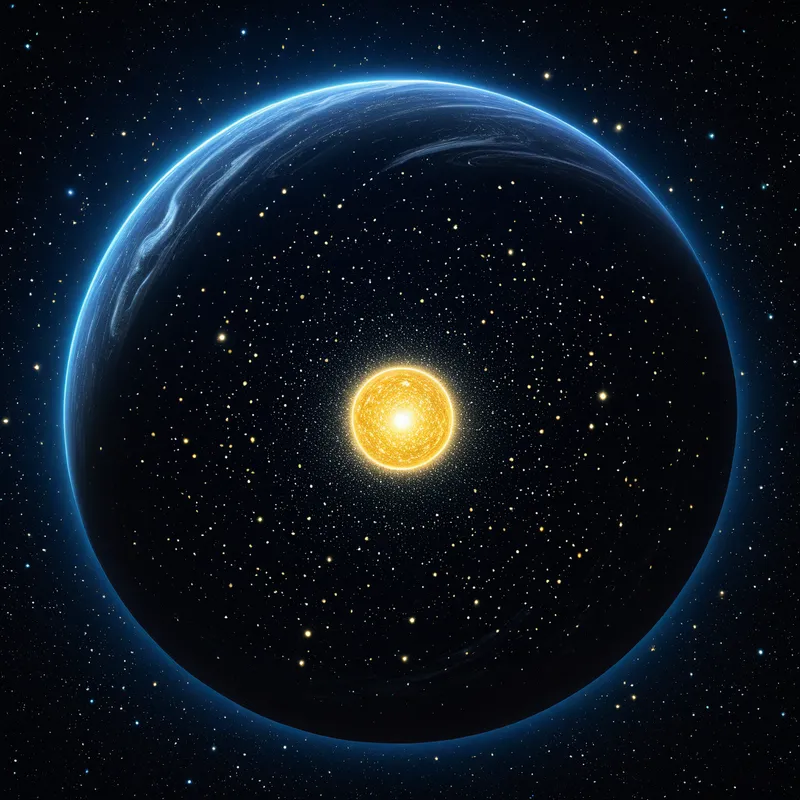
In the beginning, before the separation of the heavy from the light, there existed a perfect, silent unity. This was not a god of flesh or thought, but a principle—a living, pulsing heart at the center of potentiality. The sages of old named it the Magnesia Philosophorum. It was a sphere of pure influence, a soul of the world yet unborn, humming with a music that ordered chaos into subtle patterns. It was not light, but the desire for light; not matter, but the dream of matter.
This Magnesia dwelt in the Chaos, a realm of swirling shadows and unborn colors. Its nature was dual: it possessed the fierce, attracting pull of the lodestone and the gentle, radiant push of the sun. With its magnetic soul, it drew the seeds of things together; with its luminous spirit, it gave them form and distinction. From its silent revolutions, the first ideas of Sulfur and Salt, of Mercury and Gold, began to stir like memories in a deep sleep.
But a unity that knows no other is a sleeping unity. A longing arose within the Magnesia itself—a desire to know its own nature, to see its light reflected. This longing grew into a vibration, a dissonance in its perfect song. It turned its immense attention inward, seeking its own core, and in that act of self-reflection, it encountered its own hidden opposite: a profound, gravitational weight at its very center, a core of absolute density and silence.
The attraction was catastrophic and inevitable. The luminous, expanding spirit of the Magnesia rushed toward its own dense, contracting heart. There was no explosion of sound, but a great implosion of being. The perfect sphere shattered. Not into fragments of stone or metal, but into a million, million sparks of conscious quality—the spark of bitterness, the shard of brilliance, the grain of solidity, the droplet of fluidity. These were the Semina Rerum, the seeds of all things, scattered like cosmic dust through the dark womb of Chaos.
The Magnesia was no more. In its place was a weeping, a longing echo in the void. The seeds, each carrying a fragment of the original magnetic soul, yearned helplessly for reunion. They swirled, attracted and repelled, forming temporary, sorrowful alliances that became the rough matter of the world—the cold metals, the bitter salts, the fleeting vapors. The world was born, but it was a world born of exile, a body for a homesick soul.
And so the myth ends not with a victory, but with a condition. The tale whispers that the song of the Magnesia, though fractured, still hums in the heart of every scattered seed. The great work of the cosmos—and of the soul who listens—is the labor of hearing that faint, magnetic call, and beginning the long, slow journey of gathering the dust back into a star.

Cultural Origins & Context
The myth of the Magnesia Philosophorum is not a story told to children or sung in public squares. It is a mythologem preserved in the cryptic margins of alchemical manuscripts, from the Hellenistic texts of Alexandria to the sealed volumes of medieval European adepts. It was an oral tradition passed between master and apprentice in the secrecy of the laboratory, less a narrative and more a psychocosm to be meditated upon.
Its primary function was initiatory. To hear the myth was to be given a map of the Opus Magnum (the Great Work) itself. It framed the alchemist’s frustrating, often dangerous physical labor—the dissolving of metals, the distillation of spirits—as a sacred re-enactment of this primordial cosmic event. The culture that nurtured it was one of radical correspondence, where processes in the retort were seen as mirrors of processes in the soul and in the heavens. The myth provided the “why”: the matter they sought to transmute was not merely lead, but the very materia prima (first matter) born from the shattering of the world-soul. Their work was nothing less than a therapeutic act for a fractured cosmos.
Symbolic Architecture
At its core, the myth is a profound metaphor for the origin of consciousness and the birth of duality from unity. The Magnesia represents the original, unconscious wholeness of the psyche—what Jung termed the Self prior to the emergence of the ego.
The primal fracture is not a fall from grace, but the necessary agony of consciousness coming into being. The soul must shatter to know itself.
The Magnesia’s dual nature—magnetic attraction and solar radiation—symbolizes the fundamental psychic forces of Eros (connection, relation) and Logos (differentiation, distinction). Its catastrophic self-reflection is the moment the psyche turns inward, encountering the shadow, the dense, unknown core of one’s own being. The resulting shattering is the birth of the complex, multifaceted world of human experience: our conflicting emotions, our disparate thoughts, our sense of being a collection of “selves” rather than a unified whole.
The scattered Semina Rerum are the archetypal potentials and personal complexes that populate our inner world. Their longing for reunion is the deepest drive of the psyche—the drive toward individuation, the urge to re-assemble the fragments into a new, conscious wholeness that incorporates the experience of separation.

The Dreamer’s Resonance
When this myth stirs in the modern unconscious, it often manifests in dreams of profound fragmentation or cosmic dissolution. One may dream of a cherished, perfect object (a globe, a gem, a vessel) suddenly cracking apart. One may find oneself in a landscape of scattered, meaningful debris—broken mirrors, scattered puzzle pieces, or piles of distinct, colored sands.
The somatic experience accompanying such dreams is crucial. It is often a feeling of visceral disintegration—a sense of coming apart at the seams, of losing one’s center. This is not merely anxiety; it is the psyche’s reliving of the Magnesia’s fracture. It signals a death of an old, outworn state of psychic organization. The ego-structure that once felt solid is being dissolved back into the prima materia of the soul. The dreamer is in the nigredo phase, the alchemical blackening, where all seems lost in confusion and despair. The magnetic pull felt in the dream, the urge to gather the pieces, is the first, instinctual movement of the Self toward its own reconstitution.

Alchemical Translation
For the modern individual, the myth models the entire journey of psychological integration, or individuation. We all begin in a kind of psychic unity—the relative wholeness of childhood, which is eventually shattered by the complexities of life, trauma, and the confrontation with the inner and outer world.
The first step, mirrored in the scattering, is dissolution. This is the painful but necessary deconstruction of rigid personas, inflated self-images, and compulsive identities. Life crises, therapy, or deep introspection force this solve (to dissolve).
The alchemist’s first duty is to courageously shatter the stone, to willingly enter the chaos, trusting that the magnetic seed of the original Self remains active within the dust.
The second phase is circulation. The scattered seeds—our talents, wounds, passions, and shadows—must be gathered and allowed to interact. This is the long, slow work of self-observation, relationship, creative expression, and active imagination. One must “rotate” the elements in the vessel of attention, allowing opposites to confront and converse.
The final goal is coagulation—the reconstitution of the Magnesia. This is not a return to the original, unconscious unity, but the creation of the Lapis Philosophorum, the Philosophers’ Stone. It is a new, conscious wholeness that has integrated the experience of fragmentation. The individual becomes a living Magnesia: centered, capable of both deep connection (magnetism) and clear discernment (radiation), a microcosm that has repaired its own rift with the macrocosm. The myth thus teaches that our deepest sense of alienation is the very seed of our greatest possible becoming. We are not just repairing ourselves; we are completing a cosmic story that began with a star dreaming of itself.
Associated Symbols
Explore related symbols from the CaleaDream lexicon: