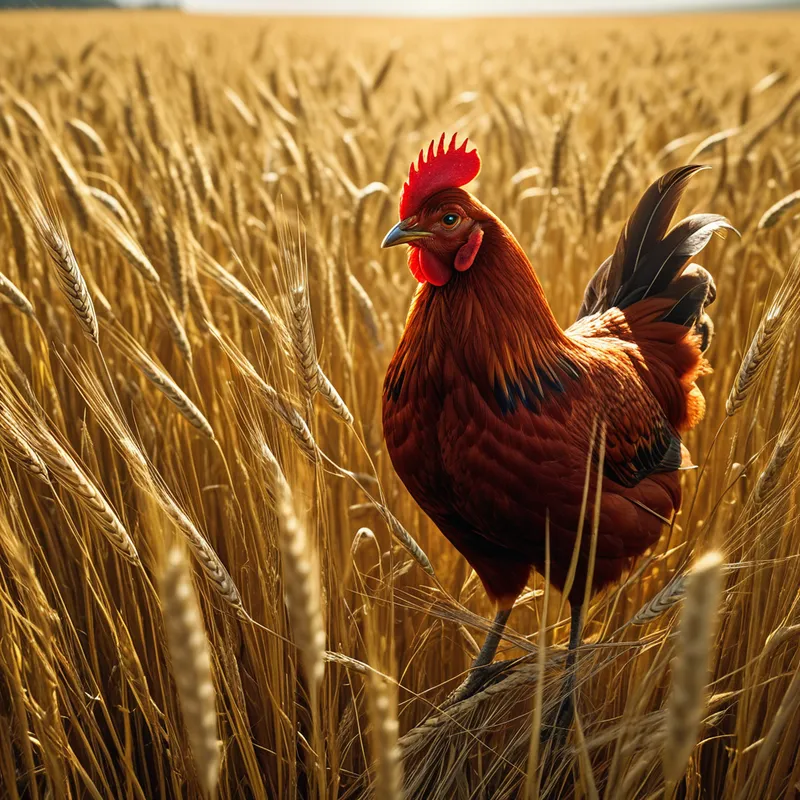
The Little Red Hen Myth Meaning & Symbolism
A hen's solitary journey from seed to bread, a parable of self-reliance and the consequences of shared refusal in the face of necessary labor.
The Tale of The Little Red Hen
Listen. This is not a story of dragons or enchanted forests. It is a story of dust, and seed, and the weight of a single day’s sun. It begins in the quiet yard, in the scratch-and-peck rhythm of an ordinary life.
There was a Little Red Hen. Her feathers were the color of a clay pot fired in a hot kiln, a practical, earth-born red. She scratched in [the earth](/myths/the-earth “Myth from Hindu culture.”/), and one day, her claw found not a worm, but a single, hard kernel of wheat. It was a tiny, golden promise. She held it in her beak and felt its potential hum.
She saw the Cat, drowsing in a sun-patch, a pool of languid fur. She saw the Dog, sprawled and snoring, chasing dream-rabbits. She saw the Pig, deep in the cool mud, content in his own becoming.
“Who will help me plant this wheat?” she asked, her voice a clear cluck in the still air.
A sleepy murmur rose. “Not I,” purred the Cat, stretching a velvet paw. “Not I,” grunted the Dog, not opening an eye. “Not I,” oozed the Pig from his earthy bath.
So the Little Red Hen said nothing more. She took the kernel, and with her own beak and claws, she dug a small grave in the good brown soil. She placed the seed within, covered it, and pattered the earth down with a prayer of diligence. She alone watched the rain bless it, the sun coax it, and the green blade break the surface, reaching, always reaching.
Time turned. The green stalk grew tall and heavy with grain. “Who will help me reap this wheat?” she asked.
[The chorus](/myths/the-chorus “Myth from Theater culture.”/) was the same, a harmony of indifference. “Not I.” “Not I.” “Not I.”
So the Little Red Hen, her red form a solitary sickle against the gold, cut the wheat herself. She threshed it, beating the grains from their husks in a private, rhythmic storm of chaff. She carried the grain to the mill. “Who will help me grind this wheat into flour?”
The answers were stones, sinking into the pond of their own comfort. “Not I.”
She turned the heavy millstone alone. The grain cracked and sighed, becoming a fine, pale dust. Finally, she stood before the oven’s mouth, the flour in a bowl, yeast breathing within it. “Who will help me bake this bread?”
The silence was her final answer. “Not I.”
So she kneaded the dough, her small wings dusted white. She shaped the loaf, a perfect, rising sun of potential. She fed the oven fire and placed her creation inside. The smell began to seep out—a smell of transformation, of heat and honeyed grain, a smell that filled the yard and crept into the dreams of the sleepers.
At last, she drew the loaf forth. It was glorious, crusted gold and brown, steaming, singing a song of completion. She placed it on the table to cool. And then, as the scent wove its irresistible spell, the others stirred.
The Cat sat up, washing a paw with sudden interest. The Dog got to his feet, nose twitching. The Pig hauled himself from the mud, drawn by a promise he had not earned.
“Who will help me eat this bread?” asked the Little Red Hen.
And this time, the chorus was eager, unified. “I will!” purred the Cat. “I will!” barked the Dog. “I will!” grunted the Pig.
The Little Red Hen looked at them, and then at the loaf, the fruit of every silent, unshared labor. “No,” she said, and her voice was not angry, but final, as final as a closed door. “I will.” And she called her chicks, and they ate the bread, every last crumb, in the bright, clear light of a task seen through to its rightful end.
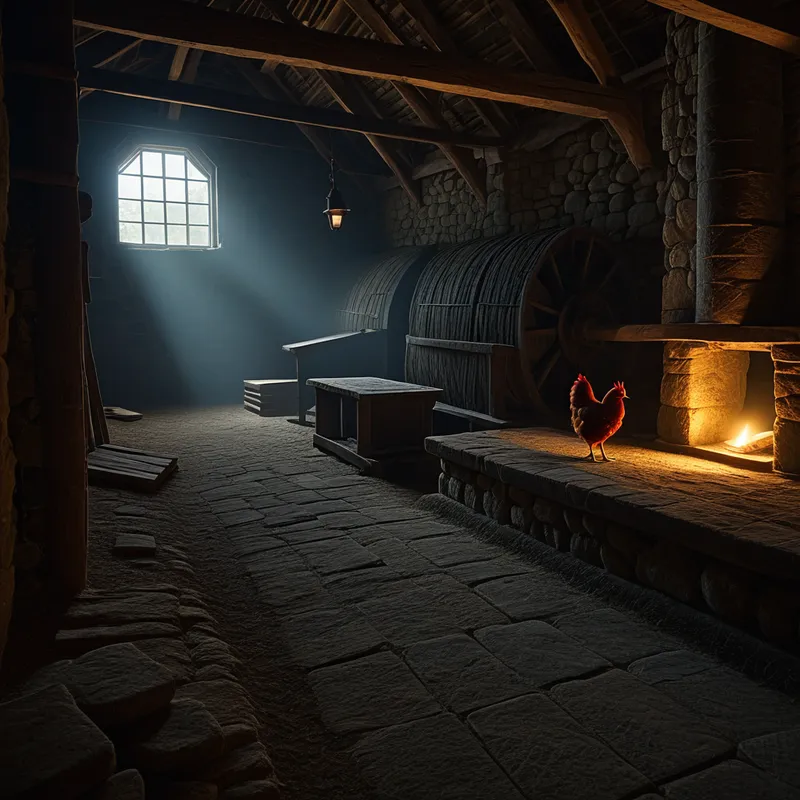
Cultural Origins & Context
The tale of The Little Red Hen is a foundational piece of oral folklore, with roots tangled deep in the soil of agrarian societies. It belongs not to the court or [the temple](/myths/the-temple “Myth from Jewish culture.”/), but to [the hearth](/myths/the-hearth “Myth from Norse culture.”/) and the yard. It was a story told by mothers and grandmothers, by farmers and teachers, less to enchant than to instruct. Its earliest printed versions appear in 19th-century collections, but its spirit is ancient, echoing the fundamental contract between labor and sustenance.
Its primary societal function was pedagogical, a tool for social cohesion through clear cause and effect. In a culture where collective survival depended on shared work—the harvest, the building, the tending—the story served as a mirror. It dramatized the social and economic consequences of apathy and freeloading, reinforcing the ethos of personal responsibility. It was a safe container to explore the frustration of the diligent with the idle, and to justify the rewards of the former. Unlike a fable ending with a moral tag, its power lies in the stark, narrative [justice](/myths/justice “Myth from Tarot culture.”/) of its conclusion: the creator enjoys the creation, alone.
Symbolic Architecture
On the surface, it is a parable of work ethic. But in the [depth](/symbols/depth “Symbol: Represents profound layers of consciousness, hidden truths, or the unknown aspects of existence, often symbolizing introspection and existential exploration.”/) psychological [soil](/symbols/soil “Symbol: Soil symbolizes fertility, nourishment, and the foundation of life, serving as a metaphor for growth and stability.”/), its symbols take root in the individual [soul](/symbols/soul “Symbol: The soul represents the essence of a person, encompassing their spirit, identity, and connection to the universe.”/). The Little Red Hen is the nascent [Creator](/symbols/creator “Symbol: A figure representing ultimate origin, divine power, or profound authorship. Often embodies the source of existence, innovation, or personal destiny.”/) [archetype](/symbols/archetype “Symbol: A universal, primordial pattern or prototype in the collective unconscious that shapes human experience, behavior, and creative expression.”/) within each person. The wheat [kernel](/symbols/kernel “Symbol: Represents potential, hidden essence, or the core of something waiting to develop. Often symbolizes beginnings, nourishment, or unexpressed emotions.”/) is the germ of potential—a creative [idea](/symbols/idea “Symbol: An ‘Idea’ represents a spark of creativity, innovation, or realization, often emerging as a solution to a problem or a new outlook on life.”/), a [life](/symbols/life “Symbol: The symbol of ‘Life’ represents a journey of growth, interconnectedness, and existential meaning, encompassing both the joys and challenges that define human experience.”/) goal, a need for psychological change.
The journey from seed to bread is the alchemy of the psyche, transforming raw, unconscious potential into nourishing, conscious substance.
The other animals—Cat, Dog, Pig—represent the other parts of our own [psyche](/myths/psyche “Myth from Greek culture.”/) that refuse the labor of [consciousness](/symbols/consciousness “Symbol: Consciousness represents the state of awareness and perception, encompassing thoughts, feelings, and experiences.”/). They are the [Shadow](/symbols/shadow “Symbol: The ‘shadow’ embodies the unconscious, repressed aspects of the self and often represents fears or hidden emotions.”/) aspects of sloth, comfort-seeking, and entitled passivity. Their repeated “Not I” is the internal [resistance](/symbols/resistance “Symbol: An object or tool representing opposition, struggle, or the act of pushing back against external forces or internal changes.”/) we all face: the procrastination, the doubt, the desire for someone else to do the hard work of our own growth. The final act of eating the [bread](/symbols/bread “Symbol: Bread symbolizes nourishment, sustenance, and the daily essentials of life, often representing fundamental needs and comfort.”/) alone is not mere selfishness, but the necessary act of individuation. It is [the ego](/myths/the-ego “Myth from Jungian culture.”/) claiming the full nourishment of an accomplishment it alone brought to fruition, thereby strengthening the conscious self.
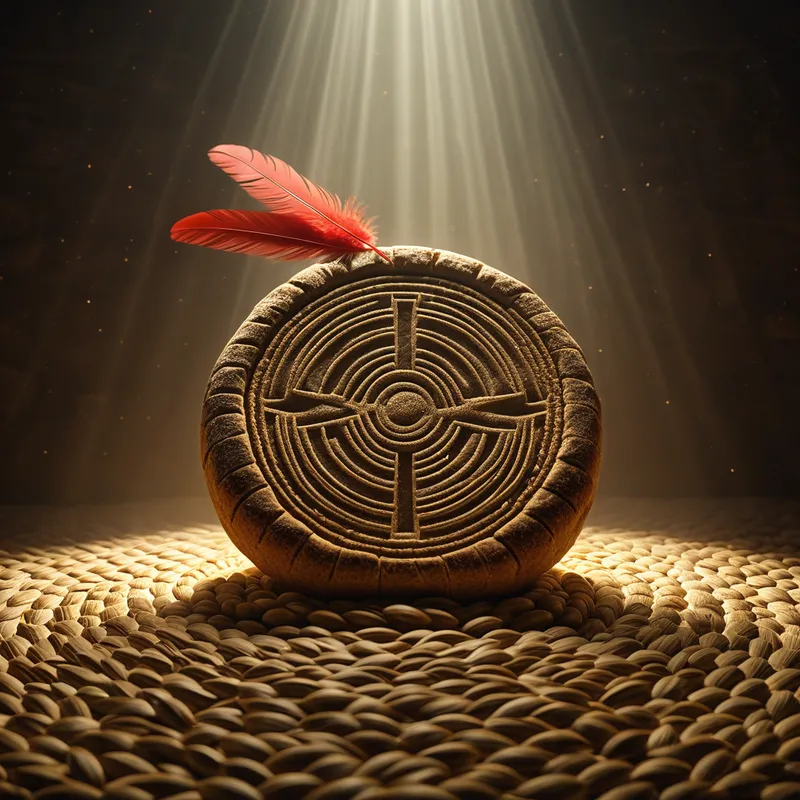
The Dreamer’s Resonance
When this myth pattern stirs in modern dreams, it rarely appears as a barnyard tableau. Instead, one might dream of laboring alone on a vast, intricate project while colleagues or family members lounge obliviously nearby. One might dream of nurturing a small, glowing idea while voices (internal or external) whisper discouragement or disinterest. The somatic feeling is often one of deep fatigue coupled with determined focus—a weight in the limbs, but a fire in the chest.
Such a dream signals a critical phase in the dreamer’s psychological process: the point where an inner potential demands concrete action, and the psyche’s habitual resistances (laziness, fear of failure, longing for rescue) are being consciously confronted. The dream is a validation of the solitary effort and a preparation for the moment of claiming one’s reward. It asks the dreamer: What is the “wheat kernel” in your life? And are you prepared to answer every “Not I” within you with the quiet, persistent action of the Hen?
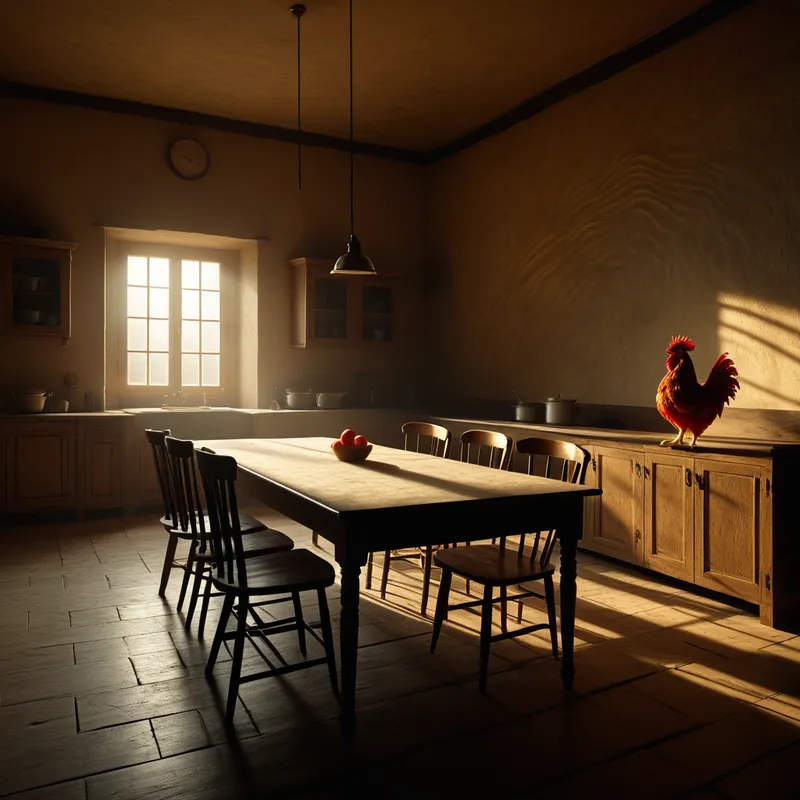
Alchemical Translation
The myth is a perfect model for the alchemical opus, [the great work](/myths/the-great-work “Myth from Alchemical culture.”/) of the soul. The stages are precise: Find [the Prima Materia](/myths/the-prima-materia “Myth from Alchemical culture.”/) (the wheat kernel). Plant it (commitment to the unconscious). Nurture its growth (sustained attention). Reap and Thresh (differentiate the valuable from the useless in oneself). Grind (the often-painful breakdown of old structures). Knead and Bake (the fiery integration and final shaping).
The oven is the crucible of the Self, where the disparate ingredients of experience are fused into a new, whole substance.
The other animals represent the massa confusa, the undifferentiated, unconscious collective within us that resists this transformative fire. The Hen’s refusal to share the final bread is the crucial alchemical stage of [separatio](/myths/separatio “Myth from Alchemical culture.”/)—the conscious separation of the refined product (the integrated self) from the base matter (the unconscious inertia). She does not destroy the Cat, Dog, and Pig; she simply ceases to let their nature dictate the fruit of her work. In doing so, she achieves a form of psychic sovereignty. For the modern individual, the myth teaches that the most sacred bread—self-knowledge, authentic achievement, psychological wholeness—must be baked by one’s own hands, and its sustenance is the rightful food only for [the self](/myths/the-self “Myth from Jungian culture.”/) that did the work. The ultimate transformation is not in the eating, but in the becoming of the one who can eat, alone and satisfied.
Associated Symbols
Explore related symbols from the CaleaDream lexicon: