The Lamp of the Art Myth Meaning & Symbolism
An alchemical myth of a divine artisan who must forge a lamp from his own substance, illuminating the cosmos and the soul's creative fire.
The Tale of The Lamp of the Art
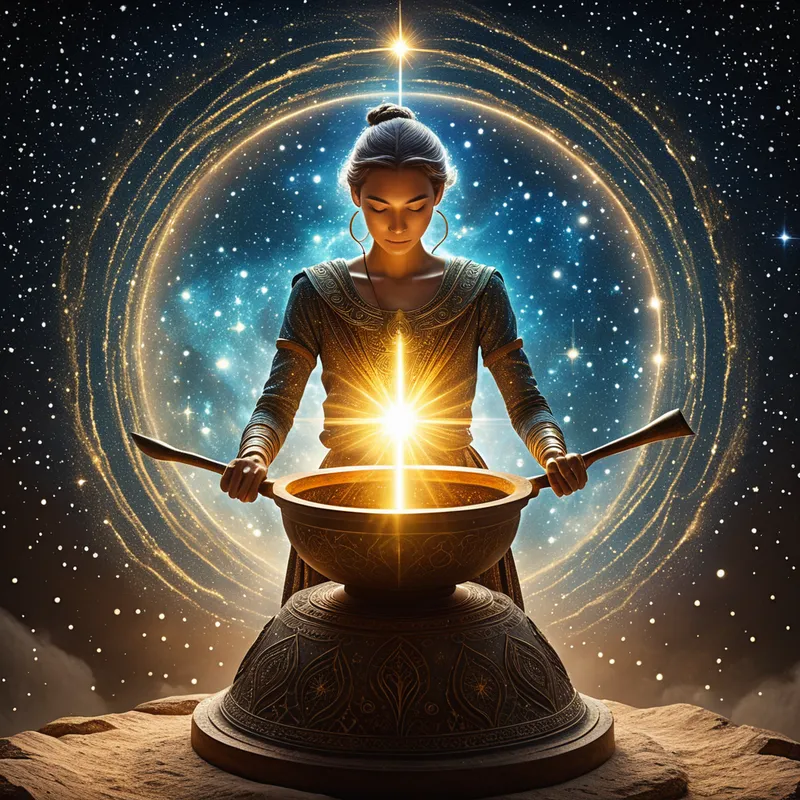
In the time before time, when the [Prima Materia](/myths/prima-materia “Myth from Alchemical culture.”/) was a dark and formless sea, there existed the Artifex. [The Artifex](/myths/the-artifex “Myth from Alchemical culture.”/) was not a king or a warrior, but a maker, a dreamer whose thoughts were the only light in that profound darkness. Yet this light was scattered, fleeting—a memory of a star seen in a dream.
A great longing awoke within the Artifex. Not for dominion, but for witness. To see the dream made manifest. To hold the light, not just in mind, but in hand. From the depths of this longing came the Knowing: to capture the light, a vessel must be forged. Not from the cold stone of [the void](/myths/the-void “Myth from Buddhist culture.”/), but from the very substance of [the self](/myths/the-self “Myth from Jungian culture.”/).
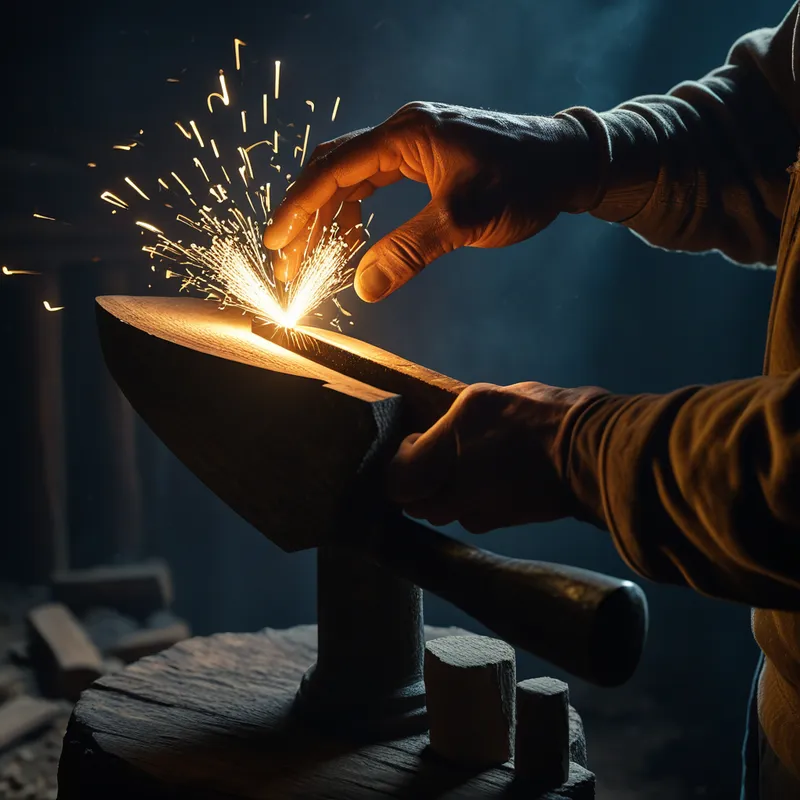
And so, the Artifex descended into the Athanor, the inner forge. Here, the heat was not of fire, but of concentrated will. The anvil was the heart. With a sigh that stirred the formless deep, the Artifex began [the great work](/myths/the-great-work “Myth from Alchemical culture.”/). From the rib—the structure of being—was drawn a filament of silver. From the breath—the spirit—a thread of gold. From the fluid of the eye—the capacity for vision—a drop of quicksilver. And from the blood—the vital force—a burning coal.
The work was agony, for it was a willing dissolution. The Artifex hammered the silver into a frame, wound the gold into a filament, sealed the quicksilver into a chamber. The coal of blood was placed within, but it smoldered, dark and dormant. [The vessel](/myths/the-vessel “Myth from Alchemical culture.”/) was beautiful, intricate, and utterly dark.
Then came the final, unthinkable act. The Artifex placed hands upon own brow, where [the third eye](/myths/the-third-eye “Myth from Hindu culture.”/) of perception slumbered. With a cry that was both loss and liberation, the Artifex plucked it forth—a [pearl](/myths/pearl “Myth from Chinese culture.”/) of pure, condensed awareness. This was the sacrifice: to become blind in order to give sight. The pearl was set into [the lamp](/myths/the-lamp “Myth from Alchemical culture.”/)‘s crown.
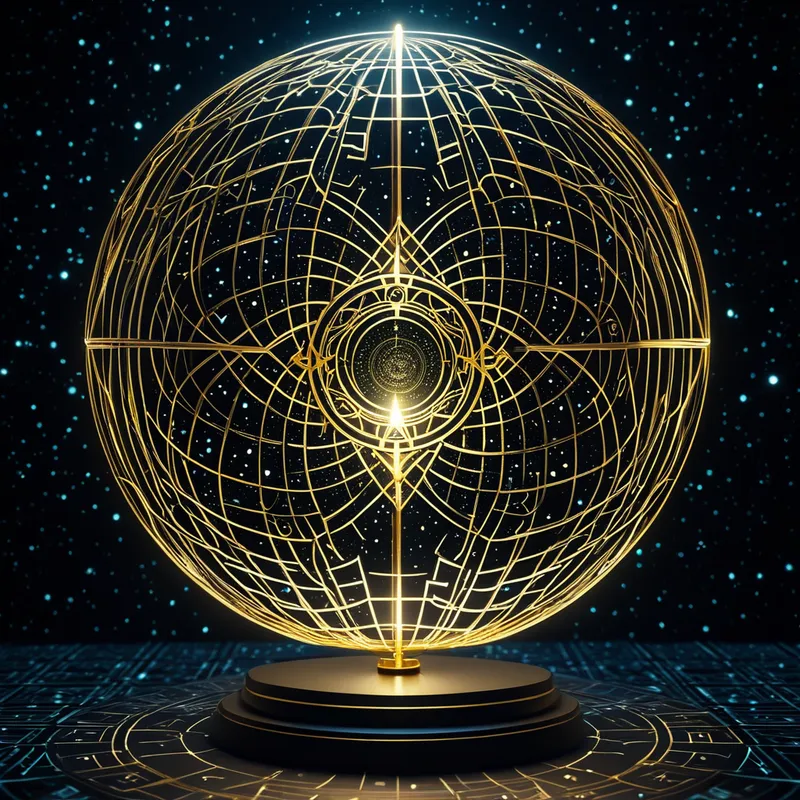
For a moment, nothing. Then, a spark leapt from the pearl to the coal. The quicksilver chamber hummed. The gold filament glowed. And a light, gentle as a first thought yet inexorable as dawn, blossomed within the vessel. It was not a light that banished the dark, but one that revealed it as a canvas. In its glow, the swirling Prima Materia began to coalesce—here into a spiral nebula, there into a dancing particle. The cosmos was not commanded into being; it was invited, by the lamp’s quiet, persistent question of light.
The Artifex, now holding the lamp aloft, was no longer just a maker. The Artifex was the Custos Lucis, forever bonded to the creation, its light forever fed by the original sacrifice. The lamp shone, and the universe whispered its name in answer.
Cultural Origins & Context
The myth of the Lamp of the Art is not a tale of a singular culture, but a deep, recurring motif within the esoteric tradition of Alchemy. It appears in fragmented forms in the cryptic texts of [Hermes Trismegistus](/myths/hermes-trismegistus “Myth from Greek culture.”/), in the visionary diagrams of medieval European adepts, and in [the parables](/myths/the-parables “Myth from Biblical culture.”/) of Persian and Arabic alchemists. It was never a popular fable, but an exemplum passed from master to apprentice in the secrecy of [the laboratory](/myths/the-laboratory “Myth from Alchemical culture.”/).
Its societal function was dual. On the operative level, it was an allegory for the physical process—the need for a perfect, sealed vessel (the lamp) to contain the volatile spirits of the work. On the spiritual level, it was the core narrative of the [Magnum Opus](/myths/magnum-opus “Myth from Alchemical culture.”/). It was told not to entertain, but to initiate—to encode the terrifying truth that the true materia for [the philosopher’s stone](/myths/the-philosophers-stone “Myth from Alchemical culture.”/) is the philosopher’s own soul. The lamp was the goal and the means, a map for the journey written in the language of symbol.
Symbolic Architecture
The myth is a perfect [blueprint](/symbols/blueprint “Symbol: A blueprint represents the foundational plan or design for something, often symbolizing potential, structure, and the mapping of one’s inner self or future.”/) of the creative act, both divine and [human](/symbols/human “Symbol: The symbol of a human represents individuality, complexity of emotions, and social relationships.”/). The Artifex represents the undifferentiated creative [spirit](/symbols/spirit “Symbol: Spirit symbolizes the essence of life, vitality, and the spiritual journey of the individual.”/), the Self in its potential state. The longing is the divine discontent, the [impulse](/symbols/impulse “Symbol: A sudden, powerful urge or drive that arises without conscious deliberation, often linked to primal instincts or emotional surges.”/) towards individuation.
The first substance of any creation is always a piece of the creator.
The [lamp](/symbols/lamp “Symbol: A lamp symbolizes guidance, enlightenment, and the illumination of truth, often representing knowledge or clarity in dark times.”/) is the [Philosopher’s Stone](/symbols/philosophers-stone “Symbol: The ‘Philosopher’s Stone’ represents the ultimate goal of transformation and enlightenment, symbolizing the quest for knowledge, wisdom, and the attainment of one’s true potential.”/) itself—not as a lump of gold, but as an [organ](/symbols/organ “Symbol: An organ symbolizes vital aspects of life and health, often representing one’s emotional or physical state.”/) of [perception](/symbols/perception “Symbol: The process of becoming aware of something through the senses. In dreams, it often represents how one interprets reality or internal states.”/). Its [construction](/symbols/construction “Symbol: Construction symbolizes creation, building, and the process of change, often reflecting personal growth and the need to build a solid foundation.”/) from the self (rib, [breath](/symbols/breath “Symbol: Breath symbolizes life, vitality, and the connection between the physical and spiritual realms.”/), [sight](/symbols/sight “Symbol: Sight symbolizes perception, awareness, and insight, representing both physical and inner vision.”/), [blood](/symbols/blood “Symbol: Blood often symbolizes life force, vitality, and deep emotional connections, but it can also evoke themes of sacrifice, trauma, and mortality.”/)) signifies that authentic creation requires total personal [investment](/symbols/investment “Symbol: Dreams of investment symbolize commitment of resources for future returns, reflecting personal growth, risk assessment, and life choices.”/); we must build our vessels from our own lived experience, our bones, our [breath](/symbols/breath “Symbol: Breath symbolizes life, vitality, and the connection between the physical and spiritual realms.”/), our joys, and our wounds.
The [Athanor](/symbols/athanor “Symbol: An alchemical furnace representing spiritual transformation, purification, and the sustained process of creating the Philosopher’s Stone.”/) is the [crucible](/symbols/crucible “Symbol: A vessel for intense transformation through heat and pressure, symbolizing spiritual purification, testing, and alchemical change.”/) of the [psyche](/myths/psyche “Myth from Greek culture.”/), where ego defenses are broken down. The final sacrifice of the “[third eye](/myths/third-eye “Myth from Hindu culture.”/)” is the most profound [symbol](/symbols/symbol “Symbol: A symbol can represent an idea, concept, or belief, serving as a powerful tool for communication and understanding.”/): it is the surrender of subjective, self-reflective [consciousness](/symbols/consciousness “Symbol: Consciousness represents the state of awareness and perception, encompassing thoughts, feelings, and experiences.”/) to achieve objective, unitive consciousness. We must give up our old way of seeing to gain true [vision](/symbols/vision “Symbol: Vision reflects perception, insight, and clarity — often signifying the ability to foresee or understand deeper truths.”/). The resulting light is not the light of the solitary ego, but the light of the [Unus Mundus](/myths/unus-mundus “Myth from Alchemical culture.”/), the connected [reality](/symbols/reality “Symbol: Reality signifies the state of existence and perception, often reflecting one’s understanding of truth and life experiences.”/), which then calls form forth from [chaos](/symbols/chaos “Symbol: In Arts & Music, chaos represents raw creative potential, uncontrolled expression, and the breakdown of order to forge new artistic forms.”/).
The Dreamer’s Resonance
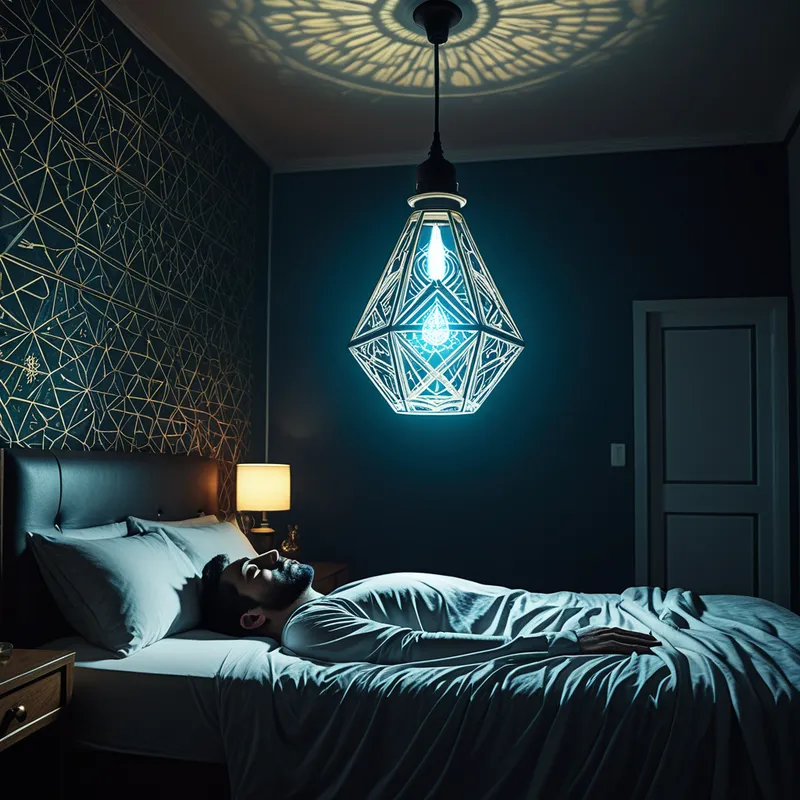
When this myth stirs in the modern unconscious, it often manifests in dreams of crafting, repairing, or searching for a light source. One might dream of painstakingly wiring a complex lamp that won’t turn on, or of finding a dusty, beautiful lantern in a basement and desperately seeking oil or a bulb. The somatic feeling is one of deep, focused tension—a creative labor that is also a physical ache.
Psychologically, this signals a critical phase of individuation. The dreamer is in their personal Athanor. The “lamp” represents a nascent aspect of the Self trying to come into being—a new identity, a creative project, a spiritual understanding. The struggle to make it work reflects the internal resistance, the fear of using one’s own essence as fuel. The dream is an assurance: the agony of construction is necessary. The light is already within, but it requires a vessel built from the truth of who you are.
Alchemical Translation
For the modern individual, the myth models the process of psychic transmutation with brutal clarity. We all harbor an inner Artifex, a creative spirit longing to bring something of meaning into [the world](/myths/the-world “Myth from Tarot culture.”/). The culture offers prefabricated vessels—ready-made identities, careers, ideologies—but to fill them is to hold a borrowed light that inevitably flickers out.
The true work begins when we withdraw into our inner forge, the focused space of introspection and ordeal. Here, we must deconstruct the composite self. What are the ribs of our structure (our core beliefs)? What is the gold of our spirit (our values)? What is the quicksilver of our perception (our biases)? We must hammer and shape these into a new vessel capable of holding a more conscious life.
The lamp only illuminates the path that was forged in its own making.
The climax is the sacrifice: the willing “plucking of the eye.” This translates as the death of an old perspective. It could be the release of a cherished self-image, the abandonment of a toxic narrative, or the surrender of control over a life outcome. It feels like a loss, a blinding. But it is the essential act that ignites the coal of our vital force with the pearl of new awareness. The resulting light is individuated consciousness. It does not solve all problems, but it allows us to see the Prima Materia of our life—the chaos, the pain, the potential—as the very substance from which our unique cosmos can coalesce. We become both the maker and the illumination, forever custodian of the fragile, fierce light we dared to kindle from our own soul.
Associated Symbols
Explore related symbols from the CaleaDream lexicon: