The Lamed Vav Tzadikim Myth Meaning & Symbolism
A Kabbalistic tale of thirty-six anonymous, humble souls whose hidden righteousness secretly sustains the world, preventing its collapse into chaos.
The Tale of The Lamed Vav Tzadikim
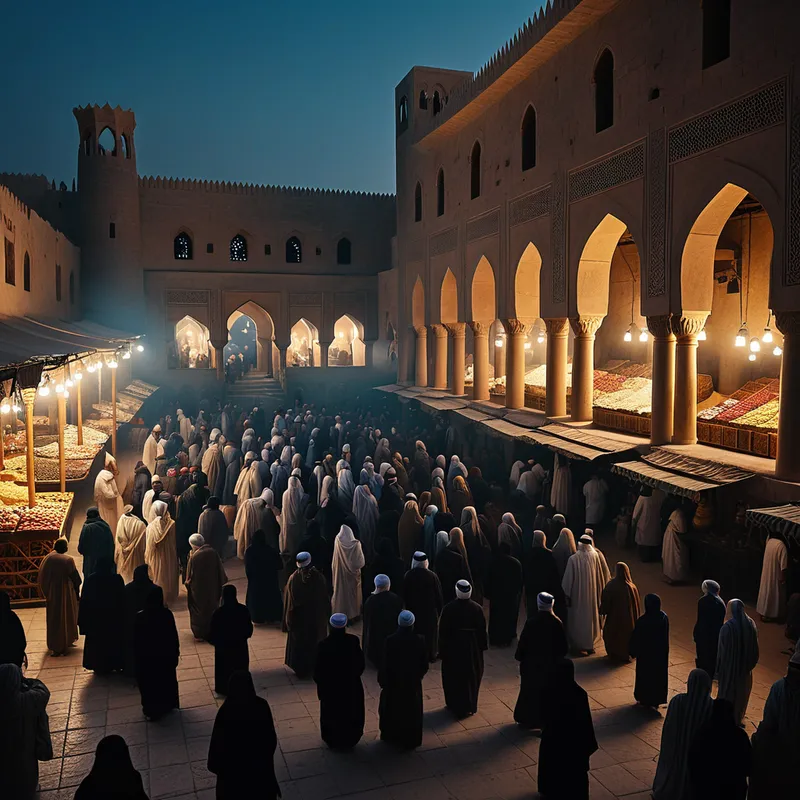
Listen. Beneath the clamor of the world—the cries of the marketplace, the sighs of the weary, the grinding of millstones—there exists a silence so deep it holds up the very sky. It is the silence of thirty-six souls. They walk among you. You have brushed shoulders with them in a crowded lane, bought bread from them, stepped aside for them on a narrow bridge. You did not know. They do not know.
For in every generation, the Shekhinah weeps. She weeps for the broken vessels of creation, for the sparks of holiness scattered in the dust, for the weight of human cruelty that threatens to crack the foundations of the world. And in her weeping, a covenant is remembered. A hidden covenant, written not on parchment but in the fabric of being.
These thirty-six—the Lamed Vav Tzadikim—are the secret pillars. They are not kings or scholars, though they may appear as such. More often, they are the water-carrier with a patient smile, the cobbler who mends a child’s shoe for free, the stranger who offers a cup of water without a word. Their righteousness is not in grand pronouncements but in unnoticed acts of true kindness, in bearing the world’s sorrow without breaking, in a humility so complete it becomes invisible.
The conflict is the world itself—its constant tilt toward chaos, its greed, its forgetfulness. The rising action is the cumulative weight of human sin, a tide that rises to drown the pillars of light. And here is the mystery: when the tide is at its highest, when the Shekhinah’s tears could flood creation, one of the Thirty-Six, perhaps in a moment of utter despair for another’s pain, lets out a sigh. A sigh that is also a prayer. Or another, in a dark hour, shares their last crust with a stray dog. An act unseen by heaven or earth, but felt.
In that moment, the scale trembles. The hidden merit, the accumulated grace of their anonymous lives, pours into the world like a secret balm. The tide recedes. The world is granted another day, another year. Not through fire from heaven, but through a hand offered in the dark. The resolution is never final, never announced. It is a perpetual, quiet miracle. The world continues, unaware that its continued breath is a gift from the humble, from the unknown, from the ones who carry the universe on their shoulders without ever standing to be counted.

Cultural Origins & Context
This myth emerges from the fertile, mystical soil of Kabbalah, particularly flourishing in the folk imagination of Eastern European Hasidism from the 18th century onward. While its numerical core (36) finds earlier mention in the Talmud, it was the mystical thinkers who wove it into a central narrative of cosmic maintenance. It was not a story for scrolls but for the fireside, passed from rebbe to disciple in hushed, awe-filled tones. Its tellers were often the Hasidic masters themselves, who used it to teach a radical theology of humility and the supreme value of simple, heartfelt action (devekut) over scholarly prowess alone.
Societally, the myth functioned as a profound moral and psychological leveler. In a world of rigid hierarchies and scholarly elites, it insisted that the true sustainer of reality might be the illiterate woodcutter or the poor widow. It democratized sainthood, making every interaction potentially sacred and every stranger a possible hidden pillar. It fostered a culture of respect for the seemingly insignificant and charged daily life with cosmic significance, encouraging acts of kindness (chesed) as contributions to the world’s very survival.
Symbolic Architecture
The myth is a masterful symbolic construct. The number thirty-six is twice eighteen, and eighteen is the numerical value of the Hebrew word chai (life). Thus, the Thirty-Six are a double portion of life, the hidden vitality of the world. They are not a collective in the usual sense; they are scattered, isolated, often unaware of each other. This represents the distributed nature of grace and consciousness—holiness is not centralized but networked through the unconscious of humanity.
The greatest power is that which refuses to be recognized as power. The Lamed Vav Tzadikim symbolize the ego’s surrender to the Self, where one’s life becomes an anonymous vessel for a transpersonal purpose.
Psychologically, they represent the archetype of the hidden helper, the part of the psyche that works tirelessly for integration and wholeness without seeking credit from the conscious ego. They are the silent, compensatory function of the unconscious that balances the cruelty and inflation of the conscious mind. Their anonymity is crucial; it symbolizes a righteousness divorced from the ego’s desire for reward, status, or even self-knowledge of its own goodness. They are the living embodiment of the idea that the work of soul-making is often a hidden, humble process.
The Dreamer’s Resonance
When this myth stirs in the modern dreamer, it often manifests not as a clear image of thirty-six people, but as a profound somatic and emotional pattern. One might dream of performing a small, crucial act—turning a hidden valve to stop a flood, whispering a word that calms a raging beast, or simply holding a space while chaos swirls—and waking with a sense of immense, quiet responsibility mixed with deep loneliness.
The psychological process is one of confronting the burden and privilege of one’s own integrity. The dreamer is being asked to recognize the part of themselves that sustains their inner world without applause. It may surface during times when one feels their kindness is exploited or their efforts are invisible. The dream is an affirmation from the unconscious: these anonymous acts are the very stitches holding your reality together. The accompanying feeling is often a weight—the weight of the world—but also a strange, unshakeable peace. It is the peace of being aligned with a purpose larger than personal narrative, of becoming, even momentarily, a pillar in the hidden architecture of the soul.

Alchemical Translation
The alchemical process modeled here is the opus contra naturam—the work against the ego’s natural desire for recognition. The base material is the lead of ordinary life, with all its petty concerns and desires for status. The myth instructs us in its transmutation into the gold of anonymous, effective virtue.
The first stage is mortificatio: the death of the ego’s need to be seen as good, special, or spiritually advanced. One must become “hidden,” even from oneself. The second is solutio: dissolution into the service of the whole, allowing one’s individual will to be dissolved in the greater need. The final, perpetual stage is coagulatio: the embodiment of this spirit in concrete, humble, daily actions—the true “fixing” of the philosophical gold.
Individuation is not about becoming a celebrated, integrated Self on a mountaintop. It is, at its most mature, about becoming one of the hidden thirty-six in the inner community of the psyche, sustaining the balance of your world from the shadows.
For the modern individual, the struggle is to perform one’s duty to the soul and the world without the fuel of external validation. The triumph is the realization that your most meaningful work may be the act no one sees, the kindness that leaves no trace, the integrity maintained when no one is watching. This is the alchemy of humility: by surrendering the desire to be a hero, you become a sustainer. By seeking no light for yourself, you become a pillar that holds up the light for all.
Associated Symbols
Explore related symbols from the CaleaDream lexicon: