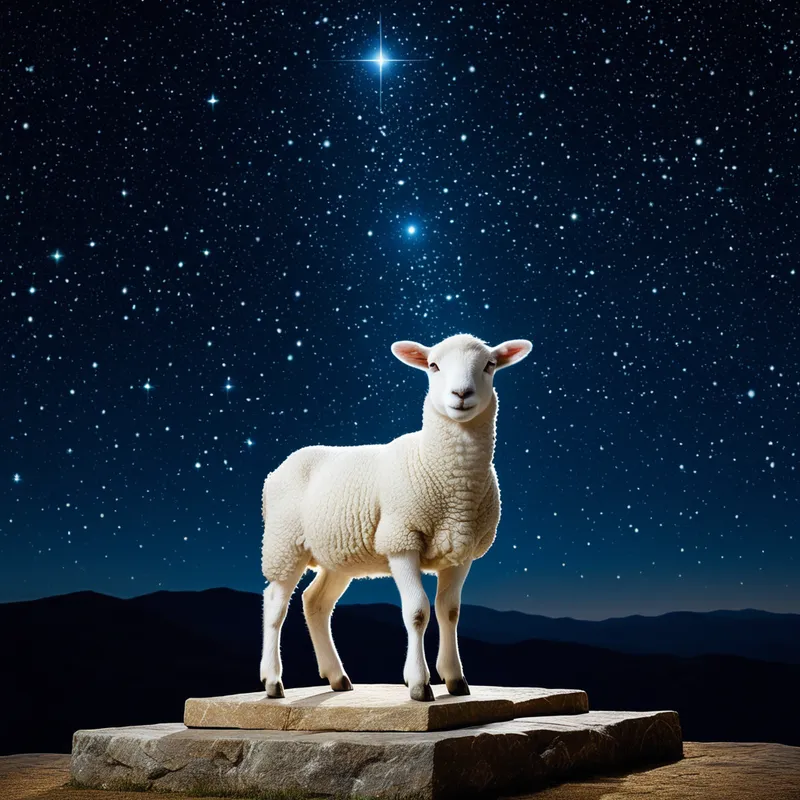
The Lamb of God Myth Meaning & Symbolism
A myth of divine innocence willingly bearing the weight of the world's shadow, transforming sacrifice into a covenant of ultimate belonging.
The Tale of The Lamb of God
Listen. In the beginning, there was a silence so deep it held the memory of every cry. A world, beautiful and broken, spun in a darkness of its own making. Its people walked with a weight they could not name, a shadow clinging to their souls, a debt written in blood on the walls of their own hearts.
Then, a whisper moved through [the prophets](/myths/the-prophets “Myth from Biblical culture.”/), a promise older than the hills: a deliverer would come. Not with an army of fire, but in the form of the most vulnerable of creatures. The door of hope would be a stable, the king’s crown would be of thorns, and the sword that conquered would be a pierced side.
He walked among them, this man from Nazareth. He spoke of a kingdom not of land, but of spirit. He touched the untouchable, fed the hungry with a few loaves, and stilled the storm with a word. Yet, his eyes held a profound sorrow, a knowledge of a cup that must be drunk. He was called the Yeshua, and his followers, in moments of awe, called him the Christos.
But the machinery of [the world](/myths/the-world “Myth from Tarot culture.”/)—the fear of priests, the cynicism of empire, the fickleness of the crowd—ground on. [The shadow](/myths/the-shadow “Myth from Jungian culture.”/) sought its price. In a garden under a gibbous moon, he sweat tears of blood, praying the cup might pass. It did not. Betrayed by a kiss, he was bound.
They led him, this silent lamb, before the judgment of men. He was stripped, scourged, mocked with a purple robe and a crown of jagged thorns pressed into his brow. The crowd, once chanting “Hosanna!” now roared “Crucify!” The sentence was passed. He carried the rough-hewn beam of his own execution through streets stained with filth and tears.
On a hill called [Golgotha](/myths/golgotha “Myth from Christian culture.”/), under a sky turning to bruised iron, they nailed his hands and feet to the wood. Between two thieves, he was raised high—the [Lamb of God](/myths/lamb-of-god “Myth from Christian culture.”/), lifted up for all to see. The air grew thick. His mother wept at his feet. “Father, forgive them,” he gasped, “for they know not what they do.” As the last light failed, he cried out with a loud voice, “It is finished.” And he bowed his head, and gave up his spirit.
At that moment, in [the temple veil](/myths/the-temple-veil “Myth from Christian culture.”/), the sacred barrier between humanity and the divine, tore in two from top to bottom. [The earth](/myths/the-earth “Myth from Hindu culture.”/) shook. Rocks split. And in the profound silence that followed the storm, a new covenant was sealed not in stone, but in spirit. On the third day, the tomb was found empty. The stone was rolled away. The sacrifice was complete, but the Lamb was not consumed. He had passed through the ultimate shadow and emerged, bearing the marks, yet alive—a promise that death itself was not the end, but a passage.
Cultural Origins & Context
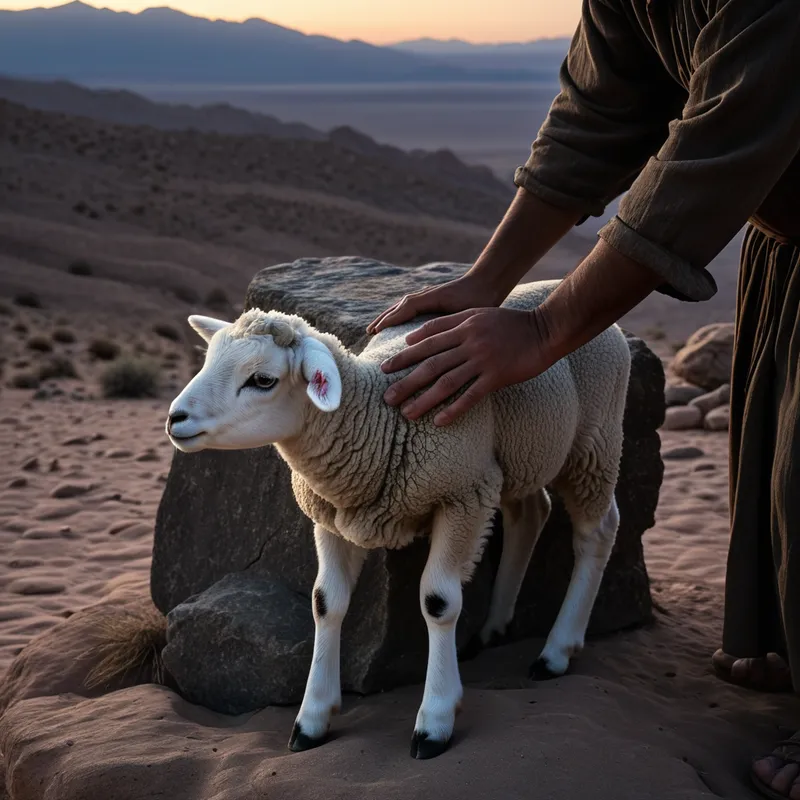
The image of the Lamb of God is not a sudden invention but a deep river fed by ancient tributaries. Its roots sink into the soil of Judaism, specifically the ritual of Passover. During [the Exodus](/myths/the-exodus “Myth from Abrahamic culture.”/), the blood of an unblemished lamb smeared on doorposts signaled protection from the angel of death. This lamb was a substitute, its life given for the life of the household.
Centuries of prophecy, from [Isaiah](/myths/isaiah “Myth from Abrahamic culture.”/)’s “suffering servant” led like a lamb to the slaughter, to the daily temple sacrifices, cultivated a cultural [psyche](/myths/psyche “Myth from Greek culture.”/) primed to understand redemption through sacred substitution. The early [Jesus](/myths/jesus “Myth from Christian culture.”/) movement, comprised of Jews like [John the Baptist](/myths/john-the-baptist “Myth from Christian culture.”/) (who first proclaimed “Behold, the Lamb of God!”), interpreted the life and death of [Jesus](/myths/jesus “Myth from Christian culture.”/) through this exact lens. They told the story orally, in Aramaic and Greek, in homes and by roadsides, framing his execution not as a shameful defeat but as the ultimate, once-and-for-all Passover sacrifice. The myth was codified in the Gospels and letters like those of Paul, functioning to create a cohesive identity for a persecuted community, offering a narrative where the deepest human guilt and fear of alienation were definitively addressed by divine solidarity.
Symbolic Architecture
The [Lamb](/symbols/lamb “Symbol: A symbol of innocence, purity, sacrifice, and new beginnings, often representing vulnerability and gentleness.”/) is perhaps the most potent [paradox](/symbols/paradox “Symbol: A contradictory yet true concept that challenges logic and perception, often representing unresolved tensions or profound truths.”/) in the symbolic [lexicon](/symbols/lexicon “Symbol: A structured collection of words or symbols representing a system of knowledge, communication, or artistic expression.”/): ultimate [innocence](/symbols/innocence “Symbol: A state of purity, naivety, and freedom from guilt or corruption, often associated with childhood and moral simplicity.”/) bearing ultimate [guilt](/symbols/guilt “Symbol: A painful emotional state arising from a perceived violation of moral or social standards, often tied to actions or inactions.”/). It represents the pure, unadulterated core of [the Self](/myths/the-self “Myth from Jungian culture.”/)—what Carl Jung might call the archetypal Self—that remains untouched by the corruptions and compromises of [the ego](/myths/the-ego “Myth from Jungian culture.”/).
The Lamb does not fight the wolf; it transforms the nature of the forest by its presence.
The “taking away of the sin of the world” is not a legal [transaction](/symbols/transaction “Symbol: An exchange of value, energy, or information between parties, representing balance, reciprocity, and the flow of resources in life.”/) but a profound psychological [event](/symbols/event “Symbol: An event within dreams often signifies significant life changes, transitions, or emotional milestones.”/). “Sin” here can be understood as all that separates—the burden of the [shadow](/symbols/shadow “Symbol: The ‘shadow’ embodies the unconscious, repressed aspects of the self and often represents fears or hidden emotions.”/), the [weight](/symbols/weight “Symbol: Weight symbolizes burdens, responsibilities, and emotional loads one carries in life.”/) of ancestral [trauma](/symbols/trauma “Symbol: A deeply distressing or disturbing experience that overwhelms the psyche, often manifesting in dreams as unresolved emotional wounds or psychological injury.”/), the isolating belief that one’s flaws are unforgivable. The Lamb symbolizes the [capacity](/symbols/capacity “Symbol: A measure of one’s potential, limits, or ability to contain, process, or achieve something, often reflecting self-assessment or external demands.”/) of the conscious ego to consciously identify with and carry this collective and personal [shadow](/symbols/shadow “Symbol: The ‘shadow’ embodies the unconscious, repressed aspects of the self and often represents fears or hidden emotions.”/), not to be destroyed by it, but to transmute it through [acceptance](/symbols/acceptance “Symbol: The experience of being welcomed, approved, or integrated into a group or situation, often involving validation of one’s identity or actions.”/). The sacrificial act is the ego’s surrender to a process larger than itself, trusting that the core Self (the Lamb) can survive the [journey](/symbols/journey “Symbol: A journey in dreams typically signifies adventure, growth, or a significant life transition.”/) through the darkness of [death](/symbols/death “Symbol: Symbolizes transformation, endings, and new beginnings; often associated with fear of the unknown.”/) and [abandonment](/symbols/abandonment “Symbol: A dream symbol representing feelings of being left behind, isolated, or emotionally deserted, often tied to primal fears of separation and loss of support.”/).
The Dreamer’s Resonance
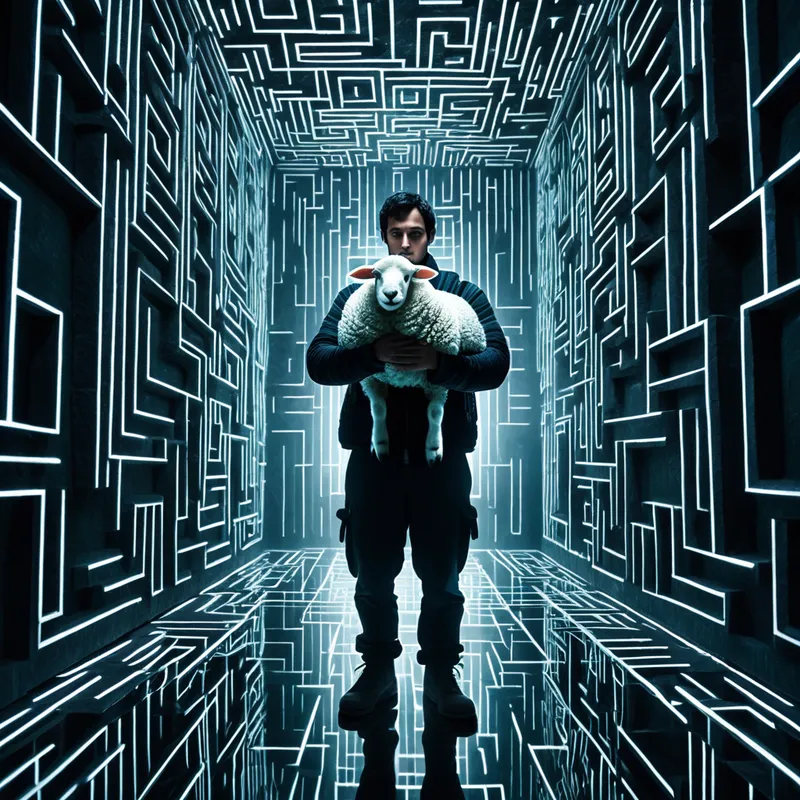
When the motif of the Lamb of God appears in modern dreams, it rarely comes as a Sunday school image. It manifests as a profound somatic and psychological process. One might dream of finding a wounded, ethereal lamb that they must protect at great cost, or conversely, of being forced to harm a lamb, feeling immense guilt upon waking. Another may dream of carrying a lamb that becomes impossibly heavy, a burden that leads them to their knees.
These dreams signal a critical encounter with the “innocent victim” complex within. The dreamer is likely grappling with a situation where they feel sacrificed—by family, work, or life circumstances—or where they are confronting the parts of themselves they have unconsciously “sacrificed” (their creativity, vulnerability, joy) to survive. The Lamb’s appearance invites the dreamer to ask: What innocent part of my soul am I betraying or neglecting? What burden of guilt or shame am I carrying that feels like a death sentence? The dream is an unconscious enactment of the myth, pushing the psyche toward the pivotal choice: to identify solely as the victim on the altar, or to recognize the sacred, transformative potential within the sacrifice itself.
Alchemical Translation
The alchemical journey mirrored in this myth is the [nigredo](/myths/nigredo “Myth from Alchemical culture.”/), the blackening, the descent into the shadow. The crucifixion is the ultimate [nigredo](/myths/nigredo “Myth from Alchemical culture.”/)—the total dissolution of the earthly ego, its hopes, its identity, exposed and annihilated on the cross of conscious suffering.
The resurrection is not a reversal of death, but the proof that the core Self is of a substance that death cannot ultimately corrupt.
For the modern individual, the path of “the Lamb” is the path of conscious suffering and sacred responsibility. It is the process of individuation where one voluntarily takes up the burden of their own wholeness. This means facing the shadow (the “sin of the world” within one’s own psyche), not projecting it onto others. It means accepting one’s wounds and vulnerabilities (the lamb’s nature) not as weaknesses to be eradicated, but as the very site of potential transformation. The “ascension” that follows is the integration of this experience, where the individual no longer lives from a place of fearful ego-defense, but from a connected, compassionate center that has stared into [the abyss](/myths/the-abyss “Myth from Kabbalistic culture.”/) and found, not emptiness, but a mysterious, unkillable love. One becomes, in a psychological sense, both the sacrificed and the sacrificer, the wound and the healing, carrying the mark of the ordeal as a badge of a hard-won, authentic self.
Associated Symbols
Explore related symbols from the CaleaDream lexicon: