The Labyrinth of Knossos Myth Meaning & Symbolism
A hero enters a monstrous maze to confront a beast born of divine wrath, navigating a path of cunning and courage to find his way back to the light.
The Tale of The Labyrinth of Knossos
Hear now the tale of a place where stone learned to breathe, and [the earth](/myths/the-earth “Myth from Hindu culture.”/) itself coiled into a knot of terror. It begins not with a man, but with a king’s pride and a god’s fury. In the sun-drenched isle of Crete, [Minos](/myths/minos “Myth from Greek culture.”/) ruled from his palace of Knossos, a gift from the divine. But when he sought to keep a magnificent white bull sent by [Poseidon](/myths/poseidon “Myth from Greek culture.”/) for sacrifice, [the sea](/myths/the-sea “Myth from Greek culture.”/)-god’s vengeance was not a wave, but a curse of passion. He made [Minos](/myths/minos “Myth from Greek culture.”/)’s queen, Pasiphaë, burn with an unnatural desire for the beast.
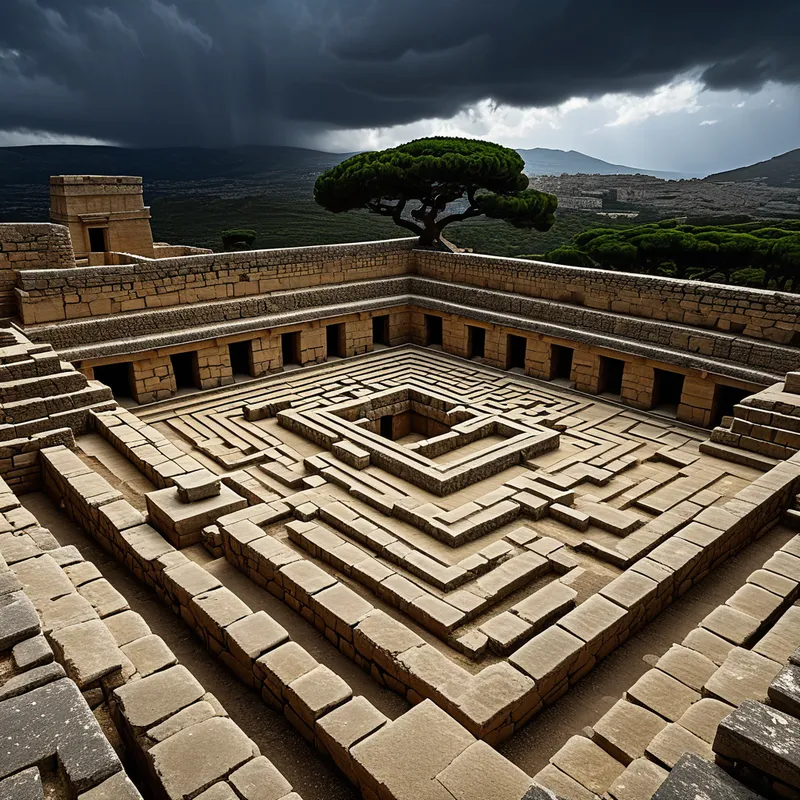
From this union of queen and bull, a monster was born: the [Minotaur](/myths/minotaur “Myth from Greek culture.”/), Asterion. A creature of immense strength, with the body of a man and the head of a bull, its roar was the sound of shattered taboos. Ashamed yet bound by its blood, King Minos commanded the genius-artisan Daedalus to build a prison from which it could never escape. And so Daedalus conceived not a cage, but a living puzzle—[the Labyrinth](/myths/the-labyrinth “Myth from Greek culture.”/). Walls of polished stone rose, not in straight lines, but in cunning, coiling passages that doubled back upon themselves, a stone intestine designed to confuse and consume. [The Minotaur](/myths/the-minotaur “Myth from Greek culture.”/) was placed within, and to feed its rage, Minos demanded a grim tribute from the conquered city of Athens: seven youths and seven maidens, sent every nine years to be lost in the dark and devoured.
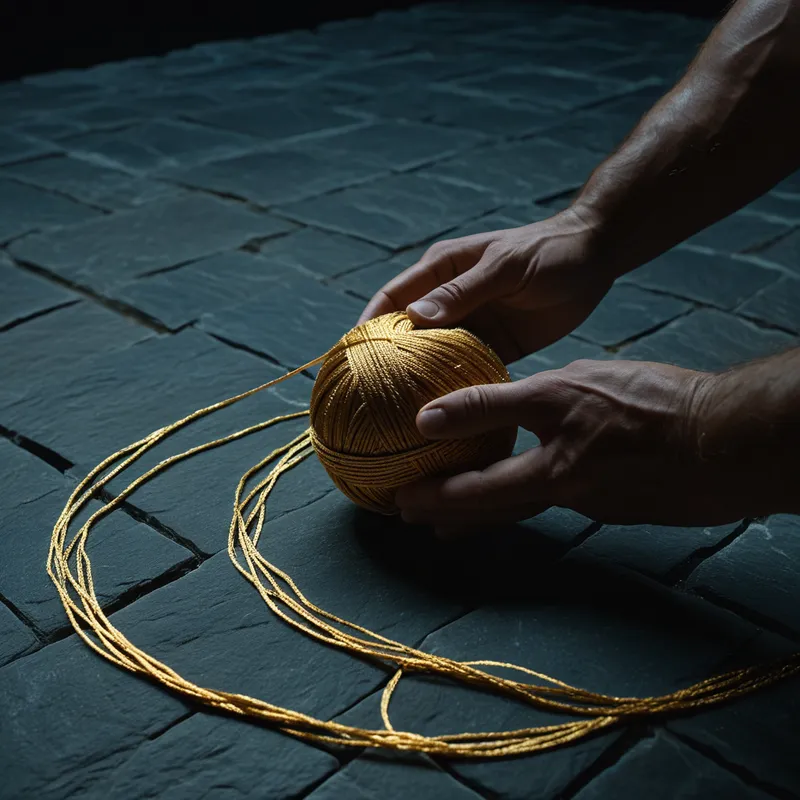
The story turns with the arrival of a prince whose heart was a compass pointing toward [justice](/myths/justice “Myth from Tarot culture.”/). [Theseus](/myths/theseus “Myth from Greek culture.”/), son of Aegeus, volunteered to be part of the third tribute. His ship sailed with black sails, a funeral shroud upon the [water](/myths/water “Myth from Chinese culture.”/). In Crete, before the dread maw of the [Labyrinth](/myths/labyrinth “Myth from Various culture.”/), the princess Ariadne saw him. In his eyes, she saw not fear, but a fierce, clean light. Love and cunning sparked together. She sought out Daedalus, the maze’s maker, and learned its secret: you cannot outthink the [Labyrinth](/myths/labyrinth “Myth from Various culture.”/), you must outwit it. She came to [Theseus](/myths/theseus “Myth from Greek culture.”/) in the dead of night, placing in his hands a simple ball of thread and a sword. “Tie this to the entrance,” she whispered. “Let it unwind as you walk. It will remember the path your mind cannot.”
At dawn, the bronze gates groaned open. The Athenian youths were thrust into the perfumed dark, the air thick with the scent of damp stone and old fear. Theseus tied the thread, felt the gentle pull of Ariadne’s hope, and stepped into the silence. The Labyrinth swallowed him. Left, right, dead ends that laughed at memory, corridors that seemed to breathe and shift. The only sounds were the scuff of his sandals, the whisper of the unraveling thread, and, growing ever closer, a heavy, snorting breath and the scrape of horn on stone. The stench of the beast filled the passage.
Then, in a chamber that felt like [the world](/myths/the-world “Myth from Tarot culture.”/)’s dark heart, he found it. The Minotaur, a mountain of muscle and anguish, charged. There was no elegant duel in that cramped space, only a brutal, desperate struggle—man against the embodiment of a king’s sin and a god’s wrath. Theseus fought with the strength of those he came to save, and with Ariadne’s thread as his tether to the world of light. The monster fell. Following the golden line back through the whispering darkness, Theseus emerged, bloodied but victorious, leading the trembling Athenians from the tomb of stone. They fled to the ship, Ariadne with them, and set sail for home, a story of [triumph](/myths/triumph “Myth from Roman culture.”/) taking shape on [the horizon](/myths/the-horizon “Myth from Various culture.”/).
Cultural Origins & Context
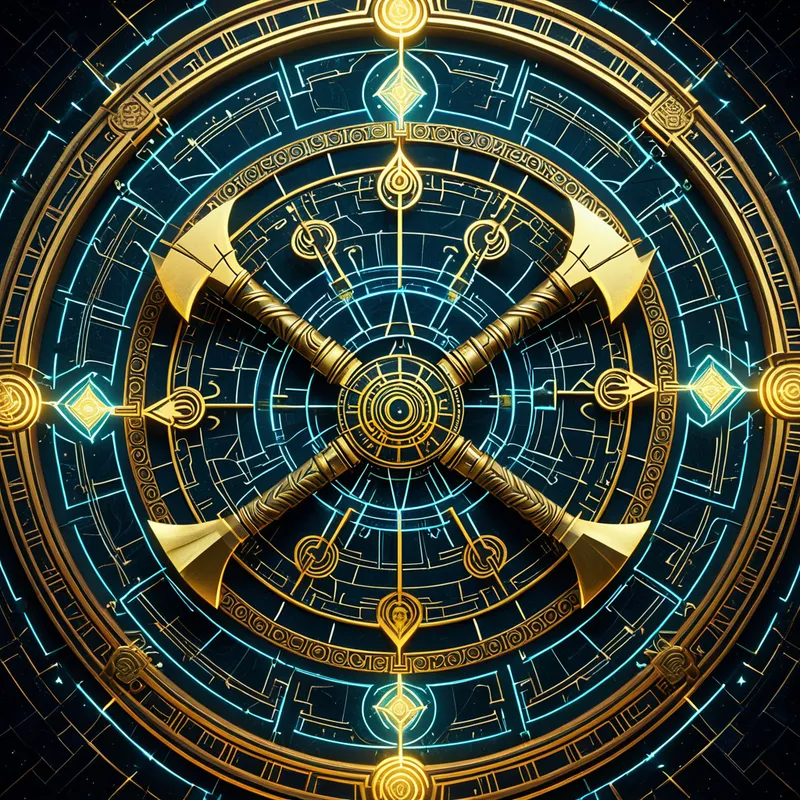
The myth of the Labyrinth is not a singular story but a palimpsest of Bronze Age memory, Mycenaean anxiety, and Classical Greek identity-formation. Its deepest roots likely touch the vast, complex palace complexes of Minoan Crete (c. 2000-1450 BCE), which, to later Mycenaean Greeks, may have seemed like impenetrable, maze-like structures. The symbol of the [labrys](/myths/labrys “Myth from Greek culture.”/), from which “labyrinth” may derive, was a sacred Minoan emblem of power and perhaps ritual sacrifice.
By the time [Homer](/myths/homer “Myth from Greek culture.”/) and Hesiod were weaving the oral tapestry of Greek myth, the tale had crystallized into a foundational narrative of Athenian civic pride. For Athens, a city that would later champion reason and democracy, the myth served a crucial function: it transformed a historical memory of subjugation (the tribute to Minoan Crete) into a story of heroic overcoming. Theseus’s victory symbolized Athens’s rise from a tributary state to a dominant power. The story was performed, painted on vases, and recounted in symposia, serving as a potent metaphor for overcoming chaotic, monstrous forces through intelligence ([metis](/myths/metis “Myth from Greek culture.”/)) and courage. It was a cultural dream of navigating complexity and emerging victorious.
Symbolic Architecture
The [Labyrinth](/symbols/labyrinth “Symbol: The labyrinth represents a complex journey, symbolizing the intricate path toward self-discovery and understanding one’s life’s direction.”/) is the ultimate [symbol](/symbols/symbol “Symbol: A symbol can represent an idea, concept, or belief, serving as a powerful tool for communication and understanding.”/) of the complex, often terrifying [structure](/symbols/structure “Symbol: Structure in dreams often symbolizes stability, organization, and the framework of one’s life, reflecting how one perceives their environment and personal life.”/) of the unconscious [psyche](/myths/psyche “Myth from Greek culture.”/). It is not a random [maze](/symbols/maze “Symbol: A maze represents confusion, complexity, or a search for truth, often reflecting life’s challenges or inner turmoil.”/), but a constructed [confusion](/symbols/confusion “Symbol: A state of mental uncertainty or disorientation, often reflecting internal conflict, lack of clarity, or overwhelming choices in waking life.”/), built by the brightest mind (Daedalus) to contain the darkest secret (the [Minotaur](/symbols/minotaur “Symbol: The Minotaur, a creature from Greek mythology, is often interpreted as a symbol of inner turmoil and the struggle between human and beast.”/)). This speaks to a profound psychological [truth](/symbols/truth “Symbol: Truth represents authenticity, honesty, and the quest for knowledge beyond mere appearances.”/): our most intricate defenses, our neuroses and complexes, are often brilliant constructions designed to hide and hold our personal monsters.
The monster in the maze is not an intruder; it is the inhabitant. The hero’s journey is not to slay the other, but to confront the part of the self that has been walled away in shame.
The Minotaur itself is the archetypal [Shadow](/symbols/shadow “Symbol: The ‘shadow’ embodies the unconscious, repressed aspects of the self and often represents fears or hidden emotions.”/)—the unacceptable hybrid born from a [king](/symbols/king “Symbol: A symbol of ultimate authority, leadership, and societal order, often representing the dreamer’s inner power or external control figures.”/)’s broken vow (superego failure) and a [queen](/symbols/queen “Symbol: A queen represents authority, power, nurturing, and femininity, often embodying leadership and responsibility.”/)’s transgressive desire (id unleashed). It is the raw, instinctual, and “bullish” [aspect](/symbols/aspect “Symbol: A distinct feature, quality, or perspective of something, often representing a partial view of a larger whole.”/) of [the self](/myths/the-self “Myth from Jungian culture.”/), denied [consciousness](/symbols/consciousness “Symbol: Consciousness represents the state of awareness and perception, encompassing thoughts, feelings, and experiences.”/) and left to rage in the dark. Theseus represents the conscious ego, armed with the sword of discernment. But his true [weapon](/symbols/weapon “Symbol: A weapon in dreams often symbolizes power, aggression, and the need for protection or defense.”/) is Ariadne’s thread—the symbol of [connection](/symbols/connection “Symbol: Connection symbolizes relationships, communication, and bonds among individuals.”/), of love, [intuition](/symbols/intuition “Symbol: The immediate, non-rational understanding of truth or insight, often described as a ‘gut feeling’ or inner knowing that bypasses conscious reasoning.”/), or the guiding principle ([anima](/symbols/anima “Symbol: The feminine archetype within the male unconscious, representing soul, creativity, and connection to the inner world.”/)) that provides a lifeline back to [consciousness](/symbols/consciousness “Symbol: Consciousness represents the state of awareness and perception, encompassing thoughts, feelings, and experiences.”/). One cannot integrate the [shadow](/symbols/shadow “Symbol: The ‘shadow’ embodies the unconscious, repressed aspects of the self and often represents fears or hidden emotions.”/) by force alone; one needs a thread of compassionate [awareness](/symbols/awareness “Symbol: Conscious perception of self, surroundings, or internal states. Often signifies awakening, insight, or heightened sensitivity.”/) to find [the way](/myths/the-way “Myth from Taoist culture.”/) back.
The Dreamer’s Resonance
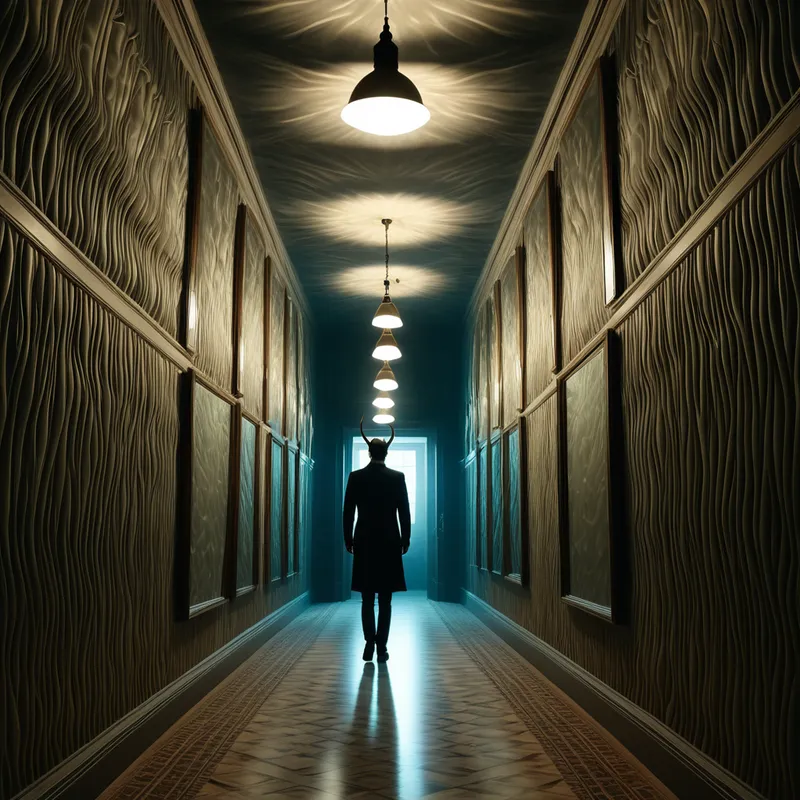
When the Labyrinth appears in modern dreams, it signals a profound encounter with the psyche’s own intricate defense system. The dreamer is not merely lost; they are navigating a self-created puzzle. Common somatic experiences include a feeling of constriction in the chest, a tightening in the gut, or a literal sense of being turned around and disoriented upon waking.
Psychologically, this dream pattern emerges during periods of intense life transition, moral complexity, or when facing a problem that seems to have no logical solution. The dream asks: What monstrous truth have you built a maze to contain? The Minotaur in the dream may appear as a frightening figure, a repressed memory, or even as a overwhelming emotion like rage or shame. The dream’s resolution—or lack thereof—mirrors the dreamer’s readiness to face this content. Finding the center and confronting the beast indicates a move toward shadow integration. Fleeing or remaining lost points to a psyche still too fragile to face its own construction, a process requiring more “thread”—perhaps therapy, creative expression, or a trusted relationship—to begin the navigation.
Alchemical Translation
The myth models the alchemical process of individuation—the journey toward psychic wholeness. The initial state is one of [nigredo](/myths/nigredo “Myth from Alchemical culture.”/), the blackening: Athens in mourning, the black-sailed ship, the dark maze. This is the state of being ruled by an unconscious complex (Minos’s shame, the city’s subjugation).
The journey into the Labyrinth is the [solutio](/myths/solutio “Myth from Alchemical culture.”/) and [separatio](/myths/separatio “Myth from Alchemical culture.”/)—dissolving [the ego](/myths/the-ego “Myth from Jungian culture.”/)’s certainty and separating from collective consciousness to enter [the personal unconscious](/myths/the-personal-unconscious “Myth from Jungian Psychology culture.”/). Theseus’s voluntary descent is the crucial act of [the ego](/myths/the-ego “Myth from Jungian culture.”/) agreeing to engage with the depths. The confrontation with the Minotaur is the coniunctio, the sacred, violent marriage of opposites: conscious and unconscious, human and beast, light and dark.
The triumph is not the death of the beast, but the fact that the hero who entered is not the same hero who leaves. He has metabolized a piece of the monster’s strength.
Finally, following the thread back represents the coagulatio—the reintegration of this transformed awareness into conscious life. The monster is slain, but its essence is absorbed. Theseus emerges not just as a savior of youths, but as a king-in-waiting, having faced the chaotic foundations of his own sovereignty. For the modern individual, the myth maps the path: we must acknowledge the hidden, shameful, or chaotic parts of ourselves (the tribute paid), find our guiding thread (self-reflection, therapy, art), courageously confront [the shadow](/myths/the-shadow “Myth from Jungian culture.”/) in its lair, and use that hard-won knowledge to find our way back to a more complete, authentic self. The maze, once a prison, becomes a map of our own depth.
Associated Symbols
Explore related symbols from the CaleaDream lexicon: