The Kalpavriksha Myth Meaning & Symbolism
A celestial wish-fulfilling tree emerges from the churning ocean of existence, offering boundless gifts and a timeless lesson on the nature of true fulfillment.
The Tale of The Kalpavriksha
In the beginning, before time was measured in breaths, there was only the great, silent ocean of milk—the Kshira Sagara. Its surface was a perfect, unbroken mirror, reflecting nothing but the potential of all things. Yet, within its depths slumbered the Amrita, and with it, all the treasures of existence, waiting to be born.
The Devas, luminous but weary, and the Asuras, mighty but restless, knew of this nectar. A thirst for immortality, for unending power and pleasure, burned in them all. They came together, not in war, but in a desperate, cosmic pact. They would churn the ocean itself.
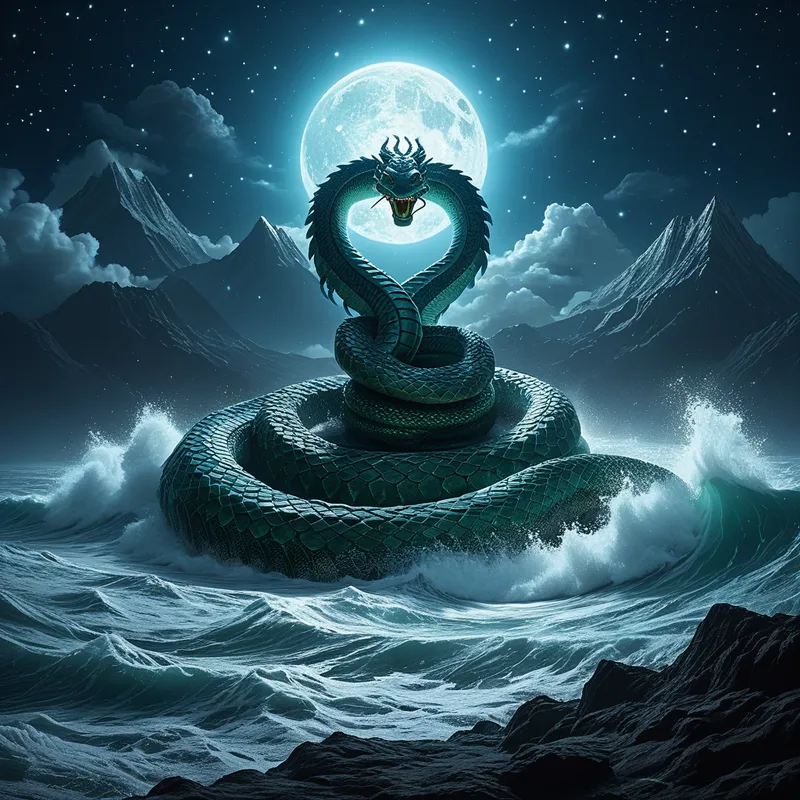
They uprooted the mighty Mount Mandara. The great serpent-king Vasuki offered himself as the rope. The Devas took his tail, the Asuras his head, and with a groan that shook the foundations of the worlds, they began to pull. The mountain spun. The ocean frothed and roared, a tempest of white foam.
From the agony of this churning, horrors first emerged—a deadly poison that threatened to end all life, swallowed by [Shiva](/myths/shiva “Myth from Hindu culture.”/) to save creation. Then, wonders began to surface. [The moon](/myths/the-moon “Myth from Tarot culture.”/), Chandra, cool and serene. The goddess of wine. The celestial cow, [Kamadhenu](/myths/kamadhenu “Myth from Hindu culture.”/). Each a marvel, yet the Devas and Asuras pulled harder, their eyes fixed on the depths, waiting for the Amrita.
And then, it rose.
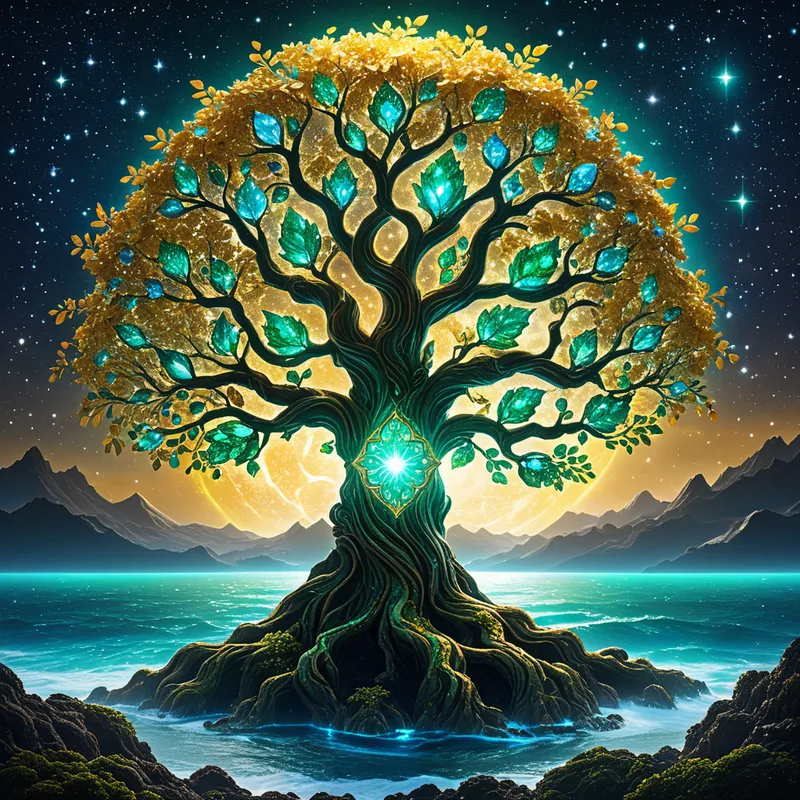
It did not burst forth, but emerged with a slow, inevitable grace, as if it had always been there. It was a tree, yet unlike any tree in any forest. Its bark was the color of dawn-touched gold, smooth and warm. Its leaves were not mere leaves, but living emeralds and sapphires that chimed softly in the cosmic wind. From its branches hung not just fruit, but pearls, garments, ornaments, and vessels overflowing with sustenance. A soft, honeyed light pulsed from its core. This was the [Kalpavriksha](/myths/kalpavriksha “Myth from Hindu culture.”/), the wish-fulfilling tree.
A profound silence fell. The churning ceased. For a moment, greed and strife were forgotten in pure, awe-struck wonder. The tree was planted in the garden of [Indra](/myths/indra “Myth from Hindu culture.”/), in Amaravati. It stood as a silent witness, its branches offering their boundless gifts to the worthy, its roots delving deep into the truth of the universe. It granted every desire, yet in its eternal, patient presence, it whispered a question that would echo through the ages: What is it you truly wish for?
Cultural Origins & Context
The Kalpavriksha is not the subject of a single, linear epic, but a pervasive and ancient motif woven into the fabric of Hindu thought. Its most famous appearance is in the Mahabharata and the cosmological narratives of the Puranas, particularly in the seminal myth of the [Samudra Manthan](/myths/samudra-manthan “Myth from Hindu culture.”/). This context is critical. The tree is not a passive feature of a heavenly landscape; it is a direct product of a titanic, collaborative effort born of conflict and desire.
It was a symbol disseminated by storytellers, rishis, and temple sculptors. In temple architecture, it is often depicted as a lush, ornamental tree, a visual shorthand for paradise, abundance, and divine grace. Its societal function was multifaceted: as a cosmological model of a fruitful universe, a theological promise of divine generosity, and a narrative device representing the ultimate reward. It served as a bridge between the human experience of want and the cosmic principle of infinite potential, teaching that the universe itself is generative and responsive.
Symbolic Architecture
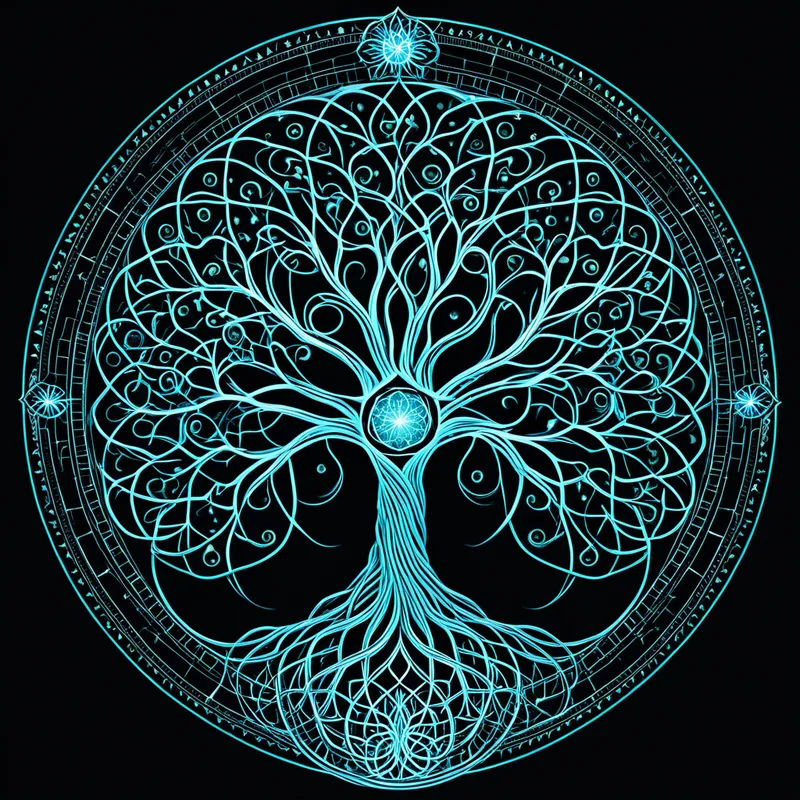
The Kalpavriksha is the ultimate [symbol](/symbols/symbol “Symbol: A symbol can represent an idea, concept, or belief, serving as a powerful tool for communication and understanding.”/) of the [psyche](/myths/psyche “Myth from Greek culture.”/)‘s creative and nourishing potential. It is the [Axis](/symbols/axis “Symbol: A central line or principle around which things revolve, representing stability, orientation, and the fundamental structure of reality or consciousness.”/) Mundi of Hindu cosmology, connecting the [underworld](/symbols/underworld “Symbol: A symbolic journey into the unconscious, representing exploration of hidden aspects of self, transformation, or confronting repressed material.”/) (its roots), the earthly [realm](/symbols/realm “Symbol: The symbol of ‘Realm’ often signifies the boundaries of one’s consciousness, experiences, or emotional states, suggesting aspects of reality that are either explored or ignored.”/) (its [trunk](/symbols/trunk “Symbol: The trunk in dreams typically denotes the core structure or foundation of one’s identity, values, or beliefs.”/)), and the heavens (its branches). It represents the totality of [the Self](/myths/the-self “Myth from Jungian culture.”/), the point where the personal [psyche](/myths/psyche “Myth from Greek culture.”/) opens to the infinite resources of the [collective unconscious](/symbols/collective-unconscious “Symbol: The Collective Unconscious refers to the part of the unconscious mind shared among beings of the same species, embodying universal experiences and archetypes.”/).
The tree that grants every wish is first a mirror that reveals the quality of the wisher.
Its [emergence](/symbols/emergence “Symbol: A process of coming into being, rising from obscurity, or breaking through a barrier, often representing birth, transformation, or revelation.”/) from the churned [ocean](/symbols/ocean “Symbol: The ocean symbolizes the vastness of the unconscious mind, representing deeper emotions, intuition, and the mysteries of life.”/) is profoundly alchemical. The ocean is the unconscious, primordial and undifferentiated. The churning is the necessary conflict, the [friction](/symbols/friction “Symbol: Friction represents resistance, conflict, or the necessary tension required for movement and transformation in dreams.”/) of opposites (Deva and Asura, light and [shadow](/symbols/shadow “Symbol: The ‘shadow’ embodies the unconscious, repressed aspects of the self and often represents fears or hidden emotions.”/), conscious and unconscious) required to bring hidden treasures to light. The Kalpavriksha is the [prima materia](/myths/prima-materia “Myth from Alchemical culture.”/) transformed—the [chaos](/symbols/chaos “Symbol: In Arts & Music, chaos represents raw creative potential, uncontrolled expression, and the breakdown of order to forge new artistic forms.”/) of potential made into a structured, living [system](/symbols/system “Symbol: A system represents structure, organization, and interrelated components functioning together, often reflecting personal or social order.”/) of [abundance](/symbols/abundance “Symbol: A state of plentifulness or overflowing resources, often representing fulfillment, prosperity, or spiritual richness beyond material needs.”/). It symbolizes that our deepest resources—creativity, [insight](/symbols/insight “Symbol: A sudden, deep understanding of a complex situation or truth, often arriving unexpectedly and illuminating hidden connections.”/), wholeness—are not manufactured, but revealed through the difficult, often tumultuous process of engaging with our own [depths](/symbols/depths “Symbol: Represents the subconscious, hidden emotions, or foundational aspects of the self, often linked to primal fears or profound truths.”/).
The “wish-fulfillment” is its most potent and dangerous symbol. It represents the naive belief that the unconscious exists to serve [the ego](/myths/the-ego “Myth from Jungian culture.”/)‘s every whim. To approach it with a [heart](/symbols/heart “Symbol: The heart symbolizes love, emotion, and the core of one’s existence, representing deep connections with others and self.”/) full of petty desire is to be cursed with the endless, hollow [pursuit](/symbols/pursuit “Symbol: A chase or being chased in dreams often reflects unresolved anxieties, unfulfilled desires, or internal conflicts demanding attention.”/) of objects that never satisfy. To approach it with wisdom is to have one’s deepest, [soul](/symbols/soul “Symbol: The soul represents the essence of a person, encompassing their spirit, identity, and connection to the universe.”/)-level yearning—for meaning, for [connection](/symbols/connection “Symbol: Connection symbolizes relationships, communication, and bonds among individuals.”/), for Self-realization—answered.
The Dreamer’s Resonance
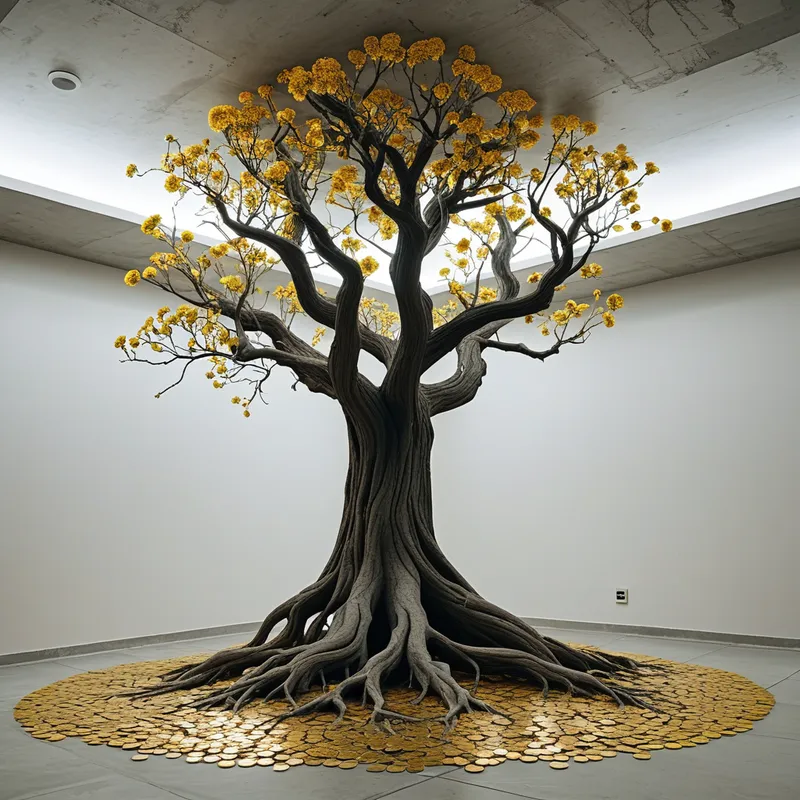
When the Kalpavriksha appears in a modern dream, it rarely manifests as a glittering celestial tree. More often, it is a paradoxical, liminal image. One might dream of a tree in a parking lot that grows money instead of leaves, or a houseplant that inexplicably produces a lost childhood toy. The dreamer feels a mix of wonder and unease.
This is the psyche signaling a critical juncture in the dreamer’s relationship with desire and inner resource. Somatically, there may be a feeling of fullness or pressure in the chest—the “wish” seeking form. Psychologically, the dreamer is confronting the question: From what depth am I sourcing my desires? Is the dream-tree abundant and healthy, or gnarled, synthetic, and burdened by its own gifts? The latter suggests the ego is attempting to force the unconscious to produce ego-gratifications, leading to a sense of psychic inflation and eventual depletion. The dream is an invitation to stop “churning” for external validation and to instead tend to the roots, to engage in the deeper work of discerning true need from passing want.
Alchemical Translation
The journey of the Kalpavriksha models the individuation process—the psychic transmutation of base, unconscious longing into the gold of conscious purpose. The initial state is the “Ocean of Milk”: a state of unconscious potential, where desires are undifferentiated and latent. The “Churning” is the life process itself—the conflicts, sufferings, relationships, and introspections that agitate the calm surface of the psyche.
The emergence of the tree represents the crystallization of the Self. It is the moment when one realizes that the source of fulfillment is not external, but an internal structure, a living center of psychic gravity that can integrate and transmute experience.
Individuation is not about acquiring the gifts of the Kalpavriksha, but about becoming the tree itself—rooted, generative, and in communion with both earth and sky.
The final stage is not in [Svarga](/myths/svarga “Myth from Hindu culture.”/), but in the inner landscape. The alchemical translation is the relocation of the wish-fulfilling function from a projected external deity or object to the core of one’s own being. The modern individual must perform their own Samudra Manthan—facing their poisons (shadow), acknowledging their conflicts, and through that disciplined engagement, allowing their own unique, inner Kalpavriksha to take root. Its fruit is no longer a material boon, but the profound realization of authenticity, where one’s deepest wish and one’s true nature are revealed to be the same.
Associated Symbols
Explore related symbols from the CaleaDream lexicon: