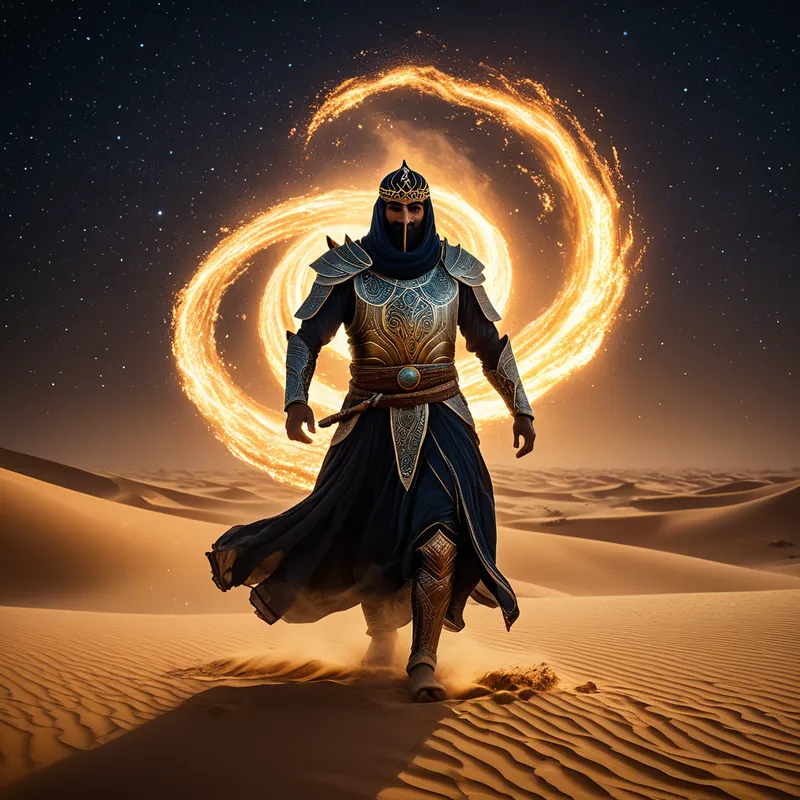
The Jinn Myth Meaning & Symbolism
Ancient beings of smokeless fire, the Jinn inhabit the liminal world, embodying the untamed, creative, and dangerous potential of the unseen psyche.
The Tale of The Jinn
Listen, and let [the wind](/myths/the-wind “Myth from Various culture.”/) from the Empty Quarter carry the tale. Before the first man drew breath from clay, before the stars had names, there was a fire that did not consume. A smokeless flame, intelligent and alive, burning in the spaces between what is and what might be. From this essence they were born: the Jinn.
They were the first people of [the world](/myths/the-world “Myth from Tarot culture.”/), but not of our world. Their kingdoms rose in the trackless desert wastes where the mirage dances, in the heart of the lonely mountain, in the deep, silent places beneath [the earth](/myths/the-earth “Myth from Hindu culture.”/). Iblis was among them, a being of such devotion and knowledge that he ascended to the very courts of the angels. For an age, [the earth](/myths/the-earth “Myth from Hindu culture.”/) was theirs. They built and they destroyed, they loved and they warred, creatures of passion and caprice, as changeable as [the desert](/myths/the-desert “Myth from Biblical culture.”/) wind.
Then came the shaping of Adam, from the dust of the earth. A new order was declared. The command echoed through the heavens: “Prostrate!” The angels, beings of pure light and obedience, bowed immediately. But the command came also to Iblis, who stood amidst them. And here, the fire of his origin flared. He saw a being made of lowly clay, and in his heart, a whisper became a roar. “I am better than he,” the whisper said. “You created me from fire, and him from clay.” Refusal crystallized in his being. He would not bow.
For this act of conscious defiance—this assertion of a self born from comparison and pride—he was cast out. Not into nothingness, but into a different role. He became Shaytan, the adversary, the whisperer. His kingdom was not abolished but inverted, his purpose turned to trial. And his people, the Jinn, were divided. Some followed him into rebellion, becoming the Shayateen. Others chose a different path, remaining in the hidden folds of creation, beings of neutral potential, capable of great good or terrifying mischief.
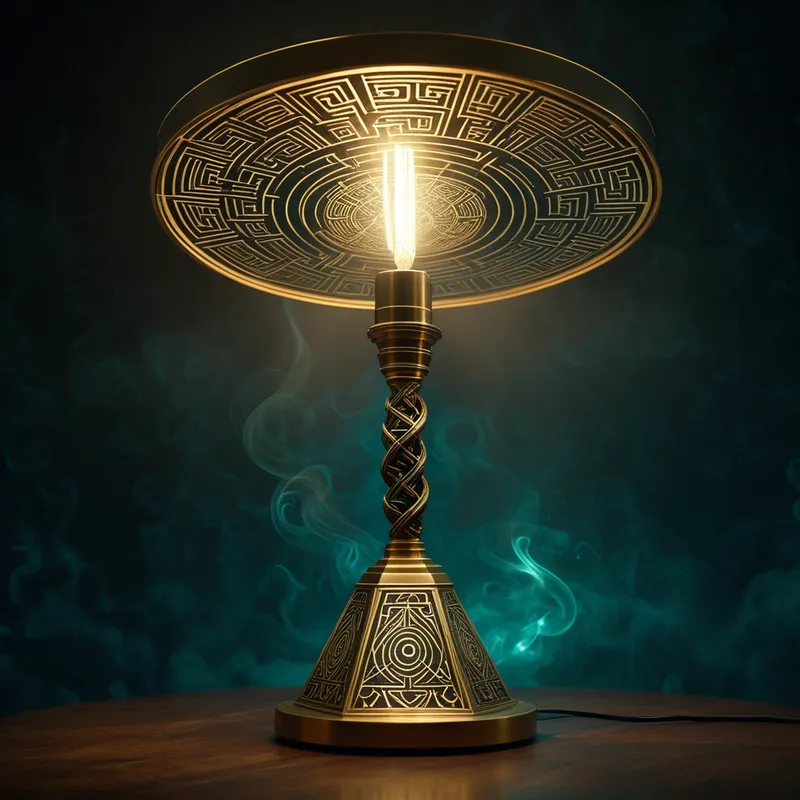
They did not vanish. They retreated. You will not see them in the full light of day, but in the liminal hours: at dusk, when the world holds its breath, and at dawn, when shadows are longest. They dwell where boundaries blur—in ruins, in abandoned places, at crossroads, and in the wild, untamed heart of nature. They can be summoned, by accident or by art, through ancient words spoken over a lonely well or by the rubbing of a sealed lamp. They are bound by oath and name, yet their power to grant wishes is a treacherous [thing](/myths/thing “Myth from Norse culture.”/), for they see the world through the lens of a fiery, literal mind, and they fulfill desires in ways that unravel the soul. They are the unseen inhabitants of your home, the cause of the sudden chill, the misplaced object, the inspiration that strikes from nowhere, and the despair that descends without cause. They are the old powers, waiting just beyond the corner of your eye.
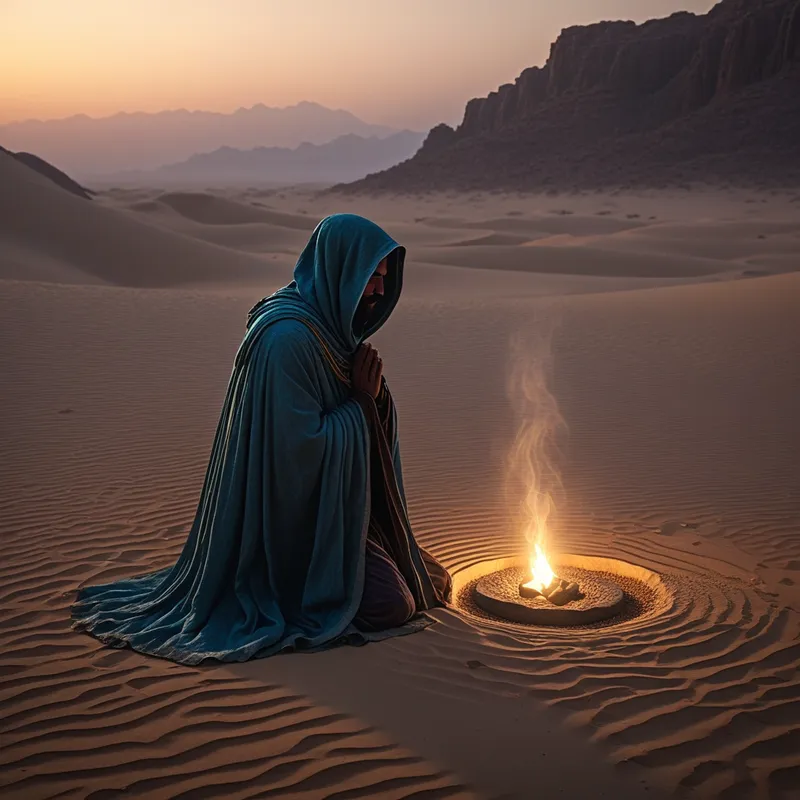
Cultural Origins & Context
The belief in the Jinn is not an invention of scripture but a deep, pre-Islamic bedrock of the Arabian worldview. For the nomadic tribes of the Peninsula, the vast, empty desert—the Rub’ al Khali—was not truly empty. It was populated by invisible, powerful presences. Every strange sound in the night, every sudden illness, every stroke of luck or misfortune could be attributed to the caprice of these beings. They were the genius loci of the ancient world, the explanation for the unpredictable and the uncanny.
Poets and Kahins (soothsayers) were thought to be inspired by familiar Jinn, channeling their otherworldly knowledge. This oral tradition, rich with cautionary tales and encounters, was woven into the very fabric of daily life and cosmic understanding. With the advent of Islam, this existing mythos was not erased but integrated and transformed. The Qur’an affirmed their existence as a separate creation of God, endowed with free will, thus elevating them from mere superstition to a article of cosmological faith. They became part of a moral universe, accountable for their choices, making the unseen world a parallel realm of spiritual struggle.
Symbolic Architecture
The Jinn are the ultimate [symbol](/symbols/symbol “Symbol: A symbol can represent an idea, concept, or belief, serving as a powerful tool for communication and understanding.”/) of the liminal—that which exists on [the threshold](/myths/the-threshold “Myth from Folklore culture.”/). Created from “smokeless fire,” they are [energy](/symbols/energy “Symbol: Energy symbolizes vitality, motivation, and the drive that fuels actions and ambitions.”/) without solid form, [consciousness](/symbols/consciousness “Symbol: Consciousness represents the state of awareness and perception, encompassing thoughts, feelings, and experiences.”/) without [the anchor](/myths/the-anchor “Myth from Christian culture.”/) of the physical [body](/symbols/body “Symbol: The body in dreams often symbolizes the dreamer’s self-identity, personal health, and the relationship they have with their physical existence.”/). They represent the raw, unintegrated potentials of the [psyche](/myths/psyche “Myth from Greek culture.”/) that exist in the [background](/symbols/background “Symbol: The background in a dream can reflect context, environment, and underlying influences in the dreamer’s life.”/) of our [awareness](/symbols/awareness “Symbol: Conscious perception of self, surroundings, or internal states. Often signifies awakening, insight, or heightened sensitivity.”/).
The Jinn are the psyche’s hinterlands, the autonomous complexes that whisper promises and threats from the edge of consciousness. They are creativity that feels alien, rage that seems to possess us, and inspiration that descends as if from another world.
They embody the [Shadow](/symbols/shadow “Symbol: The ‘shadow’ embodies the unconscious, repressed aspects of the self and often represents fears or hidden emotions.”/), not merely as personal evil, but as the vast repository of all that we have excluded from our daylight [identity](/symbols/identity “Symbol: Identity represents the sense of self, encompassing personal beliefs, cultural background, and social roles.”/): our [primal instincts](/symbols/primal-instincts “Symbol: Primal Instincts represent the basic drives and survival mechanisms inherent in every individual, harkening back to our animalistic nature.”/), our forbidden desires, our immense and often frightening creative power. Iblis’s fall is not a simple tale of evil, but a profound myth of the [birth](/symbols/birth “Symbol: Birth symbolizes new beginnings, transformation, and the potential for growth and development.”/) of conscious [differentiation](/symbols/differentiation “Symbol: The process of distinguishing or separating parts of the self, emotions, or identity from a whole, often marking a developmental or psychological milestone.”/) through [opposition](/symbols/opposition “Symbol: A pattern of conflict, duality, or resistance, often representing internal or external struggles between opposing forces, ideas, or desires.”/). His refusal is the archetypal [moment](/symbols/moment “Symbol: The symbol of a ‘moment’ embodies the significance of transient experiences that encapsulate emotional depth or pivotal transformations in life.”/) where a part of the psyche asserts its independence from total obedience, initiating the dynamic [tension](/symbols/tension “Symbol: A state of mental or emotional strain, often manifesting physically as tightness, pressure, or unease, signaling unresolved conflict or anticipation.”/) necessary for growth and, paradoxically, for the possibility of true submission later understood, not commanded.
Their association with ruins, [crossroads](/symbols/crossroads “Symbol: A powerful spiritual symbol representing a critical decision point where paths diverge, often associated with fate, transformation, and life-altering choices.”/), and deserts points to their [role](/symbols/role “Symbol: The concept of ‘role’ in dreams often reflects one’s identity or how individuals perceive their place within various social structures.”/) as dwellers in psychic spaces we have abandoned (old traumas, neglected talents) or where critical decisions must be made. To “summon” a Jinn is to consciously engage with these hidden aspects, a dangerous but potentially transformative act.
The Dreamer’s Resonance
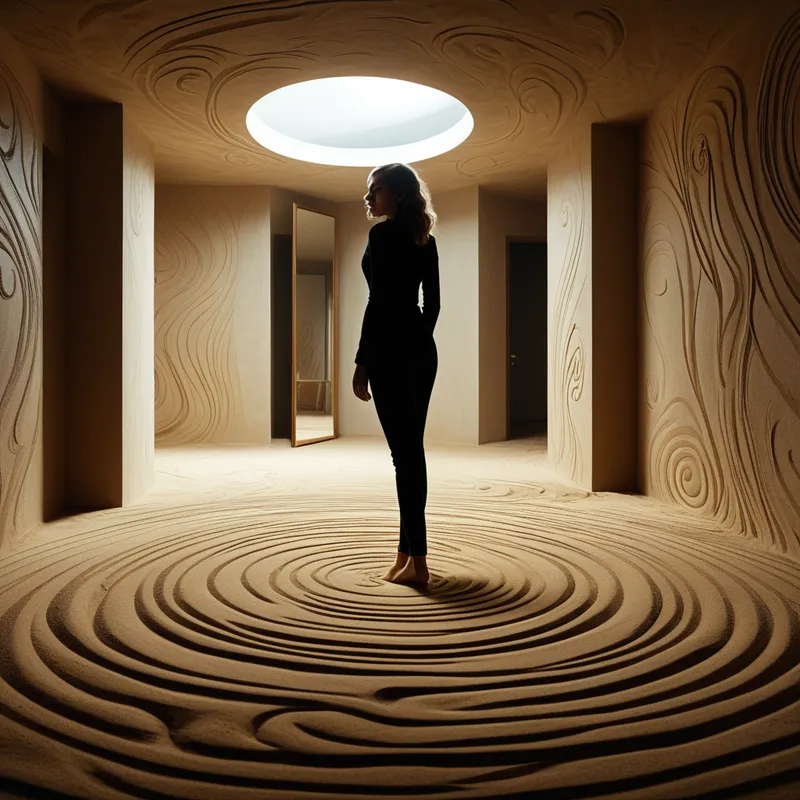
When the motif of the Jinn appears in modern dreams, it signals an encounter with an autonomous complex—a bundle of thoughts, feelings, and memories that has split off from the conscious ego and operates independently. The dreamer is experiencing a “possession,” not by an external entity, but by a powerful, unrecognized part of themselves.
Somatically, this might feel like a sudden, overwhelming emotion with no apparent cause (a fiery anger, a consuming envy, a paralyzing fear), or a compulsive behavior that feels alien. Psychologically, it is the process of a content from the unconscious breaking through its containment. The Jinn in the dream—whether as a threatening presence, a seductive guide, or a trapped genie in a lamp—represents this eruptive psychic energy. The dream is the psyche’s way of presenting this content in a form that can be witnessed. The key question for the dreamer becomes: What wish is this force trying to fulfill, and at what cost? The negotiation, binding, or integration of this dream-Jinn is [the shadow](/myths/the-shadow “Myth from Jungian culture.”/)-work made manifest.
Alchemical Translation
The myth of the Jinn provides a precise model for the alchemical stage of [Nigredo](/myths/nigredo “Myth from Alchemical culture.”/)—the blackening, the confrontation with the shadow. The first step is acknowledgement: realizing that the vast, unseen desert within us is inhabited. We must name the “Jinn” of our psyche—our repressed ambitions, our hidden angers, our untapped creative fires.
The second is confrontation and containment, symbolized by the sealing of the Jinn in a lamp or ring. This is not repression, but the conscious act of creating a vessel (through therapy, art, ritual, or deep reflection) to hold this chaotic energy so it can be examined. It is [the ego](/myths/the-ego “Myth from Jungian culture.”/) establishing a relationship with the autonomous complex, rather than being enslaved by it.
The ultimate goal is not to banish the Jinn, but to integrate its fire. The genie’s power, once bound and understood, becomes the fuel for transformation.
Finally, there is integration, the [Rubedo](/myths/rubedo “Myth from Alchemical culture.”/) or reddening. The smokeless fire of the Jinn, once a source of possession, is alchemically translated into the vital energy of the true Self. The rebellious independence of the Iblis principle transforms from a force of sheer opposition into the necessary capacity for critical thinking and individual ethical choice. The modern individual’s journey of individuation is, in this light, the process of moving from being a haunted house, subject to the whims of invisible Jinn (unconscious complexes), to becoming a wise ruler who recognizes these forces as part of the kingdom of [the Self](/myths/the-self “Myth from Jungian culture.”/), to be engaged with respect, caution, and ultimately, transformative purpose.
Associated Symbols
Explore related symbols from the CaleaDream lexicon: