The Isle of Avalon Myth Meaning & Symbolism
A shrouded isle of healing and eternal rest, where a wounded king is carried to mend his spirit, awaiting the call to return.
The Tale of The Isle of Avalon
Listen. The mists are rising from the western sea, and in their silver coils, memory sleeps. There was a king, a king of light and law, who bore a wound that would not close. Not in flesh, but in the very fabric of his reign. His name was Arthur, and his final battle at Camlan was a harvest of sorrow, reaping the last of his noble knights. The land itself bled with him.
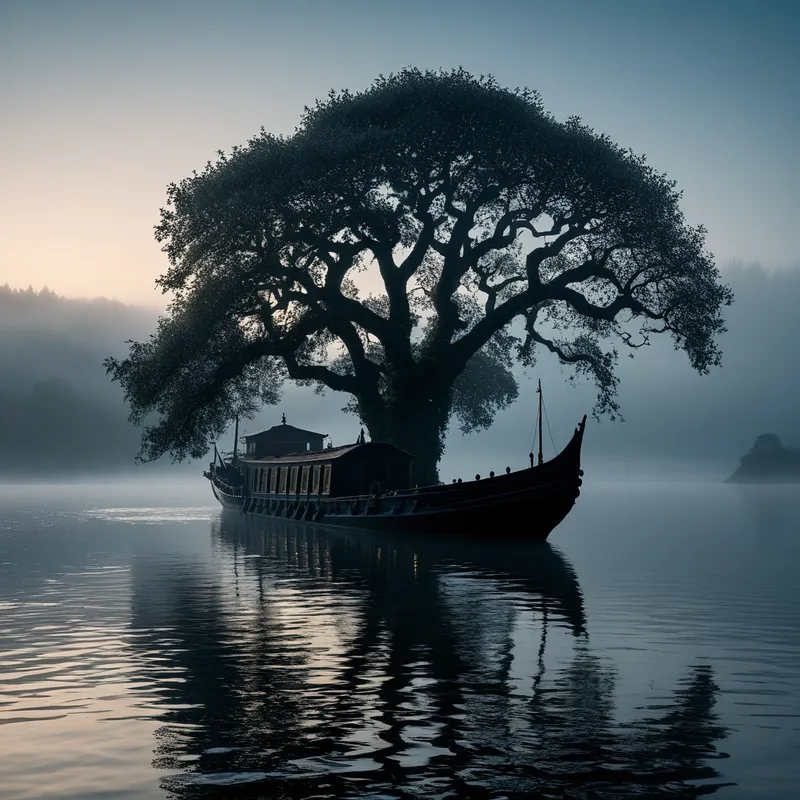
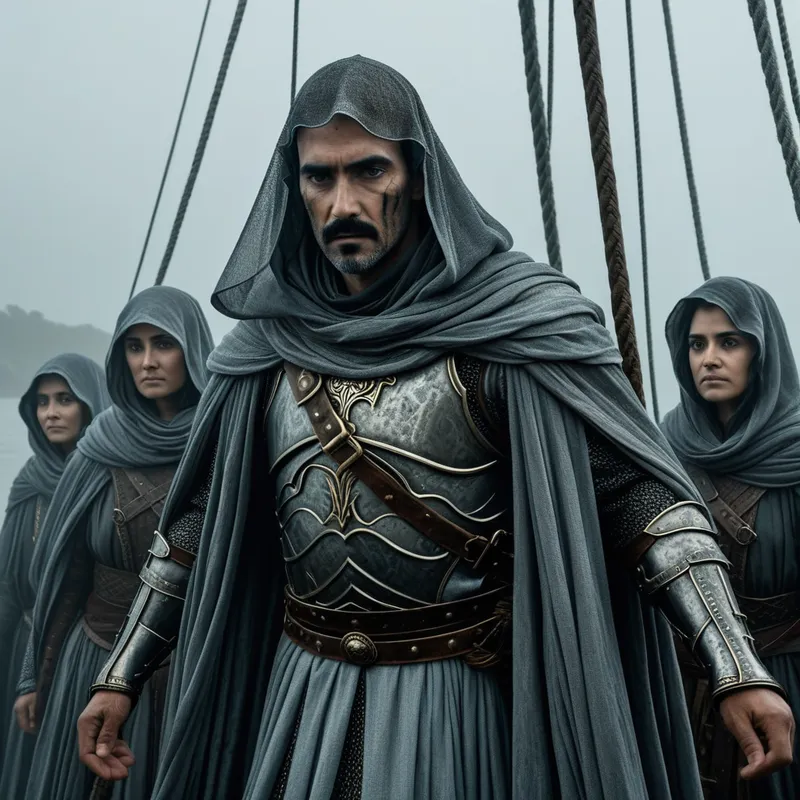
He lay upon the trampled earth, his life seeping into the soil, when a shadow fell not from the sun, but from the [water](/myths/water “Myth from Chinese culture.”/). A barge, black as a [raven](/myths/raven “Myth from Haida culture.”/)’s wing and silent as a breath held, parted the reeds. Within stood figures, nine in number, women whose faces were like carved [moonstone](/myths/moonstone “Myth from Various culture.”/)—Morgen chief among them. They were the keepers of the old ways, the weavers of threads seen and unseen. Without a word, they gathered the broken king. Their hands, cool as river stone, lifted him. The barge turned its prow westward, away from [the world](/myths/the-world “Myth from Tarot culture.”/) of men and steel, into the gathering fog.
For three days and three nights they traveled, not upon water as we know it, but through a veil. The air grew thick with the scent of damp earth and a sweetness like no other—the perfume of apples in eternal bloom. Then, the mists parted.
Avalon. The Isle of Apples. A place where twilight held dominion and the trees bore fruit of silver and gold. Here, time coiled upon itself like a sleeping serpent. The sisters bore Arthur to a chamber of green turf and living stone, a hall beneath a hill. They laid him upon a bed of fragrant herbs and moss. Morgen, her fingers tracing the air above his wound, began the long work. Not with poultice and needle, but with song and silence, with the water from the island’s sacred spring and the light caught in an apple’s heart. The king did not wake, but neither did he die. He entered a sleep deeper than death, a restorative slumber where his spirit, like the land he championed, could slowly knit itself back together. The isle wrapped him in its timeless embrace, and the legend was born: not of an end, but of a pause. The Once and Future King, resting, waiting, healing in the apple-grove beyond the world’s edge.
Cultural Origins & Context
The vision of Avalon is a late, haunting bloom on the ancient Celtic vine. Its roots tap into a deep, pre-Christian stratum of belief concerning the [Otherworld](/myths/otherworld “Myth from Celtic culture.”/). This realm, known as [Tír na nÓg](/myths/tr-na-ng “Myth from Celtic culture.”/) or Annwn, was not a place of reward or punishment, but a parallel reality of abundance, peace, and timelessness, often accessed through burial mounds, lakes, or western islands. Avalon inherits this geography of the soul.
The name itself, Insula Avallonis or Ynys Afallon, translates to “Isle of Apples,” the apple being a potent symbol of immortality, healing, and mystical knowledge in Celtic lore. The myth as we know it was crystallized in the 12th century by Geoffrey of Monmouth, who wove earlier Welsh and Breton fragments into a Latin chronicle. He positioned Avalon as the domain of the enchantress Morgen (later [Morgan le Fay](/myths/morgan-le-fay “Myth from Celtic culture.”/)), a figure descended from Celtic war-goddesses and sovereignty deities transformed into a healer and guardian.
Its societal function was multifaceted. For a culture navigating the trauma of conquest and change, it provided a narrative of preservation, not annihilation. The greatest hero was not dead, but in stasis. It also served as a bridge between the old pagan understanding of [the Otherworld](/myths/the-otherworld “Myth from Celtic culture.”/) and the new Christian ethos, offering a “sacred neutral ground” where magic and mystery could coexist with the idea of a promised return. It was a story told by bards and chroniclers to console, to promise restoration, and to affirm that the essence of a people’s spirit could never be fully eradicated, only hidden, waiting in the mists.
Symbolic Architecture
[Avalon](/symbols/avalon “Symbol: A mythical island from Arthurian legend, often representing a spiritual paradise, eternal rest, or a place of healing and transformation.”/) is not merely a [location](/symbols/location “Symbol: The symbol of ‘Location’ signifies a sense of place, context, and the environment in which experiences unfold.”/); it is a state of being. It represents the [psyche](/myths/psyche “Myth from Greek culture.”/)’s ultimate sanctuary, the inner sanctum to which [the ego](/myths/the-ego “Myth from Jungian culture.”/) must retreat when it has been catastrophically wounded by the battles of [life](/symbols/life “Symbol: The symbol of ‘Life’ represents a journey of growth, interconnectedness, and existential meaning, encompassing both the joys and challenges that define human experience.”/)—[betrayal](/symbols/betrayal “Symbol: A profound violation of trust in artistic or musical contexts, often representing broken creative partnerships or artistic integrity compromised.”/), failure, profound [loss](/symbols/loss “Symbol: Loss often symbolizes change, grief, and transformation in dreams, representing the emotional or psychological detachment from something or someone significant.”/).
The wound that will not close is the call to a journey the conscious mind cannot fathom. It is an invitation to dissolution for the sake of later reconstitution.
The Black Barge symbolizes the necessary surrender. It is the [vehicle](/symbols/vehicle “Symbol: Vehicles in dreams often symbolize the direction in life and the control one has over their journey, reflecting personal agency and decision-making.”/) of the unconscious that carries us away from the familiar battlefield of our daily struggles when our resources are utterly spent. The Nine Sisters, often linked to the Druidesses or the Morrígna, represent the multifaceted, nurturing, yet impersonal forces of the deep psyche that oversee transformation. They are the archetypal caregivers of the [soul](/symbols/soul “Symbol: The soul represents the essence of a person, encompassing their spirit, identity, and connection to the universe.”/), who know the arts of decay and [regeneration](/symbols/regeneration “Symbol: The process of renewal, restoration, and growth following damage or depletion, often representing emotional healing, transformation, or a fresh start.”/).
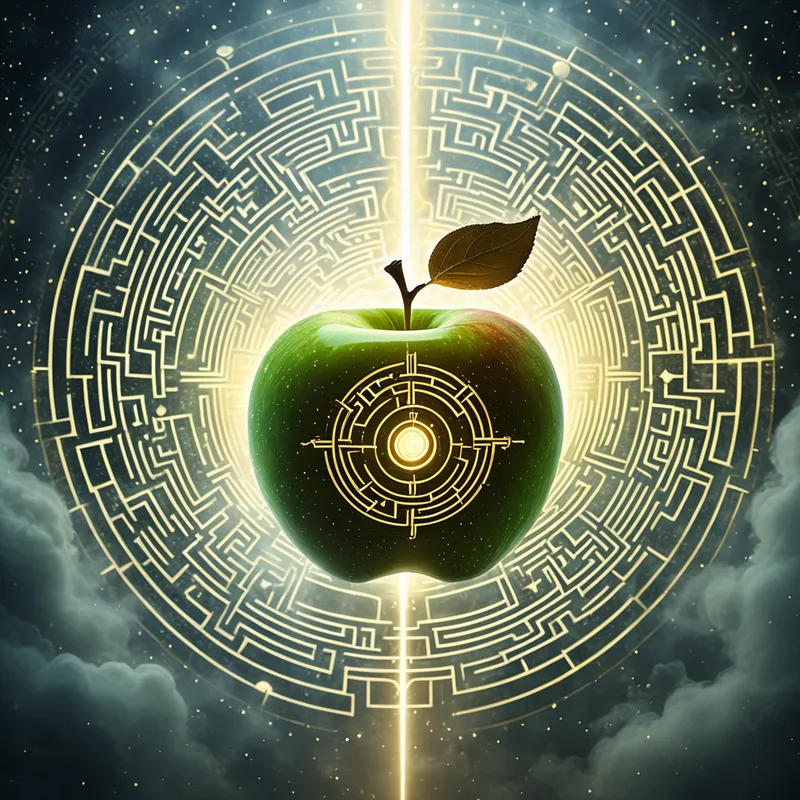
The [Apple](/symbols/apple “Symbol: An apple symbolizes knowledge, temptation, and the duality of good and evil, often representing the pursuit of wisdom with potential consequences.”/), golden and eternal, is the core [symbol](/symbols/symbol “Symbol: A symbol can represent an idea, concept, or belief, serving as a powerful tool for communication and understanding.”/). It is the [fruit](/symbols/fruit “Symbol: Fruit symbolizes abundance, nourishment, and the fruits of one’s labor in dreams.”/) of [knowledge](/symbols/knowledge “Symbol: Knowledge symbolizes learning, understanding, and wisdom, embodying the acquisition of information and enlightenment.”/), but not of a fall; rather, it is the knowledge of cyclical restoration, of life that persists beyond apparent [death](/symbols/death “Symbol: Symbolizes transformation, endings, and new beginnings; often associated with fear of the unknown.”/). Avalon itself, shrouded in mist, is the ultimate [symbol](/symbols/symbol “Symbol: A symbol can represent an idea, concept, or belief, serving as a powerful tool for communication and understanding.”/) of the [shadow](/symbols/shadow “Symbol: The ‘shadow’ embodies the unconscious, repressed aspects of the self and often represents fears or hidden emotions.”/) and the [anima](/symbols/anima “Symbol: The feminine archetype within the male unconscious, representing soul, creativity, and connection to the inner world.”/)—the feminine, watery, irrational [realm](/symbols/realm “Symbol: The symbol of ‘Realm’ often signifies the boundaries of one’s consciousness, experiences, or emotional states, suggesting aspects of reality that are either explored or ignored.”/) that the heroic, solar [consciousness](/symbols/consciousness “Symbol: Consciousness represents the state of awareness and perception, encompassing thoughts, feelings, and experiences.”/) of Arthur must integrate for wholeness. His “sleep” is the ego’s temporary abdication, allowing the deeper, slower processes of [the Self](/myths/the-self “Myth from Jungian culture.”/) to work.
The Dreamer’s Resonance
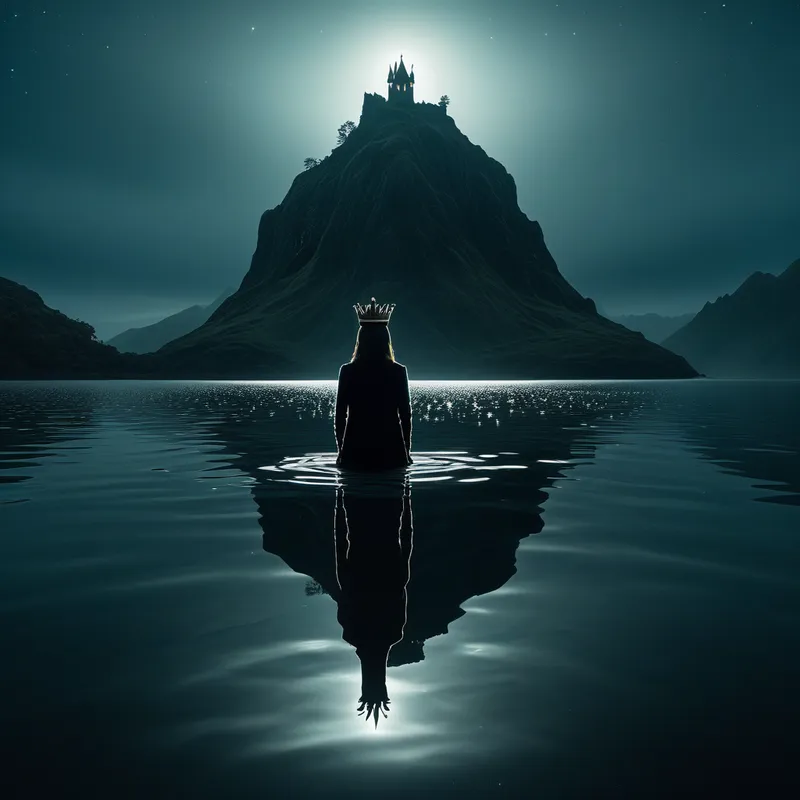
When the Isle of Avalon rises from the dreamer’s subconscious, it signals a profound psychological crisis that has moved beyond the stage of active fighting. The dreamer may find themselves on a misty shore, seeing an unreachable island, or lying wounded, awaiting transport.
This is the somatic signature of burnout, deep depression, or soul-loss—a state where the adaptive ego has been “mortally wounded.” The dream is not presenting a solution, but a diagnosis: the conscious attitude has failed. The Avalon dream is the psyche’s prescription of radical rest. The feeling is one of immense fatigue coupled with a strange, passive hope. There is no energy for striving, only for being carried. The mists in the dream represent the necessary obscurity of this process; the destination is known only to the unconscious. To dream of Avalon is to experience the psyche initiating its own urgent, non-negotiable healing protocol, pulling the dreamer out of circulation to prevent a permanent fracture.
Alchemical Translation
The myth of Avalon models the [nigredo](/myths/nigredo “Myth from Alchemical culture.”/) and albedo of the individuation process. Arthur’s wounding at Camlan is the [nigredo](/myths/nigredo “Myth from Alchemical culture.”/)—the blackening, the utter defeat of the heroic [persona](/myths/persona “Myth from Greek culture.”/). His journey to the isle is the beginning of dissolution.
The king must become a patient before he can become a king again. Sovereignty is reclaimed not through force, but through the humility of being healed.
The modern individual’s “Avalon” is that space—whether therapy, solitude, nature, or creative incubation—where they stop trying to “fix” themselves through willpower and instead submit to a deeper process. Morgen and her sisters symbolize the therapeutic container, the inner wisdom, or the supportive relationships that “hold” us while we are in pieces. The long sleep is the period of albedo, the whitening, where old identities are washed away and a new, more authentic essence begins to coalesce in the darkness.
The promise of return—“The Once and Future King”—is the ultimate alchemical hope. It signifies that the ego, having died to its old, rigid form, can be reborn integrated with the powers of the unconscious (the isle). One does not leave Avalon as the same wounded hero, but as a ruler who has incorporated the mystic isle within. The struggle, then, is the struggle to surrender, to accept the barge when it comes, and to trust the timeless, apple-scented darkness to do its work. The [triumph](/myths/triumph “Myth from Roman culture.”/) is not in the battle, but in the graceful yielding to the healing mist.
Associated Symbols
Explore related symbols from the CaleaDream lexicon: