The Hermit Myth Meaning & Symbolism
A solitary figure, guided by an inner star, ascends a mountain of the soul to find the light that illuminates the darkness within and without.
The Tale of The Hermit
Listen. There is a silence so deep it has a sound, a hum older than [the world](/myths/the-world “Myth from Tarot culture.”/). In this silence, a figure moves.
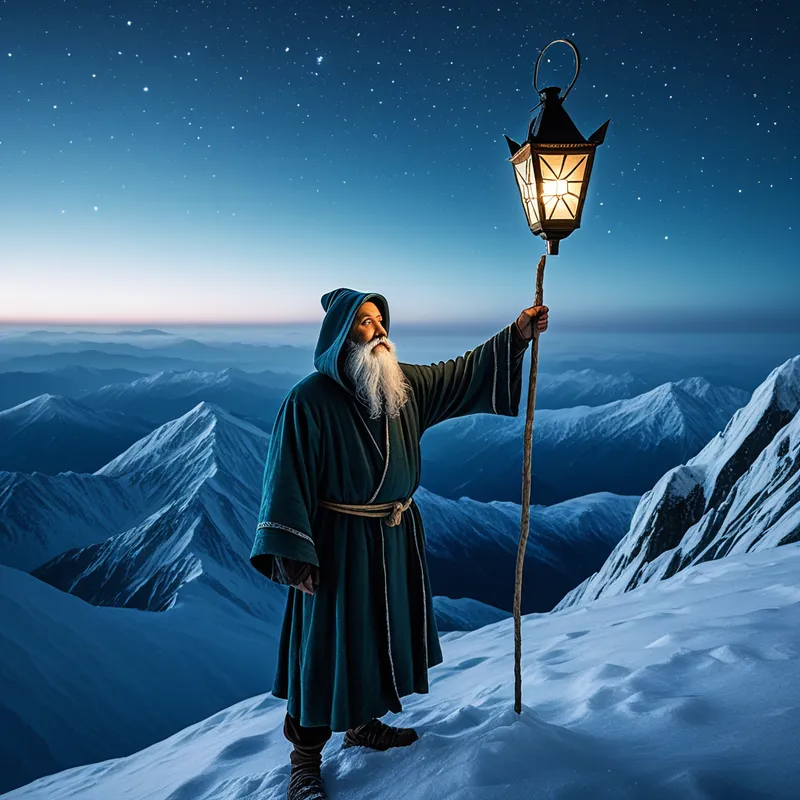
He is not young, nor is he old in [the way](/myths/the-way “Myth from Taoist culture.”/) of decaying flesh. He is old like stone, like the patient bedrock beneath the soil. His cloak is the grey of mountain mist, his hood drawn against not the cold, but the clamor. He carries a staff, not for support, but as a companion to [the earth](/myths/the-earth “Myth from Hindu culture.”/), a sixth sense tapping the hidden veins of the world. In his other hand, he holds a lantern. But this is no ordinary flame. Within its iron cage burns a six-pointed star, a cold, clear light that does not flicker with [the wind](/myths/the-wind “Myth from Various culture.”/)’s breath. It is the light of a fixed idea, an inner sun.
He walks where paths end. He climbs the Mountain of Solitude. The air thins. The voices of the marketplace, the demands of the tribe, the ceaseless chatter of [the river](/myths/the-river “Myth from Buddhist culture.”/)-valley life—all fade into a distant murmur, then into nothing. Here, there is only the crunch of frost underfoot, the sigh of the wind through high passes, and the vast, star-strewn dome of [the sky](/myths/the-sky “Myth from Persian culture.”/) pressing down.
This is his conflict: not against a dragon or a rival king, but against the seductive warmth of [the hearth](/myths/the-hearth “Myth from Norse culture.”/) left behind. The rising action is the increasing weight of the silence, the confrontation with [the void](/myths/the-void “Myth from Buddhist culture.”/) inside [the self](/myths/the-self “Myth from Jungian culture.”/). Each step upward is a shedding: a prejudice left on a rock, a fear released to the thin air, a borrowed identity unraveled by the wind.
He does not seek a summit to plant a flag. He seeks the vantage point where the [inner light](/myths/inner-light “Myth from Buddhist culture.”/) and the outer darkness meet. He stops. He lifts the lantern. And in that act, the resolution is born. [The star](/myths/the-star “Myth from Tarot culture.”/)’s light does not blaze outward to conquer the dark; it becomes a focal point, a still center. It illuminates just enough of the path ahead—one step, and then the next. It reveals that the darkness was not an enemy, but the necessary canvas for the light. The wisdom he finds is not a shouted proclamation, but the quiet, unshakable knowledge of the path itself, and the necessity of walking it alone to truly see.
Cultural Origins & Context
The figure of The Hermit emerged not from a single ancient epic, but from the symbolic melting pot of late medieval and Renaissance Europe. It crystallized in the form of the Tarot deck, most notably in patterns like the Visconti-Sforza and later, the standardized Rider-Waite-Smith deck. Its storytellers were not bards in halls, but card painters, occultists, and seekers who encoded spiritual and philosophical concepts into visual allegory.
Societally, the card functioned as a mnemonic archetype within esoteric traditions. In a world dominated by rigid religious and social structures, The Hermit represented the sanctioned, yet deeply counter-cultural, path of interiority. He was the wise old man of the forest, [the desert](/myths/the-desert “Myth from Biblical culture.”/) father, [the alchemist](/myths/the-alchemist “Myth from Various culture.”/) in his laboratory. The card served as a mirror and a map for those undertaking a quest for gnosis—direct, personal knowledge of the divine or the self, separate from institutional dogma. It was passed down hand-to-hand, deck-to-deck, a silent teacher reminding the practitioner that the ultimate authority and the ultimate journey lay within.
Symbolic Architecture
The Hermit is not merely a man who lives alone; he is the embodiment of the conscious, willed turn [inward](/symbols/inward “Symbol: A journey toward self-awareness, introspection, and the exploration of one’s inner world, thoughts, and unconscious mind.”/). His symbols form a precise psychological [blueprint](/symbols/blueprint “Symbol: A blueprint represents the foundational plan or design for something, often symbolizing potential, structure, and the mapping of one’s inner self or future.”/).
The [Mountain](/symbols/mountain “Symbol: Mountains often symbolize challenges, aspirations, and the journey toward self-discovery and enlightenment.”/) is the arduous [ascent](/symbols/ascent “Symbol: Symbolizes upward movement, progress, spiritual elevation, or striving toward higher goals, often representing personal growth or transcendence.”/) of [consciousness](/symbols/consciousness “Symbol: Consciousness represents the state of awareness and perception, encompassing thoughts, feelings, and experiences.”/), leaving the collective plains of instinct and social [conformity](/symbols/conformity “Symbol: The act of adjusting one’s behavior, beliefs, or appearance to match those of a group or societal norms, often involving pressure to fit in.”/). The Staff represents the will and the [connection](/symbols/connection “Symbol: Connection symbolizes relationships, communication, and bonds among individuals.”/) to ancestral wisdom (a phallic [symbol](/symbols/symbol “Symbol: A symbol can represent an idea, concept, or belief, serving as a powerful tool for communication and understanding.”/) of directed [energy](/symbols/energy “Symbol: Energy symbolizes vitality, motivation, and the drive that fuels actions and ambitions.”/)). The Grey [Robe](/symbols/robe “Symbol: A robe often represents comfort, authority, or a transition in one’s life, symbolizing the roles we play or the comfort of solitude.”/) signifies neutrality, the shedding of colorful personal identifications to become a [vessel](/symbols/vessel “Symbol: A container or structure that holds, transports, or protects something essential, representing the self, emotions, or life journey.”/) for something impersonal.
The lantern does not dispel the darkness; it enters into a sacred contract with it. The light is only meaningful because of the night that holds it.
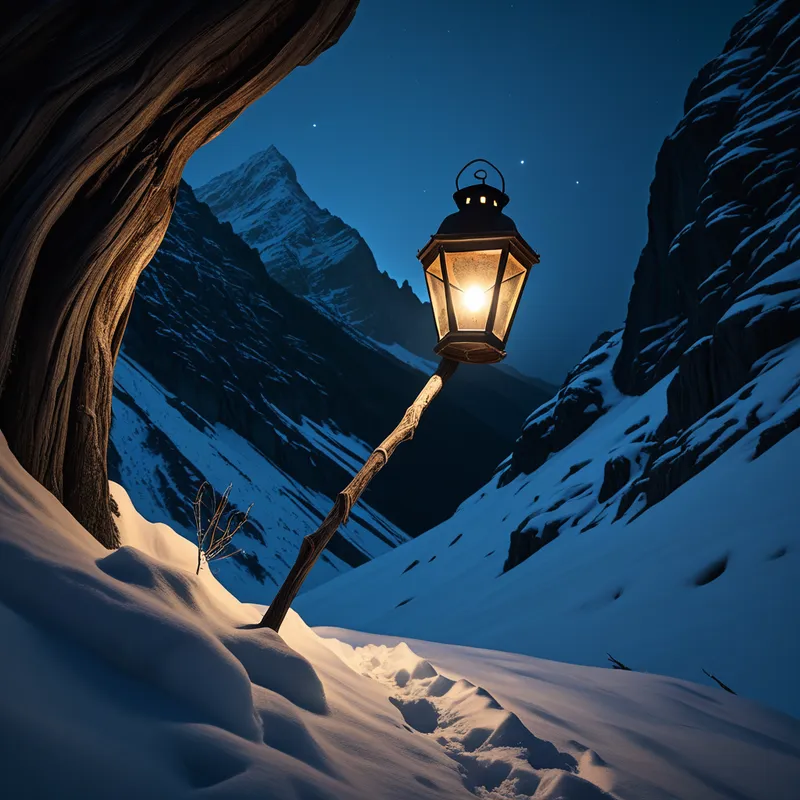
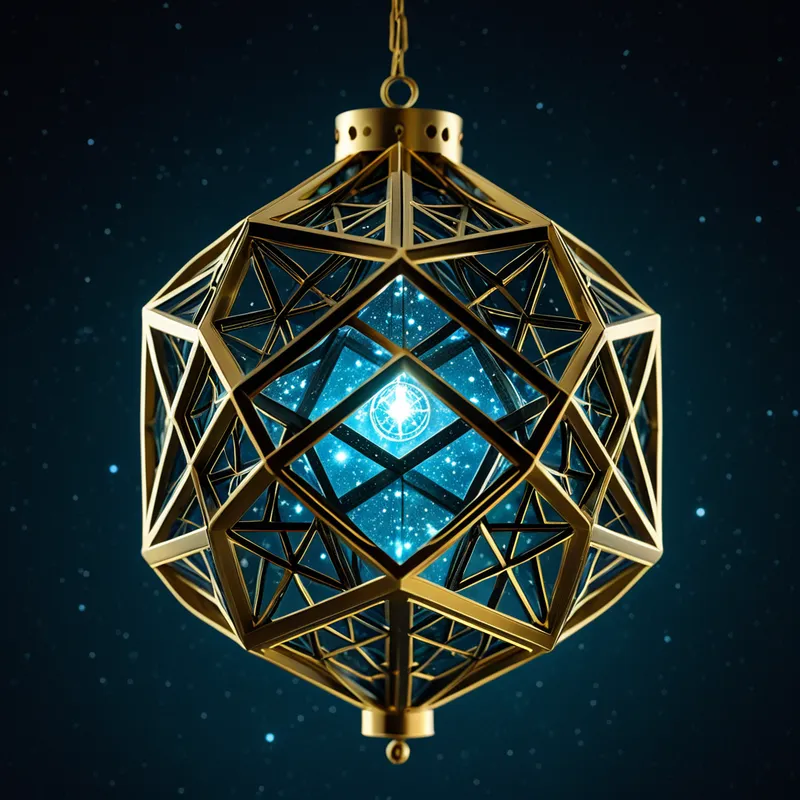
But the core is the Lantern. It is not a [torch](/symbols/torch “Symbol: A portable light source symbolizing illumination, guidance, and the transfer of knowledge or life force.”/), which consumes itself and blazes wildly. It is a contained, focused [luminescence](/symbols/luminescence “Symbol: A soft, glowing light without apparent heat source, often associated with spiritual presence, inner wisdom, or supernatural phenomena in dreams.”/). The star within, often a [Solomon](/myths/solomon “Myth from Biblical culture.”/)‘s Seal, is the integrated self, the sacred [marriage](/symbols/marriage “Symbol: Marriage symbolizes commitment, partnership, and the merging of two identities, often reflecting one’s feelings about relationships and social obligations.”/) of opposites achieved within the [psyche](/myths/psyche “Myth from Greek culture.”/). He does not look at the lantern; he looks from it. His light illuminates the next step on the personal [path](/symbols/path “Symbol: The ‘path’ symbolizes a journey, choices, and the direction one’s life is taking, often representing individual growth and exploration.”/), not the highways of the world.
Psychologically, The Hermit represents the [Senex](/symbols/senex “Symbol: The wise old man archetype representing spiritual authority, ancestral wisdom, and the integration of life experience into transcendent knowledge.”/) (the wise old man) [aspect](/symbols/aspect “Symbol: A distinct feature, quality, or perspective of something, often representing a partial view of a larger whole.”/) of the psyche. He is the antithesis of the perpetual adolescent, driven by outer validation. He is the function of introverted [intuition](/symbols/intuition “Symbol: The immediate, non-rational understanding of truth or insight, often described as a ‘gut feeling’ or inner knowing that bypasses conscious reasoning.”/), perceiving the inner patterns, the hidden threads of meaning that are invisible in the bustle of daily [life](/symbols/life “Symbol: The symbol of ‘Life’ represents a journey of growth, interconnectedness, and existential meaning, encompassing both the joys and challenges that define human experience.”/). He signifies the necessary stage in individuation where one must turn away from the collective to discover what one truly is, apart from all roles and relationships.
The Dreamer’s Resonance
When The Hermit pattern stirs in the modern dreamscape, it announces a profound interior shift. To dream of climbing a lonely mountain, of finding a single light in a vast darkness, or of being a guide who speaks not with words but with a silent presence, is to feel the call to psychological solitude.
Somatically, this may manifest as a craving for quiet, an aversion to crowds, or a deep fatigue with superficial interaction. Psychologically, it is the process of dis-identification. [The ego](/myths/the-ego “Myth from Jungian culture.”/), which once derived its strength from its attachments and accomplishments, begins to feel like a ill-fitting garment. The dreamer is going through a necessary withdrawal of projections—taking back all the expectations, fears, and ideals they have placed on the outer world (partners, jobs, ideologies) and beginning the daunting task of owning them internally.
This dream state is not depression, though it may share its topography of isolation. It is a sacred, if somber, incubation. The dreamer is being compelled to meet themselves, often for the first time, without an audience. The loneliness felt is the growing pain of the psyche differentiating itself from the maternal matrix of [the collective unconscious](/myths/the-collective-unconscious “Myth from Jungian culture.”/).
Alchemical Translation
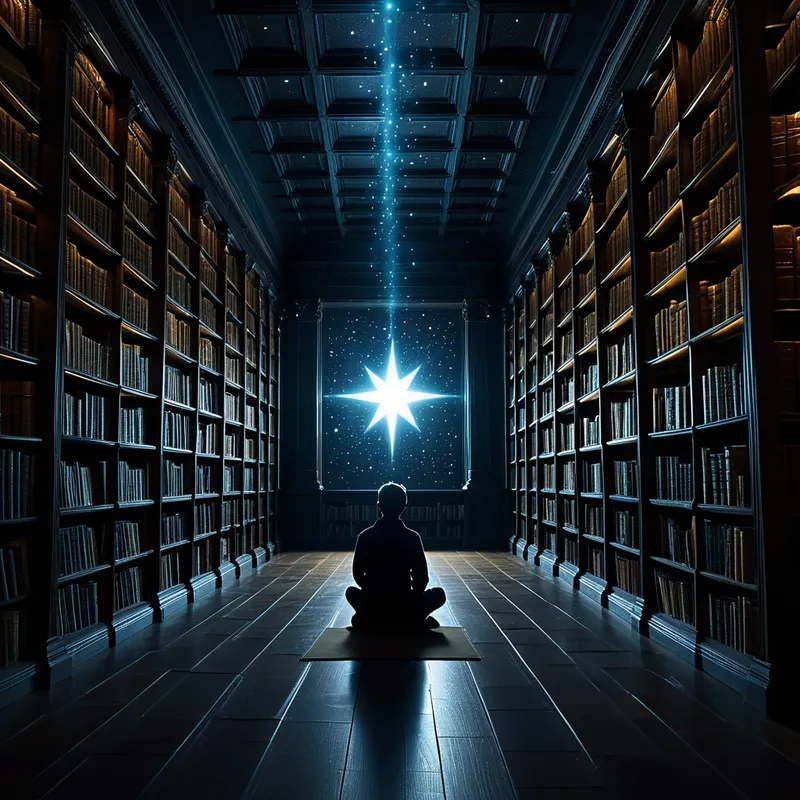
The alchemical process mirrored in The Hermit’s myth is [Separatio](/myths/separatio “Myth from Alchemical culture.”/) and the beginning of Albedo. It is the conscious, willful separation of the subtle from the gross, the essential from the accidental. In [the vessel](/myths/the-vessel “Myth from Alchemical culture.”/) of solitude, [the prima materia](/myths/the-prima-materia “Myth from Alchemical culture.”/) of one’s life experiences is left to settle. The dross of others’ opinions, societal shoulds, and compulsive identities sinks. What rises is the clarified essence: one’s own inner light, the unique star of the individual destiny.
The mountain is not climbed to escape the world, but to gain the perspective that allows one to re-enter it with meaning, rather than habit.
For the modern individual, this translates to the courageous act of digital and emotional fasting, of creating a psychic container where the noise of the world is muted. It is the practice of deep introspection, journaling, meditation, or solitary walking—not as relaxation techniques, but as active operations of psychic distillation. The [triumph](/myths/triumph “Myth from Roman culture.”/) is not a grand revelation, but the quiet, unwavering acquisition of inner authority. The Hermit’s lamp is the light of this hard-won authenticity. It allows one to navigate life’s complexities not by external maps, but by an inner compass whose true north is the Self.
The ultimate alchemy is this: by withdrawing to [the summit](/myths/the-summit “Myth from Taoist culture.”/) of solitude, one does not lose connection to humanity. Instead, one forges a different, more profound connection—from the center of one’s own being outward, rather than from the periphery inward. The Hermit, holding his light aloft on the peak, becomes a beacon not just for himself, but for all who glimpse that such a journey is possible. He embodies the paradox that to truly serve the whole, one must first become whole, alone.
Associated Symbols
Explore related symbols from the CaleaDream lexicon: