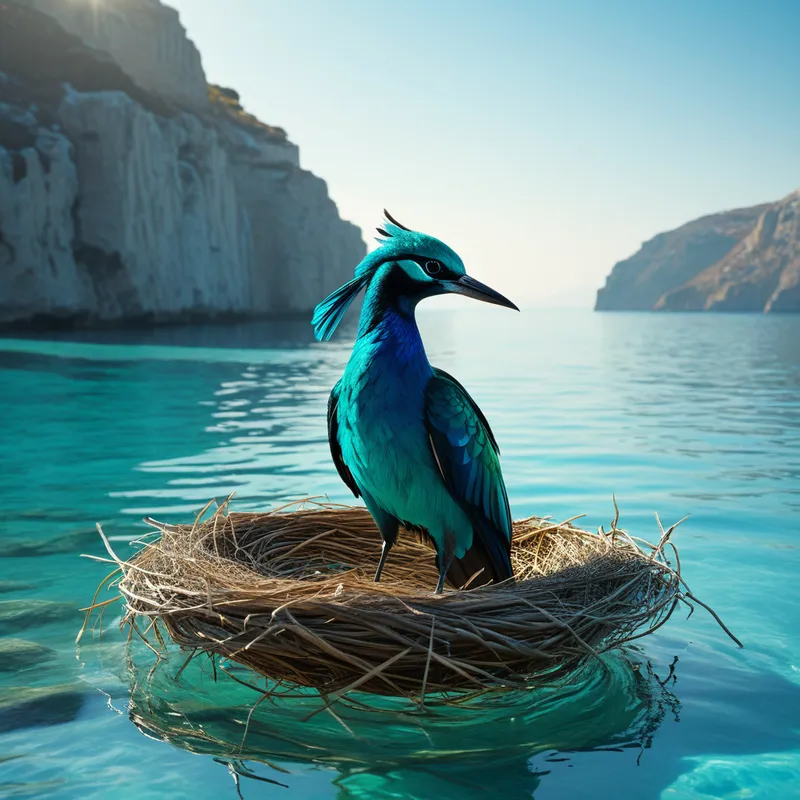
The Halcyon Myth Meaning & Symbolism
A grieving queen transformed into a bird, whose profound love commands the seas to calm, creating a sacred period of stillness each winter.
The Tale of The Halcyon
Hear now the tale woven from salt spray and sorrow, from a love so fierce it bent the will of the gods themselves. It begins not in the sun-drenched halls of Olympus, but in the mortal realm, with a king named Ceyx. He was a son of the Phosphorus, the morning star, and his light was matched only by his queen, Alcyone. She was a daughter of Aeolus, master of the tempests. Their love was a perfect, still point in the turning world, a harmony so complete the very air in their palace seemed to hum with contentment.
But a shadow fell upon Ceyx’s heart. Troubled by an ominous portent, he resolved to cross the wine-dark sea to seek the oracle at Delphi. Alcyone felt the winds of fate shift. She clung to him, her voice a desperate whisper against the gathering gale. “The sea is my father’s domain, and he is not always gentle. Do not go. Your light is all I need.” She pleaded, foretelling waves like mountains and winds that could tear the soul from a ship’s hull. But Ceyx, though his love was true, was resolved. He promised a swift return, his last kiss tasting of salt and foreboding.
The voyage began in deceitful calm. Then, Poseidon, stirred from his deep halls, unleashed his fury. The sky turned the color of a bruise, and the wind shrieked with the voices of a thousand lost sailors. Ceyx’s ship, a toy of splinters, was swallowed whole by a wave that blotted out the sky. His final thought was not of the cold water filling his lungs, but of Alcyone’s face, and the grief he had, in his pride, delivered to her door.
Alcyone, unaware, kept her vigil at their home’s shrine to Hera. She prayed not for his safe return, for in her heart she knew a terrible truth was sailing home, but for his swift and gentle journey. The goddess, moved by such devoted and dread-filled prayer, could bear the deception no longer. She summoned her messenger, Iris, commanding her to fly to the cave of Hypnos. There, in that breathless, poppy-strewn realm, Iris tasked Morpheus with a solemn duty.
That night, Morpheus, the shaper of forms, stood before Alcyone in her fitful sleep. He wore the dripping, pallid face of Ceyx. “My beloved,” the dream-Ceyx murmured, water streaming from his lips, “your prophecies were true. I am lost. Seek me on the shore.” Alcyone awoke with a cry that held the sound of breaking timbers. She ran, a phantom in the dawn mist, to the headland where she had watched his sail vanish. And there, rolling in the surf, was his body.
Her grief was a silent, physical force. She did not wail to the heavens, but walked into the churning foam, intent on embracing him one final time in the cold cradle of the sea. As the waves took her, a miracle of pity unfolded. The gods, witnessing such absolute, self-annihilating love, transformed them. Before the water could claim her, Alcyone’s arms became wings of dazzling blue-grey, her form shrinking into that of a graceful bird. And from the waves, the body of Ceyx too was changed, rising as a matching kingfisher. United again in a new form, they took to the air.
But the compassion of the gods went further. Aeolus, Alcyone’s father, was commanded to still his winds. For seven days before and seven days after the winter solstice—the time when Alcyone, now the halcyon bird, would brood her eggs on a nest floating on the peaceful sea—all storms would cease. The waves would lay down their arms, and the world would know the Halcyon Days: a sacred parenthesis of peace born from the depths of despair.
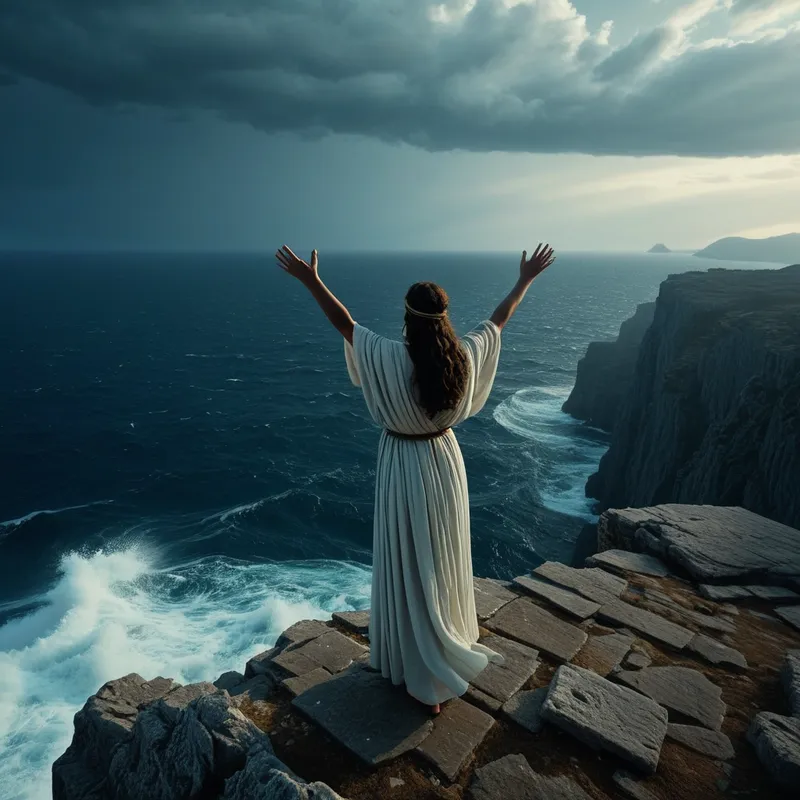
Cultural Origins & Context
The myth of the Halcyon is not the property of a single poet, but a story that drifted through the Hellenic world like a sea-mist, collected and refined by tellers such as Apollonius of Rhodes and, most famously, the Roman poet Ovid in his Metamorphoses. Its origins are likely folkloric, rooted in the observable wonder of the kingfisher (Alcedo atthis) and the peculiar, calm weather patches that can occur in the Mediterranean winter.
Societally, the myth functioned on multiple levels. For sailors and coastal communities, it provided an etiological explanation—a story of origin—for a real meteorological phenomenon, turning a period of reliable calm into a narrative gift from the gods, essential for planning voyages. On a human level, it served as a profound meditation on the extremes of love and grief, offering a vision of transcendent peace that could emerge from tragedy. It was a cultural container for the paradox of sorrow: that the deepest pain could, through the alchemy of divine compassion (or perhaps, profound acceptance), create a sanctuary of stillness. The story affirmed that even the most devastating loss could be metamorphosed, not undone, into something new and sacred.
Symbolic Architecture
At its core, the Halcyon myth is a map of the soul’s journey through catastrophic loss toward an integrated, transcendent peace. The primary symbols are the storm, the transformation, and the calm.
The storm represents the uncontrollable, external (and often internal) catastrophe that shatters the ego’s safe world. Ceyx’s journey is the ego’s hubristic venture into the unknown, ignoring the intuitive warnings of the deeper self (Alcyone). His drowning is the necessary dissolution of the old identity, the “king,” in the waters of the unconscious.
The greatest peace is not the absence of the storm, but the calm that is born from having been utterly shattered by it and remade.
The transformation into birds is the pivotal psychic event. Birds in myth are universally symbols of the spirit, of freedom from earthly binds. Their metamorphosis signifies the soul’s liberation from the fixed, mortal forms of “husband” and “wife,” “griever” and “lost.” They become a united dyad of the psyche—perhaps the conjoining of the conscious and unconscious, or the eternal bond between the animus and anima—no longer subject to mortal separation.
The Halcyon Days, the fourteen days of calm, are the ultimate symbol. This is not a naive “happy ending.” It is the earned, cyclical peace of the integrated psyche. The calm exists because of the memory of the storm, not in spite of it. It is a period of brooding, of incubation, where new life (the eggs) is nurtured on a nest that floats upon the very element that caused the destruction. This represents the psyche’s ability to create a fragile, buoyant structure of meaning and new potential atop the depths of the personal and collective unconscious.
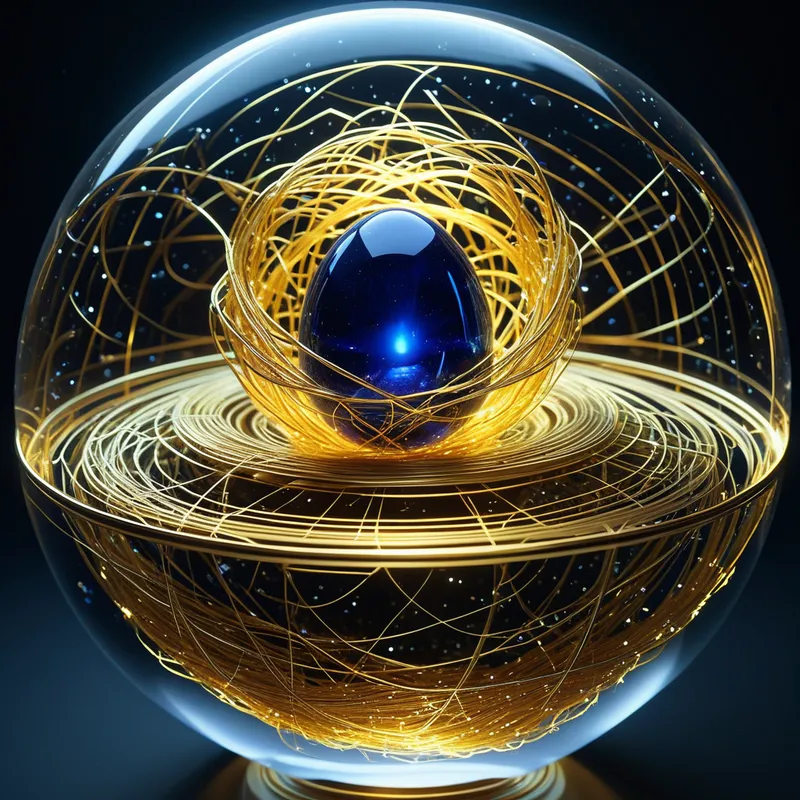
The Dreamer’s Resonance
When the pattern of the Halcyon myth stirs in modern dreams, it often signals a profound process of grieving and nascent integration. The dreamer may not see literal birds or classical figures, but the archetypal architecture will be present.
One might dream of a terrible storm destroying a beloved home (the shattered relationship to the world), followed by the discovery of a perfectly intact, precious object floating on a suddenly glassy pond (the nascent, fragile self that survives). Another may dream of walking into a ocean to retrieve something lost, only to find they can breathe underwater and are surrounded by serene, guiding light (the transformative dissolution of the ego into the unconscious). The somatic experience upon waking is often one of deep, poignant sadness intertwined with a strange, expansive calm—a somatic echo of the halcyon days.
These dreams mark the psyche’s work of metabolizing loss. The storm has passed internally; the work now is the brooding, the quiet, patient holding of the new, unformed possibilities that have emerged from the wreckage. The dreamer is in the psychic equivalent of the nest-building phase, constructing a new sense of self that can float upon the sea of their own emotions without being swamped.
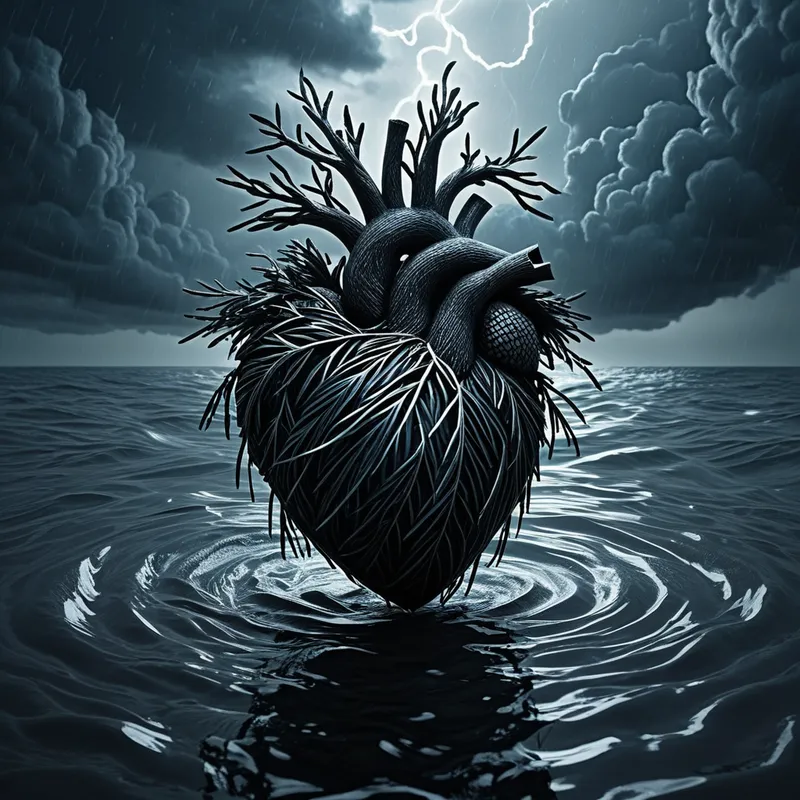
Alchemical Translation
For the modern individual navigating the individuation process, the Halcyon myth is a masterful model of psychic alchemy. The prima materia—the base material—is the perfect, yet unconscious, union of Ceyx and Alcyone. Their initial happiness is a state of psychic innocence, a pre-conscious wholeness that is beautiful but untested.
The nigredo, the blackening, is the storm and the death. This is the necessary descent, the dark night of the soul where all certainties are dissolved in the sea of chaos and grief. Ceyx’s ego-driven journey must fail. The conscious attitude must be humbled and drowned for transformation to be possible. Alcyone’s desperate walk into the waves represents the soul’s willingness to fully confront and be immersed in this darkness, to embrace the annihilation.
The albedo, the whitening, is the moment of divine pity and transformation. This is the flash of insight, the compassionate intervention of the Self (the total, guiding psyche) that reframes the catastrophe. It is the realization that the love—the core, essential connection—was not destroyed, but requires a new form. The ego-identities die, but the archetypal bond is eternalized.
The Self does not avoid the flood; it learns to build its sanctuary upon it.
Finally, the rubedo, the reddening, is the creation and maintenance of the Halcyon Days. This is the achieved state of conscious integration. The peace is not passive; it is an active, cyclical achievement. The individual, having transcended their old form, now has the capacity to command “calm” in their inner world. They can create a period of nurturing stillness—a floating nest of consciousness—where the new, more complex aspects of the self (the eggs) can be incubated and hatched. The struggle is transmuted into a sacred, renewable resource: a deep, calm center that knows, intimately, the nature of the storm, and therefore has true power over it. The individual becomes the halcyon, the creator of their own peace, born from the depths of their own profoundest sorrow.
Associated Symbols
Explore related symbols from the CaleaDream lexicon: