
The Golden Fleece Myth Meaning & Symbolism
A hero's perilous voyage to claim a divine ram's fleece, a quest of betrayal, sorcery, and the high cost of a king's stolen throne.
The Tale of The Golden Fleece
Hear now of the fleece that shone like a piece of the sun fallen to earth, and of the man who dared to steal it. It begins not with a hero, but with a crime. In the shadowed halls of Iolcus, a throne was stolen. The rightful king, Aeson, was usurped by his half-brother, the cunning Pelias. Fearful of prophecy, Pelias let Aeson’s infant son, [Jason](/myths/jason “Myth from Greek culture.”/), live, sending him away to be raised by the wise centaur Chiron in the wild mountains.
Years later, a man wearing one sandal strode into Iolcus during a festival to [Poseidon](/myths/poseidon “Myth from Greek culture.”/). It was Jason, come to claim his birthright. Pelias, seeing the omen fulfilled, smiled a serpent’s smile. “You shall have the throne,” he said, “if you first bring me the [Golden Fleece](/myths/golden-fleece “Myth from Greek culture.”/).” It was a sentence of death disguised as a quest. For the Fleece hung in the far-off land of Colchis, in a grove sacred to Ares, guarded by a dragon that never slept.
So Jason called for heroes. From across Hellas they came: the mighty [Heracles](/myths/heracles “Myth from Greek culture.”/), the divine singer [Orpheus](/myths/orpheus “Myth from Global/Universal culture.”/), the swift sons of the North Wind. They built a ship named Argo, hewn from talking timber from Dodona. Thus began the voyage of the Argonauts.
Their journey was a map of wonders and terrors. They fought the Gegeines, out-sang the [Sirens](/myths/sirens “Myth from Greek culture.”/) with [Orpheus’s lyre](/myths/orpheuss-lyre “Myth from Greek culture.”/), and navigated the Clashing Rocks that sought to crush them. They found refuge with a grieving king, Phineus, whom they freed from the torment of the winged [Harpies](/myths/harpies “Myth from Greek culture.”/). In return, he gave them the key to [the sea](/myths/the-sea “Myth from Greek culture.”/): wait for a dove to fly through the Clashing Rocks, and row with the fury of [the Erinyes](/myths/the-erinyes “Myth from Greek culture.”/) at your backs.
When at last they reached Colchis, King Aeëtes, son of the sun god [Helios](/myths/helios “Myth from Greek culture.”/), greeted them with cold suspicion. He would give up the Fleece, he declared, only if Jason could yoke two fire-breathing bulls with bronze hooves, plow a field with them, and sow the furrows with dragon’s teeth. From each tooth would spring a fully armed warrior—the Spartoi—whom Jason must then defeat alone.
It was an impossible task. But here, the story turns. For [Hecate](/myths/hecate “Myth from Greek culture.”/) had stirred the heart of the king’s daughter, the sorceress [Medea](/myths/medea “Myth from Greek culture.”/). Smitten by Aphrodite’s arrow and seeing her own path to freedom, [Medea](/myths/medea “Myth from Greek culture.”/) pledged her help. Under a midnight moon, she gave Jason a magical ointment to make him invulnerable to fire and bronze, and a simple, brutal strategy: throw a stone into the midst of [the earth](/myths/the-earth “Myth from Hindu culture.”/)-born warriors, and let them turn their rage upon each other.
Jason succeeded. But Aeëtes, enraged, plotted treachery. That night, Medea led Jason through the darkness to [the sacred grove](/myths/the-sacred-grove “Myth from Celtic culture.”/). There it hung, shimmering on the branch of an ancient oak, the Fleece of the golden ram that had once borne the prince Phrixus to safety. And coiled around its trunk, watching with unblinking eyes, was the guardian dragon. Medea sang a spell of sleep, her voice weaving a mist of oblivion. [The dragon](/myths/the-dragon “Myth from Chinese culture.”/)‘s lids grew heavy. As it slept, Jason climbed the tree, took the Fleece, and they fled back to the Argo, the Fleece’s light painting their path through the woods.
Their escape was a bloody saga of betrayal and murder, with Medea dismembering her own brother to delay her father’s pursuit. They returned to Iolcus, the Fleece in hand, but the throne they won was built on shadows. Pelias was dead, tricked and killed by Medea’s magic, and the Fleece’s golden light could not cleanse the stain of their deeds. The prize was won, but [the hero’s journey](/myths/the-heros-journey “Myth from Global culture.”/) was far from over.

Cultural Origins & Context
The myth of the Golden Fleece is one of the oldest and most layered in the Greek corpus, predating even [the Trojan War](/myths/the-trojan-war “Myth from Greek culture.”/) epics in its narrative timeline. Its primary literary source is the Argonautica of Apollonius of Rhodes, a Hellenistic epic from the 3rd century BCE, though the story fragments appear in earlier works by Pindar and Euripides. It is a foundational “quest” narrative, a template that would echo through countless later tales.
The myth functioned on multiple cultural levels. For the ancient Greeks, it served as an aetiological tale for early exploration and colonization in the Black Sea region ([Pontus](/myths/pontus “Myth from Greek culture.”/) Euxinus). Colchis represented the exotic, wealthy, and perilous East, a land of magic and barbaric splendor at the edge of the known world. The voyage of the Argo was a mythic precedent for real maritime ventures, a story told to embolden sailors and legitimize territorial claims.
It was also a deeply political story about kingship, legitimacy, and the burdens of power. The Fleece itself was not merely treasure; it was a symbol of divine favor and rightful sovereignty, originally a gift from the gods to a royal line. Jason’s quest to retrieve it was, at its core, an attempt to restore a broken cosmic and political order—to heal the “wound” of Pelias’s usurpation. The bards who recited this tale were not just entertainers but custodians of cultural memory, reinforcing ideals of heroic endeavor, the importance of oaths, and the devastating consequences of familial betrayal.
Symbolic Architecture
The Golden Fleece is far more than a [plot](/symbols/plot “Symbol: A plot symbolizes the unfolding of a story, representing personal narratives and life direction.”/) [device](/symbols/device “Symbol: A device in dreams often symbolizes the tools or mechanisms that we use to navigate our inner or outer worlds.”/); it is a nexus of profound symbols. It represents the unintegrated Self—a wholeness and potential that exists in a distant, guarded place, both within the [psyche](/myths/psyche “Myth from Greek culture.”/) and in [the world](/myths/the-world “Myth from Tarot culture.”/).
The Fleece is the soul’s lost inheritance, hanging in the grove of the unconscious, guarded by the dragon of fear and inertia.
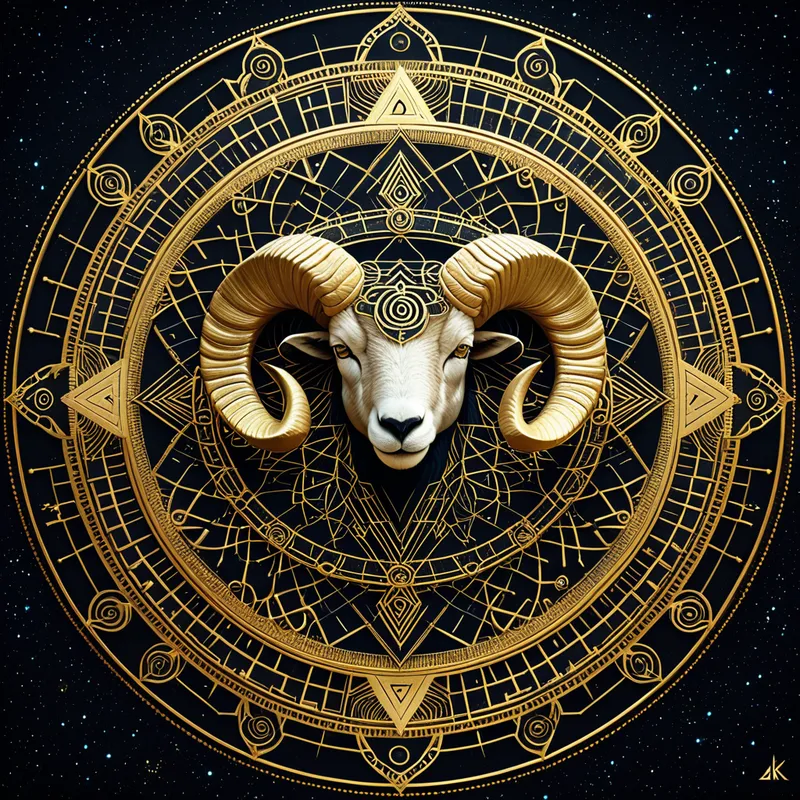
The Ram whose fleece this was was itself a [creature](/symbols/creature “Symbol: Creatures in dreams often symbolize instincts, primal urges, and the unknown aspects of the psyche.”/) of [rescue](/symbols/rescue “Symbol: The symbol of rescue embodies themes of salvation, support, and liberation from distressing circumstances.”/), sent by the gods to save Phrixus from sacrifice. Thus, the Fleece carries the dual [nature](/symbols/nature “Symbol: Nature symbolizes growth, connectivity, and the primal forces of existence.”/) of the sacrificial animal: [death](/symbols/death “Symbol: Symbolizes transformation, endings, and new beginnings; often associated with fear of the unknown.”/) transformed into a [symbol](/symbols/symbol “Symbol: A symbol can represent an idea, concept, or belief, serving as a powerful tool for communication and understanding.”/) of [life](/symbols/life “Symbol: The symbol of ‘Life’ represents a journey of growth, interconnectedness, and existential meaning, encompassing both the joys and challenges that define human experience.”/) and divinity. It is a [talisman](/myths/talisman “Myth from Global culture.”/) of salvation that has become an object of rapacious desire.
Jason is the archetypal [hero](/symbols/hero “Symbol: A hero embodies strength, courage, and the ability to overcome significant challenges.”/), but a flawed and often passive one. He is a [vessel](/symbols/vessel “Symbol: A container or structure that holds, transports, or protects something essential, representing the self, emotions, or life journey.”/) for collective [action](/symbols/action “Symbol: Action in dreams represents the drive for agency, motivation, and the ability to take control of situations in waking life.”/) ([the Argonauts](/myths/the-argonauts “Myth from Greek culture.”/)) and divine/magical intervention (Hera, Medea). His [journey](/symbols/journey “Symbol: A journey in dreams typically signifies adventure, growth, or a significant life transition.”/) is not one of sheer [strength](/symbols/strength “Symbol: ‘Strength’ symbolizes resilience, courage, and the ability to overcome challenges.”/), like Heracles’s, but of cunning, [alliance](/symbols/alliance “Symbol: A formal or informal union between individuals or groups for mutual benefit, support, or protection.”/), and endurance. He represents [the ego](/myths/the-ego “Myth from Jungian culture.”/)-[consciousness](/symbols/consciousness “Symbol: Consciousness represents the state of awareness and perception, encompassing thoughts, feelings, and experiences.”/) setting out to reclaim its [destiny](/symbols/destiny “Symbol: A predetermined course of events or ultimate purpose, often linked to spiritual forces or cosmic order, representing life’s inherent direction.”/), utterly dependent on forces beyond its control.
Medea is the myth’s true transformative engine. She is the embodiment of the [anima](/symbols/anima “Symbol: The feminine archetype within the male unconscious, representing soul, creativity, and connection to the inner world.”/), the feminine principle of [connection](/symbols/connection “Symbol: Connection symbolizes relationships, communication, and bonds among individuals.”/), magic, and ruthless instinct. Her aid is indispensable, but it comes at a terrible cost, introducing the [shadow](/symbols/shadow “Symbol: The ‘shadow’ embodies the unconscious, repressed aspects of the self and often represents fears or hidden emotions.”/) of [betrayal](/symbols/betrayal “Symbol: A profound violation of trust in artistic or musical contexts, often representing broken creative partnerships or artistic integrity compromised.”/), murder, and chaotic [emotion](/symbols/emotion “Symbol: Emotion symbolizes our inner feelings and responses to experiences, often guiding our actions and choices.”/) into the “heroic” narrative. She represents the psyche’s deep, amoral creative/destructive power that must be engaged with to achieve the goal, but which forever alters the achiever.
The Voyage itself is a map of the [individuation process](/symbols/individuation-process “Symbol: The psychological journey toward self-realization and wholeness, integrating conscious and unconscious aspects of personality.”/): leaving the known (Iolcus), navigating the [collective unconscious](/symbols/collective-unconscious “Symbol: The Collective Unconscious refers to the part of the unconscious mind shared among beings of the same species, embodying universal experiences and archetypes.”/) (the wondrous and monstrous sea), confronting the tyrannical [father](/symbols/father “Symbol: The father figure in dreams often symbolizes authority, protection, guidance, and the quest for approval or validation.”/)/old [king](/symbols/king “Symbol: A symbol of ultimate authority, leadership, and societal order, often representing the dreamer’s inner power or external control figures.”/) (Aeëtes), integrating the anima (Medea), and facing the ultimate [guardian](/symbols/guardian “Symbol: A protector figure representing safety, authority, and guidance, often embodying parental, societal, or spiritual oversight.”/) of the [treasure](/symbols/treasure “Symbol: A hidden or valuable object representing spiritual wealth, inner potential, or divine reward.”/).
The Dreamer’s Resonance
When the pattern of the Golden Fleece quest arises in modern dreams, it signals a profound psychic mobilization. The dreamer is being called to retrieve something vital that feels lost, stolen, or hidden away.
You may dream of a long and arduous journey toward a glowing objective, often through confusing landscapes. There may be a ship or vehicle (the Argo) representing the conscious personality or life structure embarking on this quest. A sense of a “crew”—supportive figures or fragmented parts of [the self](/myths/the-self “Myth from Jungian culture.”/)—is common. The central image is often the treasure itself: a glowing fabric, a piece of gold, a radiant skin or hide, hanging just out of reach.
The critical moment in such dreams is the encounter with the guardian. This is rarely a literal dragon. It manifests as a overwhelming bureaucratic hurdle, a wall of thorns, a mesmerizing but threatening figure, or a deep, paralyzing anxiety that surrounds the desired goal. This guardian is the psychic resistance—the fear of change, the power of old complexes, or the sheer inertia of the unconscious defending its status quo.
The presence of a helper figure (the Medea archetype) in the dream, perhaps offering an unorthodox or morally ambiguous solution, indicates that the dreamer’s deeper instinctual or creative self is engaging with the process. The somatic experience is often one of tense anticipation, a mix of exhilaration and dread, reflecting the body’s awareness that a core identity is being challenged and reshaped by the quest.
Alchemical Translation
The myth of the Golden Fleece is a perfect allegory for the alchemical [nigredo](/myths/nigredo “Myth from Alchemical culture.”/) and albedo, the darkening and whitening stages of psychic transformation. The quest is the alchemical opus itself.
The stolen throne is the nigredo—the blackening, the recognition of a fundamental lack or wound in one’s psychic foundation. The voyage through chaotic seas is the dissolution of old structures.
Jason’s trials in Colchis represent the confrontation with the [prima materia](/myths/prima-materia “Myth from Alchemical culture.”/), the raw, chaotic stuff of the psyche. The fire-breathing bulls are the untamed, instinctual energies that must be yoked and directed (the act of plowing). The dragon’s teeth sown into the earth symbolize planting the seeds of one’s own latent conflicts and potentials—the “warriors” of competing inner voices, ambitions, and fears.
Medea’s strategy—to throw a stone and let the warriors fight each other—is a masterful image of psychological alchemy. It is the conscious ego (the stone) introducing a catalyst into the chaotic inner conflict (the Spartoi), not to fight each fragment directly, but to allow them to exhaust and cancel each other out, leading to a new synthesis. This is the coniunctio oppositorum, achieved through cunning rather than force.
Finally, retrieving the Fleece is the attainment of the [lapis philosophorum](/myths/lapis-philosophorum “Myth from Alchemical culture.”/), the symbol of integrated wholeness. But the myth, in its brutal honesty, does not end there. The return with the Fleece leads not to a happy-ever-after, but to further betrayal and tragedy. This is the final, crucial lesson: the alchemical gold, the integrated Self, does not solve all earthly problems. It simply makes you capable of bearing them with a new consciousness. The treasure transforms the seeker, but the world remains fraught. The true Fleece is not the object won, but the soul forged in the winning of it.
Associated Symbols
Explore related symbols from the CaleaDream lexicon:
- Sweater
- Collar
- Fur
- Antique
- Sheep
- Teddy
- Oversized Sweater
- Brightly Patterned Tie
- Designer Handbag
- Fur Coat
- Furry Sheep
- Real Estate Sign
- Baseball Glove
- Capture the Flag
- Carnival Prize
- Furry Ottoman
- Retro Bean Bag
- Velvet Couch
- Woven Hammock
- Gold Earrings
- Stitched Leather
- Bison Hide
- Tanned Animal Hide
- Natural Dye from Roots
- Cotton Boll
- Buffalo Hide
- Weathered Hide
- Fuzzy Softness
- The Immunity