The Gates of Horn and Ivory fr Myth Meaning & Symbolism
An ancient myth describing two gates for dreams: one of horn for true visions, one of ivory for false illusions, questioning the nature of reality.
The Tale of The Gates of Horn and Ivory fr
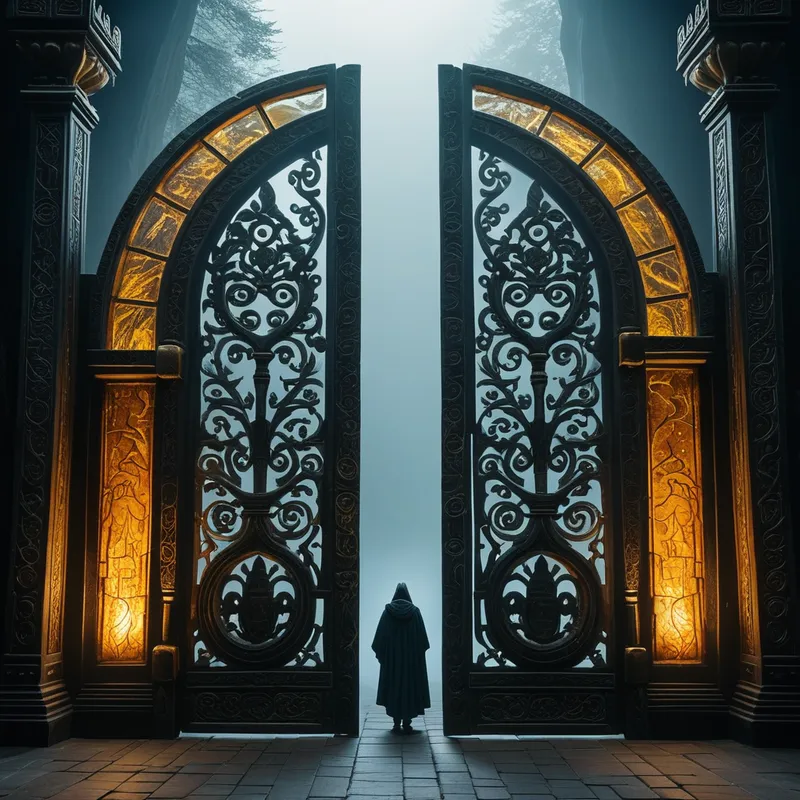
Listen, and let the veil between waking and sleeping grow thin. In the silent, echoing halls where the sun never treads, in the realm of Morpheus, there lies a crossroads known only to the shades and the whispered prayers of mortals. Here, where the river of forgetfulness murmurs its lullaby, two gates stand sentinel, older than memory itself.
To the left, a gate of horn. Not the polished trophy of a hunter, but the living, fibrous core of a beast that knew the earth. It is rough to the touch, warm as blood, and translucent like ancient amber. If you press your ear to its grain, you can hear the low hum of truth, a vibration from the very bones of the world. To the right, a gate of ivory. It is a masterpiece of cold craft, carved from the tusk of a creature of majesty and silence. Its surface is a labyrinth of beautiful scenes—lovers embracing, heroes triumphant, treasures gleaming—each facet polished to a deceptive, perfect sheen. It is seductive in its stillness.
Each night, as the world above succumbs to Hypnos, the silent host of Oneiroi gather at this junction. They are the dream-shapers, the messengers. Some bear visions dipped in the ink of fate, messages from the gods or echoes of the soul’s deep truth. These approach the horn. The gate does not swing; it parts like a curtain of mist, and the dream passes through, seamless and whole, to find its sleeper.
Others carry phantoms spun from the day’s dregs: fears dressed as prophecy, desires masquerading as destiny, the mind’s own clever forgeries. These are beautiful lies, convincing and complete. They glide toward the ivory. The gate opens without a sound, a perfect, silent mouth, and these illusions are released into the night, to dance behind the eyelids of kings and beggars alike.
And in the deepest watches of the night, a weary shade might wander here—a soul like Odysseus, or a queen like Dido. They stand in the grey light, staring at the twin portals. From the horn, a faint, golden warmth emanates, promising a painful clarity. From the ivory, a cool, silver allure whispers of comforting fiction. The choice is not theirs to make; the dreams choose their own gate. The only task for the soul, upon waking, is to wonder: through which gate did my vision come? Was it the honest roughness of horn, or the beautiful deceit of ivory?
Cultural Origins & Context
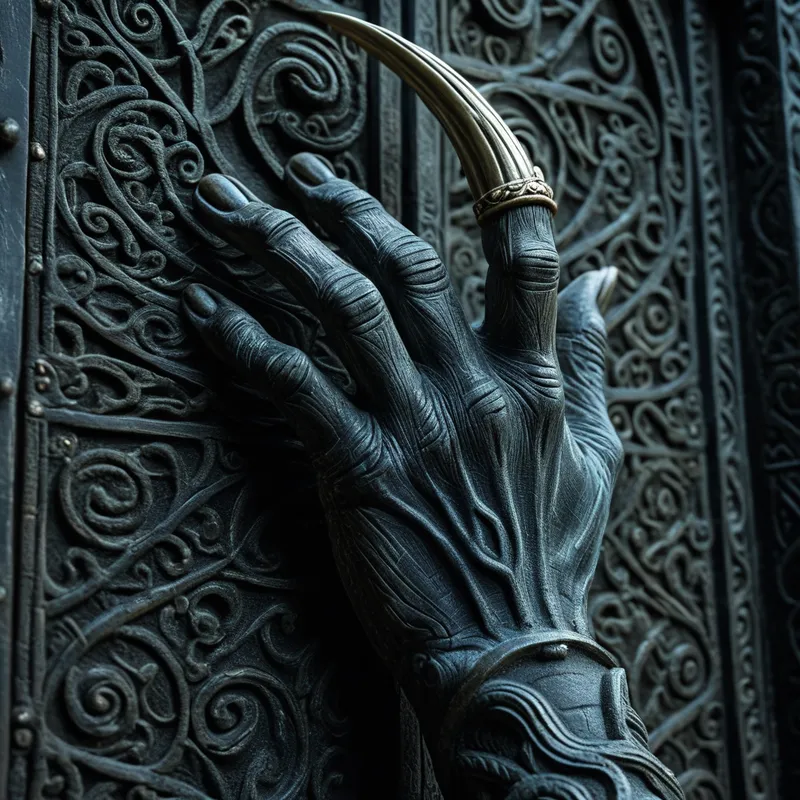
This haunting metaphor finds its most famous articulation in the epic poetry of the ancient Mediterranean world. It is spoken by the spirit of Aeneas’s deceased father, Anchises, in Virgil’s Aeneid (Book VI), and its roots stretch back further to a similar passage in Homer’s Odyssey (Book XIX). In these contexts, the myth was not a standalone folktale but a profound philosophical aside embedded within a larger journey to the underworld.
It was a myth told by poets and philosophers, a tool for grappling with epistemology—the nature of knowledge and truth. In a world where dreams were considered messages from the divine, the critical question of their authenticity was paramount. Was a dream a prophecy, a warning from the gods, or merely the mind’s digestive process? The Gates provided an elegant, dualistic framework. This myth served a societal function of cultivating discernment. It taught that not all that emerges from the sacred realm of sleep is of equal value; some visions are substantive, others are phantasmal. It placed the burden of interpretation squarely on the awakened individual, fostering a culture of introspection and critical thought about one’s own inner experiences.
Symbolic Architecture
The myth’s power lies in its stark, binary symbolism, which maps directly onto fundamental psychological and existential tensions.
The Gate of Horn symbolizes truth that is organic, unadorned, and often difficult. Horn comes from a living creature; it is part of a body, suggesting that true dreams arise from the embodied self, the “gut,” or the deep unconscious where archetypal truths reside. Its translucence implies that these truths are not necessarily obvious, but can be seen into with effort. They are integrated, whole, and aligned with reality’s core structure.
True vision requires the courage to face the unvarnished substance of one’s being, not its polished self-portrait.
The Gate of Ivory, in stark contrast, represents the psyche’s capacity for brilliant, convincing fabrication. Ivory is a beautiful material, but it is also dead, mineralized. It can be carved into any shape, representing the ego’s talent for crafting narratives that protect, flatter, or deceive. The illusions from this gate are not “false” in a trivial sense; they are often psychologically necessary fictions, defenses, or wish-fulfillments that shield consciousness from a truth it is not yet ready to bear.
The two gates together represent the fundamental human dilemma of discernment. They ask: How do we distinguish the signal from the noise within our own minds? The myth acknowledges that both streams—the truthful and the illusory—emanate from the same mysterious source (the underworld of the unconscious) and are delivered by the same messengers. The discrimination happens at the threshold, a liminal space representing the dawn of consciousness, where the dream meets the waking mind.
The Dreamer’s Resonance
When this mythic pattern stirs in the modern dreamer, it rarely appears as literal gates. Instead, it manifests as a somatic and psychological experience of critical choice or exposure of authenticity.
You may dream of being presented with two identical doors, two paths, two versions of the same person. One feels “right” in a deep, bodily sense—a feeling of gravity, warmth, or solidity (Horn). The other is intellectually appealing, glittering with promise, but feels hollow, weightless, or eerily silent (Ivory). The anxiety of the dream lies in the imperative to choose, often without sufficient data. This is the psyche rehearsing its discernment muscles.
Alternatively, a dream may involve the shocking revelation that something you believed was solid and real—a relationship, a achievement, a self-concept—is suddenly revealed to be made of plaster or smoke. This is the “Ivory Gate” illusion dissolving. The psychological process here is one of disillusionment, which, though painful, is the necessary prelude to receiving a more grounded truth. The somatic signature is often a lurch in the stomach (the “gut” truth of Horn) contradicting a pleasing mental narrative (the “head” fiction of Ivory).

Alchemical Translation
In the alchemical journey of individuation—the process of becoming psychologically whole—the myth of the Gates models the essential operation of separatio and discriminatio. The raw prima materia of the unconscious pours forth a chaotic mix of genuine symbolic guidance and personal complexes. The work of the modern individual is to become the gatekeeper of their own psyche.
The first alchemical step is to recognize the two substances. The “horn” material is that which connects you to the Self, the transpersonal core. It brings dreams of profound meaning, synchronicities, and insights that, while sometimes troubling, carry a numinous weight and lead to growth. The “ivory” material is the personal unconscious: repressed wishes, unresolved traumas, and inflated self-images that masquerade as profound truth.
Individuation is not about banishing illusions, but about learning their signature, so the voice of the soul may be heard through their beautiful, distracting noise.
The alchemical translation occurs in the crucible of waking reflection. When you analyze a dream or a life choice, you are asking: “Through which gate did this come?” Is this feeling an authentic call from my deeper nature (horn), or is it a seductive story my ego is telling to avoid a challenge (ivory)? This constant, gentle discrimination is the work of the transcendent function. It forges a consciousness that can honor the beautiful, protective illusions of the ivory without being ruled by them, and can courageously integrate the harder, transformative truths of the horn. In doing so, you do not destroy the gates; you learn to stand between them, master of the threshold, weaving the substance of both into the unique tapestry of an authentic life.
Associated Symbols
Explore related symbols from the CaleaDream lexicon: