The Garden of Perfect Brightness Myth Meaning & Symbolism
A celestial garden of perfect harmony is shattered by a single act of desire, leaving humanity with a longing for lost wholeness.
The Tale of The Garden of Perfect Brightness
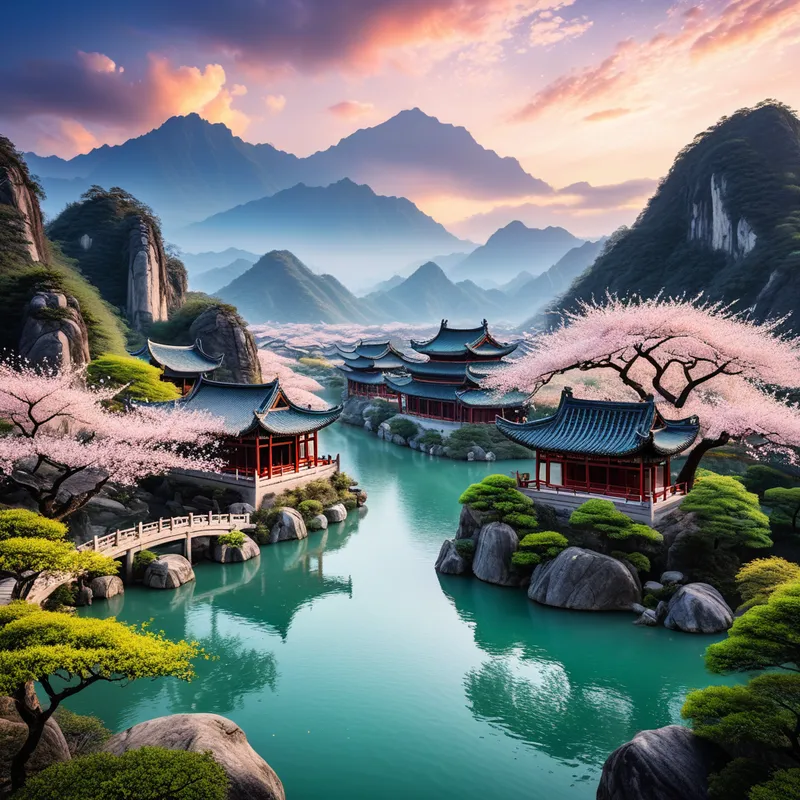
Before time was counted in dynasties, when the sky was still fresh canvas and the earth a soft clay, there existed a realm beyond the mist of the eastern peaks. This was The Garden of Perfect Brightness, the first thought of the cosmos given form. It was not built, but breathed into being by the harmonious will of the Dao.
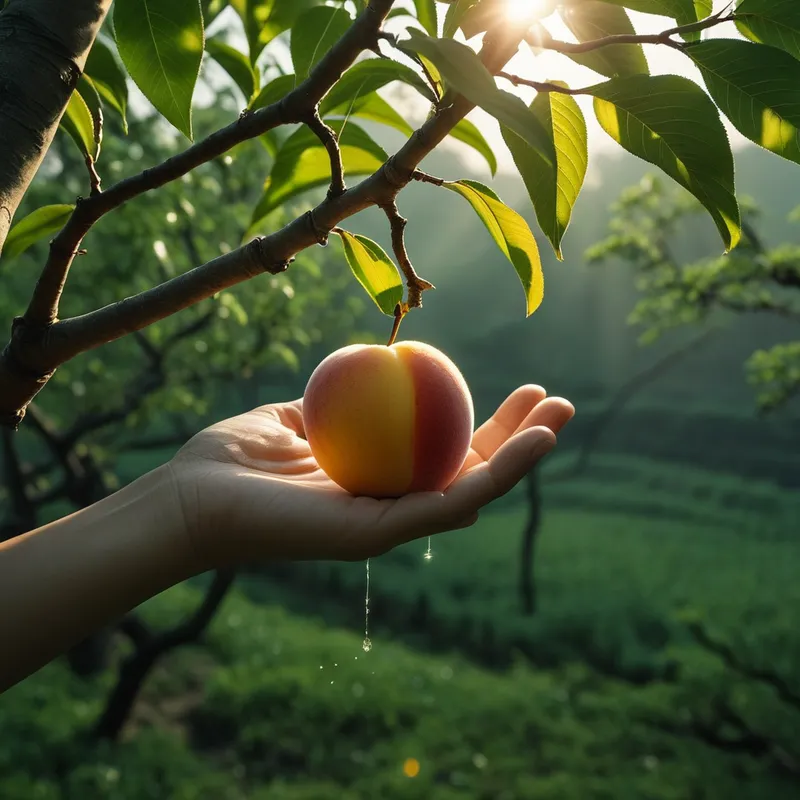
Here, the rivers flowed with the music of constellations. Peach trees, heavy with fruit that held the sweetness of dawn, bloomed and ripened in a single, eternal sigh. Jade bridges arched over streams of liquid moonlight, and pavilions of cloud rested on pillars of mountain mist. Every stone was in conscious conversation with the wind; every blossom knew its purpose in the great pattern. This was the womb of reality, a sanctuary of flawless balance presided over by the Yu Huang and his celestial court. To dwell here was to be a note in a perfect, endless chord.
And into this chord came humanity—not as masters, but as honored guests, the beloved children of heaven. They walked the garden paths, their hearts mirrors to its serenity. They knew no hunger, for the garden provided; no sickness, for its air was purity itself; no strife, for their wills were aligned with the celestial order. They lived in a state of Wu Wei, their every action flowing from the garden’s rhythm like a leaf turning in a gentle breeze.
Yet, in the very center of the garden, where the light was softest and the silence most profound, grew a single, unique tree. Its fruit was not of peach or plum, but of a shimmering, opalescent substance, containing within it not just sustenance, but the knowledge of the pattern itself—the understanding of how the harmony was woven. This tree was the axis of the garden, and its fruit was forbidden. To partake was not to rebel, but to separate; to move from being part of the music to analyzing its score.
A whisper, thin as a spider’s thread, began to stir in a human heart. It was not malice, but a deep, aching curiosity—a desire not just to live the harmony, but to possess its secret. One figure, whose name is lost to all but the echo of the consequence, stood before the tree. They saw not a boundary of love, but a mystery withheld. In a moment that stretched between eternity and a single heartbeat, the hand reached. The fruit was plucked.
The garden did not roar in anger. It sighed. A single, devastating note of dissonance rang out from the central tree. The perfect light fractured. The rivers of starlight clouded. The peach blossoms, for the first time, knew the bitter touch of wilting. The seamless connection between the human guests and the garden’s spirit was severed. The path back to the center grew misty, then impassable. The guests found themselves outside the walls, the memory of the perfect brightness now a haunting brilliance in their minds, the taste of the ordinary world suddenly ash in their mouths. They were not banished to a wasteland, but to a world that had lost its key—a world of seasons, of labor, of beautiful, heartbreaking imperfection.
Cultural Origins & Context
The myth of the Garden of Perfect Brightness is a foundational narrative stratum in Chinese thought, less a single story from one text than a pervasive cultural motif. Its deepest roots intertwine with Daoist conceptions of a primordial, harmonious state of existence, often referred to as an age of Taiping. It echoes in the philosophical nostalgia for a time before social constructs and desires complicated the simple alignment with the Dao.
While not a direct parallel, its themes resonate with and are enriched by later Confucian ideals of a perfectly ordered society and Chan (Zen) Buddhist teachings on the innate Buddha-nature obscured by attachment. It was passed down not by bards in grand halls, but by philosophers, poets, and painters. It was told in the brushstrokes of a landscape painting depicting a reclusive scholar’s hut amidst misty mountains—a personal, inaccessible paradise. It was whispered in poetry lamenting the loss of innocence and the burdens of knowledge and duty. Its societal function was to explain the human condition: our sense of existential nostalgia, our feeling of being separated from a source of wholeness, and our perpetual cultural project to re-create harmony—whether in governance, art, or the inner self.
Symbolic Architecture
The Garden is the ultimate symbol of the psychic Self in its pristine, pre-conscious wholeness. It represents a state of being where the inner and outer worlds are not in conflict; where instinct, emotion, and spirit exist in spontaneous, fruitful alignment.
The forbidden fruit is not evil, but consciousness itself—the dawn of the differentiating ego.
The act of taking the fruit symbolizes the inevitable birth of individual awareness, the necessary fall into the duality of subject and object. The human figures are not “sinners,” but representations of the emerging ego-consciousness, which must separate from the unconscious paradise to begin its journey of development. The Yu Huang and the celestial order represent the objective, archetypal laws of the psyche, which are disrupted by the ego’s claim to special knowledge. The resulting “fall” is not a punishment, but the beginning of the human drama—the start of history, psychology, and the longing for return.

The Dreamer’s Resonance
When this myth stirs in modern dreams, it often manifests as visions of impossibly beautiful, serene places from which the dreamer is subtly excluded. One might dream of a childhood home transformed into a luminous sanctuary, only to find the key no longer fits. Or of a vast, silent library containing the book of one’s own life, but the text is in a forgotten language.
Somatically, this can feel like a profound ache in the chest—a “heart-sickness” for a home one has never known. Psychologically, it signals a process of confronting the necessary loss at the core of individuation. The dreamer is grappling with the price of consciousness: the loneliness of self-awareness, the burden of choice, and the grief for the undifferentiated state of simply being without analysis or effort. It is the psyche mourning its own innocence while simultaneously yearning to integrate that lost wholeness on a higher, conscious level.
Alchemical Translation
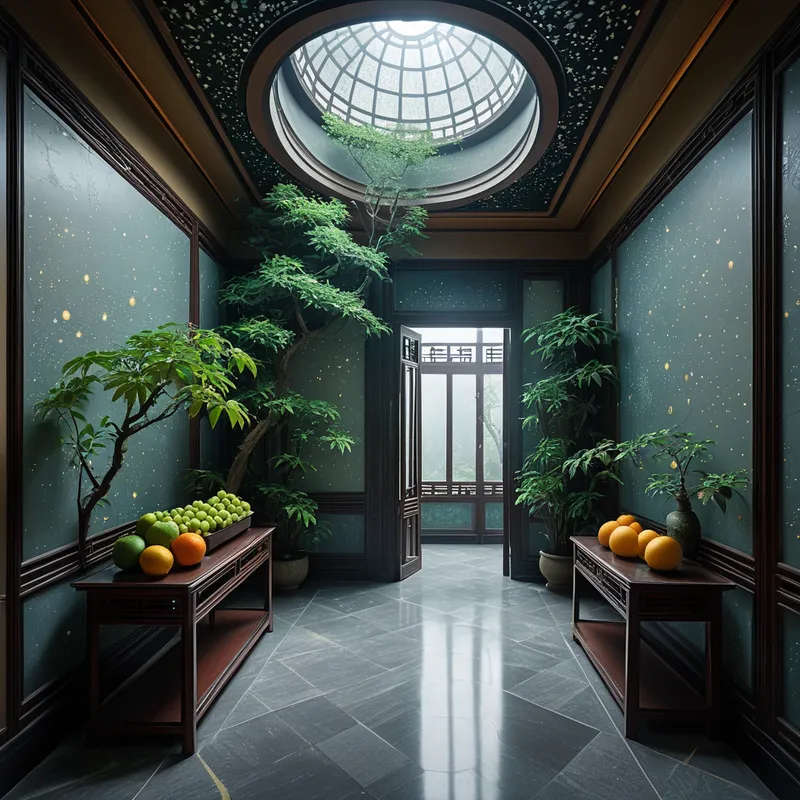
The myth does not end with the exile; it sets the stage for the alchemical work. The Garden of Perfect Brightness becomes the Lapis Philosophorum of the Chinese soul—the ultimate goal of the inner journey. The process of psychic transmutation is not about physically returning to a lost paradise, but about consciously reconstructing its principle of harmony within.
Individuation is the long cultivation of an inner garden, using the very consciousness that exiled us as our tool.
The first step is Acknowledgment: recognizing the longing for the Garden as a valid, guiding signal from the Self, not mere regression. The second is Differentiation: sorting through the overgrown, chaotic “world” of our personal psyche—our complexes, desires, and pains—which grew in the shadow of the Garden’s loss. The third is the Cultivation of Wu Wei: not inaction, but the practiced art of aligning personal will with the deeper patterns of the psyche, much as the original guests moved with the garden’s rhythm. This is the slow, meticulous work of bringing consciousness to the unconscious, order to chaos, not through force, but through attentive dialogue.
The triumph is not regaining a static perfection, but achieving a dynamic, conscious harmony. The transformed individual carries the memory of the Garden not as a wound, but as an inner compass. They become a living node where the celestial pattern can once again manifest, not in a walled paradise, but in a life lived with integrity, creativity, and a deep, resonant peace. The Garden of Perfect Brightness is then no longer a place lost in time, but a quality of being, patiently earned.
Associated Symbols
Explore related symbols from the CaleaDream lexicon: