
The Fisher King Myth Meaning & Symbolism
A wounded king's suffering renders his kingdom a wasteland. Healing arrives only when a questing knight asks a compassionate question.
The Tale of The Fisher King
Listen, and hear a tale of a wound that bled a kingdom dry.
In the shadowed years of Arthur’s reign, there existed a realm apart, a land called Corbenic or [the Grail](/myths/the-grail “Myth from Arthurian culture.”/) Kingdom. Its ruler was a man known only as the [Fisher King](/myths/fisher-king “Myth from Arthurian culture.”/). He was not always so. In his youth, he was a knight of fire and spirit, guarding the most sacred of relics. But in a moment of pride or passion—some say he reached for a sword that was not his to wield—a burning spear shot from a phantom hand and struck him grievously, deep between the thighs. The wound did not kill him. It festered. It became a living death, a perpetual agony that no poultice or prayer could soothe.
The king could no longer ride, nor rule, nor stand upon his land. His only solace was to sit by the waters that threaded through his castle, to fish from a small boat, a passive act for a man of action. And as his body bled, so too did his kingdom. The rivers ran slow and thick. The fields, once golden, hardened into cracked clay. Trees bore no fruit. Cattle grew lean and silent. The very air hung heavy with a scent of damp stone and lost hope. The castle itself became a tomb of echoes, its halls populated by sorrowful processions and strange, silent wonders, all orbiting the immobilized heart of their king.
Into this waste came the pure fool, the knight Percival. Lost and seeking shelter, he was guided to a river where a man in rich robes fished from a boat. The fisherman directed him to his castle. There, Percival was led through silent, torch-lit halls to a great chamber. He witnessed a haunting procession: a youth carrying a spear that dripped blood, maidens with censers, and finally, a maiden bearing a radiant vessel—the [Grail](/myths/grail “Myth from Christian culture.”/) itself. It passed before the wounded king, who sat propped on his couch, his face grey with pain.
A feast was laid, but each course appeared mysteriously from the Grail. The king ate little, his suffering a palpable presence. All the while, a question burned in Percival’s throat: Whom does the Grail serve? Or, as other tellings whisper: What ails you, uncle? But Percival, schooled in courtly silence, held his tongue. He feared to seem rude, to break an unspoken rule. The moment passed. The Grail vanished. The feast ended.
He awoke to an empty castle, its gates open to a wind-swept courtyard. His horse stood saddled. As he rode out, the very land seemed to weep. A maiden met him on the bridge, her face streaked with tears. “You had the question in your mouth,” she cried. “Had you but asked it, the king would have been healed, and the land made whole. Now, suffering continues, and your quest is redoubled.” The castle faded into [the mist](/myths/the-mist “Myth from Celtic culture.”/), leaving Percival alone with the crushing weight of his withheld compassion, and [the wasteland](/myths/the-wasteland “Myth from Arthurian culture.”/) stretched before him, unhealed.
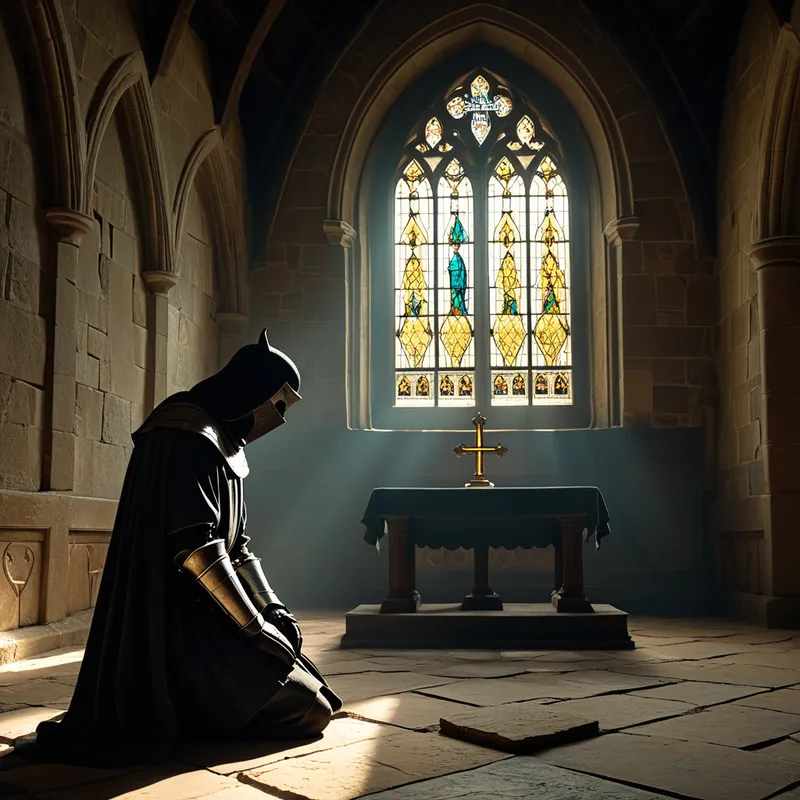
Cultural Origins & Context
The Fisher King myth is not a single, fixed story but a haunting melody woven through the later tapestry of Arthurian romance. Its most profound treatments come from the 12th and 13th centuries, in the works of Chrétien de Troyes ([Perceval](/myths/perceval “Myth from Arthurian culture.”/), or the Story of the Grail) and, later, in the anonymous Queste del Saint Graal. These were not folk tales told around hearths, but sophisticated literary compositions for courtly audiences, blending chivalric ideals with deep spiritual yearning.
The myth functioned on multiple levels. For a feudal society, it was a stark parable about the health of the kingdom being inextricably linked to the moral and physical health of its ruler. A wounded king meant a wounded land. On a spiritual level, it reflected the intense medieval preoccupation with spiritual aridity and the quest for divine grace, with the Grail representing that ultimate, unattainable solace. The story was a narrative engine for the ultimate knightly quest, moving adventure beyond mere battlefield glory into the realm of spiritual and psychological trial. It asked the courtly listener: What matters more—perfect manners, or perfect compassion?
Symbolic Architecture
At its core, the myth is a masterful depiction of symbolic [resonance](/symbols/resonance “Symbol: A deep, sympathetic vibration or connection, often in sound or feeling, that amplifies and harmonizes across systems.”/) between the inner and outer worlds. The Fisher [King](/symbols/king “Symbol: A symbol of ultimate authority, leadership, and societal order, often representing the dreamer’s inner power or external control figures.”/)’s wound is not merely physical; it is a wound of the [soul](/symbols/soul “Symbol: The soul represents the essence of a person, encompassing their spirit, identity, and connection to the universe.”/), of vitality, of creative and generative power.
The king and his land are one psyche. The barren waste is the external landscape of an internal desolation.
The wound, located in the thighs, symbolizes a [rupture](/symbols/rupture “Symbol: A sudden break or tear in continuity, often representing abrupt change, separation, or the shattering of established patterns.”/) in the [life](/symbols/life “Symbol: The symbol of ‘Life’ represents a journey of growth, interconnectedness, and existential meaning, encompassing both the joys and challenges that define human experience.”/) force, in eros and generative power. It is a stagnation of [energy](/symbols/energy “Symbol: Energy symbolizes vitality, motivation, and the drive that fuels actions and ambitions.”/), a [paralysis](/symbols/paralysis “Symbol: A state of being unable to move or act, often representing feelings of powerlessness, fear, or being trapped in waking life.”/) of the will to live and create. The act of fishing is poignant: it is a passive, waiting [activity](/symbols/activity “Symbol: Activity in dreams often represents the dynamic aspects of life and can indicate movement, progress, and engagement with personal or societal responsibilities.”/) by the waters of the unconscious, a hope that sustenance ([insight](/symbols/insight “Symbol: A sudden, deep understanding of a complex situation or truth, often arriving unexpectedly and illuminating hidden connections.”/), healing) might come from the [depths](/symbols/depths “Symbol: Represents the subconscious, hidden emotions, or foundational aspects of the self, often linked to primal fears or profound truths.”/), hooked by [chance](/symbols/chance “Symbol: A representation of opportunities and unpredictability in life, illustrating how fate can influence one’s journey.”/) rather than claimed by [action](/symbols/action “Symbol: Action in dreams represents the drive for agency, motivation, and the ability to take control of situations in waking life.”/).
The Grail is the [symbol](/symbols/symbol “Symbol: A symbol can represent an idea, concept, or belief, serving as a powerful tool for communication and understanding.”/) of wholeness, the telos of the [psyche](/myths/psyche “Myth from Greek culture.”/). It provides sustenance but cannot, by itself, heal the wound. It must be approached, and its power activated, by the correct [relationship](/symbols/relationship “Symbol: A representation of connections we have with others in our lives, often reflecting our emotional state.”/). Percival’s failure is the failure of the conscious ego, trained in social forms but disconnected from its instinctual, compassionate core. He sees the [mystery](/symbols/mystery “Symbol: An enigmatic, unresolved element that invites curiosity and exploration, often representing the unknown or hidden aspects of existence.”/) but does not engage with it; he observes the suffering but does not address it. His required question is the act of relatedness—the bridge between the seeking [consciousness](/symbols/consciousness “Symbol: Consciousness represents the state of awareness and perception, encompassing thoughts, feelings, and experiences.”/) and the wounded, unconscious core of [the self](/myths/the-self “Myth from Jungian culture.”/).

The Dreamer’s Resonance
When this myth stirs in the modern dreamer, it signals a profound encounter with a state of psychic stagnation. To dream of a wounded or impotent authority figure (a king, a boss, a parent) in a decaying environment is to dream of the Fisher King.
The somatic experience is one of heaviness, paralysis, or a chronic, low-grade pain that has no clear source. Psychologically, the dreamer may be living in a personal “wasteland”—a career that no longer grows, a relationship drained of vitality, a creative life gone fallow. The dream highlights the deep, often shameful wound (the shadow) that is being ignored, the source of the bleed. The Percival in the dream may be the dreamer’s own observing ego, circling the issue, seeing the procession of potential solutions (the Grail), but failing to ask the crucial, vulnerable question that would initiate healing. The dream is a call to move from passive observation of one’s suffering to active, compassionate inquiry into its root.

Alchemical Translation
The myth models the alchemical process of individuation with stark clarity. The wounded king represents the dormant, suffering Self—the central archetype of wholeness that is injured by life’s traumas and our own avoidances. The wasteland is the life lived in service to this unconscious suffering.
Healing is not an act of finding, but of asking. The question itself is the catalyst that begins the transmutation of leaden suffering into golden awareness.
Percival’s journey is [the ego](/myths/the-ego “Myth from Jungian culture.”/)’s long road to maturity. His initial failure is necessary; it is the [nigredo](/myths/nigredo “Myth from Alchemical culture.”/), the blackening, where the folly of the old way is revealed. He must wander the waste, confronted by his failure, until his courtly [persona](/myths/persona “Myth from Greek culture.”/) is stripped away. Only then can he return, humbled and authentic, to ask the question.
The healing question—“What ails you?”—is the quintessential act of psychic integration. It is the ego turning toward the wounded Self with empathy, rather than turning away with fear or disgust. It acknowledges [the shadow](/myths/the-shadow “Myth from Jungian culture.”/). In that moment of compassionate relatedness, the logjam of energy is broken. The life force (symbolized by the restored land) can flow again. The king’s wound closes, not because a magic object was found, but because the psyche’s central relationship—between the conscious mind and the deep Self—has been restored to right order. The Grail, then, is revealed not as an external trophy, but as the sustaining symbol of that renewed, inner connection. The quest ends where it began, but the kingdom within is transformed.
Associated Symbols
Explore related symbols from the CaleaDream lexicon: