The Field of Reeds Myth Meaning & Symbolism
The ancient Egyptian vision of paradise, a blessed land of eternal abundance where the justified soul labors joyfully in the fields of the gods.
The Tale of The Field of Reeds
Listen, and let your ka—your vital force—travel beyond the western horizon, where the sun dies each evening. The journey begins not in light, but in the profound, silent dark of the tomb. Your body rests, wrapped and anointed, but your ba—your mobile soul, a bird with your face—awakens. It slips through the stone, into the Duat, the terrifying and beautiful underworld.
Here, in winding corridors of night, you are not alone. Demons with knives test your knowledge of secret names. You recite spells from the Book of the Dead, your passport through peril. You merge with Ra in his night-barque, fighting the serpent Apep. You are ferried by the silent ferryman on a black river, toward a hall that hums with ultimate truth.
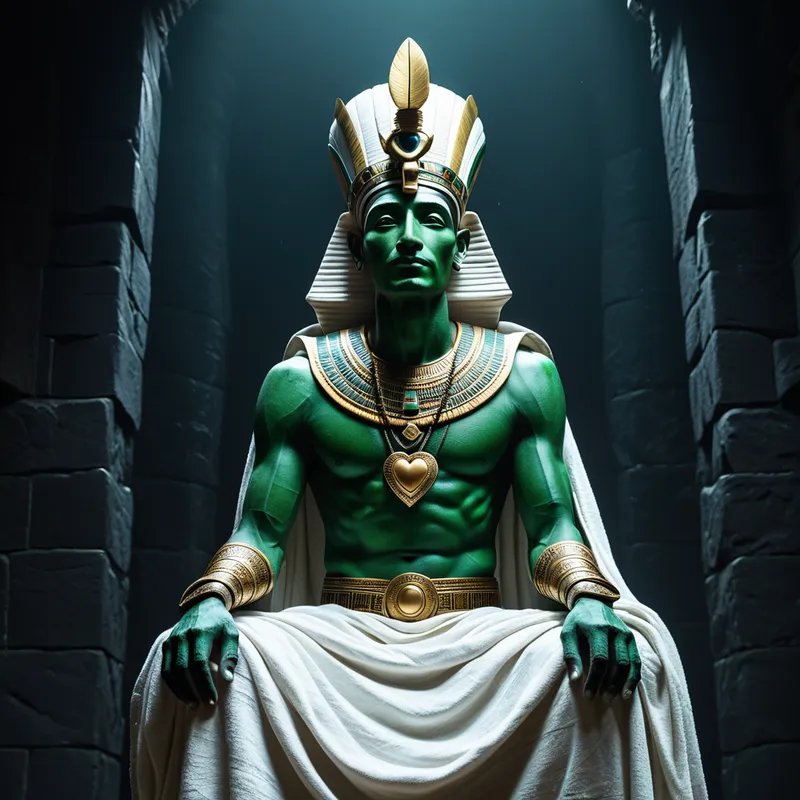
This is the Hall of Ma’at. Its ceiling is upheld by papyrus columns, its floor is cool stone. And there, upon a throne of malachite, sits Osiris</ab title=“God of the afterlife, resurrection, and fertility; the judge of the dead.”>iris, the Lord of the Silent. He is wrapped in white, his skin the green of sprouting grain, his eyes deep pools of stillness. Before him, Anubis, with his sleek black jackal head, leads you forward. His hands, precise and gentle, guide your heart from your chest—not the physical organ, but the ib, the seat of your conscience, memory, and essence.
He places it upon the golden scales. In the other pan, he sets the feather of Ma’at, so light it seems made of condensed moonlight. The air stills. The hybrid god Ammit, the Devourer, crouches nearby, her crocodile jaws slightly parted. The scribe god Thoth stands ready with his papyrus scroll, his ibis beak poised to record.
The scales tremble. Does your heart, heavy with lies, with cruelty, with stolen bread and broken oaths, sink? Or does it, purified by confession and a life in harmony with ma’at, balance perfectly with the feather’s truth?
If it balances… a sigh like wind through reeds passes through the hall. Osiris nods. Thoth proclaims: “True of voice.” You are maet kheru—justified.
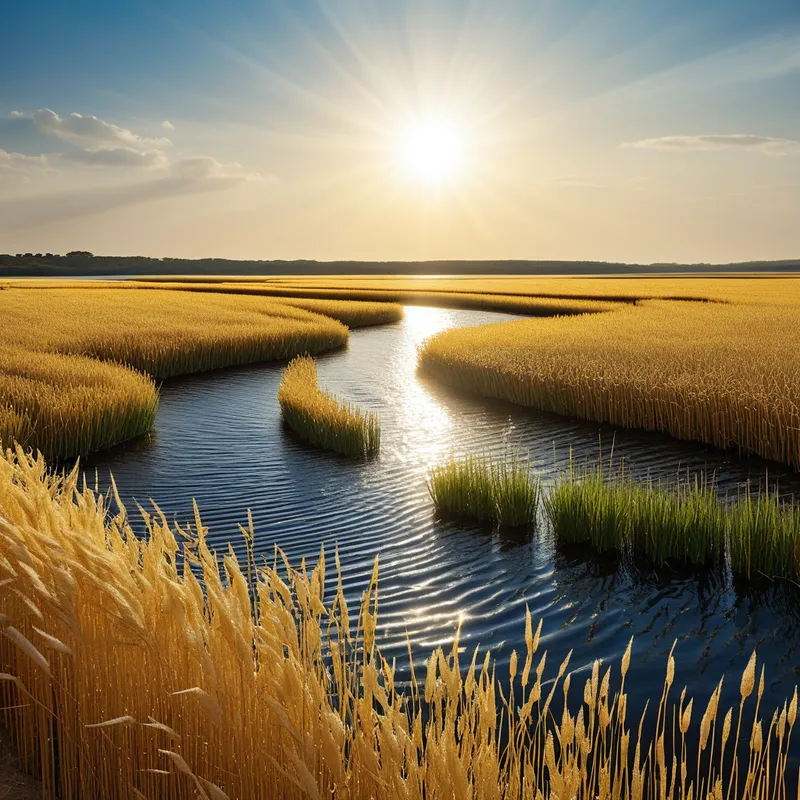
Then, you are led not into darkness, but into blinding, gentle light. You step onto a bank of black, fertile earth. Before you stretches The Field of Reeds. A perfect mirror of the most blessed parts of Egypt, but eternal. The reeds are taller than a man, their tassels golden in the light of an endless, gentle sun. Canals of cool, clear water teem with fish. Wheat grows waist-high, ripe and heavy. Fig and date trees offer their bounty. There is no thirst, no hunger, no weariness.
And here, you do the impossible: you labor. You plow, you sow, you harvest. But the work is a joy, a sacred participation in the cycle that sustains the cosmos itself. You see your ancestors, smiling. You reunite with your loved ones. You dwell in your own house, built from eternity. You sail on the waters in the company of gods. This is not an end, but a beginning—the soul’s true, flourishing home.
Cultural Origins & Context
The vision of The Field of Reeds, known as Sekhet-Aaru or A’aru, was not a singular, canonical story but a evolving constellation of beliefs spanning nearly three millennia. Its earliest roots are in the Old Kingdom Pyramid Texts, spells carved into royal burial chambers to propel the pharaoh, a living god, directly to the stars. By the Middle Kingdom, these democratized into the Coffin Texts, extending the hope of paradise to the nobility. The New Kingdom’s Book of the Dead (the Book of Coming Forth by Day) made it a tangible guidebook for any who could afford a copy.
This myth was not merely told; it was performed, internalized, and lived toward. It was painted on tomb walls, inscribed on amulets, and recited by priests during funeral rites. Its primary societal function was twofold. Firstly, it provided a comprehensive, reassuring map for the ultimate transition, mitigating the terror of death with detailed instructions. Secondly, it served as the ultimate ethical framework. The promise of the Field was conditional upon passing the weighing of the heart, a divine audit of one’s life. Thus, the myth reinforced ma’at—truth, justice, and social order—as the foundational principle of civilization itself. To live a good life was to ensure one’s heart would be as light as a feather.
Symbolic Architecture
At its core, the journey to the Field of Reeds is a profound allegory for the soul’s purification and integration. The myth presents a complete psychic architecture.
The Heart (Ib) is not the emotional heart, but the total record of the self—consciousness, memory, and conscience combined. It is the sum of one’s being placed on the scale.
The ultimate judgement is not delivered by a god, but by the weight of your own accumulated truth.
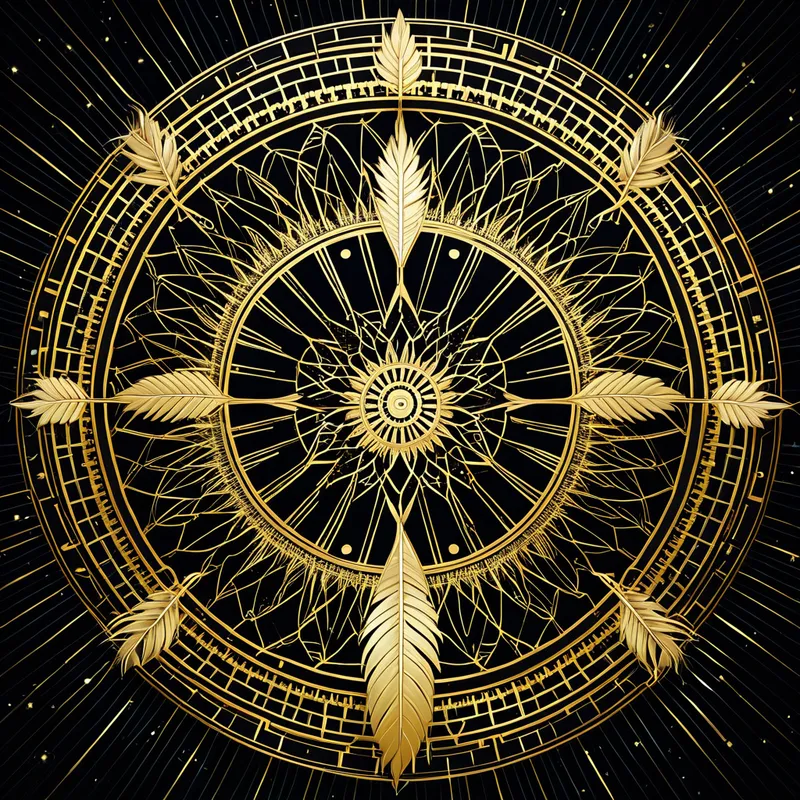
The Feather of Ma’at symbolizes the transcendent, impersonal principle of cosmic order, balance, and truth. It is the objective standard against which the subjective self is measured.
The Scale represents the moment of supreme existential accountability, where the persona (the social self) is stripped away, and the essential character stands naked before reality itself.
The Field itself is the symbol of integrated, fruitful existence. It negates the dichotomy between labor and paradise. To work joyfully in the eternal fields is to signify that one’s daily life and one’s spiritual state have become congruent. It is the self, fully realized, participating consciously in the cycles of creation. The reeds, ever-regenerating, speak of resilience and eternal life; the endless grain, of nourishment and fruition.
The Dreamer’s Resonance
When this myth stirs in the modern dreamer, it rarely appears as a literal Egyptian tableau. Instead, its patterns emerge in deep psychological process. Dreaming of being weighed or measured, perhaps on a giant scale or in a stark, official room, points to a profound inner self-assessment. The psyche is conducting its own “judgement,” often during life transitions, after a moral failure, or when one’s actions are out of alignment with one’s core values. The somatic feeling is one of exposure and intense vulnerability.
Dreams of arriving in a miraculously fertile, peaceful landscape after a long ordeal—a green field, a serene garden, a calm shore—signal the dreamer’s psyche reaching a state of hard-won inner peace and acceptance. It is the relief felt after a period of intense introspection, therapy, or shadow-work, when conflicting parts of the self have been acknowledged and brought into a new harmony. The conflict is not gone, but it is now contained within a larger, more ordered system—a personal ma’at has been restored.
Alchemical Translation
The alchemical journey of individuation—becoming the unique, integrated individual one is meant to be—is perfectly modeled by this myth. The process begins with Nigredo, the descent into darkness: the ego’s confrontation with the Duat of the unconscious, with all its repressed fears, traumas, and unlived potentials (the demons, the serpent). This is the necessary death of the old, unaware self.
The Weighing of the Heart is the critical stage of Albedo, purification. Here, the individual must hold their own “heart”—their motivations, secrets, and self-deceptions—up to the pure, white light of conscious awareness (the feather). This is brutal self-honesty. The “devourer” Ammit represents the consequence of failure: psychic disintegration, being consumed by one’s own unresolved shadow.
To be declared “true of voice” is to achieve congruence, where the inner self and the outer expression are one. This is the philosopher’s stone of the psyche.
Achieving balance grants entry into Citrinitas, the dawning of the inner sun. The Field of Reeds is the state of Rubedo, the final red stage of alchemical gold. It represents the fully realized Self, where work becomes sacred play, where one’s unique talents (the harvest) are offered back to the world (the gods) from a place of abundance, not lack. It is not a static heaven of rest, but a dynamic paradise of purposeful, joyful participation. The modern individual’s “Field of Reeds” is found when their daily life becomes an authentic expression of their deepest, most balanced truth—a life in which, at last, the heart and the feather are one.
Associated Symbols
Explore related symbols from the CaleaDream lexicon: