The Fairy Folk Myth Meaning & Symbolism
A tale of the Sidhe, the luminous and perilous folk of the hollow hills, and the mortal who trespasses into their timeless, enchanted realm.
The Tale of The Fairy Folk
Listen now, and let the fire’s crackle fade. Let the modern world recede like a forgotten coast. We travel to a time when the wind in the hawthorn carried whispers, and every shadowed mound held a kingdom.
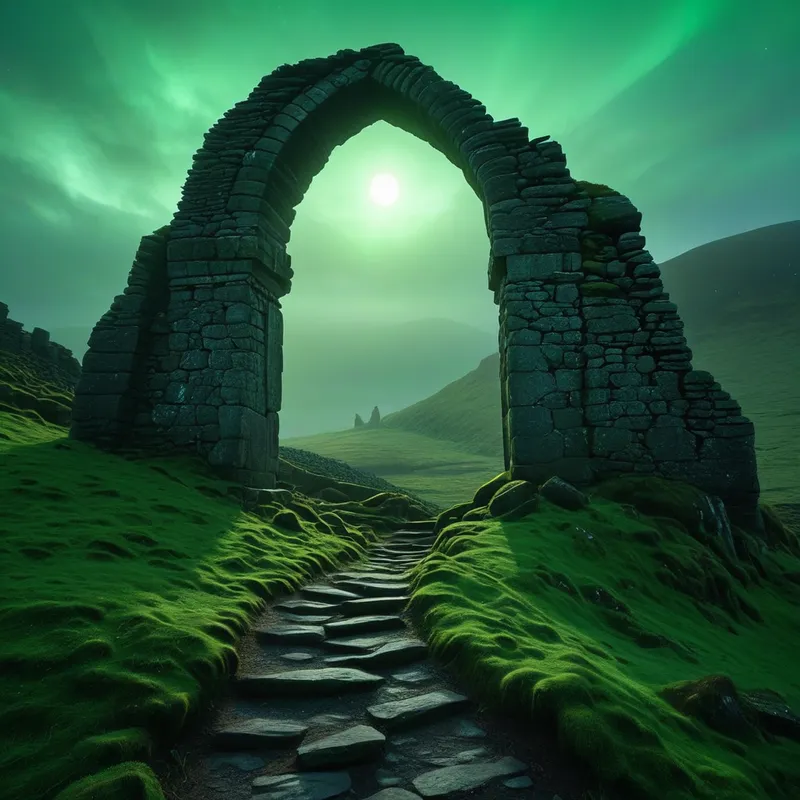
In the west, where the land meets the sea in a tumult of grey rock and green, there existed a world within our world. It was not a place for mortal maps, but a presence felt in the sudden hush of the woods, in the peculiar bend of light at dusk. These were the lands of the Aos Sí, the People of the Mounds, whom some dared call the Fair Folk, though never to their faces. Their palaces were the Sídhe, the hollow hills that rose from the bog and heath, splendid and hidden. Within, time was not a river but a deep, still pool. The Sidhe themselves were beings of terrible beauty—tall, fierce, and radiant, their eyes holding the chill and fire of ancient stars. They were the remnants of a divine order, the Tuatha Dé Danann, who retreated into the hills when new gods, and then mortals, laid claim to the sunlit world.
Into this borderland came a young man, Oisín, son of the warrior Fionn mac Cumhaill. He was wandering the edges of a lough, the water like beaten silver under a twilight sky, when he saw her. Niamh of the Golden Hair rode from the west on a white steed whose hooves did not touch the earth. Her cloak was the colour of a summer sky at midnight, and her beauty was a sorrowful, piercing thing. She spoke his name, and her voice was the sound of distant bells. “Come with me, Oisín,” she said, “to Tír na nÓg, where there is no death, no decay, only joy and feasting and the music that never ends.”
His heart, a mortal drum, beat against his ribs. He looked back once at the darkening woods of Erin, then took her hand. As he mounted behind her, the world blurred. The lake became a sea, the sea a mist, and the mist gave way to a land of impossible colours. In Tír na nÓg, three hundred years passed like three days of festival. Yet, a thorn of longing grew in Oisín’s heart—a homesickness for the rough, familiar scent of peat smoke, for the faces of his kin, for the weight of time itself. Niamh, her eyes full of a knowing sadness, warned him: if his foot were to touch the soil of Erin, the centuries he had evaded would claim him in an instant.
But the longing became a tide. She gave him her white steed, with one command: “Stay in the saddle.” He rode back across the ocean of time. Arriving in Erin, he found everything changed. The forts of the Fianna were grass-covered mounds; his people were dust and legend. Leaning from his saddle to help some men move a great stone, his grip failed. The saddle girth broke, and he tumbled to the earth. The moment he touched the native soil, the three hundred years descended. Before the horrified onlookers, the radiant youth withered into an ancient, blind man, the weight of ages crushing him. The white steed screamed and vanished. Oisín was left, a living ghost in a foreign land, with only a bard’s memory of a love and a land that time could not touch.
Cultural Origins & Context
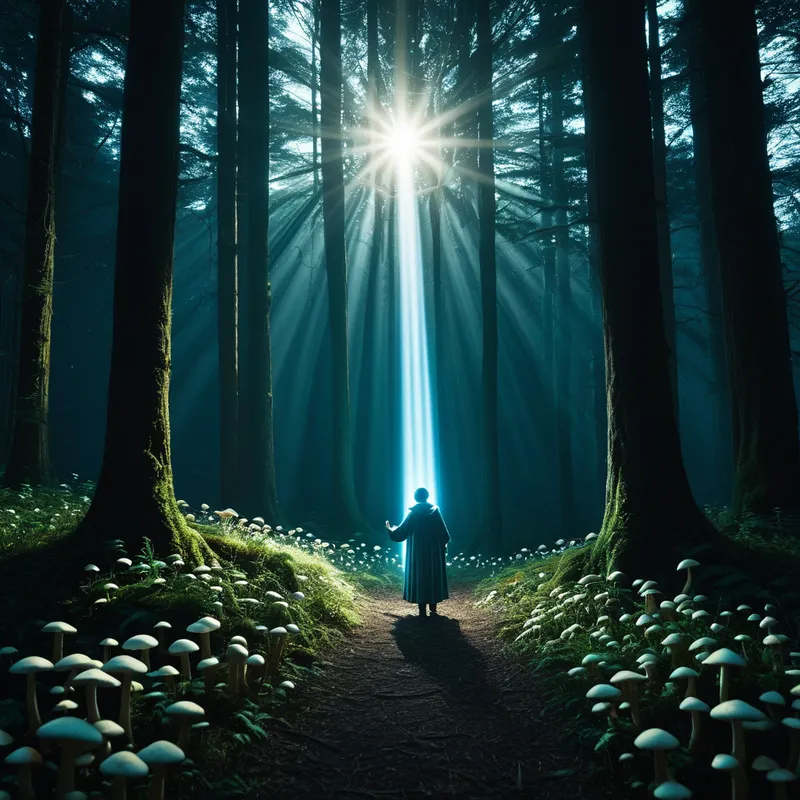
This is not a single story but a tapestry of belief woven across Ireland, Scotland, Wales, and Brittany. The myth of the Fairy Folk is the folk memory of a theological and political transition. The Aos Sí are often interpreted as the diminished gods of the Tuatha Dé Danann, the pre-Christian pantheon who, in the mythic cycle, were defeated and agreed to retreat into the underworld—the hollow hills, lakes, and seas. They did not vanish; they became the adjacent, parallel reality.
These stories were the province of the seanchaí, the traditional storyteller, kept alive by the hearthside and at crossroads. They were not mere entertainment but a vital cosmology. They explained the uncanny: a sudden illness was “a fairy stroke,” a missing child was “taken,” a peculiarly shaped stone was a marker of their realm. The myths enforced social codes—respect for certain trees (hawthorn, elder), taboos about disturbing mounds, and offerings of milk or bread to appease the “good people.” They mapped the psychological and physical landscape, marking the boundaries between the known world of community and law and the wild, enchanting, amoral world of the unconscious Other.
Symbolic Architecture
The Fairy Folk myth is a profound map of the psyche’s structure. The Aos Sí represent the autonomous complexes of the unconscious—those bundles of energy, memory, and potential that possess their own life, intelligence, and power. They are not “us,” yet they inhabit us. Their beauty symbolizes the allure of the unconscious, its creative and numinous potential. Their perilousness reflects its danger: to be captivated is to be lost.
The Sídhe is the psyche itself—a hidden, luminous interiority beneath the mundane hill of ego-consciousness.
Tír na nÓg is the state of psychic inflation, where one identifies with the archetypal energy. It is the artist lost in inspiration, the lover in infatuation, the mystic in ecstasy—a timeless, deathless state severed from the human condition. Oisín’s journey is the necessary but tragic arc of consciousness. He experiences the divine union (with Niamh/the Anima), but pure unconsciousness cannot sustain life. The return, the desire for the mortal world, is the ego’s attempt to integrate the experience. The fatal touch of the soil is the crushing price of that attempt: one cannot bring the timeless into time without being destroyed by the collision. The myth warns that a direct, unmediated merger with the archetypal unconscious annihilates the individual.
The Dreamer’s Resonance
When this myth stirs in modern dreams, it announces a brush with the autonomous psyche. Dreaming of hidden, opulent rooms behind a mundane wall echoes the discovery of the Sídhe. Dreaming of eerily beautiful yet aloof figures signifies an encounter with an unconscious complex—perhaps the inner critic (the stern Fairy Queen) or the seductive but draining allure of an old obsession (the captivating fairy lover).
The somatic signature is often a feeling of enchantment mixed with dread, a literal “spell.” One may wake with a sense of profound meaning just out of reach, or with a chilling disorientation. Dreaming of a fairy ring, or being unable to leave a party that has turned strange, mirrors Oisín’s dilemma: the psyche is both inviting us in and trapping us. These dreams mark a threshold moment where a powerful inner content is seeking recognition but has not yet been integrated. The psychological process is one of numinous invasion—the ego is being confronted by something greater than itself, and the task is to acknowledge its power without being consumed by it.
Alchemical Translation
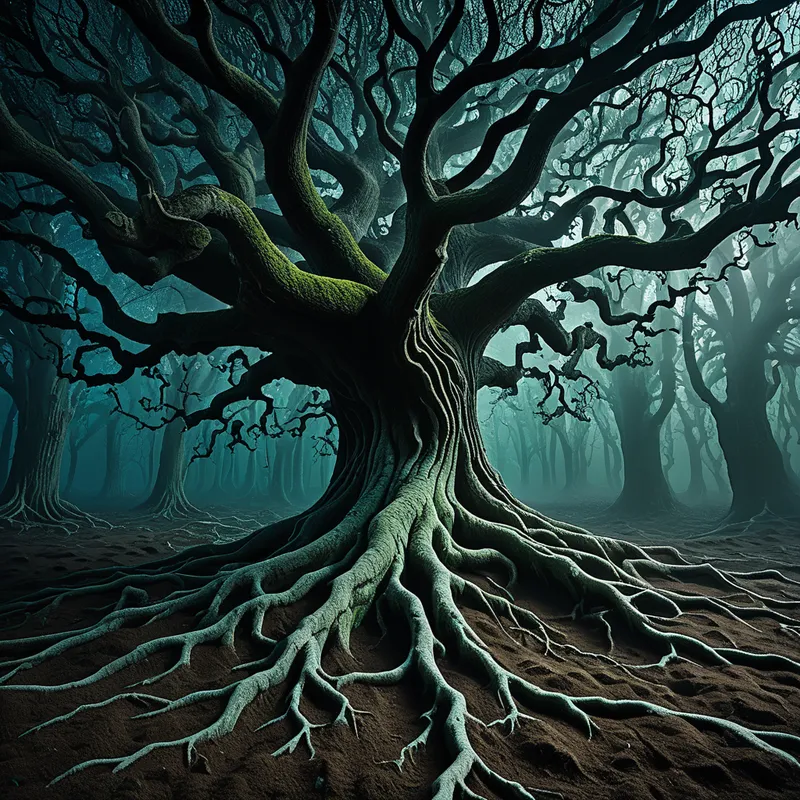
The alchemical work modeled here is the mortificatio—the necessary death. Oisín’s physical withering is the brutal image of the inflation’s end. For the modern individual, the “Fairy Folk” experience is any transcendent state—a spiritual high, a manic creative burst, a romantic idealization—that promises escape from life’s limitations.
The journey to Tír na nÓg is inevitable and necessary; the return, though it destroys the dreamer, is what makes the vision human.
The alchemical translation is not about avoiding the enchantment, but about undergoing it consciously. One must, like Oisín, ride the white steed of intuition into the Otherworld. But the goal of individuation is to return without falling from the saddle—to find a vessel strong enough to carry a drop of that timeless water back into the vessel of time. This is the artist who channels inspiration into form, the meditator who brings peace into action, the analyst who holds the archetypal image without identifying with it. The “saddle girth” is the strength of the ego, forged not to resist the unconscious, but to relate to it. The failure of Oisín’s girth is the failure of mediation. Our work is to braid a stronger one: through reflection, creative expression, and humble dialogue with the inner Folk, we learn to host the guests from the hollow hills without giving them the keys to the entire kingdom. In doing so, we do not become ageless, but we become whole—mortals touched by the eternal, bearing its scars and its sublime, fleeting music.
Associated Symbols
Explore related symbols from the CaleaDream lexicon: