The Eye of Providence Myth Meaning & Symbolism
A myth of cosmic justice where the all-seeing eye of the Furies ensures no crime escapes divine notice, weaving fate into the fabric of reality.
The Tale of The Eye of Providence
Hear now a tale not of Olympus’s bright peaks, but of the deep, chthonic truths that coil beneath [the world](/myths/the-world “Myth from Tarot culture.”/) like great roots. It is a story whispered not in sunlit temples, but in the hushed dread that follows a broken oath, in the cold sweat that wakes a murderer from his dream. It is the story of the Eye that never sleeps.
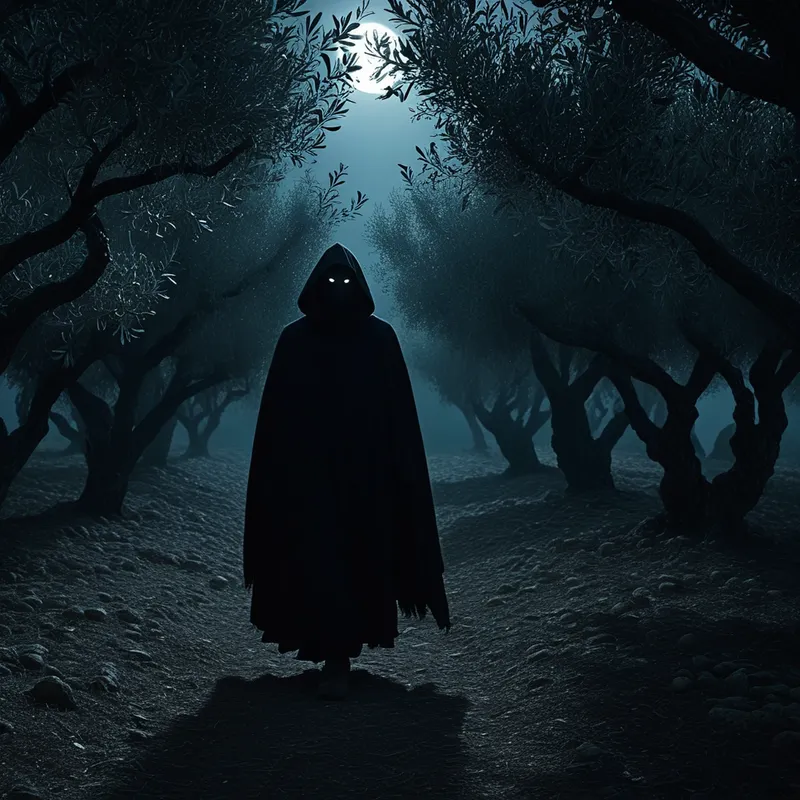
Before the laughter of the gods echoed in their halls, there was [the Law](/myths/the-law “Myth from Biblical culture.”/). And from the first blood spilled upon the dark earth, from the first promise shattered against the stones of greed, they were born: the Erinyes, whom men in trembling voices call [the Furies](/myths/the-furies “Myth from Greek culture.”/). They are older than [the sky](/myths/the-sky “Myth from Persian culture.”/) itself, daughters of primeval Night. Their forms are of shadow and wind, but their gaze—ah, their gaze is a fixed and terrible star.
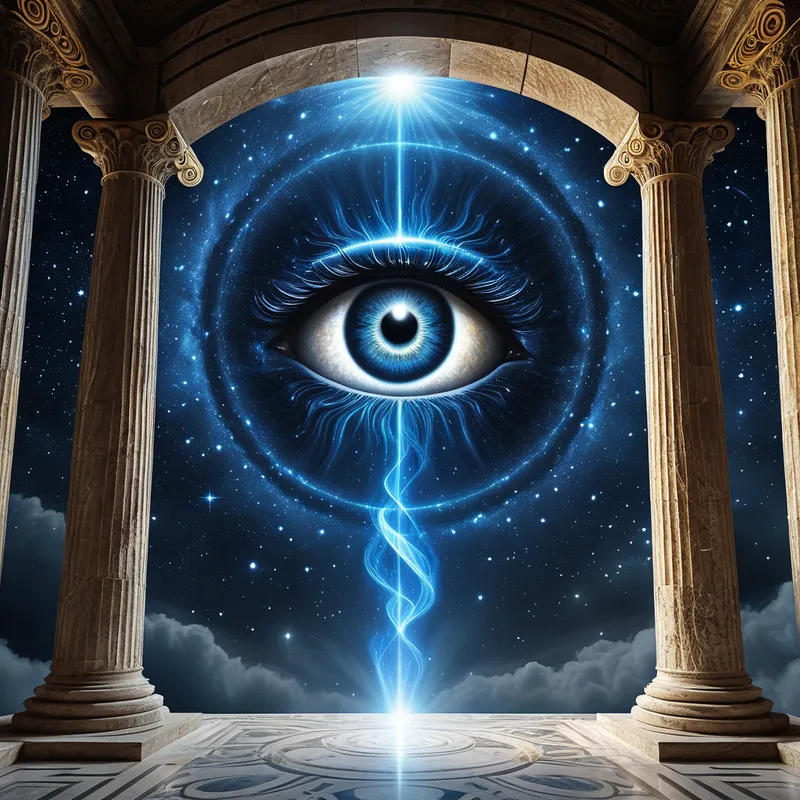
They do not hunt with hounds or spears. They hunt with sight. From the moment a soul stains itself with kin-blood, or violates the sacred bond of guest and host, an Eye opens upon them. It is not an eye of flesh, but of consequence. It settles upon the guilty one like an invisible, crushing weight. They may flee across wine-dark seas, hide in the labyrinthine streets of mighty cities, or cloak themselves in royal purple and lies. It matters not. The Eye of Providence sees through stone, through [water](/myths/water “Myth from Chinese culture.”/), through the fortress of the human heart.
The guilty one feels it first as a prickle on the neck in a crowded agora. Then as a cold spot in the sun. Soon, every reflective surface—a polished shield, a still pool—holds not their own face, but a glimpse of a vast, unblinking pupil. Sleep offers no refuge, for the Eye gazes into their dreams, replaying the crime in endless, silent loops. Food turns to ash, music to discord, for all is filtered through the lens of that unwavering witness.
Their pursuit is the rising action of a life unraveling. The criminal becomes a ghost in their own life, haunted not by a specter, but by the sheer, unbearable fact of being seen in their totality—their deed, their cowardice, their rotting secret. The world itself becomes an extension of that gaze; the rustling leaves accuse, the stars are pinpricks of light from the Eye’s celestial counterpart.
There is no battle, no clashing of swords. The resolution is not death, but restoration. The Eye drives the guilty inexorably toward the sacred precinct, the hall of judgment, or the purifying rites. It herds the fractured soul back toward the whole. Only when the crime is acknowledged, the blood-price paid, the cosmic scales re-balanced, does the pressure of the gaze relent. Not in forgiveness, but in completion. The Law has been served. The Eye closes, and the world breathes again. But its potential—the promise that no act is ever truly hidden—remains, woven into the fabric of all that is.
Cultural Origins & Context
This concept of the all-seeing, punitive divine gaze is not a single, codified myth from a specific text like the Theogony, but a pervasive and terrifying strand woven through the entire tapestry of ancient Greek religious thought. The Erinyes were its most potent personification. Their cult was ancient, predating the Olympian order, and spoke to a fundamental, pre-political understanding of [justice](/myths/justice “Myth from Tarot culture.”/)—dike—as a natural, automatic force, like gravity for the soul.
Stories of their relentless pursuit, as in Aeschylus’s Oresteia, were performed in civic theaters, serving a crucial societal function. In a world without forensic science or centralized policing, the fear of this cosmic surveillance was a powerful deterrent. It upheld the most sacred social bonds: those of family (philia) and the sacred duty to strangers ([xenia](/myths/xenia “Myth from Greek culture.”/)). The myth taught that the community (polis) was always watching, because the cosmos itself was a witness. It externalized the conscience and gave form to the universal human fear of exposure, making it a pillar of the moral universe.
Symbolic Architecture
The Eye of Providence is the archetypal [symbol](/symbols/symbol “Symbol: A symbol can represent an idea, concept, or belief, serving as a powerful tool for communication and understanding.”/) of omniscient justice, but its [depth](/symbols/depth “Symbol: Represents profound layers of consciousness, hidden truths, or the unknown aspects of existence, often symbolizing introspection and existential exploration.”/) [psychology](/symbols/psychology “Symbol: Psychology in dreams often represents the exploration of the self, the subconscious mind, and emotional conflicts.”/) reveals it as far more than a celestial policeman.
The Eye is the consciousness of the deed itself, made manifest. It is the objective truth of an action, divorced from the perpetrator’s subjective excuses and self-deceptions.
Psychologically, it represents the Self, in the Jungian sense, as the central organizing principle of the [psyche](/myths/psyche “Myth from Greek culture.”/) that seeks wholeness. When we commit an act—especially a morally fragmenting one like a [betrayal](/symbols/betrayal “Symbol: A profound violation of trust in artistic or musical contexts, often representing broken creative partnerships or artistic integrity compromised.”/) or a cruelty—that is at odds with our deeper, intrinsic [nature](/symbols/nature “Symbol: Nature symbolizes growth, connectivity, and the primal forces of existence.”/), [the Self](/myths/the-self “Myth from Jungian culture.”/) “opens an Eye” upon the conscious ego. This is the [birth](/symbols/birth “Symbol: Birth symbolizes new beginnings, transformation, and the potential for growth and development.”/) of [guilt](/symbols/guilt “Symbol: A painful emotional state arising from a perceived violation of moral or social standards, often tied to actions or inactions.”/), but not a petty, social guilt. It is a profound, ontological guilt, the [psyche](/myths/psyche “Myth from Greek culture.”/)’s recognition that it has violated its own potential for integrity.
The Eye is not evil; it is indifferent. It does not hate the criminal; it simply sees the [crime](/symbols/crime “Symbol: Crime in dreams often symbolizes guilt, inner conflict, or societal rules that are being challenged or broken.”/) as a fact in the psychic ecosystem. Its relentless gaze is the pressure of the unconscious, demanding that the split-off, “criminal” part of the self be acknowledged and integrated. The fleeing, haunted mortal is [the ego](/myths/the-ego “Myth from Jungian culture.”/) attempting to live a [life](/symbols/life “Symbol: The symbol of ‘Life’ represents a journey of growth, interconnectedness, and existential meaning, encompassing both the joys and challenges that define human experience.”/) based on a lie, while the entire unconscious Self knows the [truth](/symbols/truth “Symbol: Truth represents authenticity, honesty, and the quest for knowledge beyond mere appearances.”/) and will not let it rest.
The Dreamer’s Resonance
When this mythic pattern erupts in modern dreams, it signals a profound psychological process: the confrontation with a repressed moral or psychic content. The dreamer is not necessarily a murderer, but they may be living with an unacknowledged “crime” against their own soul—a life path chosen out of fear, a talent abandoned, a fundamental truth denied, or a harm they have inflicted and rationalized away.
The somatic experience is key. Dreamers report feeling watched, followed, or exposed under a glaring light. They may dream of cameras, searchlights, or actual disembodied eyes in the sky or in walls. The atmosphere is one of profound anxiety and inescapability. This is the somatic echo of the Erinyes’ pursuit. The psyche is applying pressure. It is forcing the conscious mind to feel the weight of what it has tried to ignore. The dream is the beginning of the end of self-deception. The Eye has opened, and integration—though it may feel like a trial—is now the only path to peace.

Alchemical Translation
The myth models the alchemical opus, [the great work](/myths/the-great-work “Myth from Alchemical culture.”/) of individuation. The initial “crime” is the necessary separation, the creation of a conflicted, suffering consciousness (the [nigredo](/myths/nigredo “Myth from Alchemical culture.”/)). The guilty, fractured ego is the raw, base material.
The relentless gaze of the Eye is the fire of contemplatio and mortificatio—the burning away of illusion. It forces a sustained, painful confrontation with [the shadow](/myths/the-shadow “Myth from Jungian culture.”/). There is no bypassing this stage. One must feel hunted, seen, and broken down by the truth of one’s own actions or inauthenticity.
The pursuit ends not in destruction, but at the altar of self-knowledge. The judgment hall is the inner tribunal where the ego finally stands before the Self and confesses.
This confession is the albedo, the whitening. The ego surrenders its sovereignty and its lies. It acknowledges the crime, not to an external god, but to the totality of its own being. This is the purifying sacrifice.
The resolution—the closing of the Eye—symbolizes the [rubedo](/myths/rubedo “Myth from Alchemical culture.”/), the reddening, or coniunctio, [the sacred marriage](/myths/the-sacred-marriage “Myth from Various culture.”/). The split is healed. The energy once used to flee and hide is redeemed. The “criminal” aspect is not executed, but understood and integrated. The individual is no longer at war with themselves. They have moved from a state of being seen by a terrifying external force, to seeing themselves with clarity and acceptance. The Providence is no longer an external eye of judgment, but an internal eye of wisdom. The law of the cosmos becomes the law of one’s own, now whole, character.
Associated Symbols
Explore related symbols from the CaleaDream lexicon: