The Exodus / The Babylonian Exile Myth Meaning & Symbolism
A people's epic journey from bondage to covenant, and a later exile that shattered identity, forcing a profound spiritual and psychological rebirth.
The Tale of The Exodus / The Babylonian Exile
Listen. The story begins in the iron breath of the kiln, in the dust of the brickyard. A people, the children of Israel, are ground into the mud of Egypt. Their backs ache under the sun, their spirits crushed under the whips of taskmasters. Their cry rose from [the earth](/myths/the-earth “Myth from Hindu culture.”/) like a great heat shimmer, a groan that pierced the heavens.
And the heavens heard. A voice spoke from a bush that burned but was not consumed, calling a reluctant stutterer, [Moses](/myths/moses “Myth from Biblical culture.”/), from [the wilderness](/myths/the-wilderness “Myth from Biblical culture.”/). “Let my people go.” Thus began the duel of wills, a contest between the power of [the river](/myths/the-river “Myth from Buddhist culture.”/) and the power of [the desert](/myths/the-desert “Myth from Biblical culture.”/) god. Ten plagues descended—[water](/myths/water “Myth from Chinese culture.”/) turned to blood, skies darkened by locusts, a thick, palpable dread of the angel of death. Finally, broken, [Pharaoh](/myths/pharaoh “Myth from Egyptian culture.”/) relented. The multitude fled into the night, a ragged river of humanity flowing east, guided by a [pillar of cloud](/myths/pillar-of-cloud “Myth from Biblical culture.”/) by day and of fire by night.
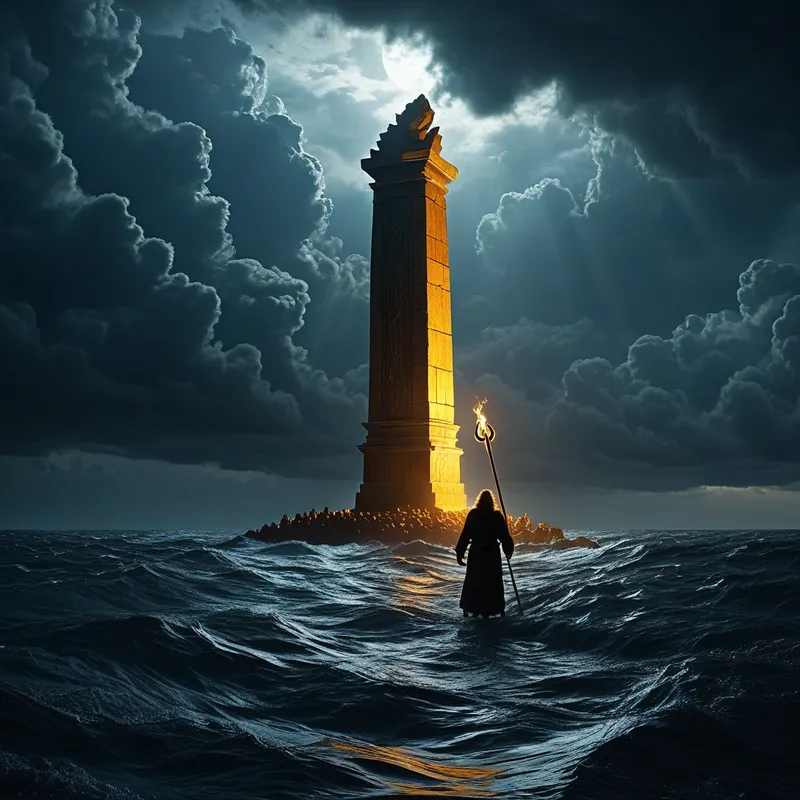
But the heart of a tyrant is a sea that closes. Chariots thundered in pursuit, hemming the fugitives against the shores of the Sea of Reeds. Then, a wind from the east, a mighty breath of the divine, drove back the waters and heaped them up like walls of glass and chaos. The people crossed on dry ground, a birth canal through the deep. The waters returned, swallowing the army of Egypt, and on the far shore, there was only the sound of [the wind](/myths/the-wind “Myth from Various culture.”/) and the stunned silence of freedom.
They entered the wilderness, a vast and hungry emptiness. Their god provided—[manna](/myths/manna “Myth from Biblical culture.”/) like frost, water from stone—but their hearts remained slaves, longing for the leeks and onions of their captivity. At the mountain, Sinai, amidst thunder and smoke, a covenant was forged. A law was given, a blueprint for a holy people. They built a mobile sanctuary, the [Tabernacle](/myths/tabernacle “Myth from Biblical culture.”/), and after a generation of wandering, a new breed born in the desert stood at [the threshold](/myths/the-threshold “Myth from Folklore culture.”/) of a land promised.
Centuries passed. Kings rose and fell in that land. A temple of dazzling stone was built in [Jerusalem](/myths/jerusalem “Myth from Biblical culture.”/). But the covenant frayed. Prophets cried out like voices in a gathering storm, warning of a coming rupture. And it came. The empire of Babylon, a beast of polished brick and absolute power, laid siege. Walls crumbled. The magnificent temple was set ablaze, its gold melting, its holy spaces defiled. The leading citizens—the skilled, the noble, the priests—were chained and marched across the blistering desert to the heart of Mesopotamia.
There, by the rivers of Babylon, they sat down and wept. They hung their harps on the poplar trees, for how could they sing the song of YHWH in a foreign land? The center was gone. The map of their soul was erased. They were exiles, orphans of history, adrift in the glittering, terrifying pluralism of empire.
Cultural Origins & Context
These are not one story, but two foundational traumas and triumphs woven into the DNA of a people. [The Exodus](/myths/the-exodus “Myth from Abrahamic culture.”/) narrative likely coalesced from older tribal memories and poetic fragments during the monarchic period (10th-6th centuries BCE), serving as a national origin myth. It answered the question, “Who are we?” with a powerful answer: “We are the people liberated from bondage by a faithful God.”
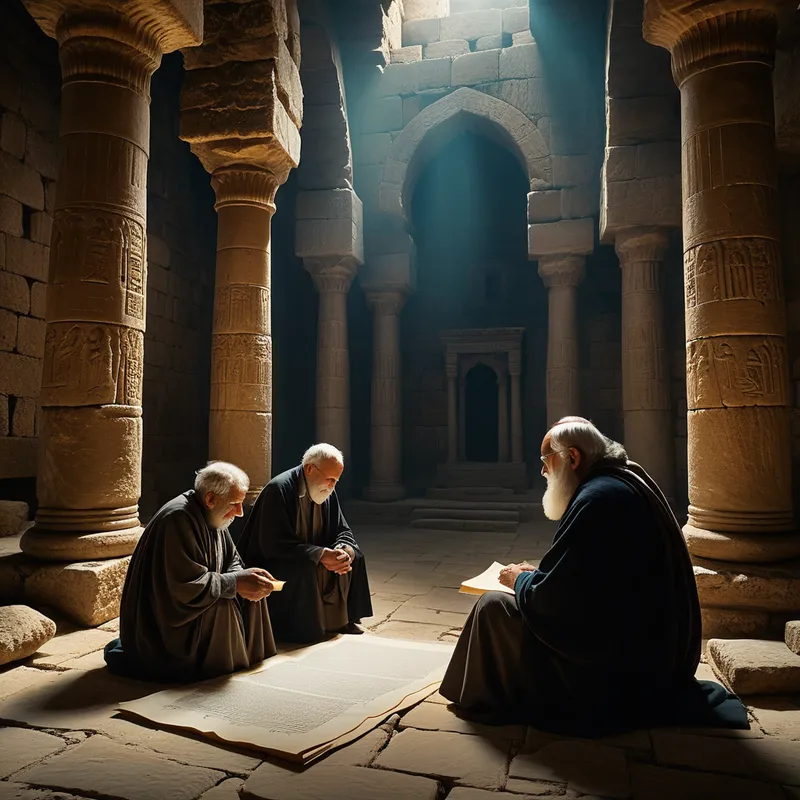
The Exile was a brutal, documented historical event (586-538 BCE). The trauma was existential. Their theology, centered on a God tied to a land and a temple in Zion, faced annihilation. In response, the exiled priests, scribes, and prophets—figures like the anonymous author scholars call the Deuteronomist and the prophet known as Second [Isaiah](/myths/isaiah “Myth from Abrahamic culture.”/)—began the profound work of compilation, reflection, and reinterpretation. They wove the older Exodus story together with the laws, histories, and prophecies into a sweeping narrative arc. This literary-theological project, born in [the crucible](/myths/the-crucible “Myth from Alchemical culture.”/) of exile, gave us the core of the Hebrew Bible as we know it. The story was told to remember, to warn, and most importantly, to forge a new identity not based on land or temple, but on text, memory, and a portable covenant.
Symbolic Architecture
At its [heart](/symbols/heart “Symbol: The heart symbolizes love, emotion, and the core of one’s existence, representing deep connections with others and self.”/), this dual myth maps the [soul](/symbols/soul “Symbol: The soul represents the essence of a person, encompassing their spirit, identity, and connection to the universe.”/)‘s [journey](/symbols/journey “Symbol: A journey in dreams typically signifies adventure, growth, or a significant life transition.”/) between two fundamental poles: the House of Bondage and [the Promised Land](/myths/the-promised-land “Myth from Biblical culture.”/), with the necessary, terrifying [passage](/symbols/passage “Symbol: A passage symbolizes transition, movement from one phase of life to another, or a journey towards personal growth.”/) through the [Wilderness](/symbols/wilderness “Symbol: Wilderness often symbolizes the untamed aspects of the self and the unconscious mind, representing a space for personal exploration and discovery.”/) and the [Exile](/symbols/exile “Symbol: Forced separation from one’s homeland or community, representing loss of belonging, punishment, or profound isolation.”/) in between.
The Egypt of the soul is not just oppression, but the seductive comfort of known suffering. It is the entrenched [pattern](/symbols/pattern “Symbol: A ‘Pattern’ in dreams often signifies the underlying structure of experiences and thoughts, representing both order and the repetitiveness of life’s situations.”/), the familiar [prison](/symbols/prison “Symbol: Prison in dreams typically represents feelings of restriction, confinement, or a lack of freedom in one’s life or mind.”/) of neurosis, the “onions of Egypt” for which we secretly yearn when freedom demands [responsibility](/symbols/responsibility “Symbol: Responsibility in dreams often signifies the weight of duties and the expectations placed upon the dreamer.”/). Pharaoh represents the tyrannical, rigid [aspect](/symbols/aspect “Symbol: A distinct feature, quality, or perspective of something, often representing a partial view of a larger whole.”/) of [the ego](/myths/the-ego “Myth from Jungian culture.”/) or the superego that refuses to let the deeper Self emerge.
The crossing of the sea is the psychic break, the irreversible point of no return where the old structures of life are dissolved. It is not a gentle transition, but a cataclysm that drowns the pursuing forces of the past.
The Wilderness is the liminal [space](/symbols/space “Symbol: Dreaming of ‘Space’ often symbolizes the vastness of potential, personal freedom, or feelings of isolation and exploration in one’s life.”/) of transformation. It is the analytic [hour](/symbols/hour “Symbol: Represents the measurement and passage of time, often symbolizing urgency, mortality, or a specific moment of significance.”/), the creative block, the depression after a great [life](/symbols/life “Symbol: The symbol of ‘Life’ represents a journey of growth, interconnectedness, and existential meaning, encompassing both the joys and challenges that define human experience.”/) change. Here, the [mana](/symbols/mana “Symbol: A spiritual energy or life force in Polynesian cultures, now widely adopted in gaming as a resource for magical abilities.”/) of easy answers does not fall; instead, one must gather the subtle, daily [bread](/symbols/bread “Symbol: Bread symbolizes nourishment, sustenance, and the daily essentials of life, often representing fundamental needs and comfort.”/) of [insight](/symbols/insight “Symbol: A sudden, deep understanding of a complex situation or truth, often arriving unexpectedly and illuminating hidden connections.”/) (manna) and find living [water](/symbols/water “Symbol: Water symbolizes the subconscious mind, emotions, and the flow of life, representing both cleansing and creation.”/) struck from the rock of one’s own hardened [resistance](/symbols/resistance “Symbol: An object or tool representing opposition, struggle, or the act of pushing back against external forces or internal changes.”/).
The Exile represents a more profound, later-stage [death](/symbols/death “Symbol: Symbolizes transformation, endings, and new beginnings; often associated with fear of the unknown.”/). If Egypt is bondage to the outer other, Exile is the [loss](/symbols/loss “Symbol: Loss often symbolizes change, grief, and transformation in dreams, representing the emotional or psychological detachment from something or someone significant.”/) of the inner center. The [temple](/symbols/temple “Symbol: A temple often symbolizes spirituality, sanctuary, and a deep connection to the sacred aspects of life.”/)—the [symbol](/symbols/symbol “Symbol: A symbol can represent an idea, concept, or belief, serving as a powerful tool for communication and understanding.”/) of achieved [identity](/symbols/identity “Symbol: Identity represents the sense of self, encompassing personal beliefs, cultural background, and social roles.”/), wholeness, and [connection](/symbols/connection “Symbol: Connection symbolizes relationships, communication, and bonds among individuals.”/)—is destroyed. The soul finds itself in Babylon, the [realm](/symbols/realm “Symbol: The symbol of ‘Realm’ often signifies the boundaries of one’s consciousness, experiences, or emotional states, suggesting aspects of reality that are either explored or ignored.”/) of alienation, where all the old gods (values, statuses, certainties) are shown to be powerless. This is the dark [night](/symbols/night “Symbol: Night often symbolizes the unconscious, mystery, and the unknown, representing the realm of dreams and intuition.”/) of the soul, where the songs of the old self cannot be sung.
The Dreamer’s Resonance
When this myth stirs in the modern unconscious, it manifests in dreams of profound transition and disorientation. To dream of being pursued, of fleeing across a stark landscape, or of walls of water speaks to the anxiety of a nascent liberation—leaving a job, a relationship, or an identity. The somatic feeling is often of breathlessness and urgency.
Dreams of exile are quieter, but deeper. They feature being lost in vast, glittering, impersonal cities (the modern Babylon), unable to find one’s home or room. One might dream of a childhood house now empty and ruined, or of trying to read a sacred text whose letters keep blurring. These dreams accompany life stages where a previously cohesive sense of self has collapsed—after a major loss, a failure, or in midlife. The psychological process is one of de-structuring. The ego, which built its temple in a certain career, role, or belief, watches it burn. The dreamer is in the “rivers of Babylon” phase, weeping, unable to sing their old song, because the old lyre of their personality is broken.

Alchemical Translation
The alchemical work modeled here is the opus contra naturam—the work against nature, or more precisely, against the ingrained, natural state of psychic slavery and later, psychic complacency. The process has two major operations.
First, the [Nigredo](/myths/nigredo “Myth from Alchemical culture.”/) of Exodus: the blackening, the confrontation with [the shadow](/myths/the-shadow “Myth from Jungian culture.”/) (Pharaoh/Egypt) and the chaotic dissolution ([the Sea](/myths/the-sea “Myth from Greek culture.”/)). The goal is not to defeat the shadow, but to separate from its totalizing rule and cross into the wilderness of the unknown. The guiding principle here is [the voice from the burning bush](/myths/the-voice-from-the-burning-bush “Myth from Biblical culture.”/)—the call of [the Self](/myths/the-self “Myth from Jungian culture.”/), which ignites awareness but does not consume the individual vessel.
The covenant at Sinai is the Albedo, the whitening. It represents the receipt of a new, conscious structure—the Law as lapis, the philosophical stone—to replace the unconscious slavery of Egypt. It is the formulation of a personal ethic born from the encounter with the numinous.
Second, and more subtly, is the Mortificatio of Exile. This is the necessary death of the achieved structure. [The temple of Solomon](/myths/the-temple-of-solomon “Myth from Biblical culture.”/)—the magnificent, consolidated conscious achievement—must be destroyed. This is the most painful alchemical stage, for it feels like a betrayal by the very Self that guided the first journey. The soul is reduced to its essence, “by the rivers,” in a state of pure longing.
The final stage, the [Rubedo](/myths/rubedo “Myth from Alchemical culture.”/) or reddening, is not a return to the old land, but a creation of something new from the ashes. The exiles do not merely go back; they return as a “remnant” with a transformed consciousness. They rebuild, but the new temple is haunted by the memory of the old. The true gold forged in Babylon is not a building, but the Torah as a portable homeland, the internalized law written on the heart, as the prophet foretold. For the modern individual, this translates to the birth of a personality no longer identified with any single external achievement, role, or homeland, but rooted in a resilient, reflective, and fluid inner covenant. One becomes, at last, a citizen of the wilderness and a scribe in exile, forever writing the text of one’s own becoming.
Associated Symbols
Explore related symbols from the CaleaDream lexicon: