The Exegesis of the Soul Myth Meaning & Symbolism
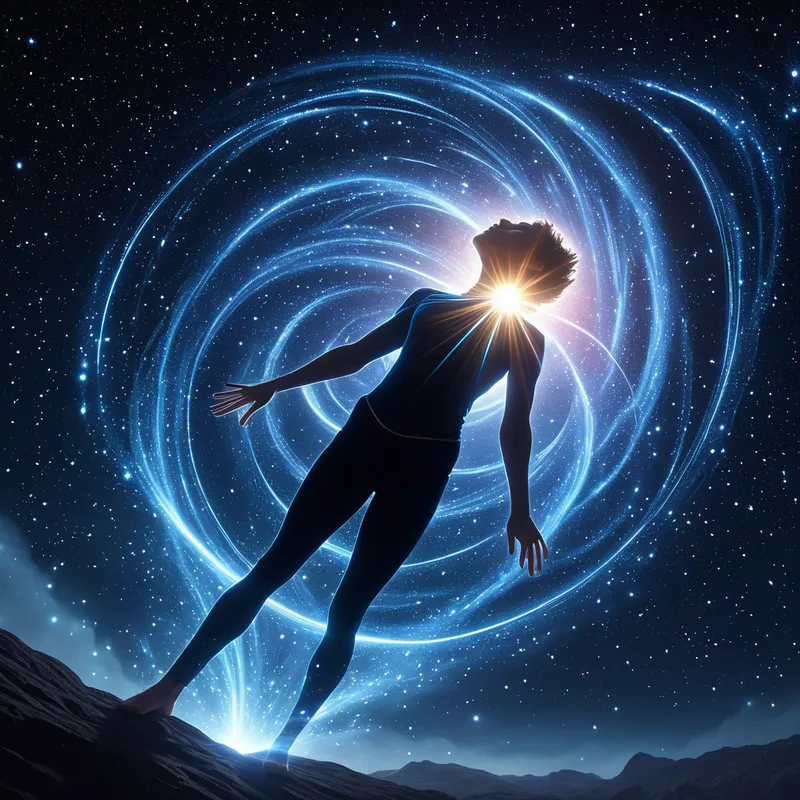
A tale of a divine spark, cast into the world of matter, that must remember its origin and undertake the perilous journey home to the Pleroma.
The Tale of The Exegesis of the Soul
Listen, and hear the story of the one who fell from the Fullness.
In the beginning, before time was counted, there was the Pleroma. It was a silence so profound it sang, a stillness that was perfect motion. Within it, the Monad emanated pairs of radiant beings, Aeons, in joy and love. Their light was knowledge, and their knowledge was peace. The youngest of these, Sophia, longed not for rebellion, but for a knowing equal to the source itself—a longing that moved without the consent of her consort. From this passionate, solitary thought, a spark leapt forth, but it had no pair, no balance. It was a fragment, a longing given form, but it was alone.
This spark, this child of desire, was Pneuma—the Soul. Cast out from the harmony of the Pleroma, it fell. It fell through realms of diminishing light, through veils of forgetfulness, into the swirling chaos of becoming. Here, the Demiurge and his Archons ruled, mistaking their own domain for the highest heaven. They captured the falling spark, the Soul. With matter, they built around it a beautiful, terrible prison: the human body. With the waters of Lethe, the river of forgetfulness, they clouded its memory. The Soul was dressed in the garment of the flesh, named, numbered, and set adrift in a world of shadows, convinced the cave wall was the sun.
And so the Soul lived, generation upon generation, a stranger in a strange land. It felt a deep, inconsolable homesickness—a Pothos—but knew not for what it yearned. It sought solace in the temporary pleasures and pains of the world, in the cycles of birth and death orchestrated by the Demiurge, mistaking these echoes for the real. Yet, in rare moments of silence, in the ache of beauty, in the shock of love or the depth of despair, a memory would stir. A flash of a light never seen in this world. A melody from a song sung before the stars were fixed.
This memory is the call. It is the beginning of the Exegesis—the interpretation, the leading out. The Soul, hearing the faint echo, turns inward. It begins to question the nature of its prison, the origin of its longing. It starts to read the world not as reality, but as a text written in a foreign tongue, a coded message from home. This is the perilous journey, the ascent. The Soul must gather its scattered fragments, remember its true name, and pass back through the spheres of the Archons, who present it with the illusions of its past lives and attachments. To each, the awakened Soul must now say, “I know you for what you are. I am not yours. My origin is beyond you.”
And if it holds fast to the memory, to the spark of Pneuma, it will break the final seal. It will shed the last garment of forgetfulness and, like a bolt of lightning returning to the cloud, be reunited with the Pleroma. Not as the youngest, longing Aeon, but as one who has known exile and return, whose wholeness now contains the memory of the journey. The circle closes. The silence sings again.
Cultural Origins & Context
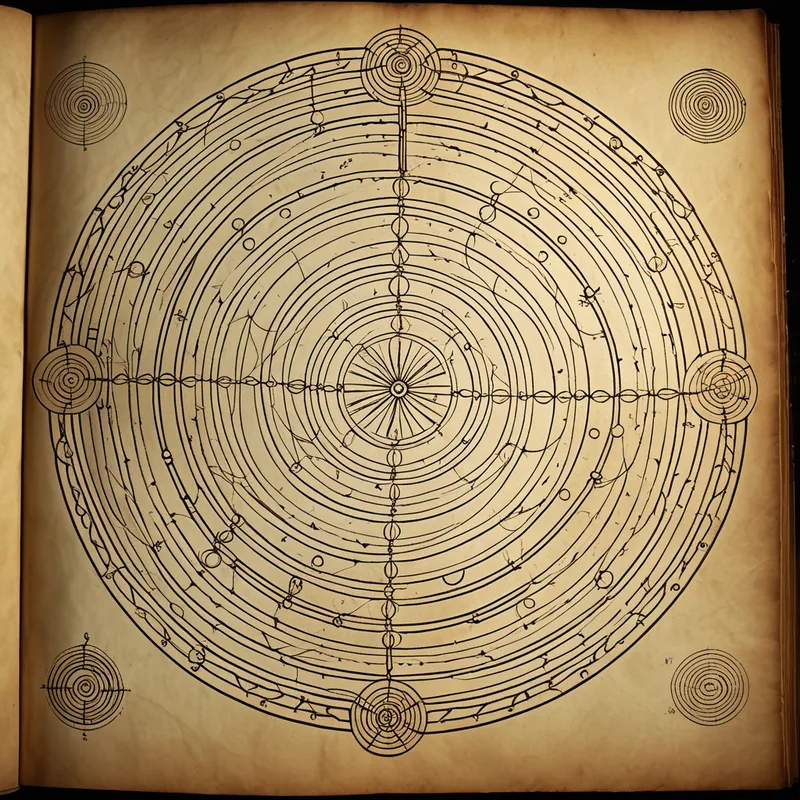
The narrative of the Soul’s exile and return is not a single, codified myth but a core pattern woven through various texts from the 2nd to 4th centuries CE, commonly grouped under the umbrella of “Gnosticism.” These include the Apocryphon of John, the Gospel of Truth, and the Exegesis on the Soul itself, from which this article takes its thematic name. These texts were often secret, passed among small, dedicated communities who saw themselves as the “seed of Seth” or the “immovable race”—those in whom the divine spark was awake.
The myth functioned as a master key to human existence. For the Gnostic, the societal and religious structures of the mainstream world (be it pagan Roman or orthodox Christian) were part of the Demiurge’s order. Thus, the myth provided a radical, interior justification for feeling alienated from the world. It was not a pathology, but a sign of one’s true origin. The telling of the myth was an act of remembrance and recruitment, a way to awaken the “sleeping” spark in others by mirroring their deepest, unnamed longing back to them as a sacred story.
Symbolic Architecture
The myth is a profound map of the psyche’s [structure](/symbols/structure “Symbol: Structure in dreams often symbolizes stability, organization, and the framework of one’s life, reflecting how one perceives their environment and personal life.”/) and its potential liberation. The [Pleroma](/symbols/pleroma “Symbol: In Gnostic cosmology, the Pleroma is the divine fullness or totality of spiritual powers, representing the realm of perfection beyond the material world.”/) represents the unconscious in its primordial, undifferentiated state of potential wholeness—what Jung termed the Self. Sophia’s “[passion](/symbols/passion “Symbol: Intense emotional or physical desire, often linked to love, creativity, or purpose. Represents life force and deep engagement.”/)” is the creative/destructive urge of the psyche to know itself, an urge which, when unbalanced, leads to a [fragmentation](/symbols/fragmentation “Symbol: The experience of breaking apart, losing cohesion, or being separated into pieces. Often represents disintegration of self, relationships, or reality.”/) of [consciousness](/symbols/consciousness “Symbol: Consciousness represents the state of awareness and perception, encompassing thoughts, feelings, and experiences.”/).
The fall into manifestation is both a tragedy and a necessity; the soul must lose itself to find itself in a new key.
The Demiurge is the personification of the ego at its most inflated and identificatory stage—the part of us that constructs a coherent, but limited, sense of “I” from the raw [material](/symbols/material “Symbol: Material signifies the tangible aspects of life, often representing physical resources, desires, and the physical world’s influence on our existence.”/) of experience and calls it the entire [reality](/symbols/reality “Symbol: Reality signifies the state of existence and perception, often reflecting one’s understanding of truth and life experiences.”/). The Archons are the complex, autonomous sub-personalities, traumas, and societal conditioning that govern different aspects of our [behavior](/symbols/behavior “Symbol: Behavior encompasses the actions and reactions of individuals, often as a response to various stimuli or contexts.”/) and [perception](/symbols/perception “Symbol: The process of becoming aware of something through the senses. In dreams, it often represents how one interprets reality or internal states.”/). The [body](/symbols/body “Symbol: The body in dreams often symbolizes the dreamer’s self-identity, personal health, and the relationship they have with their physical existence.”/) and the world are not evil, but they are the [realm](/symbols/realm “Symbol: The symbol of ‘Realm’ often signifies the boundaries of one’s consciousness, experiences, or emotional states, suggesting aspects of reality that are either explored or ignored.”/) of illusion (Maya) when mistaken for the ultimate [reality](/symbols/reality “Symbol: Reality signifies the state of existence and perception, often reflecting one’s understanding of truth and life experiences.”/).
The [journey](/symbols/journey “Symbol: A journey in dreams typically signifies adventure, growth, or a significant life transition.”/) of remembrance, then, is the process of withdrawing projections from the outer world and the ego-[identity](/symbols/identity “Symbol: Identity represents the sense of self, encompassing personal beliefs, cultural background, and social roles.”/), re-owning the fragmented parts of the psyche (the Archons), and re-integrating them into a [relationship](/symbols/relationship “Symbol: A representation of connections we have with others in our lives, often reflecting our emotional state.”/) with the central, guiding spark of the Self (Pneuma).
The Dreamer’s Resonance
When this myth activates in the modern unconscious, it often manifests not as a literal retelling, but through the feeling-tones and images of its core movements. The dreamer may experience:
- Profound Exile: Dreams of being a foreigner in a familiar city, of speaking a language no one understands, or of searching for a home whose address is forgotten.
- The Call to Remember: A voice with no source, a letter in an unknown script, a forgotten room in one’s own house suddenly discovered, or a guiding figure (an old wise person, an animal, a light) that appears at a crossroads.
- Confrontation with the Archons: Recurring dreams of being judged by faceless authorities, trapped in bureaucratic mazes, or pursued by shapeshifters that represent one’s own fears, shames, or inherited burdens. These are the “gatekeepers” of the old identity.
- The Ascent: Dreams of flight, of climbing a treacherous mountain towards a light, of solving an ancient riddle, or of finally understanding a fundamental truth that dissolves the dream-world around you.
Somatically, this process can feel like a deep, cellular homesickness—an anxiety or depression that has no clear worldly cause. It is the Pneuma agitating against the confines of its identification with the personal biography. The psychological process is one of dis-identification and re-contextualization: “This pain, this role, this story is something I have, but it is not who I am at the core.”

Alchemical Translation
The alchemical opus is mirrored perfectly in the Soul’s exegesis. The first stage, Nigredo, is the fall itself—the immersion in the darkness of matter, the experience of alienation and suffering. This is the necessary mortification of the naive ego.
The prison of the world is the crucible of the soul; the heat of suffering is the fire that separates the essential from the accidental.
The Albedo is the dawning of remembrance, the washing in the waters of Gnosis. It is the stage of introspection, of “reading” one’s life and psyche for symbolic meaning, of gathering the scattered silver (the lunar, soulful aspects) of one’s experience. The confrontation with the Archons is the Citrinitas, the testing and integration of these complex psychic contents.
Finally, the Rubedo is the triumphant ascent and reintegration. The spark of Pneuma, now having consciously united with the redeemed aspects of the soul (the Sophia principle made wise), returns to the Self. The philosopher’s stone is forged: not a physical object, but the realized individual who has transmuted the lead of unconscious, worldly existence into the gold of conscious, authentic being. They live in the world, but are no longer of it, carrying the memory of the Pleroma as an inner sun.
Associated Symbols
Explore related symbols from the CaleaDream lexicon:
- Soul — The divine spark in exile, the core protagonist of the myth, representing the individual’s deepest, transpersonal essence trapped in the cycle of worldly experience.
- Mirror — The world of matter and the ego, which reflects a distorted, fragmented image of the true Self, but can also become a tool for self-recognition and gnosis.
- Water — The waters of forgetfulness (Lethe) that cloud the soul’s memory, but also the cleansing, purifying knowledge that washes away illusion during the ascent.
- Door — The passage between the realms, both the gate into incarnation and the portal through each archontic sphere on the journey back to the Pleroma.
- Light — The essential nature of the Pleroma and the Pneuma; the memory of origin that guides the soul through the darkness of the material world.
- Journey — The entire arc of the myth, from fall to remembrance to ascent, modeling the essential psychic movement from unconsciousness to conscious individuation.
- Key — The gnosis itself, the interpretive insight that unlocks the coded meaning of suffering and opens the doors of perception to the soul’s true origin.
- Shadow — The realm of the Archons and the Demiurge, representing the unconscious, autonomous complexes that must be confronted and integrated for the soul to pass.
- Bridge — The path of exegesis or interpretation that spans the chasm between the world of illusion and the realm of truth, built from remembered wisdom.
- Spirit — Synonymous with Pneuma, the irreducible divine essence within that is the agent of remembrance and the catalyst for the entire transformative process.
- Dream — The state of ordinary, unawakened life in the world, from which the call to remember emerges as a disruptive, more vivid reality.
- Wounded Soul — The soul in its fallen state, suffering from the amnesia of its divine origin and the consequent identification with the pains and pleasures of the material prison.