
The Eternal Heaven Blue Sky Myth Meaning & Symbolism
A foundational Mongolian myth where the Eternal Heaven Blue Sky establishes cosmic order, binding all life under its infinite, sacred canopy.
The Tale of The Eternal Heaven Blue Sky
Listen. Before the wind had a name, before the grass learned to bend, there was only the Tengri—the Eternal Heaven Blue Sky. It was not a place, but a Being, a vast, silent consciousness of purest azure, stretching from the edge of one thought to the end of all time. Beneath it, the raw stuff of the world churned in a formless, grey tumult—earth and water, stone and root, all tangled in a chaotic, dreaming slumber.
From the heart of this boundless blue, a will emerged. It was not a voice of thunder, but a pressure, a profound intention that settled over the chaos like a gentle, inescapable weight. This was the first law: There shall be a below, and there shall be an above. And so it was. The heaviest elements sighed and sank, becoming the dark, nurturing Etugen. The lightest sparks of spirit shimmered and rose, becoming the ninety-nine Tngri, each a distinct aspect of the Blue Sky’s majesty—one for the sun’s journey, one for the moon’s pull, one for the steadfastness of the mountain, one for the swiftness of the river.
But the middle realm, the world between, remained a roiling, spirit-haunted plain. Fearful shadows, the remnants of unformed chaos, slithered between the stalks of the first grasses. They whispered discord into the hearts of the newly-formed creatures. The wolf hunted not from need, but from rage; the horse ran not in freedom, but in terror.
The Eternal Heaven Blue Sky perceived this disharmony. It did not descend. Instead, it breathed. A single, endless exhalation swept across the steppe. This breath was the Wind of Destiny, Zaya. It did not destroy the shadows, but arranged them. It gave them a place in the order. The shadow of greed became the necessary cunning of the hunter; the shadow of fear became the alertness of the herd. The breath wove through all things, connecting the high Tengri to the deep Etugen, binding every creature, every stone, every drop of dew to the celestial decree.
And then, the Sky bestowed its final, most sacred gift. It cast its reflection upon the world. In the still surface of a high mountain lake, in the wide, dark eyes of a newborn foal, in the upward gaze of the first human shaman, fragments of that eternal blue were captured. This was the Sülde—the heavenly spirit, a shard of the cosmic order planted within the heart of the mortal. It was a covenant: so long as you look up and recognize the Blue Sky, you remember your place in the great tapestry. You are neither master nor slave, but a thread in the weave, bound by the sacred law of the everlasting azure. The conflict was not vanquished, but ordered. The chaos was not erased, but given its role in the symphony of the whole. And the world, under the watchful, silent dome of the Eternal Heaven, began to breathe in rhythm.

Cultural Origins & Context
This is not a myth contained in a single epic poem, but the very atmosphere of a worldview. For the nomadic peoples of the Central Asian steppes, the myth of the Eternal Heaven Blue Sky—Tengri—is the foundational pillar of Tengrism. It was passed down not by bards in halls, but by shamans (Böö) under the open sky, by elders around the hearth, and by the daily lived experience of a life utterly exposed to the elements.
The sociopolitical function was profound. The Eternal Blue Sky was the ultimate legitimizer of authority. The great Khans, like Genghis, ruled by the mandate of Tengri, the Sülde of the nation. This created a cosmology of sacred order: Tengri above, the Khan on earth, the people below, and the earth (Etugen) beneath all. The myth enforced a code of balance, respect for nature, and acceptance of one’s destined place within a vast, interconnected system. It was a spiritual ecology, where human morality was a reflection of cosmic harmony.
Symbolic Architecture
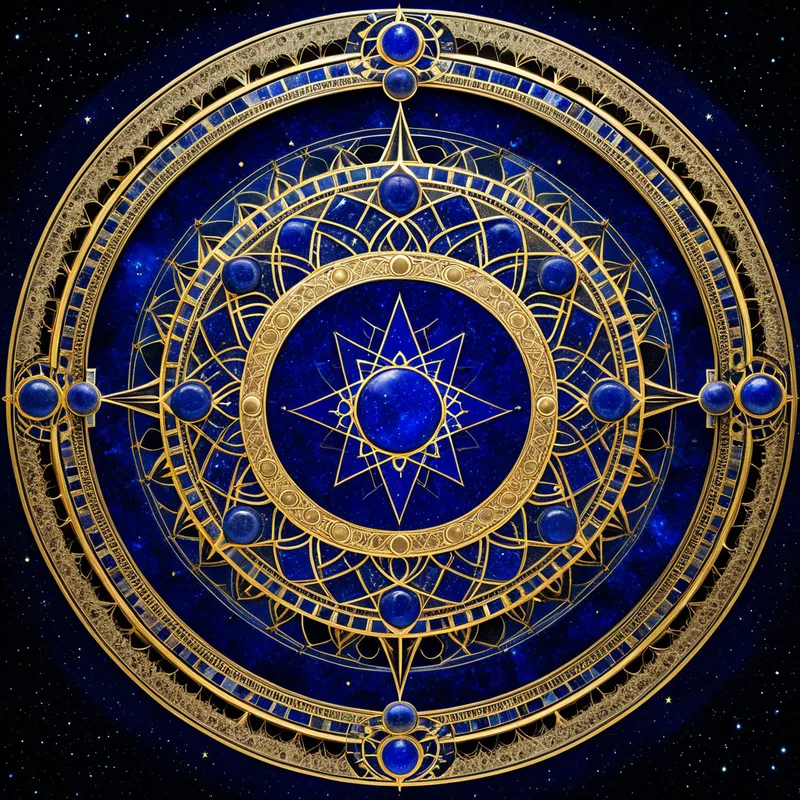
The Eternal Heaven Blue Sky is the ultimate symbol of the Self in its cosmic aspect—the archetype of wholeness, order, and transcendent consciousness.
The Blue Sky does not fight the storm; it contains it. In this is the wisdom of the ruler who integrates chaos into a broader, stable order.
The formless chaos beneath represents the undifferentiated, unconscious psyche—the prima materia of the soul. The act of separation (above/below) is the first act of consciousness, creating the tension of opposites necessary for life and psychic development. The ninety-nine Tngri symbolize the multitude of archetypal forces, instincts, and complexes that populate the inner world. The fearful shadows are the personal and collective shadow, those rejected aspects of ourselves that, left unattended, cause inner and outer discord.
The Wind of Destiny, Zaya, is the symbolic breath of individuation—the compelling, often unseen force that drives us toward our own unique form and fate. It does not eliminate our flaws or dark parts but seeks to arrange them meaningfully into the structure of our personality. The gift of the Sülde is the crucial psychological insight: the center of the Self, the spark of the divine, is not somewhere “out there,” but is a reflection of the cosmic order implanted within. To know oneself is to look inward and see a fragment of that eternal blue.
The Dreamer’s Resonance
When this myth stirs in the modern dreamer, it often manifests not as a narrative, but as a somatic atmosphere. One dreams of standing under an impossibly vast, deeply calming, and profoundly authoritative blue sky. There is a feeling of immense space, quietude, and correct placement. Alternatively, the dream may feature chaotic, shadowy landscapes that suddenly become still and ordered under the influence of a blue light or a calming, pervasive wind.
Psychologically, this signals a process of psychic integration and the establishment of inner order. The dreamer is likely grappling with internal chaos—perhaps anxiety, conflicting life demands, or a moral dilemma. The appearance of the Blue Sky archetype represents the emergent capacity of the ego to align with the broader, ordering principle of the Self. It is the soul’s reassurance that a larger, more stable pattern exists beyond the immediate turmoil. The somatic feeling of expansion and calm indicates the nervous system settling as the psyche moves from a state of fragmentation toward cohesion.

Alchemical Translation
The alchemical journey mirrored in this myth is that of the Opus, moving from the Nigredo (the chaotic, grey tumult) to the Albedo (the reflective, ordering breath) and ultimately to the Caeruleum or Rubedo, represented by the eternal blue itself.
For the modern individual, the struggle is not against external monsters, but against internal disorder. The triumph is not conquest, but the achievement of a sovereign inner state. The first step is the recognition of the chaos within—our confused desires, repressed emotions, and unintegrated shadows (the formless world). The second, and most critical, is the invocation of the “Blue Sky” function of the mind: the conscious, observing ego that can step back and impose perspective, structure, and ethical order. This is the breath of Zaya.
The alchemical gold is not found by destroying the base metal, but by revealing the perfect, hidden pattern already within it. So too, the Self is not built, but uncovered by the light of conscious attention.
The final transmutation is the realization that this ordering principle is not a harsh, external judge, but the very core of one’s own being—the Sülde. To live in accordance with this inner heaven is to experience destiny not as fate, but as authentic, self-authored existence. One becomes a microcosm of the cosmic order, a sovereign ruler of one’s own inner kingdom, eternally under the peaceful, authoritative dome of one’s own realized Self.
Associated Symbols
Explore related symbols from the CaleaDream lexicon:
- Sky — The primary canvas of the myth, representing infinite consciousness, the transcendent Self, and the ultimate source of order and destiny.
- Heavenly River — Symbolizes the flow of Zaya or destiny, the celestial decree that connects all beings and guides the soul’s journey under the Blue Sky.
- Circle — Represents the wholeness and perfection of Tengri, the cyclical nature of cosmic order, and the mandala of the integrated psyche.
- Destiny — Embodied as Zaya, the wind that arranges chaos into meaningful pattern, representing the soul’s unique path within the grand design.
- Order — The fundamental principle established by the Eternal Blue Sky, the sacred law that harmonizes chaos and creates a liveable cosmos.
- Soul — Mirrors the concept of Sülde, the individual fragment of the heavenly blue, the inner spark of the divine that connects the mortal to the eternal.
- Mountain — The sacred meeting point between the Eternal Heaven Blue Sky and the Earth Mother Etugen, the place where shamans commune with the celestial order.
- Eagle — The messenger and embodiment of Tengri, whose flight symbolizes the soul’s aspiration to rise and perceive the world from the perspective of the Blue Sky.
- Wind — The active manifestation of the sky’s will, the breath of destiny that weaves order into the world and carries the prayers of mortals upward.
- Mirror — Represents the reflective quality of lakes and eyes that capture the blue of heaven, symbolizing the act of introspection through which we perceive our own Sülde.
- Eternal — The timeless, unchanging nature of the Blue Sky, representing the enduring, archetypal reality of the Self beyond the fluctuations of the personal ego.
- Celestial Blue Sky — The specific, sacred hue of Tengri, symbolizing clarity, peace, authority, and the vast container of all psychic phenomena.