The Ein Sof Myth Meaning & Symbolism
The story of the Infinite, the No-Thing that existed before existence, whose withdrawal created the space for all worlds and the human soul.
The Tale of The Ein Sof
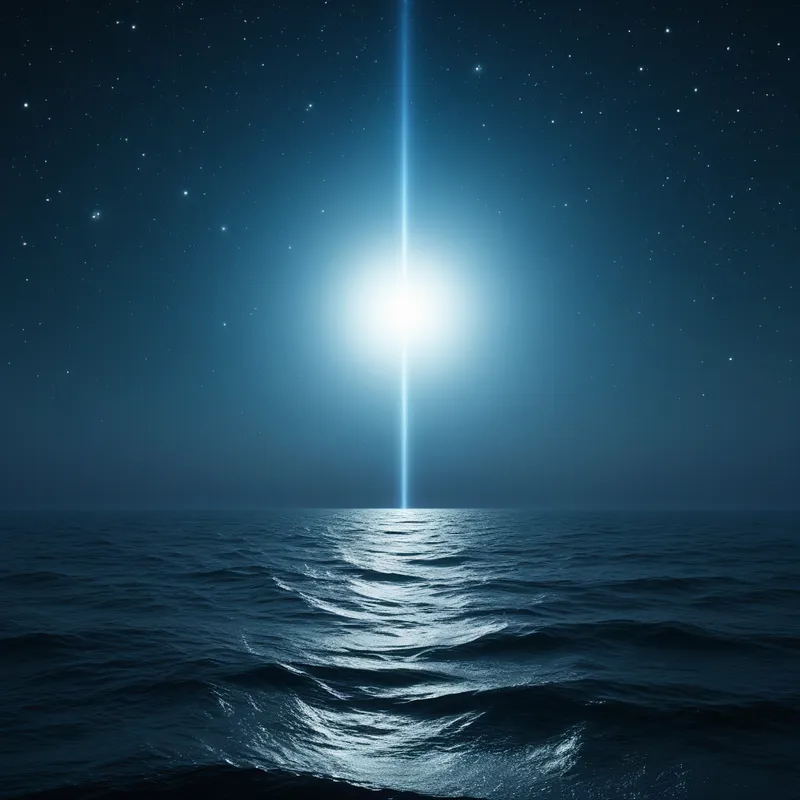
Before the Beginning, there was no Before. There was no Time to measure a beginning. There was no Space to contain a world. There was only the One.
It was not a king on a throne, nor a god with a face. It was the Ein Sof—the Endless. Imagine a light so pure, so absolute, that it filled every conceivable and inconceivable place. Not a light that shone upon things, for there were no things. It was a light that was all things, and yet was none of them. It was existence itself, boundless, uniform, perfect. In that infinitude, there was no other. There was no distinction, no inside or outside, no here or there. Only the silent, radiant, all-encompassing Is-ness.
But within that perfect, undifferentiated light, a thought arose. Not a thought as we know it, but a primal stirring, a deep, compassionate yearning. The yearning was for an Other. For relationship. For a beloved to know and to be known by. Yet, for a beloved to exist, there must be a place that is not the All. There must be a space where the beloved can stand apart.
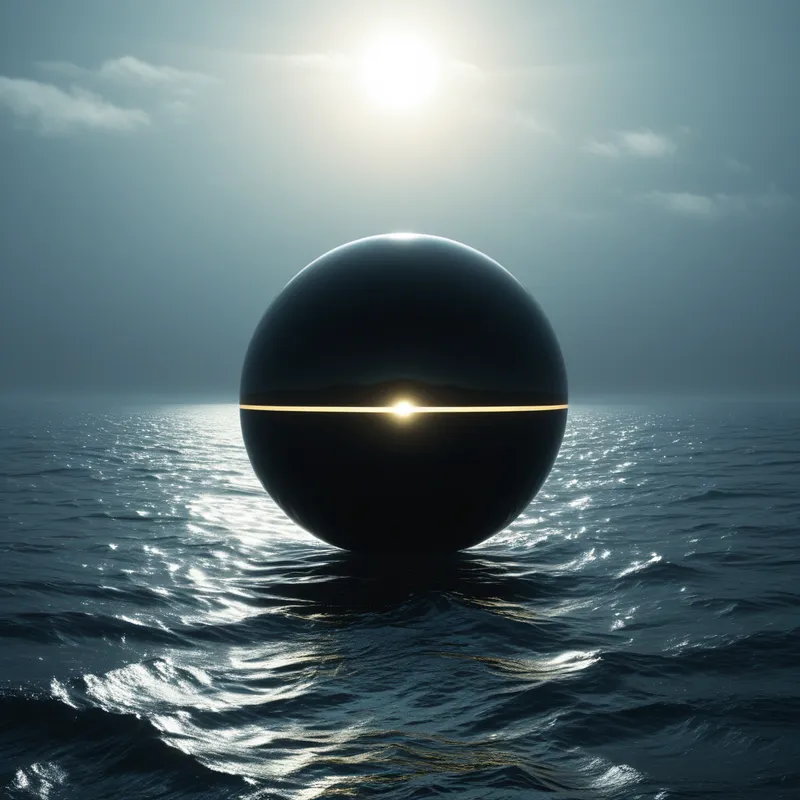
And so, the Unthinkable happened. The Ein Sof performed the ultimate act of love: it withdrew. It contracted into itself. From the very center of its infinite being, it gathered its light, pulling it back, back, back. This was the [Tzimtzum](/myths/tzimtzum “Myth from Kabbalistic culture.”/), the Great Withdrawal.
Where the light receded, it left not darkness as we fear it, but a hollow, a womb, a perfectly empty circle. A sacred void. Into this void, this newly created space of Not-God, a single, focused ray of the original light descended. This ray was no longer the uniform All, but a stream, a channel. It pierced [the void](/myths/the-void “Myth from Buddhist culture.”/) like a lance of liquid diamond.
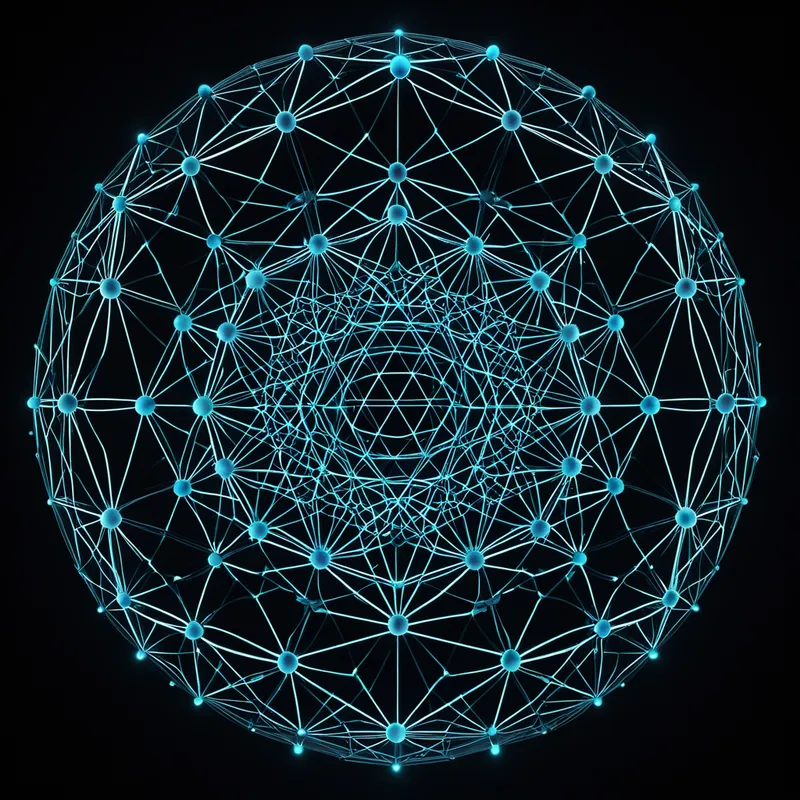
As this ray entered the chamber of absence, it began to crystallize. It formed vessels—Sefirot—beautiful, radiant structures to hold the light. Ten vessels, arranged in the pattern of a cosmic tree or a divine human form. They glimmered with the promise of worlds: Keter, Chokhmah, Binah, and down to Malkhut. But the light was too potent, too fierce for the young vessels. With a soundless shattering—the Shevirat HaKeilim—they fractured.
Shards of the vessels, sparks of the holy light, were cast down, scattered like stars into the lowest depths of the void. They fell into the shells of emptiness—the Klippot. The pure light became imprisoned in the coarse fragments of matter. [The world](/myths/the-world “Myth from Tarot culture.”/) was born from this catastrophe—a world of separation, of pain, of distance from the source, but a world that now contained, hidden within every stone and every soul, a spark of the original, endless light.
And the task was set, not by a commanding voice, but by the very structure of the broken cosmos: to gather the sparks. To raise the fallen light. To repair the vessels. This is Tikkun Olam, the mending of the world. The story of the Ein Sof is not a tale of a finished creation, but of a creation begun in withdrawal, broken by abundance, and awaiting its healing through the hands of every conscious soul.
Cultural Origins & Context
This myth, in its most elaborated form, is the heart of Lurianic Kabbalah, named for its seminal thinker, Rabbi [Isaac](/myths/isaac “Myth from Biblical culture.”/) Luria (the Ari), in the 16th century. It arose not as a philosophical treatise for the masses, but as an intensely secretive, oral teaching passed from master to a single, prepared disciple in the Galilean town of Safed. The context was one of profound trauma: the recent expulsion of Jews from Spain. The myth of the Shevirah and the exile of divine sparks provided a cosmic framework to understand their own earthly exile and suffering. It was not a punishment, but part of the divine drama itself. Its function was to grant ultimate meaning to human action—every ethical deed, every prayer, every moment of mindfulness, was an act of cosmic restoration, gathering light from the darkness of a broken world.
Symbolic Architecture
The myth presents a profound symbolic [architecture](/symbols/architecture “Symbol: Architecture in dreams often signifies structure, stability, and the framing of personal identity or life’s journey.”/) of the [psyche](/myths/psyche “Myth from Greek culture.”/) and [reality](/symbols/reality “Symbol: Reality signifies the state of existence and perception, often reflecting one’s understanding of truth and life experiences.”/). The Ein Sof represents the unconscious [pleroma](/symbols/pleroma “Symbol: In Gnostic cosmology, the Pleroma is the divine fullness or totality of spiritual powers, representing the realm of perfection beyond the material world.”/), the undifferentiated totality of the [psyche](/myths/psyche “Myth from Greek culture.”/) before the [emergence](/symbols/emergence “Symbol: A process of coming into being, rising from obscurity, or breaking through a barrier, often representing birth, transformation, or revelation.”/) of ego-[consciousness](/symbols/consciousness “Symbol: Consciousness represents the state of awareness and perception, encompassing thoughts, feelings, and experiences.”/). It is the state of primal unity, of no-distinction, which is both our [origin](/symbols/origin “Symbol: The starting point of a journey, often representing one’s roots, source, or initial state before transformation.”/) and a psychological state we may touch in deep [meditation](/symbols/meditation “Symbol: Meditation represents introspection, mental clarity, and the pursuit of inner peace, often providing a pathway for deeper self-awareness and spiritual growth.”/) or psychosis.
The first act of consciousness is not an emergence, but a withdrawal. To know itself, the Self must first create a space where it is not.
The Tzimtzum is the fundamental act of individuation. [The ego](/myths/the-ego “Myth from Jungian culture.”/) forms not by adding something, but by the unconscious (the Ein Sof) limiting itself, creating a “clear [space](/symbols/space “Symbol: Dreaming of ‘Space’ often symbolizes the vastness of potential, personal freedom, or feelings of isolation and exploration in one’s life.”/)” where consciousness can stand apart and perceive. This is a sacred, necessary alienation. The [Sefirot](/symbols/sefirot “Symbol: The ten divine emanations in Kabbalah representing aspects of God and the structure of creation.”/) are the archetypal structures of the psyche—the patterns of thought, [emotion](/symbols/emotion “Symbol: Emotion symbolizes our inner feelings and responses to experiences, often guiding our actions and choices.”/), and [perception](/symbols/perception “Symbol: The process of becoming aware of something through the senses. In dreams, it often represents how one interprets reality or internal states.”/) through which the light of [awareness](/symbols/awareness “Symbol: Conscious perception of self, surroundings, or internal states. Often signifies awakening, insight, or heightened sensitivity.”/) flows. Their shattering symbolizes the inevitable [trauma](/symbols/trauma “Symbol: A deeply distressing or disturbing experience that overwhelms the psyche, often manifesting in dreams as unresolved emotional wounds or psychological injury.”/) of incarnation: the pure potential of [the Self](/myths/the-self “Myth from Jungian culture.”/) meets the limitations of personal [history](/symbols/history “Symbol: History in dreams often represents the dreamer’s past experiences, lessons learned, or unresolved issues that continue to influence their present.”/), biology, and circumstance, and fractures into complexes. The scattered sparks are the fragmented parts of our wholeness—our talents, our wounds, our unlived lives—that feel lost in the “shells” of our neuroses, our habits, our societal masks.
The Dreamer’s Resonance
When this myth stirs in the modern dreamer, it often manifests not as a linear story, but as profound somatic and atmospheric experiences. One may dream of being in an endless, featureless white space, feeling both peace and terrifying anonymity—the press of the Ein Sof before distinction. One may dream of a sudden, shocking vacuum or hollow at the center of a familiar room—the Tzimtzum creating psychic space for something new. Most commonly, one dreams of searching for precious, glowing fragments—a lost jewel in mud, a shining piece of glass in rubble, a key in a dark basement. This is the psyche activating the Tikkun process. The somatic feeling is one of sacred gathering, of recognizing value in what was broken or discarded within oneself. The psychological process is one of reclaiming projections, integrating shadows, and gathering the dispersed energy of the Self.

Alchemical Translation
The alchemical journey of individuation maps perfectly onto this myth. The [prima materia](/myths/prima-materia “Myth from Alchemical culture.”/), the leaden, confused state of the psyche, is the world of the Klippot—where [the divine spark](/myths/the-divine-spark “Myth from Gnostic culture.”/) is hidden in base matter (our complexes and sufferings). [The first stage](/myths/the-first-stage “Myth from Alchemical culture.”/), [nigredo](/myths/nigredo “Myth from Alchemical culture.”/) (blackening), is the conscious confrontation with this inner void and fragmentation, the recognition of the Shevirah within.
The goal is not to return to the undifferentiated light, but to become a vessel strong enough to hold the tension between the infinite and the finite.
The work of albedo (whitening) and citrinitas (yellowing) is the careful, patient work of Tikkun—identifying, cleaning, and raising the sparks through self-knowledge, therapy, creative expression, and ethical living. The final stage, [rubedo](/myths/rubedo “Myth from Alchemical culture.”/) (reddening), is the creation of a new, integrated vessel—the repaired Sefirot, [the Philosopher’s Stone](/myths/the-philosophers-stone “Myth from Alchemical culture.”/). This is the individuated Self, no longer shattered by the divine light but capable of channeling it consciously into the world. The myth teaches that our deepest wounds and our highest callings are made of the same substance: scattered light awaiting the mender’s hand. Our life’s purpose, in this alchemical translation, is to perform the Tzimtzum for our own growth, to hold the space for our fragments to be seen, and to become artisans of our own sacred repair.
Associated Symbols
Explore related symbols from the CaleaDream lexicon: