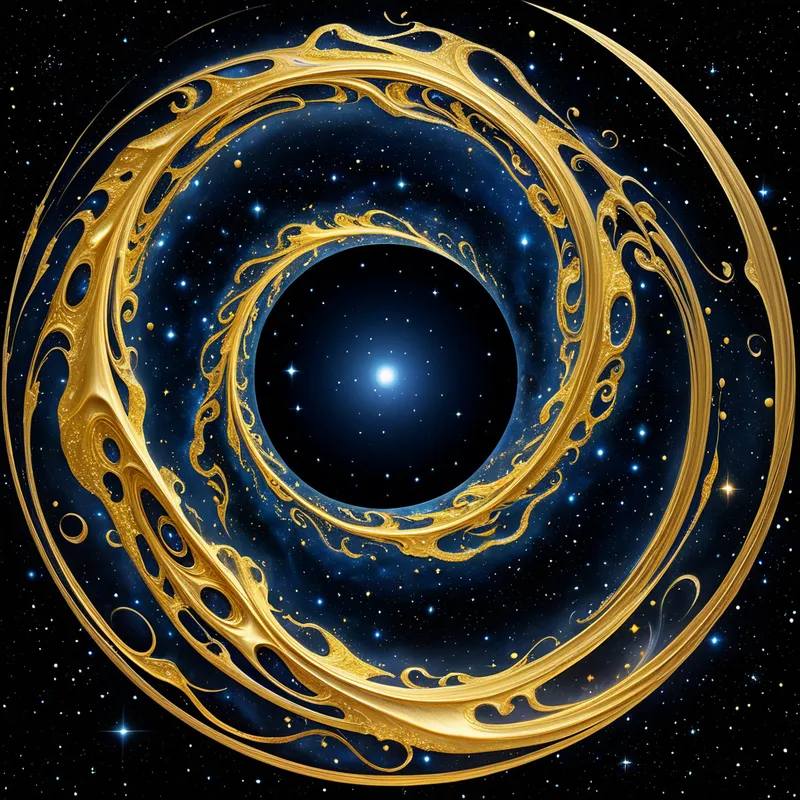
The duality of Yin and Yang fr Myth Meaning & Symbolism
The primordial story of how the undivided Dao gave birth to the complementary forces of dark and light, whose eternal dance creates and sustains all existence.
The Tale of The Duality of Yin and Yang
Before the mountains rose and the seas were poured, before the breath of life stirred in the dust, there was only the Dao. It was not a [thing](/myths/thing “Myth from Norse culture.”/), but [the womb](/myths/the-womb “Myth from Various culture.”/) of all things; not a silence, but the potential for all sound. It was perfect, whole, and complete in its profound solitude—a boundless, featureless ocean of pure being.
Yet within that boundless stillness, a dream began. A subtle tension, a gentle yearning, like the first hint of a tide within a calm sea. From the heart of the undifferentiated, a single, luminous point coalesced—not a sun, but the seed of all differentiation. It pulsed with a quiet, inevitable rhythm.
And then, the great sigh.
It was not a sound of rupture, but of release. A breath exhaled from eternity itself. From that luminous seed, two essences began to unwind, to flow outward in a slow, cosmic dance. One was dark, deep, and yielding—cool as the midnight pool, soft as receptive earth. This was Yin. The other was bright, active, and penetrating—warm as the noonday sun, firm as a thrusting peak. This was Yang.
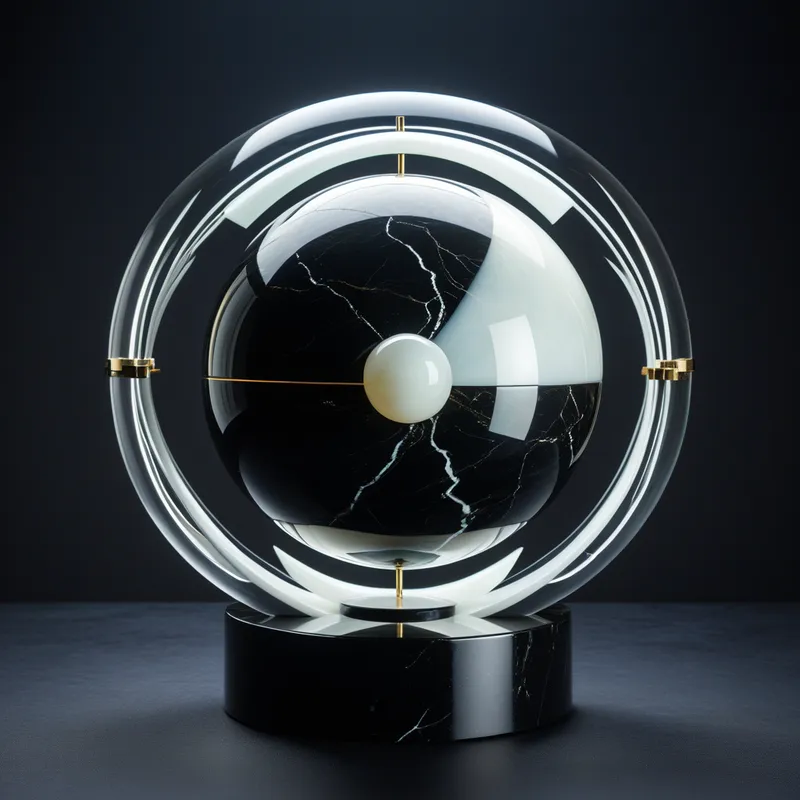
They did not fight, but embraced. Where Yin flowed, it created valleys, shadows, and the quiet of [the moon](/myths/the-moon “Myth from Tarot culture.”/). Where Yang surged, it forged mountains, light, and the vigor of the day. They swirled around one another, each containing at its heart a seed of the other—a dot of light in the deepest dark, a speck of shadow in the brightest light. Their movement was not a conflict, but a courtship; their separation, not a schism, but the necessary condition for creation.
From their eternal, circling embrace, the ten thousand things sprang forth. The interaction of their breaths became the winds. The meeting of their essences condensed into the waters and the stones. The rhythm of their dance set the seasons in their turn and the stars in their courses. They became the parents of all phenomena: heaven and earth, fire and [water](/myths/water “Myth from Chinese culture.”/), action and rest, speech and silence. [The world](/myths/the-world “Myth from Tarot culture.”/) was born not from a single command, but from this graceful, perpetual interplay—a universe spun from the loom of duality, forever seeking, in its endless transformations, to remember the wholeness from which it came.
Cultural Origins & Context
This is not a myth with a single author or a dated origin; it is the foundational cosmology of ancient Chinese thought, crystallized in texts like the [I Ching](/myths/i-ching “Myth from Chinese culture.”/) (Yijing) and the philosophical schools of Daoism. It was passed down not merely as a story, but as an explanatory framework for the universe, used by sages, farmers, physicians, and statesmen alike. Its societal function was profound: it provided a model for understanding natural cycles, health (as in traditional Chinese medicine), social harmony, and political order. The myth taught that conflict and opposition were not ultimate evils, but natural phases in a greater cycle of return to balance. It was a tool for navigating a world of constant change, offering the wisdom that every extreme contains the seed of its reversal.
Symbolic Architecture
The myth presents a symbolic map of [consciousness](/symbols/consciousness “Symbol: Consciousness represents the state of awareness and perception, encompassing thoughts, feelings, and experiences.”/) itself. The undifferentiated Dao represents the unconscious [pleroma](/symbols/pleroma “Symbol: In Gnostic cosmology, the Pleroma is the divine fullness or totality of spiritual powers, representing the realm of perfection beyond the material world.”/), the state of [psychic wholeness](/symbols/psychic-wholeness “Symbol: A state of complete integration between conscious and unconscious aspects of the psyche, representing spiritual unity and self-realization.”/) that precedes ego-[consciousness](/symbols/consciousness “Symbol: Consciousness represents the state of awareness and perception, encompassing thoughts, feelings, and experiences.”/). The [emergence](/symbols/emergence “Symbol: A process of coming into being, rising from obscurity, or breaking through a barrier, often representing birth, transformation, or revelation.”/) of [Yin and Yang](/myths/yin-and-yang “Myth from Chinese culture.”/) symbolizes the primary act of [perception](/symbols/perception “Symbol: The process of becoming aware of something through the senses. In dreams, it often represents how one interprets reality or internal states.”/): the splitting of unity into the fundamental categories of experience—self and other, inner and outer, known and unknown.
Yin is the symbolic embodiment of the receptive unconscious: the dark, fertile ground of dreams, intuition, emotion, and the body’s wisdom. Yang is the principle of conscious differentiation: the light of analysis, action, structure, and the assertive ego.
They are not moral opposites (good vs. evil) but functional complements. The dot of each within the other is the critical psychological [insight](/symbols/insight “Symbol: A sudden, deep understanding of a complex situation or truth, often arriving unexpectedly and illuminating hidden connections.”/): in the deepest core of the conscious mind (Yang) lies an unconscious [kernel](/symbols/kernel “Symbol: Represents potential, hidden essence, or the core of something waiting to develop. Often symbolizes beginnings, nourishment, or unexpressed emotions.”/) (the black dot); in the [heart](/symbols/heart “Symbol: The heart symbolizes love, emotion, and the core of one’s existence, representing deep connections with others and self.”/) of the unconscious (Yin) burns a point of conscious [awareness](/symbols/awareness “Symbol: Conscious perception of self, surroundings, or internal states. Often signifies awakening, insight, or heightened sensitivity.”/) (the white dot). This symbolizes that no state is pure, and [redemption](/symbols/redemption “Symbol: A theme in arts and music representing transformation from failure or sin to salvation, often through creative expression or cathartic performance.”/) or balance always lies in acknowledging the hidden opposite within.
The Dreamer’s Resonance
When this myth stirs in the modern dreamer, it often manifests as dreams of stark duality or a yearning for synthesis. One may dream of being torn between two choices, two lovers, two paths, or two identities. The somatic experience can be one of tension, of being pulled in opposite directions. Alternatively, one might dream of a beautiful, rotating [mandala](/myths/mandala “Myth from Buddhist culture.”/), a bridge connecting two shores, or the profound relief of a cool shadow after intense heat (or vice-versa).
Psychologically, this indicates a process where the [psyche](/myths/psyche “Myth from Greek culture.”/) is grappling with a pair of opposites that have become stuck in conflict. The conscious attitude (Yang) may have become too rigid, demanding, or one-sided, and the unconscious (Yin) rises up in dreams to compensate, presenting images of passivity, darkness, or chaos. The dream is the psyche’s attempt to initiate the sacred dance, to get the frozen opposites moving again in a fluid, life-giving cycle.

Alchemical Translation
The individuation process, the journey toward psychological wholeness, is perfectly modeled by the dance of Yin and Yang. The modern individual often begins identified with one pole—perhaps the assertive, achieving Yang of the [persona](/myths/persona “Myth from Greek culture.”/). The first alchemical step is the [nigredo](/myths/nigredo “Myth from Alchemical culture.”/), the confrontation with [the shadow](/myths/the-shadow “Myth from Jungian culture.”/), which is the unrecognized Yin: the repressed emotions, the neglected needs, the “dark” potential.
The goal is not to conquer the opposite, but to court it, to engage with it until the tension of opposites generates a transcendent third—the symbolic child of the union, which is the nascent Self.
This is the coniunctio oppositorum ([the conjunction](/myths/the-conjunction “Myth from Alchemical culture.”/) of opposites). One learns to hold the tension between activity and rest, logic and intuition, speaking and listening. By consciously engaging this inner dance, the rigid ego is softened, and the chaotic unconscious is structured. The rotating [Tai Chi](/myths/tai-chi “Myth from Chinese culture.”/) symbol becomes an internal gyroscope. One becomes a vessel through which the primordial energies flow in balance, no longer identified solely with the light or the dark, but becoming the space where both are honored, and from which creative life, like the ten thousand things, can spontaneously arise. The alchemical gold is this lived equilibrium, a consciousness that has re-membered its origin in the undivided Dao while fully participating in the beautiful, fleeting dance of the dual world.
Associated Symbols
Explore related symbols from the CaleaDream lexicon: