The Drowned Myth Meaning & Symbolism
A drowned god's silent journey through the underworld rivers, a sacrifice to the deep that births wisdom from the abyss.
The Tale of The Drowned
Hear now a whisper from the well of memory, a tale not of thunder, but of silence. Not of the spear’s flight, but of the slow sink. In the time before time’s strict accounting, when [Ginnungagap](/myths/ginnungagap “Myth from Norse culture.”/) still echoed with possibility, there was a god who sought not the heights of Asgard, but the depths of all that is forgotten.
His name is lost to the currents, for names are things of air and fire, and he chose the domain of [water](/myths/water “Myth from Chinese culture.”/) and stone. He stood on [the mist](/myths/the-mist “Myth from Celtic culture.”/)-shrouded banks of Gjöll, its waters black as polished obsidian, cold enough to still the heart of a star. He did not look to the golden halls. He looked down. Into the [water](/myths/water “Myth from Chinese culture.”/), he saw not his reflection, but a void—a calling older than the gods themselves.
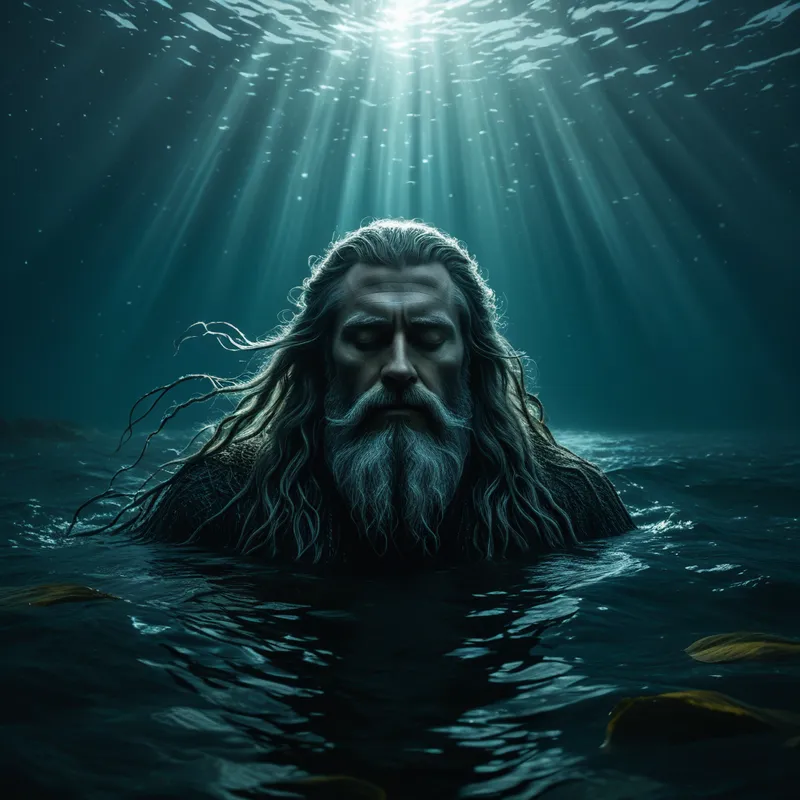
Without a word, a cry, or a prayer, he stepped from the living rock. The water did not splash; it accepted. It swallowed his ankles, his knees, his chest, with the infinite patience of the deep. The cold was not a shock, but an embrace, a dissolution of the boundaries of self. He sank, his hair fanning like silver weed, his eyes open, watching the light from above shrink to a single, wavering coin, and then to nothing.
Down he drifted, past the roots of [Yggdrasil](/myths/yggdrasil “Myth from Global/Universal culture.”/), where they drink from hidden springs. The weight of all the worlds above pressed upon him, not as a crushing force, but as a profound truth. Here, in the absolute dark, sight became irrelevant. He knew the water by its taste—of ancient minerals and the memory of rain. He knew the currents by their touch—the slow, pulsing breath of [the earth](/myths/the-earth “Myth from Hindu culture.”/) itself.
He came to rest not on a bed, but in a state of suspension, within the hall of Hel. Not the realm of punishing fire, but of quiet damp, of muffled sounds and echoing drips. Here, he did not languish. He listened. He listened to the whispers of the dead who had drowned in seas and rivers, their stories dissolved into the water molecules that now surrounded him. He listened to the groaning of the tectonic plates, the slow song of [the world](/myths/the-world “Myth from Tarot culture.”/)’s bones. He became a vessel for the knowledge that cannot be spoken, only felt in the marrow—the knowledge of surrender, of ending, of being unmade.
And in that utter unmaking, a new perception was born. His consciousness, untethered from form, began to flow. It traveled up through the sap of Yggdrasil, becoming the bitter taste of knowledge. It seeped into the Well of Urd, adding the salt of experience to the waters of destiny. The Drowned did not return. He became a part of the circuit—the silent, submerged counterpart to Odin’s hanging sacrifice on the tree. One sought vision through agony suspended in air; the other found wisdom through surrender in the endless sea.
Cultural Origins & Context
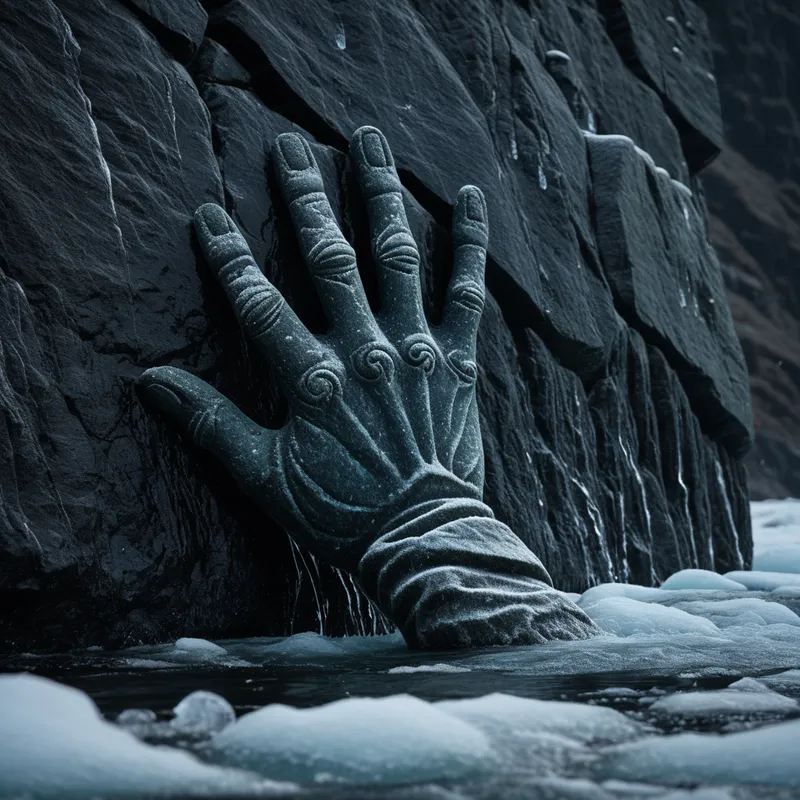
The specific, named myth of “The Drowned” as a singular figure is not explicitly cataloged in the surviving Eddic or skaldic verse. Yet, the archetype is woven deeply into the Norse worldview, less a story told than a condition understood. It emerges from the collective [psyche](/myths/psyche “Myth from Greek culture.”/) of a people intimately acquainted with [the sea](/myths/the-sea “Myth from Greek culture.”/)’s dual nature as giver of life and highway to death.
This narrative is reconstructed from fragments: from the concept of the encircling ocean, from the drowned who go to Hel rather than [Valhalla](/myths/valhalla “Myth from Germanic culture.”/), and from the profound symbolic weight of wells, springs, and rivers in the cosmology. It is the myth of the fornjótr—the ancient being—of the water. It would have been a tale felt in the creak of a longship hull, seen in the fate of a fisherman who never returned, and honored in the offerings thrown into sacred springs. Its function was not to inspire battle-rage, but to cultivate a solemn respect for the unconscious, unknown depths—both in the world and in [the self](/myths/the-self “Myth from Jungian culture.”/). It provided a narrative container for the terror and awe of dissolution, transforming it from a meaningless end into a sacred passage.
Symbolic Architecture
The Drowned represents the ultimate [journey](/symbols/journey “Symbol: A journey in dreams typically signifies adventure, growth, or a significant life transition.”/) into the unconscious. Where Odin’s sacrifice on Yggdrasil is an active, willful seeking of [knowledge](/symbols/knowledge “Symbol: Knowledge symbolizes learning, understanding, and wisdom, embodying the acquisition of information and enlightenment.”/), the Drowning is a passive, necessary being taken by it. The [water](/symbols/water “Symbol: Water symbolizes the subconscious mind, emotions, and the flow of life, representing both cleansing and creation.”/) is the primordial mater, the [chaos](/symbols/chaos “Symbol: In Arts & Music, chaos represents raw creative potential, uncontrolled expression, and the breakdown of order to forge new artistic forms.”/) of potential from which [life](/symbols/life “Symbol: The symbol of ‘Life’ represents a journey of growth, interconnectedness, and existential meaning, encompassing both the joys and challenges that define human experience.”/) emerged and to which it returns.
To drown is not to be destroyed by the unconscious, but to be dissolved into its constituent wisdom, losing the ego’s rigid form to become part of the psychic ecosystem.
The god’s silent descent is the symbolic [death](/symbols/death “Symbol: Symbolizes transformation, endings, and new beginnings; often associated with fear of the unknown.”/) of the [persona](/symbols/persona “Symbol: The social mask or outward identity one presents to the world, often concealing the true self.”/)—the social self that must breathe the air of recognition and [action](/symbols/action “Symbol: Action in dreams represents the drive for agency, motivation, and the ability to take control of situations in waking life.”/). The [realm](/symbols/realm “Symbol: The symbol of ‘Realm’ often signifies the boundaries of one’s consciousness, experiences, or emotional states, suggesting aspects of reality that are either explored or ignored.”/) of Hel, often misunderstood as a place of [punishment](/symbols/punishment “Symbol: A dream symbol representing consequences for actions, often tied to guilt, societal rules, or internal moral conflicts.”/), is here the [womb](/symbols/womb “Symbol: A symbol of origin, potential, and profound transformation, representing the beginning of life’s journey and the unconscious source of creation.”/) of the psyche, where unintegrated experiences (the whispers of the dead) and foundational psychic structures (the world’s bones) reside. The Drowned’s transformation into a circulating [awareness](/symbols/awareness “Symbol: Conscious perception of self, surroundings, or internal states. Often signifies awakening, insight, or heightened sensitivity.”/) signifies the goal of this descent: not to remain in oblivion, but to have one’s [consciousness](/symbols/consciousness “Symbol: Consciousness represents the state of awareness and perception, encompassing thoughts, feelings, and experiences.”/) redistributed, becoming a hidden influence that nourishes the roots of the world-[tree](/symbols/tree “Symbol: In dreams, the tree often symbolizes growth, stability, and the interconnectedness of life.”/) from below. He becomes the [shadow](/symbols/shadow “Symbol: The ‘shadow’ embodies the unconscious, repressed aspects of the self and often represents fears or hidden emotions.”/) of the all-[father](/symbols/father “Symbol: The father figure in dreams often symbolizes authority, protection, guidance, and the quest for approval or validation.”/), the necessary, submerged complement to sovereign consciousness.
The Dreamer’s Resonance
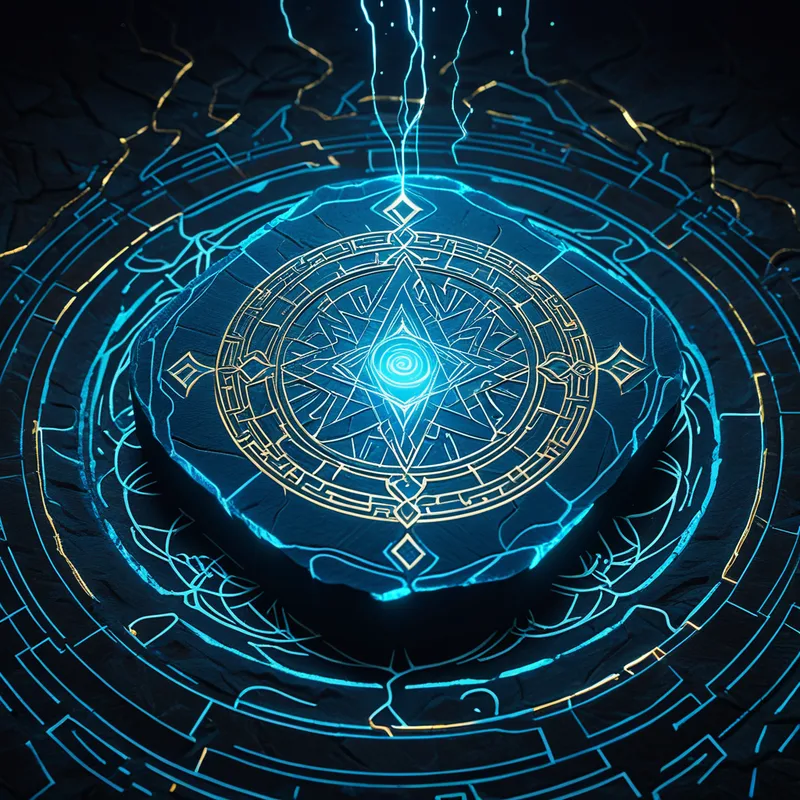
When this myth stirs in the modern dreamer, it rarely appears as a literal Norse god. It manifests as dreams of slow sinking in deep water—not panicked, but eerily calm. Of being in a submarine, descending past the light into blackness. Of living in a house where the basement is perpetually flooded. These are somatic dreams of depression, of enervation, where the psychic energy has withdrawn from the heights of ambition and engagement into the depths.
The body may feel heavy, leaden upon waking. This is not merely sadness; it is the psyche enacting a necessary “drowning.” It is a forced descent, an involuntary sacrifice of [the ego](/myths/the-ego “Myth from Jungian culture.”/)’s agendas. The dreamer is being pulled into their own Gjöll to listen to what they have ignored: drowned grief, suppressed memories, a foundational exhaustion. The process feels like a loss of self, because it is. It is the ego’s terror confronting the soul’s requirement for dissolution and re-constitution. To dream of the Drowned is to be in the middle of this alchemical solve—the dissolving stage—where all that was solid is made fluid once more.
Alchemical Translation
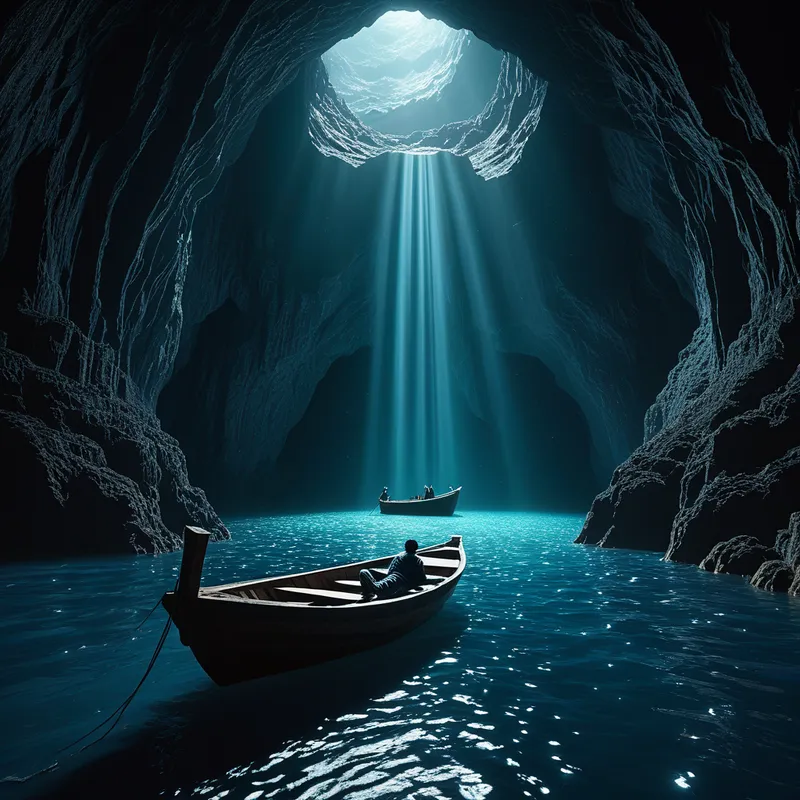
The journey of the Drowned is a precise map for the individuation process when the primary task is not fighting dragons, but surrendering to [the flood](/myths/the-flood “Myth from Biblical culture.”/). The modern individual, identified with achievement, [persona](/myths/persona “Myth from Greek culture.”/), and control (the Asgardian stance), often reaches a point where this mode of being becomes brittle, empty. Life itself becomes [the river](/myths/the-river “Myth from Buddhist culture.”/) Gjöll, inviting—or forcing—a descent.
The first alchemical stage, nigredo, is not chosen; it is the black water that accepts you. The ego’s will must cease its struggle.
The conscious mind must allow itself to be “drowned”—to let go of its need to direct, to understand, to stay afloat. This is the sacrifice: the offering of control to the unconscious. The suspension in Hel’s hall is the mortificatio, the seeming death where the old identity rots away. But here, in the quiet, the listening begins. The dissolved elements of the self—the forgotten talents, the buried wounds, the innate wisdom—begin to communicate. This is the start of the albedo, the whitening. The consciousness, now fluid, starts to circulate. It no longer belongs solely to the individual; it becomes a participatory awareness in the larger psyche. The wisdom gained is not intellectual, but systemic—a knowing of patterns, of roots, of the slow, foundational pulses of one’s own nature. One does not return to the surface “cured,” but transformed into a source that nourishes from below. The individual becomes like a hidden spring feeding their own world-tree, their conscious life now supported by and in dialogue with the vast, quiet intelligence of the depths they once feared.
Associated Symbols
Explore related symbols from the CaleaDream lexicon: