The Desana People of Light Myth Meaning & Symbolism
An ancestral myth of the Desana people where light is the sacred substance of creation, memory, and the soul's journey through cosmic order.
The Tale of The Desana People of Light
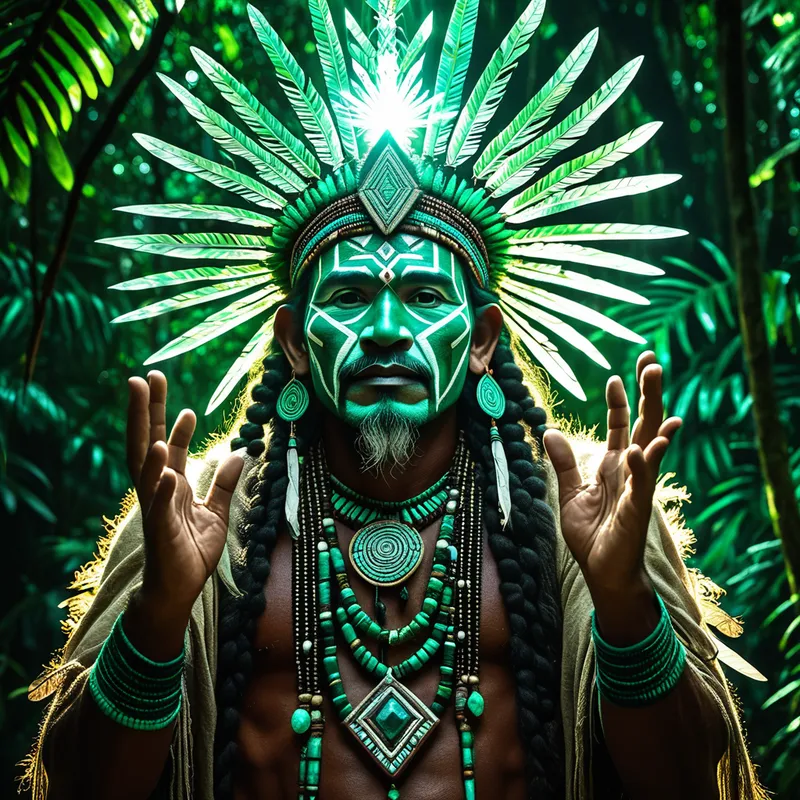
Listen. In the time before time, when the world was a dark, formless dream, the Great Anaconda of the Universe swam in the black waters of potential. From its body, the first land emerged—a great mountain, Wíi. Upon this mountain, the Sun Father, Pamuri-mahsë, descended. He was not a ball of fire, but a being of pure, intelligent radiance. With him came his brother, the Thunder, and his daughter, the Morning Star.
Pamuri-mahsë looked upon the dark earth and saw it was ripe for order. He took the substance of his own light—not mere illumination, but the very essence of law, memory, and destiny—and he fashioned the first people. These were the People of Light. They were not born of clay or breath, but crystallized from luminous intention. Their bodies shimmered with an inner glow, and their minds were connected in a single, humming network of knowing. They understood the language of the stones, the purpose of the rivers, and the true names of all creatures.
But the world was vast and the darkness deep. A great dispersion was decreed. The People of Light were to journey from the sacred mountain, carrying fragments of the original luminosity within them. As they traveled down the River of Leche in the sky and into the green labyrinth of the world, a profound change occurred. The dense matter of the earth, the weight of the forest, began to absorb their radiance. Their brilliant forms dimmed; the perfect network of shared memory fractured into individual, flickering sparks trapped in bone and blood. They became us—the human people, forgetful and stumbling in the shadows, carrying only a fading ember of the original light within our marrow.
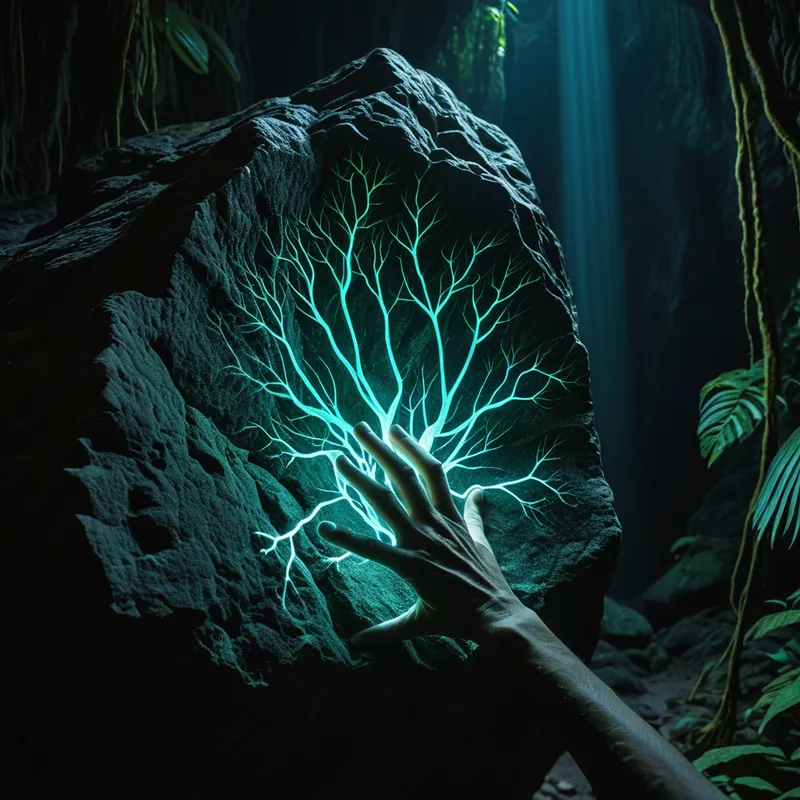
Yet, Pamuri-mahsë did not abandon them. He established the Law. He decreed that the light, though diluted, was stored in the very land—in the crystals of the mountains, in the veins of certain sacred rocks, in the patterns of the jaguar’s pelt and the flight of the hummingbird. He appointed the Payé as the guardians of this knowledge. Through sacred ritual, through the inhalation of the Yakê, and through the strict observance of the cosmic order, the Payé could re-connect with the luminous matrix. They could remember. They could, for a moment, become again the People of Light, seeing the world not as separate things, but as a single, breathing organism woven from sacred, intelligent energy. The myth does not end; it hums, a low, persistent frequency in the jungle night, a promise that the light has not gone out—it has only been stored.
Cultural Origins & Context
This is the foundational cosmology of the Desana, an indigenous Tucanoan people of the Colombian Northwest Amazon. The myth is not merely a story but the operating system of their reality, transmitted orally through generations by the Payé, the shamans who are the technicians of this sacred physics. It functions as a societal blueprint, encoding laws of ecology, kinship, and ritual practice. The narrative explains their origin, defines their sacred geography (with Wíi often associated with specific peaks), and mandates a life of balance. Hunting, marriage, and agriculture are all governed by the need to maintain the energetic equilibrium established when the Light was distributed. The myth is a living map, ensuring the people remember they are not owners of the forest, but temporary custodians of the light-energy within it.
Symbolic Architecture
At its core, this is a myth about the descent of [consciousness](/symbols/consciousness “Symbol: Consciousness represents the state of awareness and perception, encompassing thoughts, feelings, and experiences.”/) into matter. The People of Light represent pure, undifferentiated [awareness](/symbols/awareness “Symbol: Conscious perception of self, surroundings, or internal states. Often signifies awakening, insight, or heightened sensitivity.”/)—a state of cosmic unity and omniscience. The [journey](/symbols/journey “Symbol: A journey in dreams typically signifies adventure, growth, or a significant life transition.”/) into the world is the inevitable process of incarnation, where [universal consciousness](/symbols/universal-consciousness “Symbol: This symbol represents the interconnectedness of all beings and the collective awareness that transcends individual experiences.”/) becomes individuated, experiencing [separation](/symbols/separation “Symbol: A spiritual or mythic division between realms, states of being, or consciousness, often marking a transition or loss of connection.”/), forgetfulness, and the constraints of the physical [body](/symbols/body “Symbol: The body in dreams often symbolizes the dreamer’s self-identity, personal health, and the relationship they have with their physical existence.”/).
The original state is not lost, but translated; the soul’s light is not extinguished, but encrypted into the world.
The Wíi is the [axis](/symbols/axis “Symbol: A central line or principle around which things revolve, representing stability, orientation, and the fundamental structure of reality or consciousness.”/) mundi, the point of [connection](/symbols/connection “Symbol: Connection symbolizes relationships, communication, and bonds among individuals.”/) between the transcendent [realm](/symbols/realm “Symbol: The symbol of ‘Realm’ often signifies the boundaries of one’s consciousness, experiences, or emotional states, suggesting aspects of reality that are either explored or ignored.”/) of pure potential (the Sun [Father](/symbols/father “Symbol: The father figure in dreams often symbolizes authority, protection, guidance, and the quest for approval or validation.”/)’s domain) and the immanent, manifested world. The Payé and the rituals are technologies for decryption—means to reverse the [entropy](/symbols/entropy “Symbol: In arts and music, entropy represents the inevitable decay of order into chaos, often symbolizing creative destruction, impermanence, and the natural progression toward disorder.”/) of forgetfulness and re-access the foundational code. The light itself is the ultimate [symbol](/symbols/symbol “Symbol: A symbol can represent an idea, concept, or belief, serving as a powerful tool for communication and understanding.”/): it is not passive [illumination](/symbols/illumination “Symbol: A sudden clarity or revelation, often representing spiritual awakening, intellectual breakthrough, or the dispelling of ignorance.”/) but active, intelligent ordering principle. It is [memory](/symbols/memory “Symbol: Memory symbolizes the past, lessons learned, and the narratives we construct about our identities.”/), law, [soul](/symbols/soul “Symbol: The soul represents the essence of a person, encompassing their spirit, identity, and connection to the universe.”/), and ecological interdependency all fused into one radiant substance.
The Dreamer’s Resonance
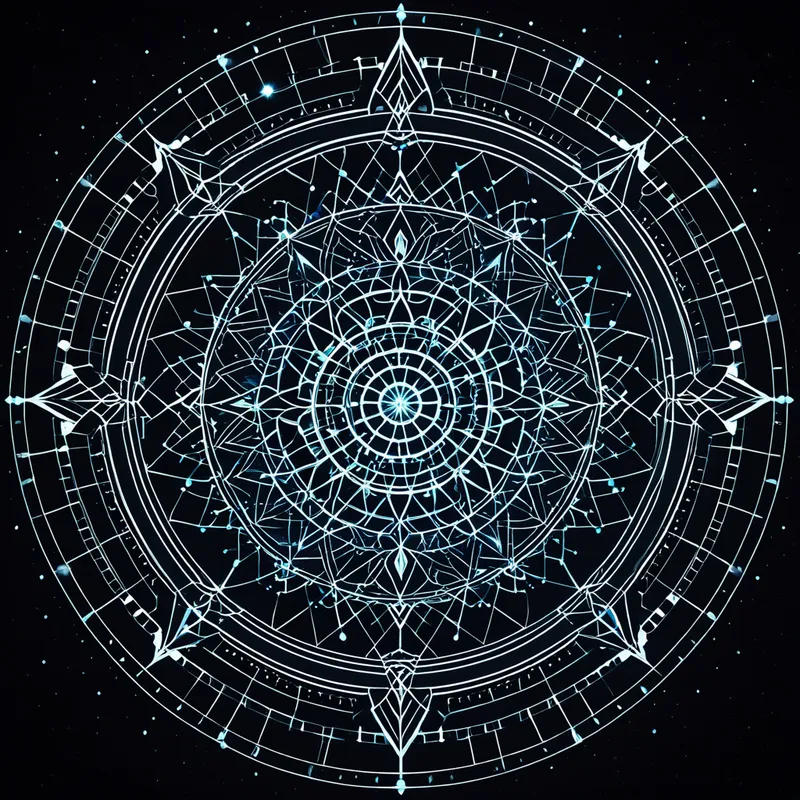
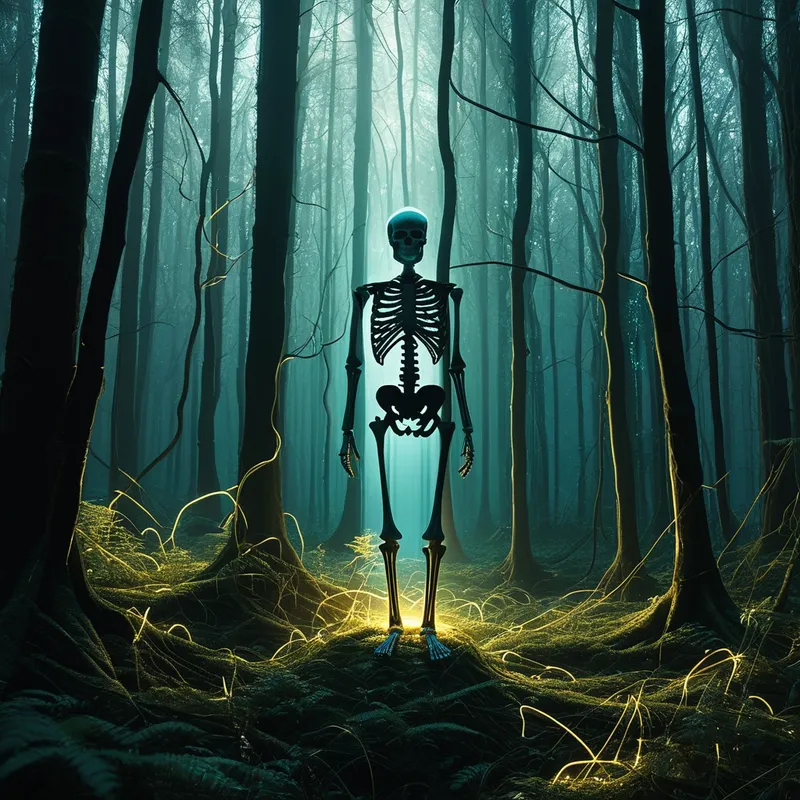
When this myth pattern stirs in the modern psyche, it often manifests as dreams of finding hidden sources of light in darkness: discovering a room in one’s house filled with a soft, intelligent glow; uncovering luminescent crystals in a cave; or seeing one’s own skeleton or nervous system illuminated from within. These are somatic dreams of remembrance. The psyche is signaling a process of re-collecting scattered parts of the Self. The feeling is often one of profound nostalgia—not for a personal past, but for a state of wholeness and knowing that feels ancestral. One may dream of intricate networks, webs of light, or geometric patterns, representing the re-connection to a larger, ordered system. The accompanying somatic sensation can be a humming vibration, a feeling of crystalline clarity, or a deep, calming warmth in the center of the chest—the dream body remembering its luminous architecture.
Alchemical Translation
For the modern individual navigating a fragmented world, the Desana myth models the path of psychic integration, or individuation. We all are the dimmed People of Light, carrying the spark of the Self (the Self) within the dense, often confusing matter of our personal histories and complexes (the forest). The hero’s journey here is not outward conquest, but inward remembrance.
The alchemical work is the methodical gathering of one’s own lost luminosity from the experiences of life.
The first stage is acknowledging the “dispersion”—the feeling of being fractured, forgetful of our essential nature. The Wíi is the symbolic center we must locate within: the core of our being where order can be established. The rituals of the Payé translate to our own disciplined inner practices—meditation, active imagination, shadow work, creative expression—that serve to “inhale the Yakê,” to alter our ordinary consciousness and perceive the luminous connections we typically ignore. Each integrated complex, each healed wound, each moment of true self-awareness is a fragment of light reclaimed from the dark matter of the personal and collective unconscious. The goal is not to escape the world, but to see it and oneself anew: not as a separate ego, but as a conscious participant in a vast, intelligent, and luminous network of being. We become, like the Payé, temporary guardians of the light we have remembered, responsible for the order and balance of our own inner cosmos.
Associated Symbols
Explore related symbols from the CaleaDream lexicon:
- Light — The sacred, intelligent substance of creation, memory, and the soul itself; the original state of unified consciousness from which all life descends.
- Mountain — Represents Wíi, the axis mundi or world center where cosmic order was established and the descent of light into the world began.
- River — Symbolizes the River of Leche, the celestial pathway of the ancestral journey, and the flow of life and memory from the cosmic source into earthly manifestation.
- Forest — The dense, material world that absorbs and dims the original light, representing the challenges of incarnation, forgetfulness, and the labyrinth of earthly life.
- Cave — The hidden, interior space where fragments of the original light are stored, akin to the unconscious mind where ancestral memory and the soul’s essence await discovery.
- Ritual — The disciplined practice (like the work of the Payé) that serves as a technology for reconnecting with the luminous matrix and remembering one’s true nature.
- Memory — The core treasure carried within; not personal recollection, but the ancestral, cosmic knowledge encoded in the light-substance of the soul.
- Order — The cosmic law established by the Sun Father, representing the inherent, intelligent structure of reality that the myth reveals and that one must align with.
- Journey — The necessary dispersion and subsequent path of return, the soul’s voyage from unified light into individuated experience and back towards conscious wholeness.
- Dream — The state where the barriers between the dimmed human and the original People of Light become permeable, allowing for visions of the luminous network.
- Root — The deep, ancestral connection to the source of light and the foundational laws of existence, which must be nourished to sustain life and understanding.
- Rebirth — The continual process of remembering and re-integrating the light, experienced as moments of profound insight, healing, and reconnection to the cosmic whole.