The Debt Parables Myth Meaning & Symbolism
A teacher tells parables of unpayable debts and radical forgiveness, revealing a kingdom where ledgers are erased and hearts are unburdened.
The Tale of The Debt Parables
Listen. The air was thick with dust and questions. They had come, as they often did, to trap the Rabbi with the sharpened hooks of the law. “How often must I forgive?” one asked, thinking seven times a generous tally. The Rabbi’s eyes, which held the depth of a night without stars, looked through the man and into the heart of the cosmos itself. “Not seven times,” he said, his voice a low river carving stone, “but seventy-seven times.”
And seeing they could not comprehend a mathematics of infinity, he began to weave a tale.
“Therefore,” he said, the word a key turning in a heavy lock, “the kingdom of heaven is like a king who wished to settle accounts with his servants.”
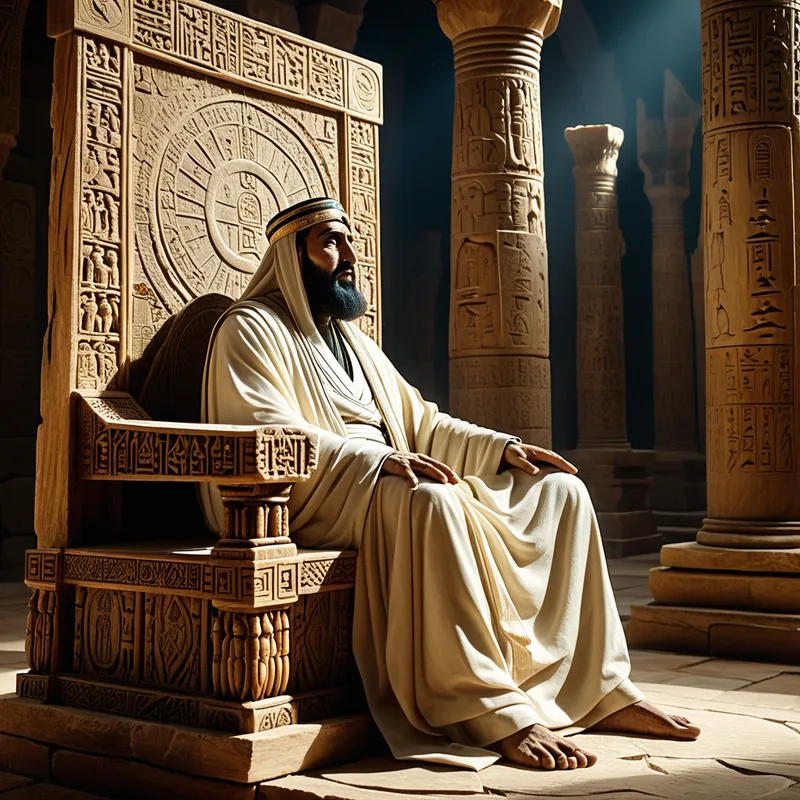
Picture him: a monarch whose wealth was as vast as the desert, whose power was the bedrock of the world. His ministers brought before him a servant whose debt was catastrophic—ten thousand talents. A sum beyond comprehension, a weight that could crush mountains. It was the debt of a lifetime, of a hundred lifetimes. The king commanded the man, his wife, his children, and all he possessed to be sold to settle the account. The servant fell on his face, the hot stones of the courtyard grinding into his brow. “Have patience with me,” he pleaded, his voice cracking like dry clay, “and I will pay you everything.”
And the king, from the well of a mercy deeper than the debt, was moved with compassion. He did not offer a payment plan. He did not demand collateral. He reached into the very fabric of the obligation and released him. He forgave the debt. The scroll of the man’s life, once black with impossible sums, was wiped clean, the papyrus left bare and trembling in the sun.
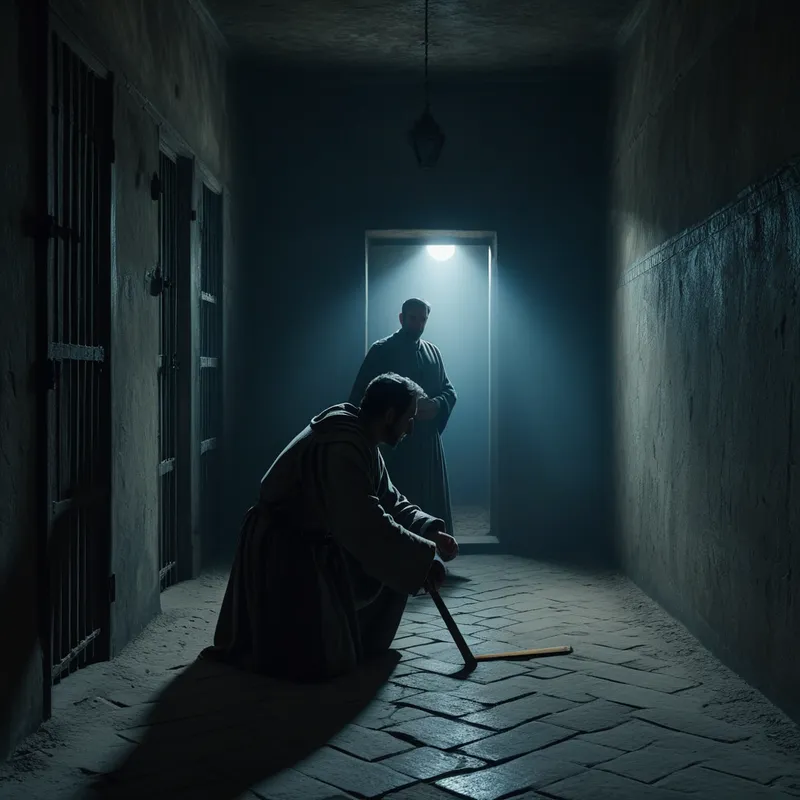
The servant walked out, the weight of a world lifted from his shoulders. The sun felt new. The air tasted of freedom. Yet, as he went, he found a fellow servant who owed him a hundred denarii—a modest sum, a few months’ wages. He seized him by the throat, a gesture of pure, animal need. “Pay what you owe,” he hissed. His fellow servant fell to his knees, repeating the very words he himself had just wept: “Have patience with me, and I will pay you.” But the forgiven man heard only the echo of his own former terror, now twisted into power. He refused. He had the man thrown into prison until the debt should be paid.
Other servants, sickened by the spectacle, carried the news back to the king. The monarch’s compassion, once a warm sun, now hardened into a cold, judicial fire. He summoned the first servant. “You wicked servant!” he thundered, and the palace walls seemed to lean in to hear. “I forgave you all that debt because you pleaded with me. Should not you have had mercy on your fellow servant, as I had mercy on you?” In his anger, the king delivered him to the jailers, to be tortured until the original, unpayable debt was settled.
The Rabbi let the silence hang, a precipice over which every listener now teetered. “So also my heavenly Father will do to every one of you,” he said, his final words falling like stones into a still pool, “if you do not forgive your brother from your heart.”
Cultural Origins & Context
These parables, primarily the tale of the Unforgiving Servant found in the Gospel of Matthew (18:21-35), emerged from a culture deeply structured by honor, shame, and tangible obligation. First-century Judea under Roman rule was a world of very real, crushing debt—economic, social, and religious. The Torah provided mechanisms for debt relief (Shmita), but the human reality was often one of perpetual indebtedness.
The teller, Jesus of Nazareth, was a rural teacher speaking to peasants, laborers, and a few elites, often using the common folk genre of the mashal (parable)—a story from everyday life with a hidden, spiritual punch. Its societal function was dual: it was a radical ethical injunction for a community being formed (“forgive from your heart”), and a breathtaking theological claim about the nature of the Kingdom of God. It presented a divine economy utterly alien to the transactional systems of Rome or even the Temple: an economy of grace, where the foundational currency is mercy received and mercy given.
Symbolic Architecture
The myth’s power lies in its stark symbolic architecture. The King is the archetypal Sovereign, representing the ultimate moral and cosmic authority, the source of all being and law. The ten-thousand-talent debt is not a financial mistake but a symbol of the existential, unpayable debt of being—the sheer fact of our finite, flawed existence in the face of the infinite.
The forgiven debt is the central, terrifying miracle of the myth: it represents a grace that precedes law, a gift that annihilates the ledger of cosmic accountancy.
The first servant symbolizes the human ego. He experiences the miracle of forgiveness somatically—he is physically released—but does not metabolize it psychologically. He mistakes the king’s cancellation of debt for a personal asset, a new capital of righteousness to be hoarded. His subsequent violence reveals that he never truly felt the weight of his own debt; he only feared the punishment. His heart remains a locked vault.
The second debt, the hundred denarii, is the petty, tangible wrongs of daily human interaction—the insults, betrayals, and minor cruelties. The prison is the self-made hell of the unforgiving heart, a torture chamber of one’s own resentment and rage. The final, horrific twist—being handed over to the jailers for the original debt—reveals the myth’s brutal psychological logic: failure to pass on received grace nullifies that grace. The ego, by refusing the flow of mercy, re-institutes the very economy of debt it was saved from, and becomes its own torturer.

The Dreamer’s Resonance
When this myth stirs in the modern dreamer, it often manifests not as biblical imagery, but as the core somatic feeling of unpayable obligation and trapped fury. One may dream of being pursued by faceless debt collectors, of trying to pay for groceries with worthless currency, or of being shackled in a bureaucratic maze of endless forms.
These are dreams of the moral and emotional ledger. The psyche is processing where it feels unforgiven—and thus indebted—and, more painfully, where it is refusing to forgive. The “jailers” in the dream are the autonomous complexes of resentment we feed. The torture is the somatic cost: the tight chest, the knotted stomach, the chronic anxiety of a self that believes it must settle accounts to be worthy of love or peace. The dream is the unconscious, in its own symbolic language, pleading for a royal pardon—and warning of the self-imposed prison that follows if that pardon is kept as a private trophy rather than spent as communal currency.

Alchemical Translation
The alchemical process modeled here is the transmutation of debt into gift, and of obligation into relationship. The base metal is the leaden, crushing weight of the ego’s account-book self—the “I owe, therefore I am.”
The first, divine solve (dissolution) is the shock of being forgiven the unforgivable. This is the mortificatio, the death of the old identity as a debtor striving for solvency. The ego is humbled, brought to its knees. But the alchemy fails if it stops here. The forgiven servant represents the incomplete operation; he experiences the solve but refuses the coagula (re-coagulation).
The true coagula is the conscious, willed act of forgiving the “hundred denarii”—the specific, human-scale hurts. This is where the divine gift is integrated and made human. The psychic energy bound up in resentment (the jailed fellow servant) is released and transformed into the connective tissue of empathy.
The completed work, the Philosopher’s Stone of this process, is a heart that has internalized the kingdom’s economy. It no longer operates on ledger and law but on the circulation of received grace. The individual is liberated from the torture of self-justification. They become a sovereign in their own right, not by hoarding power like the wicked servant, but by replicating the king’s first gesture: releasing the grip, cancelling the account, and in doing so, discovering that the only debt that truly binds is the one we refuse to cancel for another. The myth thus maps the path of individuation from a bounded, accountable ego to a self that participates in the boundless economy of mercy.
Associated Symbols
Explore related symbols from the CaleaDream lexicon: