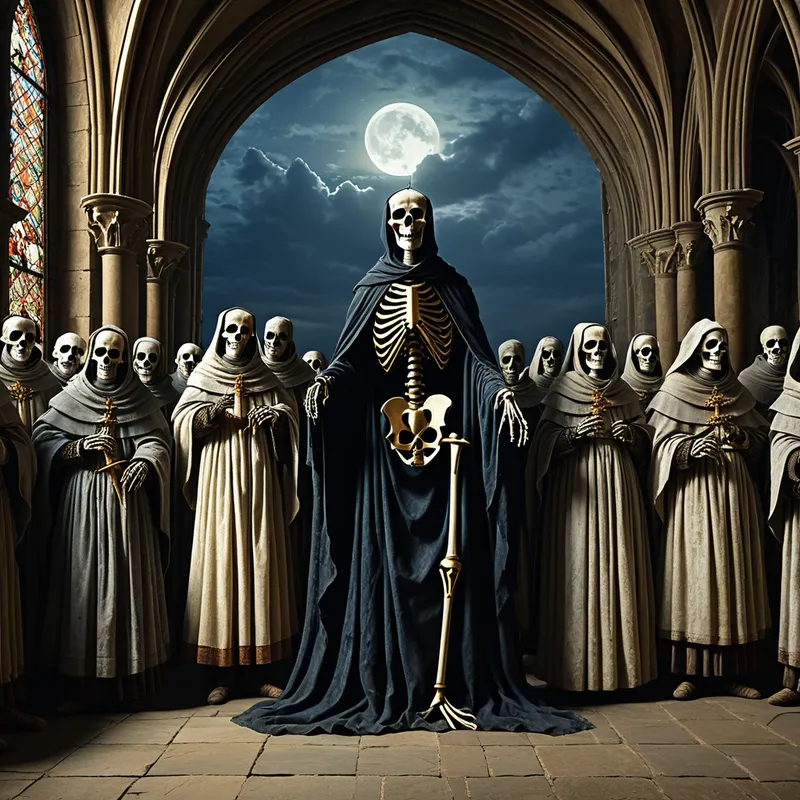
The Danse Macabre Myth Meaning & Symbolism
A spectral procession where Death, the great equalizer, leads all—pope and pauper—in a final, unifying dance, mocking worldly vanity.
The Tale of The Danse Macabre
Listen, and let the chill of the stone cloister seep into your bones. For the tale I tell is not sung by minstrels in the hall, but whispered by the wind through charnel houses and painted in silent, desperate pigment upon cold church walls.
It begins not with a fanfare, but with a silence—a pause in the bustling, grimy, fragrant cacophony of the medieval world. The fields are tilled, the prayers are chanted, the wars are waged. Kings plot in their keeps, merchants tally their coins, lovers whisper in orchards. Each believes in the solidity of their station, the permanence of their role in the great, tiered ladder of being that stretches from earth to heaven.
Then, a note sounds. It is not from trumpet or bell, but from a bone flute, or the single, resonant pluck of a string on a vielle made of old, dry wood. From the mist of the churchyard, or the shadow of the market cross, He steps forth. He is not a monster of fang and fury, but a figure of elegant, terrible simplicity: a skeleton, clad in the faintest memory of a shroud, yet moving with an undeniable, graceful vitality. This is Death, the only true lord of the dance.
He does not attack; he invites. His empty gaze finds the pope in his Vatican palace. A bony hand extends. The pontiff’s theological certainty melts into human fear, then a weary surrender. He takes the hand. He finds the emperor on his battlefield throne. The conqueror, whose word moves armies, finds his will powerless against this silent summons. His sword falls, and his hand is grasped. So it goes, in an inexorable, winding line. The cardinal, the abbot, the knight in gleaming armor, the wealthy merchant, the astrologer, the physician with his herbs, the lusty youth, the beautiful maiden, the struggling laborer, the wailing infant—one by one, each is tapped upon the shoulder.
And they join. They form a chain, a procession that winds through the very heart of the world’s illusions. They dance through the castle, the cathedral, the tavern, the field. The king dances with the beggar. The bishop holds the hand of the thief. The maiden’s rosy cheek is next to the hollow skull of the aged crone. There is no music we can hear, only the rhythm of their steps—a slow, stately, inescapable measure. Their faces tell the story: shock, denial, bargaining, rage, and finally, for some, a pale, stark peace. The dance mocks their earthly titles, renders their gold and silks mere costume. It is the ultimate leveling. The dance does not end in a tomb, but leads toward a vast, mist-shrouded portal—the gateway from which all came and to which all must return. The final figure, often a hermit or a monk, looks not with terror, but with recognition, as if greeting a long-expected, if severe, friend. And then, the procession fades into the mist, leaving behind the silent, unchanged world, now seen through eyes that know its deepest, most fragile truth.
Cultural Origins & Context
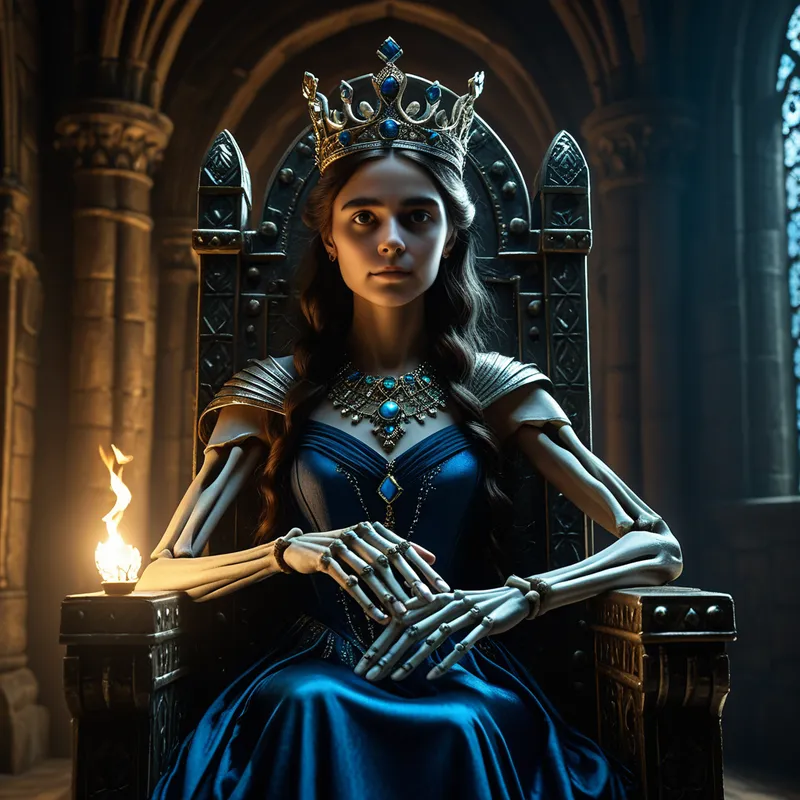
The Danse Macabre was not a single story penned by an author, but a cultural meme born from collective trauma and piety. It erupted in the late Middle Ages, particularly in the 14th and 15th centuries, a period ravaged by the Black Death, endless wars, and famine. Death was not a distant abstraction but a constant, visceral presence. In this soil, the myth took root.
It was propagated through “poor man’s bibles”—the frescoes on church and cemetery walls, like the famous, now-lost mural in the Cimetière des Innocents in Paris. These public artworks were sermons in pigment, designed for a largely illiterate populace. They were also performed in pageants and recited in verses where each figure, from pope to peasant, had a lamenting dialogue with Death. Its societal function was multifaceted: a memento mori (“remember you must die”) to curb sin and pride, a social critique that highlighted the vanity of worldly hierarchies, and a paradoxical form of comfort. By making death universal, orderly, and even communal, it stripped some of death’s lonely, arbitrary terror. It was a myth told by the community, to the community, about the one experience that truly united them all.
Symbolic Architecture
At its core, the Danse Macabre is a grand, grim allegory of the Shadow. Death here is not merely a physical end, but the ultimate Shadow figure—the repressed knowledge of our finitude, the great negation that defines every affirmation of life.
The dance is the psyche’s ritual enactment of its own dissolution, where the persona—the mask of social rank and identity—is forcibly removed by the hand of reality itself.
The procession order is its masterstroke. By placing the highest ecclesiastical and temporal powers first, the myth systematically deconstructs the ego’s fortresses. The pope represents spiritual authority, the king worldly power, the knight physical strength, the merchant material wealth, the youth future potential, the beauty temporal allure. Death, as the unifying principle, demonstrates that none of these constructs offer true sanctuary. The “dance” itself is key—it transforms the passive victimhood of dying into an active, if unwilling, participation. It is a ritual of integration, however coerced.
The myth’s central symbol, the skeletal figure of Death, is paradoxically lively. This represents the archetypal truth that the force of dissolution is itself a vital, dynamic principle within the psyche. It is not an enemy from without, but a law from within.
The Dreamer’s Resonance
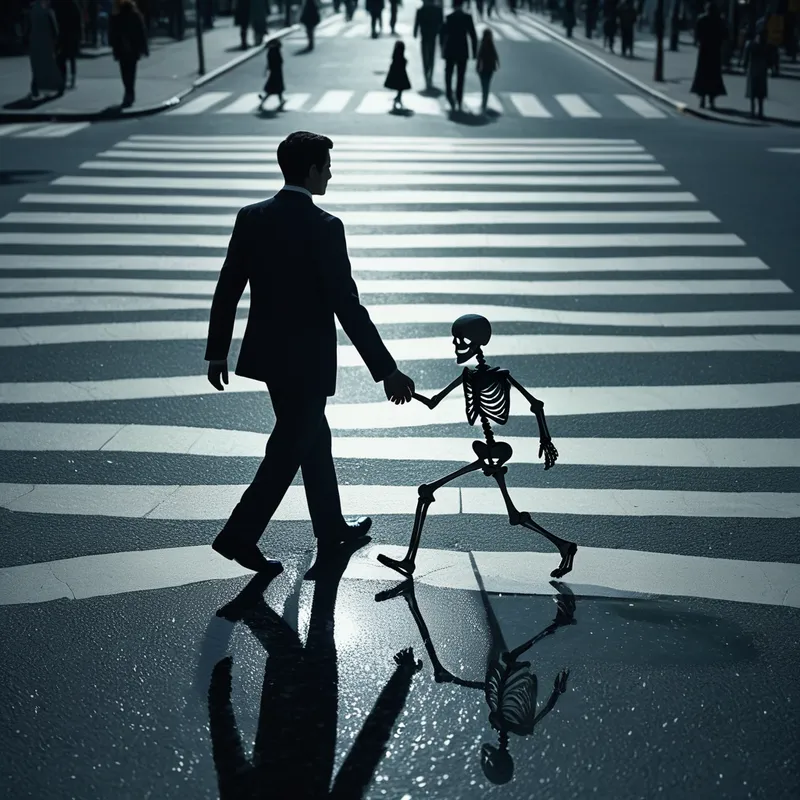
When this myth stirs in the modern dreamer, it rarely appears as a medieval fresco. Instead, one might dream of being in a crowded, anonymous airport or train station, where a familiar yet faceless figure gestures for you to join a line that has no visible end. You may dream of your workplace hierarchy dissolving, as the CEO and the intern are led away together by a quiet, administrative figure. Or you may simply feel a profound, somatic rhythm—a heartbeat or a ticking—that insists you leave what you are doing and follow.
These dreams signal a profound psychological process: the ego’s confrontation with a necessary ending. This could be the end of a career, a relationship, a life phase, or a deeply held self-concept. The “dance” is the somatic, often anxious, feeling of being in transition, of having your old identity stripped away by a force greater than your will. The dream is an invitation—or a demand—to acknowledge what you have been avoiding: your own limitations, your mortality, or the inevitable change that you have been resisting. It is the psyche’s way of initiating its own memento mori, not to frighten, but to make space for renewal by honestly engaging with the fact of endings.
Alchemical Translation
In the alchemical journey of individuation, the Danse Macabre maps directly onto the dreaded stage of nigredo. This is the “dark night of the soul,” where all that was once bright, solid, and valued is broken down into its black, base matter.
The alchemist’s putrefaction is the soul’s danse macabre. One must willingly take the skeletal hand and be led into the dissolution of all that one thought one was.
The modern individual undergoing this psychic transmutation does not face a physical skeleton, but its equivalent: depression, loss of meaning, the collapse of ambition, the failure of a cherished project, or the stark confrontation with personal failure or illness. This is Death as the archetype of transformation. The key to the alchemical translation is in the participation. Individuation requires that we do not merely suffer these endings as passive victims, but that we, as the myth implores, “join the dance.” We must actively engage with our despair, our mortality, our shadow.
By “dancing” with our endings—by consciously feeling the grief, examining the broken pieces of our pride, and acknowledging the equality of all souls in the face of existential truths—we perform the alchemical magic. The lead of our inflated ego is crushed. From this humbled, equalized state—where the inner king and the inner beggar hold hands—the true work of rebuilding the soul (albedo and rubedo) can begin. The Danse Macabre, therefore, is not a myth of doom, but a severe, necessary map for the most profound kind of liberation: the liberation from the illusion of separateness and the tyranny of a fragile, status-driven self.
Associated Symbols
Explore related symbols from the CaleaDream lexicon: