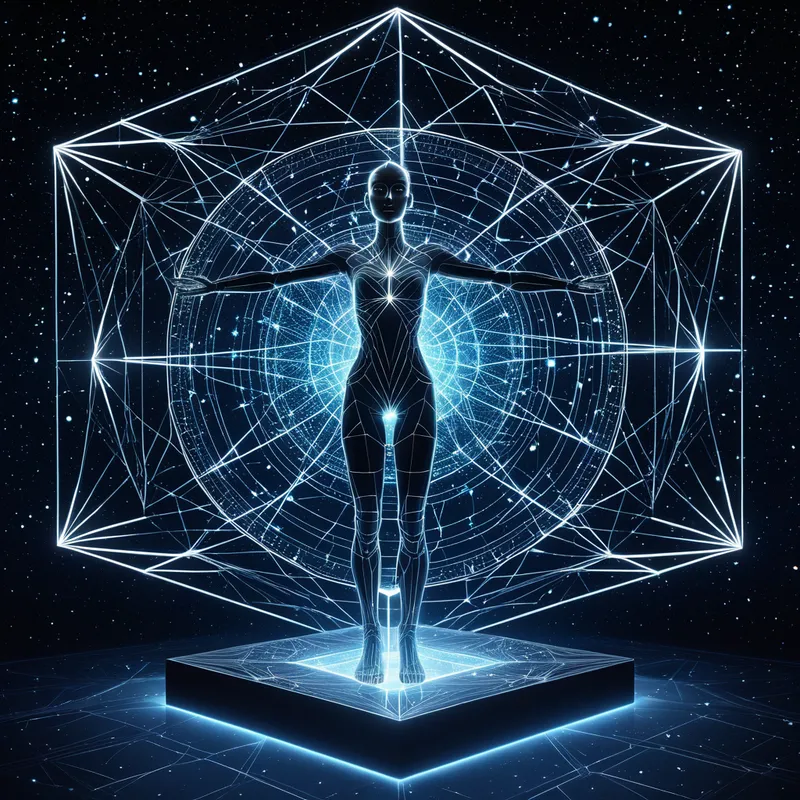
The Cube of the Universe Myth Meaning & Symbolism
A myth of the Demiurge shaping primal chaos into a perfect, rotating cube, establishing cosmic order and the soul's geometric path to remembrance.
The Tale of The Cube of the Universe
Listen, and hear the tale of the First Shaping, when [the world](/myths/the-world “Myth from Tarot culture.”/) was not a world, but a breath held in the throat of eternity.
In the beginning, there was only the Apeiron—the Unbounded. It was a churning sea without shore, a darkness that was not dark, a silence that roared with all potential and no form. There were no stars, no earth, no up or down. Only the ceaseless, fertile, and terrifying dance of the Unmanifest.
From within this womb of possibility, a presence stirred. Not a god of thunder or passion, but a principle of Mind. The Demiurge, the Craftsman, gazed upon the Apeiron with a love not of possession, but of order. It beheld the perfect, eternal patterns that exist beyond time—the Forms—and a divine sorrow moved within it. For the beautiful patterns had no mirror, the perfect geometries no home.
With a will that was neither hand nor voice, [the Demiurge](/myths/the-demiurge “Myth from Gnostic culture.”/) reached into the Apeiron. Its attention was a force. Where it focused, the chaotic dance slowed. The formless substance resisted, clinging to its ancient, wild freedom. The Craftsman did not fight, but persisted, applying the persuasion of perfect logic, the gentle, inexorable pressure of mathematical truth.
Slowly, agonizingly, a shape began to cohere. Not a sphere first, as one might think, but the simplest of boundaries: a plane. Then another, intersecting at a perfect angle. A third. The substance groaned as it was asked to hold a line, to maintain an edge against the pull of its own boundless nature. The Demiurge worked with the patience of eternity, tracing the blueprint of the Platonic Solid most steadfast, most foundational.
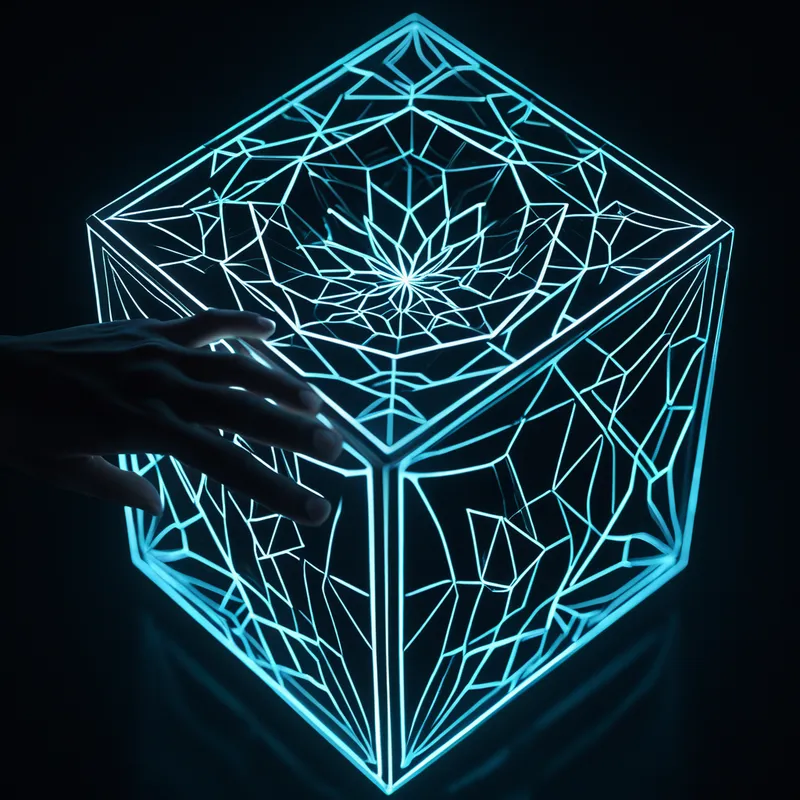
A corner formed. Then another. Six faces of equal perfection emerged from the soup of stars-to-be. The Cube took shape—not as stone, but as the first idea made manifest. It was a cage for chaos, a sanctuary for law. As the final face solidified, the Demiurge set it turning, not on a random axis, but on one aligned with the celestial equator of a heaven not yet born. Its rotation was the first rhythm, the first measure of time within the timeless.
And within its vast, geometric heart, space was now defined. Here was inside and outside. Here was stability. The wild potential of the Apeiron, now bounded, could condense into the elements—fire, air, [water](/myths/water “Myth from Chinese culture.”/), earth—spinning off from the Cube’s corners and faces to populate the cosmos. The Cube did not contain the universe; it was its anchor, its immutable core, the hidden geometric skeleton upon which the glittering illusion of the starry vault was hung. The Craftsman looked upon its work, the perfect Cube rotating in the now-ordered void, and saw that it was good. For in its perfect angles and steadfast form, the soul of the world had found a home, and a path back to remembrance.
Cultural Origins & Context
This myth finds its most eloquent expression in Plato’s dialogue, the Timaeus, though its roots likely tap into older Orphic and Pythagorean mysteries. It was not a tale for the marketplace, but for [the symposium](/myths/the-symposium “Myth from Greek culture.”/) and the academy—a “likely story” (eikōs mythos) offered not as literal history, but as a profound metaphorical model for educated citizens and philosophers.
Its primary function was cosmological and pedagogical. In a culture deeply invested in geometry as divine language, the myth explained how a universe of change and flux (the world we perceive) could arise from eternal, unchanging principles. The storyteller was often a philosopher, a “guide of souls,” using the narrative to illustrate abstract truths about reality, mathematics, and ethics. It served to elevate the mind from the messy, imperfect world of the senses to the contemplation of perfect, rational order, reinforcing the Platonic worldview that true reality is intellectual and geometric, not material.
Symbolic Architecture
The Cube is the [archetype](/symbols/archetype “Symbol: A universal, primordial pattern or prototype in the collective unconscious that shapes human experience, behavior, and creative expression.”/) of manifestation itself. It represents the necessary imposition of limit upon the infinite, the [moment](/symbols/moment “Symbol: The symbol of a ‘moment’ embodies the significance of transient experiences that encapsulate emotional depth or pivotal transformations in life.”/) potential becomes actual. The Apeiron is the unconscious in its raw, creative, and terrifying totality—the [realm](/symbols/realm “Symbol: The symbol of ‘Realm’ often signifies the boundaries of one’s consciousness, experiences, or emotional states, suggesting aspects of reality that are either explored or ignored.”/) of dreams, instincts, and unformed possibilities. The Demiurge is the ordering principle of [consciousness](/symbols/consciousness “Symbol: Consciousness represents the state of awareness and perception, encompassing thoughts, feelings, and experiences.”/), [the ego](/myths/the-ego “Myth from Jungian culture.”/) or [the Self](/myths/the-self “Myth from Jungian culture.”/) that seeks to bring coherence, [structure](/symbols/structure “Symbol: Structure in dreams often symbolizes stability, organization, and the framework of one’s life, reflecting how one perceives their environment and personal life.”/), and meaning.
The soul is geometrized spirit. Its suffering is the resistance of the boundless to the boundary; its joy is the discovery of form within the formless.
The six faces symbolize the three-dimensional world of [material](/symbols/material “Symbol: Material signifies the tangible aspects of life, often representing physical resources, desires, and the physical world’s influence on our existence.”/) [reality](/symbols/reality “Symbol: Reality signifies the state of existence and perception, often reflecting one’s understanding of truth and life experiences.”/) ([length](/symbols/length “Symbol: Length in dreams often represents the measure of time, distance, and the emotional investment in pursuit of goals.”/), [width](/symbols/width “Symbol: Represents capacity, scope, and the boundaries of experience or potential.”/), [depth](/symbols/depth “Symbol: Represents profound layers of consciousness, hidden truths, or the unknown aspects of existence, often symbolizing introspection and existential exploration.”/)) and the six directions that define our embodied experience. Its [stability](/symbols/stability “Symbol: A state of firmness, balance, and resistance to change, often represented by solid objects, foundations, or steady tools.”/) represents the laws of [nature](/symbols/nature “Symbol: Nature symbolizes growth, connectivity, and the primal forces of existence.”/), [logic](/symbols/logic “Symbol: The principle of reasoning and rational thought, often representing order, structure, and intellectual clarity in dreams.”/), and the [psyche](/myths/psyche “Myth from Greek culture.”/)‘s need for a stable core [identity](/symbols/identity “Symbol: Identity represents the sense of self, encompassing personal beliefs, cultural background, and social roles.”/). The rotation signifies the dynamism of this order—it is not a dead structure, but a living, generative [framework](/symbols/framework “Symbol: Represents the underlying structure of one’s identity, emotions, or life. It signifies the mental or emotional scaffolding that supports or confines the self.”/) that produces the diversity of the [cosmos](/symbols/cosmos “Symbol: The entire universe as an ordered, harmonious system, often representing the totality of existence, spiritual connection, and the unknown.”/) from its unity. Psychologically, the Cube is the psychic container, the developed ego-structure that can hold and give shape to the powerful, often chaotic energies of the unconscious without being shattered by them.
The Dreamer’s Resonance
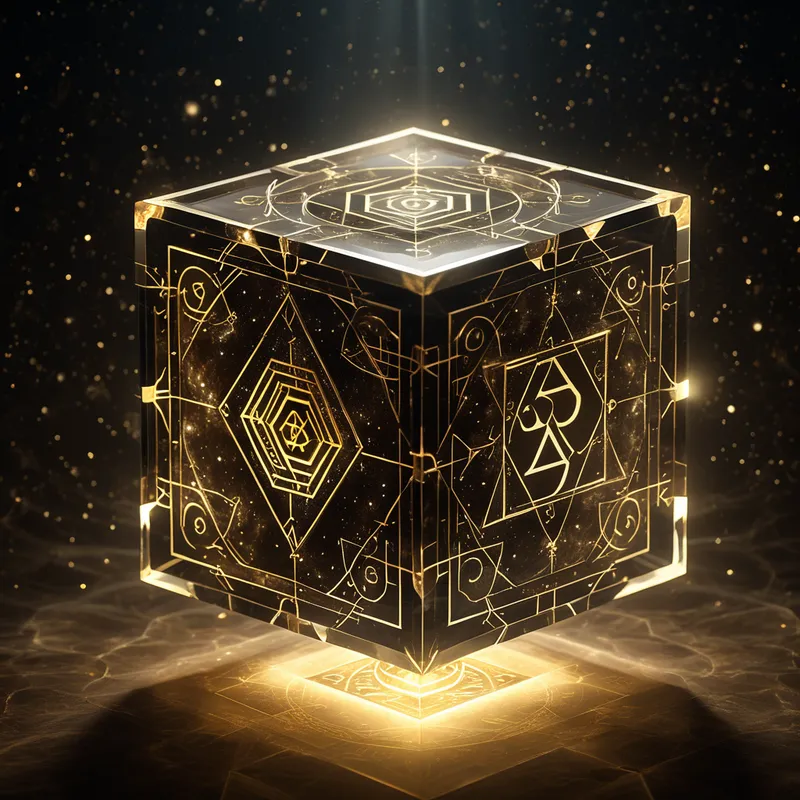
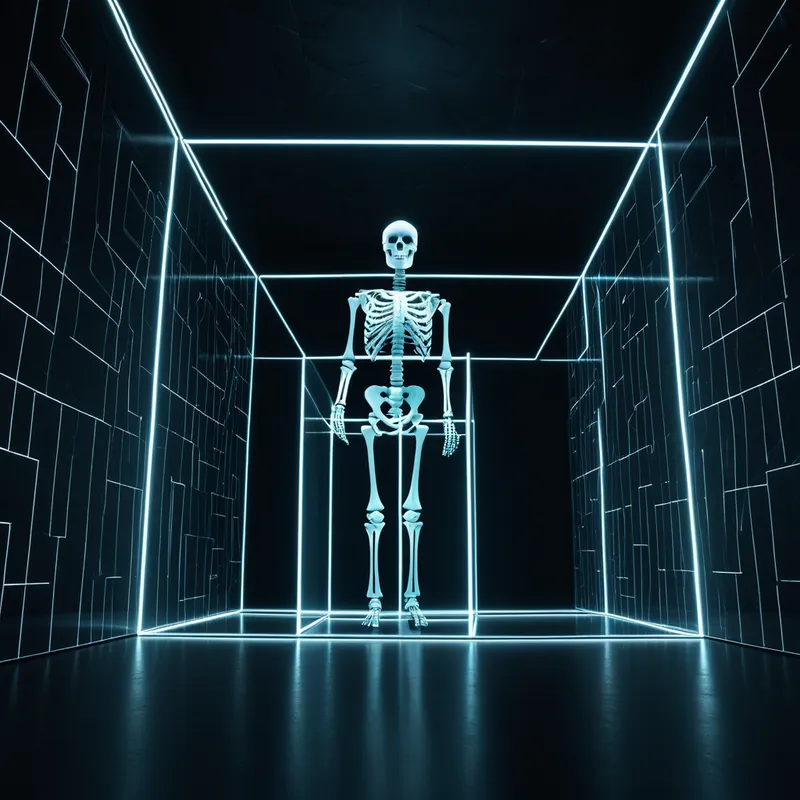
When the Cube appears in modern dreams, it rarely does so as a simple box. It may manifest as a perfectly still room the dreamer cannot leave, a vast, empty building with stark, right-angled corridors, or a glowing geometric shape hovering in a void. It often appears during periods of profound internal reorganization—after a crisis, at the start of therapy, or during a spiritual awakening where old identities are dissolving.
The somatic experience is key. One may feel a sense of awe-struck claustrophobia, a paradoxical feeling of being both securely held and rigidly confined. This is the psyche working to re-establish, or perhaps question, its foundational structures. Dreaming of a crumbling or melting cube signals a deconstruction of the ego-container, often a prelude to a necessary, if frightening, expansion. Dreaming of discovering a hidden, perfect cube within a chaotic landscape marks a moment of profound internal integration—the conscious discovery of one’s own core, immutable structure amidst life’s chaos.
Alchemical Translation
The myth models the alchemical opus of individuation—the journey from unconscious wholeness (the Apeiron), through a state of fragmented chaos (life’s suffering), to a conscious, integrated wholeness (the ordered Cosmos).
The initial state is one of psychic diffusion, where thoughts, impulses, and potentials swirl without direction. The Demiurge’s act is the birth of the ego’s intention to make a coherent life. The “resistance” of the Apeiron is the resistance we meet from our own depths—our shadow, our complexes, our fear of definition. The labor of shaping the Cube is the daily, patient work of building a life of principle, discipline, and integrity.
Individuation is not becoming perfect, but becoming specific. The Cube is the courage to be finite, to accept the limits that make a unique shape possible.
The final, rotating Cube represents the achieved Self. It is not a static perfection but a dynamic, living structure. The soul, once lost in boundless confusion, now has a defined center and a stable axis. The elements of one’s personality (fire of passion, water of emotion, air of intellect, earth of body) find their proper place and relationship within this stable geometry. The modern individual’s [triumph](/myths/triumph “Myth from Roman culture.”/) is not conquering the unconscious, but providing it with a vessel—a Cube of the Self—strong enough to contain its creative fury and translate it into a life of meaningful form. We are all Demiurges, tasked with finding the perfect, hidden geometry of our own soul within the chaos of existence.
Associated Symbols
Explore related symbols from the CaleaDream lexicon: