The Cosmic Seed Myth Meaning & Symbolism
From the primordial void, a single seed contains the potential for all existence, birthing the cosmos through a sacred act of sacrifice and division.
The Tale of The Cosmic Seed
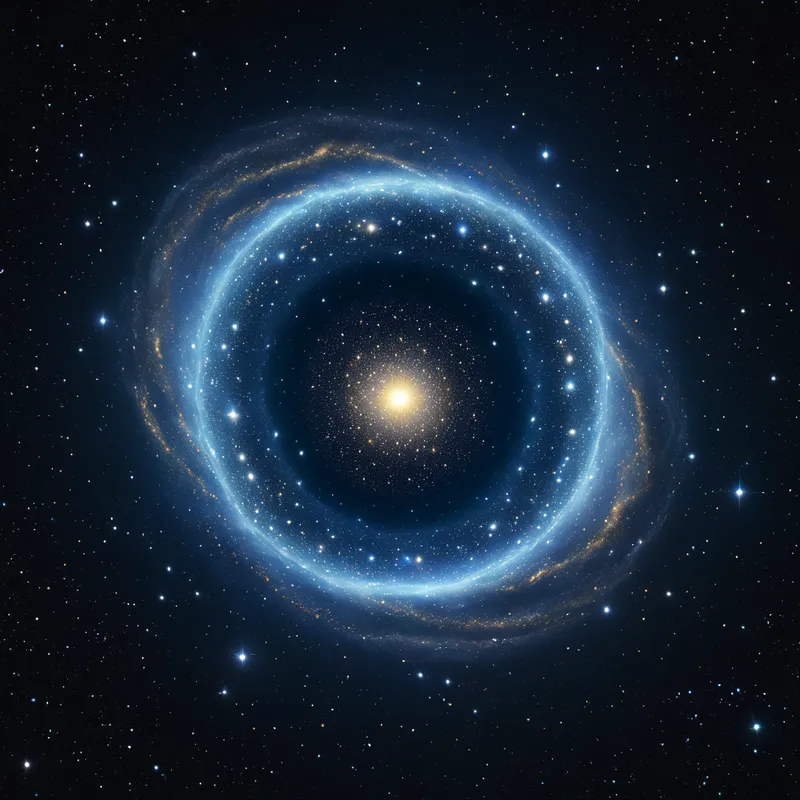
In the beginning, there was not a beginning. There was only the Nyx, the deep and dreaming dark. No wind stirred, for there was no air. No light fell, for there were no stars. No time passed, for there was no sequence. Only a vast, silent potential, a womb of everything and nothing, waiting.
And within that womb, a single point of consciousness stirred. Some traditions name this entity Atum, the Complete One. Others whisper of Ymir, formed from the meeting of fire and ice. In this telling, we shall call it the Dreamer. The Dreamer floated in the perfect solitude of the Nyx, aware only of its own being. And in the center of its being, it felt a pressure, a warmth, a hum. It was the Seed.
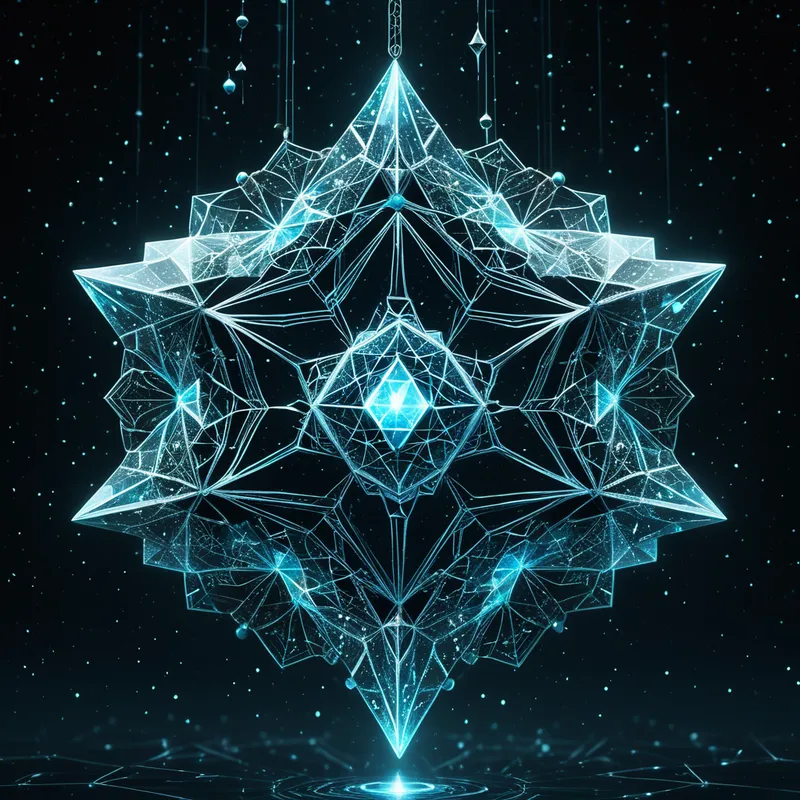
This was no seed of oak or wheat. This was the Cosmic Seed, a perfect, self-contained orb of condensed possibility. Within its shell, too thin to see yet stronger than time, swirled the ghosts of mountains and oceans, the echoes of laughter and thunder, the blueprints for lions and lilies and the human heart. It glowed with a soft, inward light, a captive sunrise.
The Dreamer contemplated the Seed. For eons that were not eons, it held this perfect, complete potential. But completeness, in the endless dark, became a form of solitude. A longing arose—not for something else, for there was nothing else—but for expression. For the song inside the Seed to be sung. For the map to become a world.
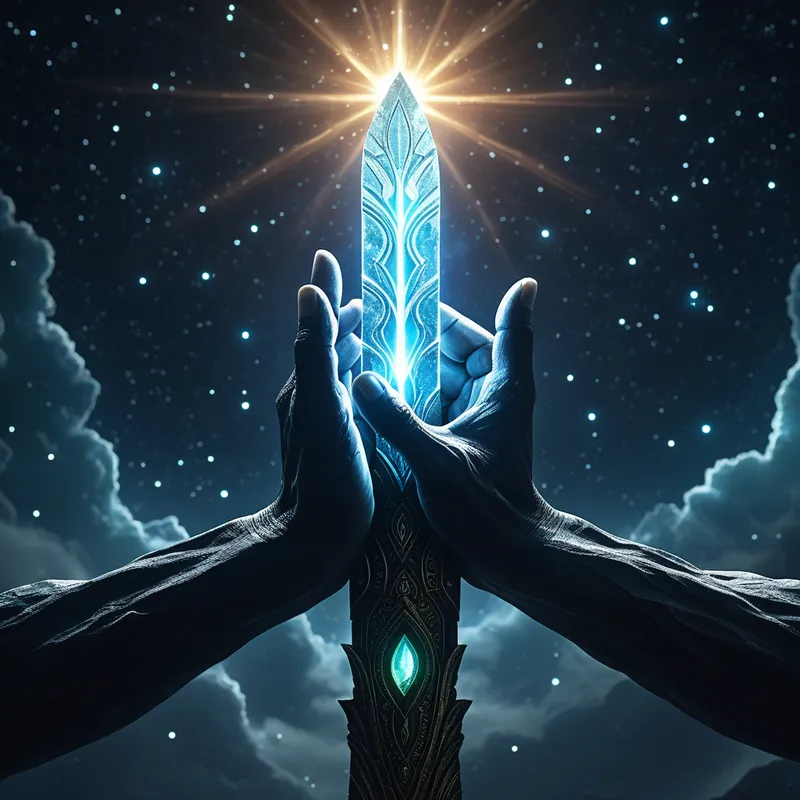
With a thought that was also an act, a decision that was also a surrender, the Dreamer brought forth from its own essence a blade of pure intention. This was not a weapon of war, but a tool of distinction, sharp enough to separate light from shadow, sky from earth, self from other. [The void](/myths/the-void “Myth from Buddhist culture.”/) held its breath.
There was no sound, but the feeling was of a universe inhaling. The Dreamer placed the blade against the shimmering shell of the Cosmic Seed. Then, with a movement that was both infinitely gentle and catastrophically powerful, it cut.
The rupture was not a destruction, but a birth-cry. From the Seed poured not fragments, but opposites rushing to find their place. Light, brilliant and blinding, streamed upward, coalescing into suns and constellations. Heavier, darker elements sank, swirling into planets and fertile soil. What was once compressed potential now exploded into dynamic relationship. Hot sought cold, dry sought wet, and in the spaces between, life drew its first breath.
The shell of the Seed itself was transformed. One half became the dome of [the sky](/myths/the-sky “Myth from Persian culture.”/), curving protectively overhead. The other became the foundational earth, solid and enduring. The Dreamer, its act complete, did not vanish. It became the breath in [the wind](/myths/the-wind “Myth from Various culture.”/), [the law](/myths/the-law “Myth from Biblical culture.”/) in the orbit of planets, the hidden pattern in the growth of a vine—the conscious principle now woven into the very fabric of the differentiated world it had dared to imagine into being.
Cultural Origins & Context
The motif of the Cosmic Seed or World Egg is not the property of a single culture, but a profound archetypal pattern emerging independently across the globe. We find it in the [Hiranyagarbha](/myths/hiranyagarbha “Myth from Hindu culture.”/) (Golden Womb) of the Rigveda, in the [hundun](/myths/hundun “Myth from Chinese culture.”/) of Chinese philosophy, and in the Orphic myths of ancient Greece. This widespread occurrence suggests it speaks to a fundamental human intuition about origins.
These stories were not mere explanations for pre-scientific peoples. They were sacred narratives, recited during rituals of renewal, at solstices, or at the inauguration of a new leader. To tell the story of the Seed was to participate in the original creative act, to align the community with the foundational order (Dharma, [Ma’at](/myths/maat “Myth from Egyptian culture.”/)) that emerged from chaos. [The shaman](/myths/the-shaman “Myth from Siberian culture.”/), priest, or elder who narrated it was performing a vital function: connecting the people to the source of all potency and reminding them that their world, their society, and their own lives were the continued unfolding of that first sacred sacrifice.
Symbolic Architecture
Psychologically, the Cosmic Seed represents the totality of the [psyche](/myths/psyche “Myth from Greek culture.”/) in its pre-conscious, undifferentiated state. It is [the Self](/myths/the-self “Myth from Jungian culture.”/) in its potential form, prior to the [emergence](/symbols/emergence “Symbol: A process of coming into being, rising from obscurity, or breaking through a barrier, often representing birth, transformation, or revelation.”/) of [the ego](/myths/the-ego “Myth from Jungian culture.”/), the [persona](/symbols/persona “Symbol: The social mask or outward identity one presents to the world, often concealing the true self.”/), and the complex web of opposites that define our waking [life](/symbols/life “Symbol: The symbol of ‘Life’ represents a journey of growth, interconnectedness, and existential meaning, encompassing both the joys and challenges that define human experience.”/): conscious/unconscious, good/bad, masculine/feminine. It is the “all in one” of our latent capacities, memories, and destinies.
The Seed is the prison of perfection, and its cracking is the necessary trauma that makes growth possible.
The primordial Nyx or void is the unconscious itself—not a negative [emptiness](/symbols/emptiness “Symbol: Emptiness signifies a profound sense of void or lack in one’s life, often related to existential fears, loss, or spiritual quest.”/), but the [fertile ground](/symbols/fertile-ground “Symbol: Fertile ground symbolizes potential, growth, and the promise of new beginnings, reflecting a state where life can thrive.”/) of being. The [Dreamer](/symbols/dreamer “Symbol: The dreamer represents the self, the conscious mind engaging with subconscious thoughts and feelings during dreaming.”/) is the first [flicker](/symbols/flicker “Symbol: A brief, unstable light or movement suggesting transition, uncertainty, or the ephemeral nature of perception and reality.”/) of conscious [awareness](/symbols/awareness “Symbol: Conscious perception of self, surroundings, or internal states. Often signifies awakening, insight, or heightened sensitivity.”/) within that ground. The decisive cut, then, is the primordial act of [consciousness](/symbols/consciousness “Symbol: Consciousness represents the state of awareness and perception, encompassing thoughts, feelings, and experiences.”/): the [separation](/symbols/separation “Symbol: A spiritual or mythic division between realms, states of being, or consciousness, often marking a transition or loss of connection.”/) of subject and object, the [birth](/symbols/birth “Symbol: Birth symbolizes new beginnings, transformation, and the potential for growth and development.”/) of discrimination. This is both a creative and a violent act. It creates [the world](/myths/the-world “Myth from Tarot culture.”/) of experience by shattering the [peace](/symbols/peace “Symbol: Peace represents a state of tranquility and harmony, both internally and externally, often reflecting a desire for resolution and serenity in one’s life.”/) of potential. We see this echoed in the [infant](/symbols/infant “Symbol: The infant symbolizes new beginnings, innocence, and the potential for growth and development.”/)‘s gradual realization that it is separate from the [mother](/symbols/mother “Symbol: The symbol of ‘Mother’ represents nurturing, protection, and the foundational aspect of one’s emotional being, often associated with comfort and unconditional love.”/), a realization that is both the [dawn](/symbols/dawn “Symbol: The first light of day, symbolizing new beginnings, hope, and the transition from darkness to illumination.”/) of [identity](/symbols/identity “Symbol: Identity represents the sense of self, encompassing personal beliefs, cultural background, and social roles.”/) and the [origin](/symbols/origin “Symbol: The starting point of a journey, often representing one’s roots, source, or initial state before transformation.”/) of existential longing.
The Dreamer’s Resonance
When this mythic pattern stirs in the modern dreamer, it often manifests in times of profound transition, where an old, contained sense of self must break open to allow for a new stage of life. One might dream of a radiant gem, a closed flower, or a glowing egg held in one’s own hands or chest. The dream carries a somatic weight of both immense pressure and imminent release.
To dream of holding the unbroken Seed is to be in a state of pregnant potential. You may feel you contain a world of possibility—a new career, a creative project, a spiritual awakening—but are paralyzed by the perfection of the idea, fearing the messy reality of its manifestation. The dream is a somatic signal of readiness. To dream of the Seed cracking or shattering can be terrifying, akin to a dream of explosion or disintegration. Yet, upon waking, there is often not despair, but a strange, quiet awe. The psyche is reporting its own necessary fragmentation, the death of a monolithic self-concept to make way for a more complex, differentiated, and authentic identity. It is the chaos before a new inner cosmos is formed.
Alchemical Translation
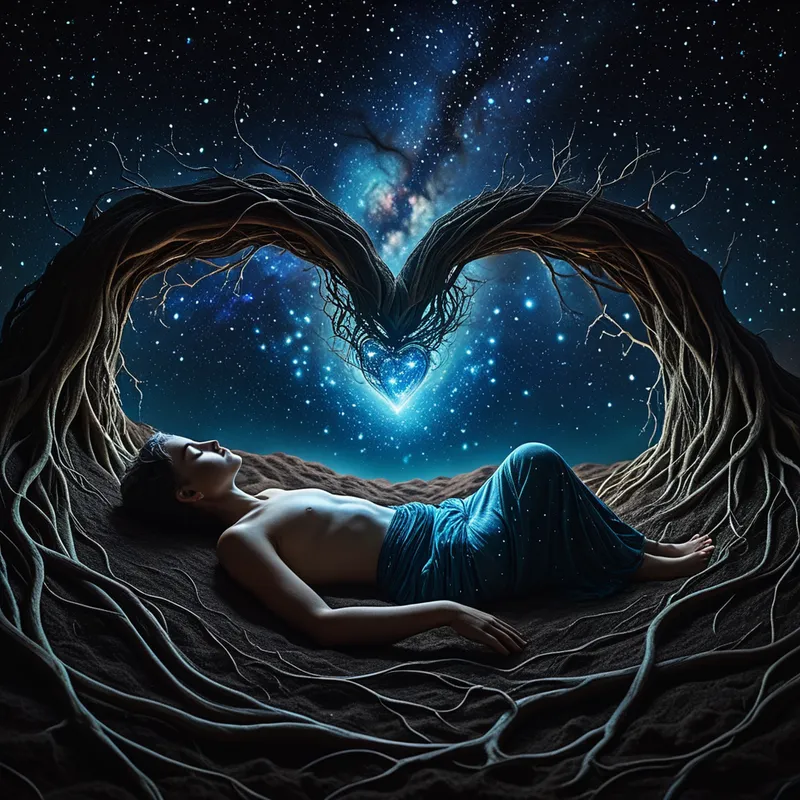
The journey of individuation, the process of becoming a whole and integrated individual, follows the exact blueprint of the Cosmic Seed myth. We begin in the [nigredo](/myths/nigredo “Myth from Alchemical culture.”/), [the dark night of the soul](/myths/the-dark-night-of-the-soul “Myth from Christian Mysticism culture.”/) or a state of unconscious fusion with our family and cultural patterns. This is the Nyx. The first stirring of consciousness—perhaps a crisis, a deep question, or a piercing insight—is the Dreamer awakening.
Our latent Self, the Seed, contains everything we are meant to be, but it is compressed, unrealized. The alchemical work is the application of the blade: the difficult, conscious work of analysis, shadow integration, and the separation of what is truly us from what we have merely introjected. We must “cut open” our complexes, our illusions of perfection, and our defensive structures.
Individuation is not about becoming perfect, but about becoming specific. It is the sacred violence that translates the poem of potential into the story of a life.
This process feels like a sacrifice. It sacrifices the comfort of the known, the safety of the unmanifest, the fantasy of a conflict-free existence. But from this sacrifice, the inner cosmos is born. The light of consciousness rises to illuminate our talents and values (the sky), while the dark, fertile earth of the body and the unconscious grounds our being. The once-contained psyche becomes a living, breathing universe of interrelated parts. We do not become the Dreamer who holds the Seed; we become the world that grows from it, a walking, breathing testament to the creative sacrifice that is a life authentically lived.
Associated Symbols
Explore related symbols from the CaleaDream lexicon: