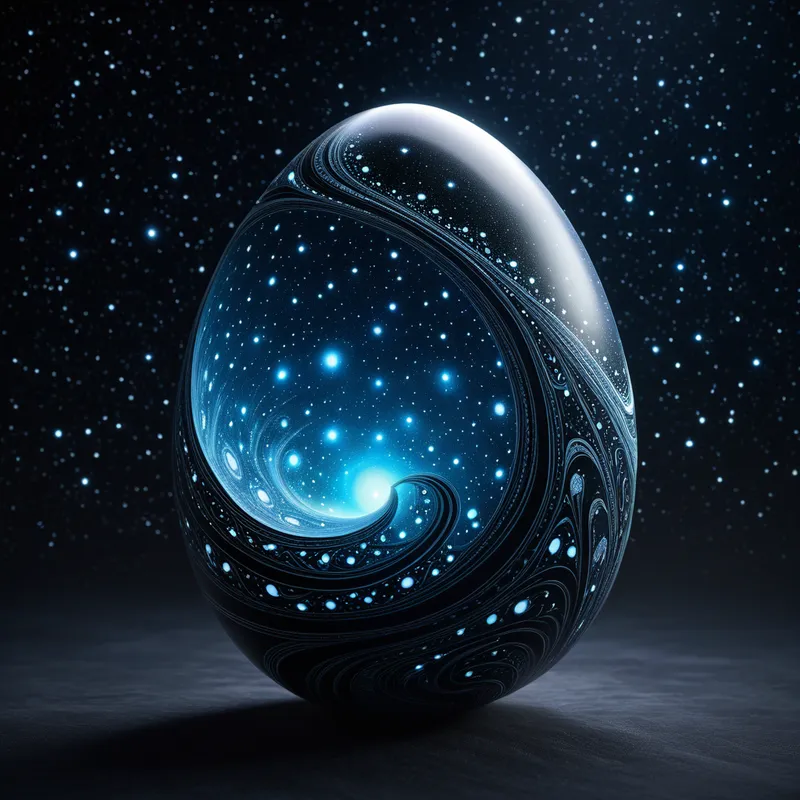
The Cosmic Egg Myth Meaning & Symbolism
A primordial unity, a cosmic egg, cracks open in the void, birthing the universe and the duality of existence from its boundless potential.
The Tale of The Cosmic Egg
In the beginning, there was not darkness, nor was there light. There was not sound, nor was there silence. There was only the Primordial Waters, a vast, dreaming ocean of potential without shore or surface. It was a womb of pure becoming, where all possibilities swirled in a perfect, motionless dance. And within this boundless, featureless deep, there rested a single, perfect thing: the Cosmic Egg.
It was not large, nor was it small, for there was nothing to measure it against. Its shell was not white, nor black, but held within its opalescent surface the memory of every color yet to be born. It was the only thing that was, a concentration of all that could ever be. For eternities uncounted, it floated, a silent thought in the mind of the void.
Then, a stirring. A vibration that was not a sound, a warmth that was not heat. From within the egg’s profound stillness, a presence awakened. In the Hiranyagarbha, it was the golden embryo. In the Ginnungagap, it was the spark born from the meeting of fire and ice. In the Wuji, it was the first movement. This presence grew, filled with the unbearable pressure of existence yearning to be. The egg, this perfect vessel of totality, began to hum with a light that had never before been seen.
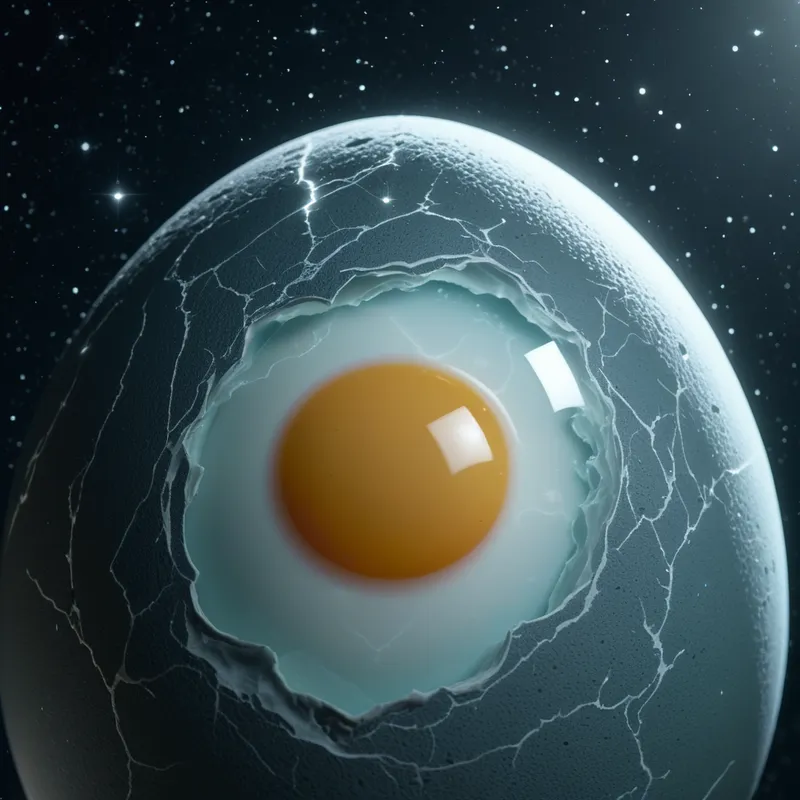
The shell, which had contained infinity, could no longer hold it. A hairline fracture appeared, not with a crash, but with a sigh that became the first wind. Then, a crack, ringing out like the first note of a cosmic symphony. Light, raw and blinding, erupted forth—not just to illuminate, but to create space as it flowed. From the shattered halves of the egg, the world was made. The lighter part, swirling and rising, became the dome of the sky, Ouranos or Nut. The denser part, settling and cooling, became the solid earth, Gaia or Geb.
Where the yolk had been, the sun ignited. The membranes became the misty atmosphere. And in that first, glorious separation, time itself began to flow. The unity was broken, but in its breaking, it gave birth to the ten thousand things: mountains and rivers, stars and seas, and the great, echoing expanse between them where life would one day take root and wonder at its own origin.
Cultural Origins & Context
The Cosmic Egg is a truly global myth, one of humanity’s most profound and recurring intuitions about origins. It appears not as a single story, but as a resonant pattern woven into the foundational narratives of cultures from the ancient Finnish Kalevala (where the world is born from the egg of a diving bird) to the Rigveda, from the philosophical traditions of China to the creation accounts of the Dogon people of Mali. This was not a myth passed down by a single priesthood but a fundamental archetype that emerged independently across continents, suggesting it speaks to a deep layer of the human psyche.
Its function was cosmological and psychological. For ancient societies, it answered the most fundamental question: “How did all this come to be?” It provided an elegant, tangible image for the transition from the formless (Chaos, Ginnungagap) to the formed (Cosmos). By telling of a time when sky and earth were one, it also established the sacred nature of their separation and interconnection. The myth was often recited during rituals marking new beginnings—the new year, a coronation, a birth—invoking the creative power of that first, primal moment to sanctify and empower new cycles of life.
Symbolic Architecture
The egg is the ultimate symbol of potential. It represents a state of wholeness where all opposites—light and dark, male and female, spirit and matter—exist in perfect, latent unity. It is the Prima Materia of the universe, and by extension, of the psyche.
The Cosmic Egg is the psyche in its pre-conscious state: everything is there, but nothing is yet differentiated. Consciousness itself is the cracking of that shell.
The act of cracking is not destruction, but necessary differentiation. It is the primal act of consciousness, the first distinction that creates a “self” and an “other.” The resulting duality (sky/earth) is not a fall from grace, but the necessary condition for existence, relationship, and experience. The myth tells us that creation is a violent, beautiful act of separation from a nurturing but limiting totality. The egg must break for the world to live; the child must separate from the womb to become an individual.
The Dreamer’s Resonance
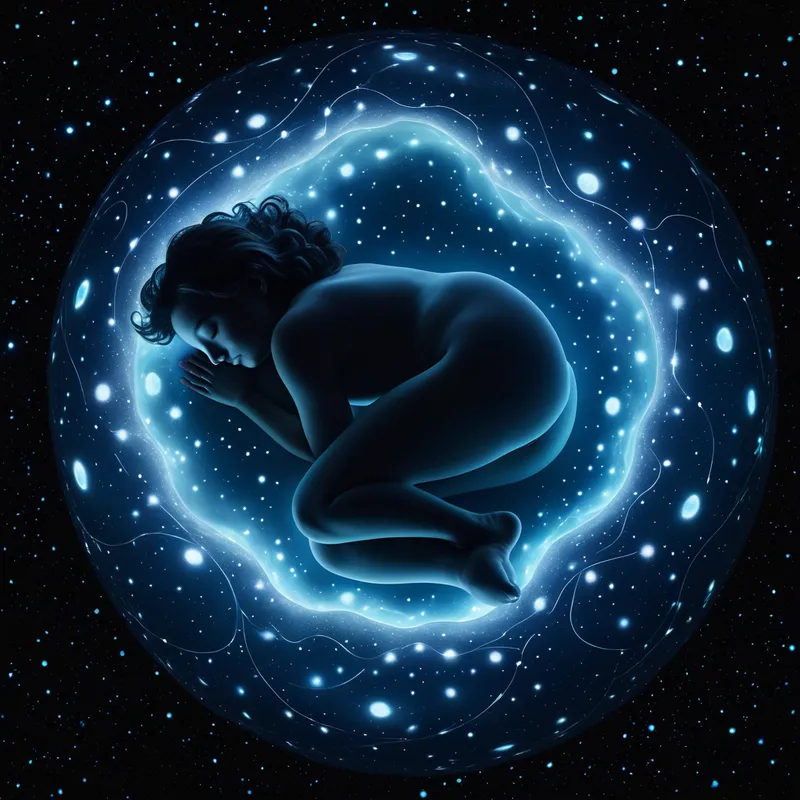
When the Cosmic Egg appears in modern dreams, it rarely does so as a literal, mythological image. It manifests as a profound feeling of being on the cusp of a new existence. One might dream of being trapped inside a translucent sphere, a bubble, or a glass room, feeling both protected and desperately constrained. There may be imagery of something precious—a gem, a heart, a baby—encased in a hard shell that needs to break open.
Somatically, this can correlate with feelings of pressure in the chest or head, a sense of impending, inevitable change. Psychologically, the dreamer is at the final stage of a gestation period. This could be the end of a long introspection, the completion of an internal project, or the resolution of a complex emotional state. The unconscious is signaling that the time of incubation is over. The protective container that once served to nurture a nascent part of the self (a new talent, a recovered memory, a changed perspective) has now become a prison, and the psyche is preparing for the birth—and the potential trauma—of its emergence into conscious life.
Alchemical Translation
The journey of individuation mirrors the myth of the Cosmic Egg. We all begin in a kind of psychic unity, often experienced in childhood or in states of undifferentiated belonging. The first step toward consciousness is the “cracking”—the painful realization of our separation, our complexes, our shadow. This is the Nigredo, the chaos that follows the break.
The alchemical goal is not to return to the unbroken egg, but to consciously re-create its unified state on a higher level, having integrated the differentiated world born from its fracture.
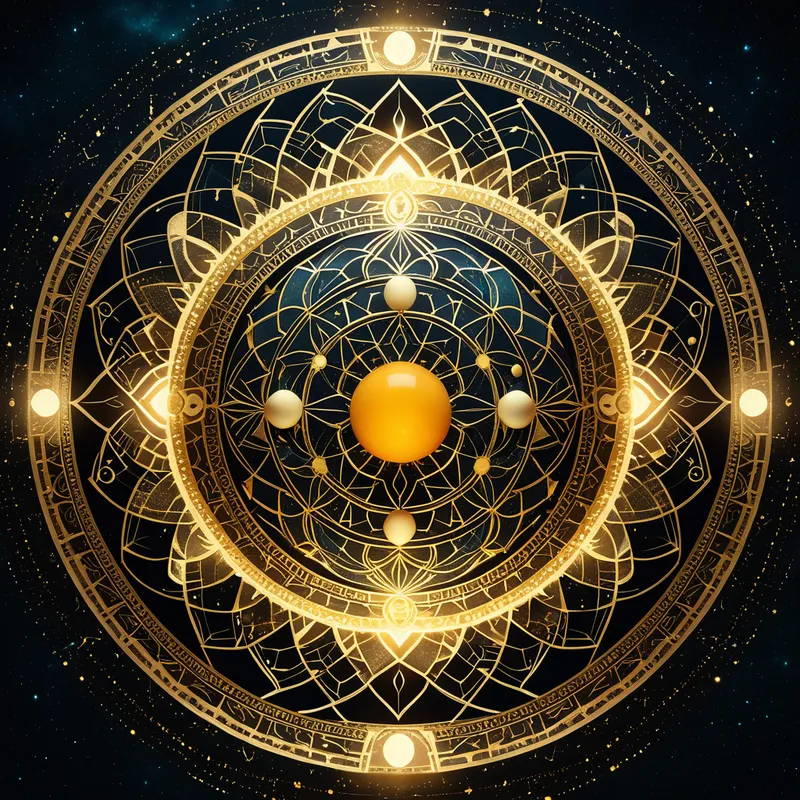
The process involves gathering the scattered pieces of our experience—the sky and earth of our spirit and body, our light and dark halves—and bringing them into a new relationship. This is the labor of analysis, integration, and self-acceptance. The ultimate goal is the creation of the Self, symbolised by the Lapis Philosophorum or the Mandala. This achieved wholeness is the “philosopher’s egg”—a vessel that contains multiplicity in unity, but now consciously held. We cannot go back to the primordial womb, but we can, through the work of consciousness, become the vessel that contains our own cosmos. We become the egg that willingly holds its own light, and the world that was born from it.
Associated Symbols
Explore related symbols from the CaleaDream lexicon: