The Cosmic Anaconda of the Tukano Myth Meaning & Symbolism
An ancestral anaconda voyages upriver, its body transforming into the landscape and its sacred songs into the first people and their laws.
The Tale of The Cosmic Anaconda of the Tukano
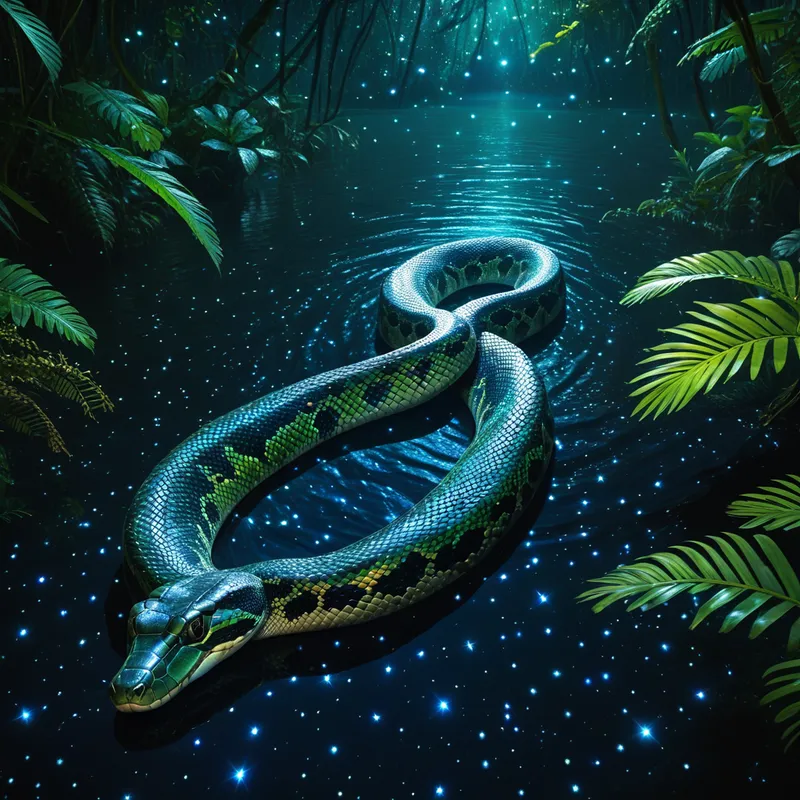
In the beginning, there was only Water and Song. From the deep, eastern womb of the world, Yepa Huake—the Great Cosmic Anaconda—awoke. Its body was the river itself, a colossal, living current of scales like polished night, etched with the patterns of stars yet unborn. Within its vast belly, it carried the Ancestors, not as flesh, but as potent seeds of spirit, humming with the sacred rhythms of future life.
The Anaconda began its epic voyage, a slithering pilgrimage against the current of the great river. It was the First Journey, a labor of creation. Where its massive head pushed through the waters, the riverbed deepened and curved. Where its mighty body scraped the banks, hills rose and forests took root. Its breath was the mist that cloaked the mountains; its shed scales became the glittering stones in the river shallows. The world was being written by its passage.
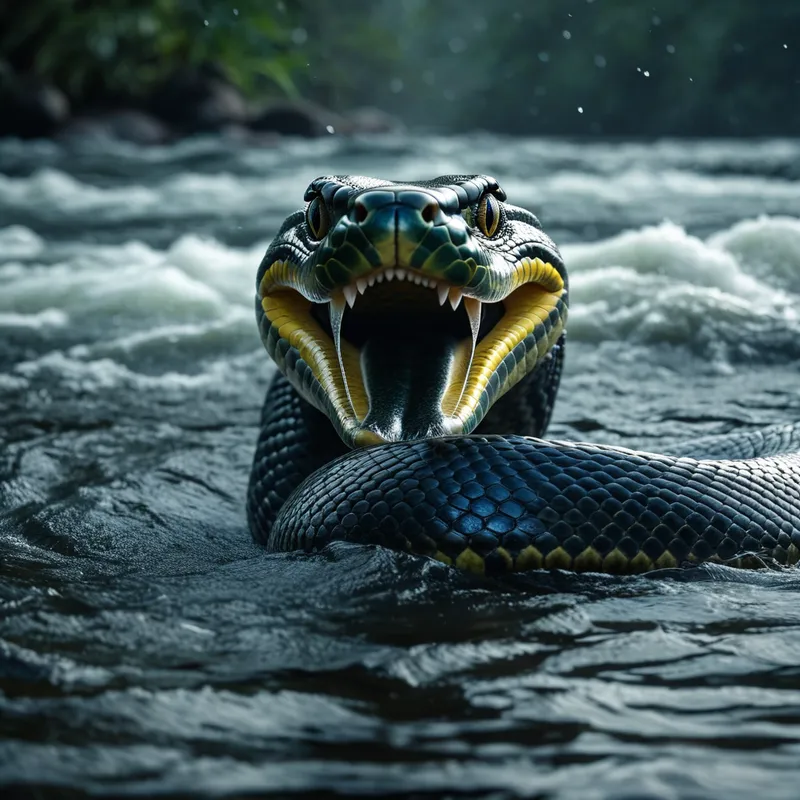
But the journey was not gentle. The river fought back with roaring Rapids and treacherous whirlpools. In these places of violent transition, the Anaconda would writhe and struggle, its cosmic energy concentrated into a furious, creative agony. At the most sacred of these sites, known as He Poná, the great serpent would pause. From its mouth, it would release not prey, but a burst of luminous vapor and sacred sound—a People-Seed. These seeds, imbued with specific songs and laws, would solidify upon the banks, becoming the first human ancestors of the Tukanoan clans. Each clan carried the unique melody of the song that birthed them, a direct inheritance from the Anaconda’s generative struggle.
Finally, having sculpted the entire river basin with its form and populated it with its spiritual children, the Cosmic Anaconda reached the headwaters. Its creative force spent, its great body began its final transformation. Its flesh melted into the earth, becoming the fertile soil. Its immense backbone fossilized into the mountain ranges that cradle the world. Its last exhale became the wind in the Maloca, and its final, resonant hum settled into the stones and the roots, a permanent vibration within all things. The journey was complete. The formless potential of the Water had, through the serpent’s arduous voyage, become the ordered, singing world of land, river, and people.
Cultural Origins & Context
This myth is the foundational narrative of the Tukanoan peoples, an indigenous linguistic family inhabiting the Vaupés River basin in the northwest Amazon. It is not merely a story but a living, topographic map and a social charter. The myth was—and for many, still is—passed down by Payés and elders during sacred ceremonies within the maloca, often accompanied by the consumption of caapi.
Its societal function is multifaceted. Firstly, it explains the origin of the landscape: every curve in the river, every hill, is a part of the Anaconda’s body, making the entire territory a sacred, animate being. Secondly, it establishes the identity and relationships of the exogamous clans (the “People-Seeds”), each with its designated role, territory, and ancestral song derived from a specific point in the Anaconda’s journey. The myth encodes law, ecology, and kinship, binding the people to their land through a shared, divine ancestry that emerged from struggle and transformation.
Symbolic Architecture
At its core, the myth presents a profound [blueprint](/symbols/blueprint “Symbol: A blueprint represents the foundational plan or design for something, often symbolizing potential, structure, and the mapping of one’s inner self or future.”/) for how order—cosmic, ecological, and social—emerges from [chaos](/symbols/chaos “Symbol: In Arts & Music, chaos represents raw creative potential, uncontrolled expression, and the breakdown of order to forge new artistic forms.”/) through a disciplined, transformative [journey](/symbols/journey “Symbol: A journey in dreams typically signifies adventure, growth, or a significant life transition.”/). The Cosmic Anaconda is the ultimate [Serpent](/symbols/serpent “Symbol: A powerful symbol of transformation, wisdom, and primal energy, often representing hidden knowledge, healing, or temptation.”/) [archetype](/symbols/archetype “Symbol: A universal, primordial pattern or prototype in the collective unconscious that shapes human experience, behavior, and creative expression.”/), not as a tempter but as a world-bearing [creator](/symbols/creator “Symbol: A figure representing ultimate origin, divine power, or profound authorship. Often embodies the source of existence, innovation, or personal destiny.”/). Its voyage upstream is an act of immense will, moving against the natural flow to imprint [purpose](/symbols/purpose “Symbol: Purpose signifies direction, meaning, and intention in life, often reflecting personal ambitions and core values.”/) onto the formless.
The journey against the current is the archetypal pattern of consciousness defining itself against the pull of the unconscious.
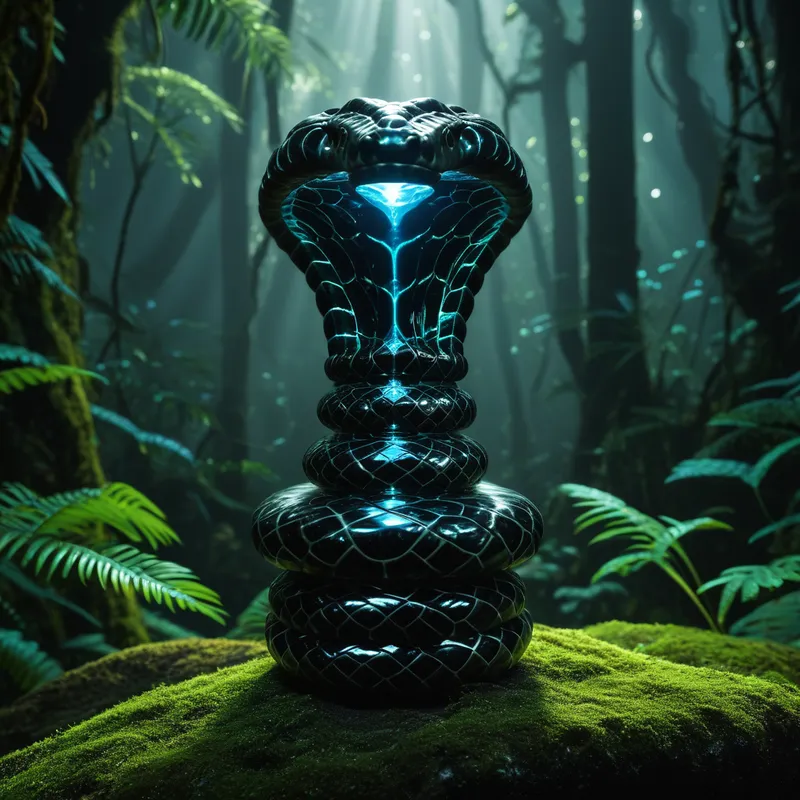
The Maloca, which is modeled after the Anaconda’s [body](/symbols/body “Symbol: The body in dreams often symbolizes the dreamer’s self-identity, personal health, and the relationship they have with their physical existence.”/), represents the achieved, structured world—a [microcosm](/symbols/microcosm “Symbol: A small, self-contained system that mirrors or represents a larger, more complex whole, often reflecting the universe within an individual.”/) born from the [macrocosm](/symbols/macrocosm “Symbol: The universe as a whole, representing the interconnectedness of all existence and the reflection of the individual within the cosmic order.”/)’s sacrifice. The [Rapids](/symbols/rapids “Symbol: A turbulent, fast-moving section of a river, symbolizing life’s uncontrollable forces, emotional intensity, and the need for navigation through chaos.”/) are critical symbols of the necessary ordeal. Creation is not a peaceful act but a violent engagement with [resistance](/symbols/resistance “Symbol: An object or tool representing opposition, struggle, or the act of pushing back against external forces or internal changes.”/). It is at these points of maximum [tension](/symbols/tension “Symbol: A state of mental or emotional strain, often manifesting physically as tightness, pressure, or unease, signaling unresolved conflict or anticipation.”/) that new forms of [life](/symbols/life “Symbol: The symbol of ‘Life’ represents a journey of growth, interconnectedness, and existential meaning, encompassing both the joys and challenges that define human experience.”/) and [consciousness](/symbols/consciousness “Symbol: Consciousness represents the state of awareness and perception, encompassing thoughts, feelings, and experiences.”/) are “born,” forged in the [crucible](/symbols/crucible “Symbol: A vessel for intense transformation through heat and pressure, symbolizing spiritual purification, testing, and alchemical change.”/) of struggle.
The Dreamer’s Resonance
When this mythic pattern stirs in the modern Dream, it often manifests as dreams of powerful, sometimes terrifying, aquatic or serpentine movement. One might dream of swimming forcefully upstream in a dark river, feeling a colossal presence just below. Or of one’s own spine feeling incredibly long, heavy, and powerful, connecting to a deep, ancient force.
Psychologically, this signals a profound somatic and psychic process: the feeling of being carried by—or being—a deep, instinctual current that is actively shaping one’s life. The “rapids” in the dream represent life crises, periods of intense pressure where old structures break down. The emergence from the serpent’s maw is akin to a psychological rebirth, where a new complex, talent, or aspect of identity (a “People-Seed”) is being painfully but necessarily delivered into consciousness. The dream is an affirmation that the struggle has a creative, world-building purpose.
Alchemical Translation
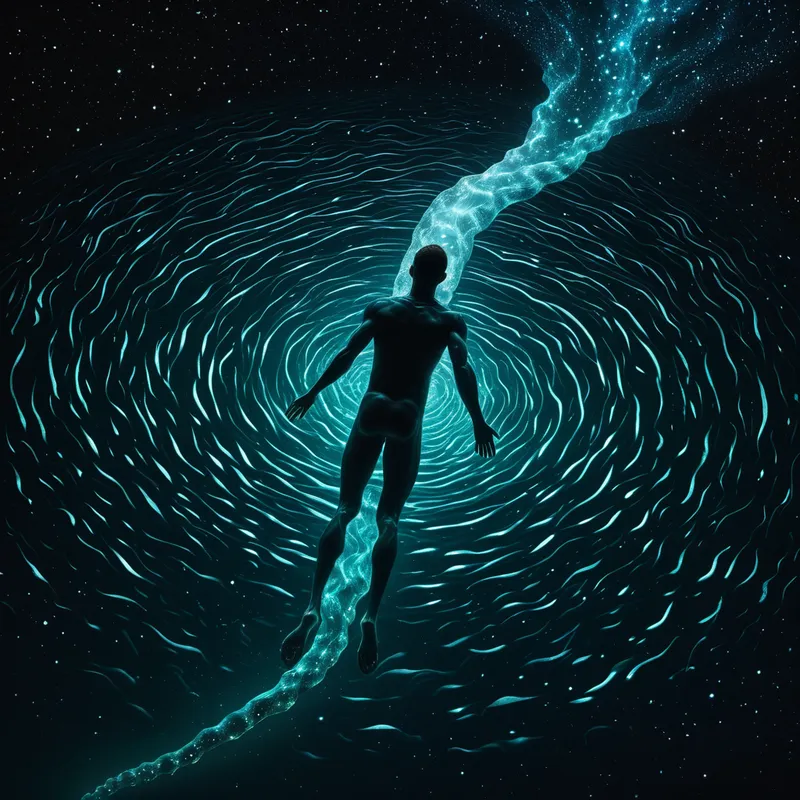
For the individual, the Anaconda’s journey is a perfect map of the individuation process. We all begin in the “eastern waters” of undifferentiated potential, fused with family and cultural complexes. The call to consciousness is the call to begin our own upstream voyage, to differentiate Self from the collective flow.
The alchemical prima materia is the chaotic water; the Anaconda is the enduring spirit that submits to the ordeal of coagulation, transforming base potential into the gold of authentic being.
The “rapids” are our unavoidable encounters with the Shadow—our fears, traumas, and repressed energies. The myth teaches that we do not bypass these places; we are transformed within them. Each successful navigation allows a new “ancestral seed”—a previously unconscious part of our potential—to be born and integrated. The final transformation, where the serpent becomes the landscape, symbolizes the ultimate goal: the complete integration of the psychic journey into the stable, lived reality of the individual. The instinctual, serpentine energy doesn’t vanish; it becomes the very ground of our being, the fertile soil from which our daily life grows. We become the living maloca, a structured, sacred space built from our own endured and sacred journey.
Associated Symbols
Explore related symbols from the CaleaDream lexicon:
- River — The flowing course of life, time, and consciousness; the path of the ancestral journey that must be traveled and shaped.
- Serpent — The primal, transformative life force and instinctual wisdom that creates order through its own dynamic movement and sacrifice.
- Journey — The essential process of moving from undifferentiated potential towards differentiated, conscious being, against the current of inertia.
- Rapids — The necessary points of crisis, chaos, and ordeal where transformation is forced and new psychic structures are born.
- Ancestor — The emergent aspects of self and identity that are released from the primal source, carrying specific laws and songs for one’s life.
- Song — The unique vibrational pattern, purpose, or destiny encoded within each individual and community, originating from the creative act.
- Water — The primordial, unconscious source of all life and potential, the medium through which the formative journey must take place.
- Maloca — The achieved, structured world of the conscious self and community, built in the image of the transformative journey that created it.
- Mountain — The enduring structure and backbone of identity formed from the spent, solidified energy of the completed creative struggle.
- Transformation — The core alchemical process of changing state, from fluid potential to solid reality, through a sustained, purposeful ordeal.
- Cosmic Pathway — The mythic journey itself, understood as a sacred, star-mapped route that connects the origin of the soul to its manifested existence.
- Seed — The latent potential carried within the unconscious, awaiting the precise moment of struggle and release to germinate into conscious form.